All the ways the self-driving future won’t come to pass.
Self-driving cars are coming. Tech giants such as Uber and Alphabet have bet on it, as have old-school car manufacturers such as Ford and General Motors. But even as Google’s sister company Waymo prepares to launch its self-driving-car service and automakers prototype vehicles with various levels of artificial intelligence, there are some who believe that the autonomous future has been oversold—that even if driverless cars are coming, it won’t be as fast, or as smooth, as we’ve been led to think. The skeptics come from different disciplines inside and out of the technology and automotive industries, and each has a different bear case against self-driving cars. Add them up and you have a guide to all the ways our autonomous future might not materialize.
We need to begin a serious debate about whether artificially evolved humans are our future, and if we should put an end to these experiments before it is too late.
In 2016, Craig Venter and his team at Synthetic Genomics announced that they had created a lifeform called JCVI-syn3.0, whose genome consisted of only 473 genes. This stripped-down organism was a significant breakthrough in the development of artificial life as it enabled us to understand more fully what individual genes do. (In the case of JCVI-syn3.0, most of them were used to create RNA and proteins, preserve genetic fidelity during reproduction and create the cell membrane. The functions of about a third remain a mystery.)
Several hours of discussions and debate later, Engadget’s editors have decided who among our finalists should win our Best of CES awards. Below is our list of winners for each category, as well as Best of the Best and People’s Choice. Congratulations to all winners and finalists!
A system that uses a technique called constructive solid geometry (CSG) is allowing MIT researchers to deconstruct objects and turn them into 3D models, thereby allowing them to reverse-engineer complex things.
The system appeared in a paper entitled “InverseCSG: Automatic Conversion of 3D Models to CSG Trees” by Tao Du, Jeevana Priya Inala, Yewen Pu, Andrew Spielberg, Adriana Schulz, Daniela Rus, Armando Solar-Lezama, and Wojciech Matusik.
More than 100 million devices with Amazon’s Alexa assistant pre-installed have been sold, the company said Friday.
The new metric, revealed by Amazon devices SVP Dave Limp in an interview with The Verge, showcases just how quickly the company has crammed the voice assistant into disparate hardware devices and shoved them out the door. The company did not distinguish further how many of these items were Amazon-built Echo devices and how many were designed by third-party OEMs.
3D printing made some big advances in the medical domain last year, and it seems like that trend isn’t going to slow down any time soon. Proving that point is an impressive procedure recently carried out in Bulgaria, in which a patient received one of the first 3D-printed ribs as part of a potentially lifesaving operation. It demonstrated a new approach to create rib implants, using a process called fused deposition modeling (FDM), which is cheaper in both machine and material costs than other similar attempts.
“[The] patient, Ivaylo Josifov, was diagnosed with a rib deformation,” Mateusz Sidorowicz, director of marketing at 3DGence, the company which made the 3D printer, told Digital Trends. “The doctors were concerned that the deformity may progress, and decided to replace the rib with an implant. Unfortunately, traditional implants — made from titanium, for example — are very expensive. Also, the titanium itself is not a perfect material for replacing ribs.”
The Consumer Electronics Show is one of the biggest technology events of the year where brand new devices and products are shown off to the world, sometimes for the very first time. As such, you’ll see some of the coolest and most exciting things at CES.
However, at CES 2019 we saw some things that were a little…strange. Some of them were cool, some of them were useful, and some of them could even make the world a better, safer place. But they were all a little weird and inevitably caused many CES 2019 attendees pause and scratch their heads.
We know not everyone can attend CES, so we’ve rounded up some of the weirdest things we saw as we wandered the show floor. Check out our strange CES 2019 roundup below.
“Choose things that are good enough, and do not worry about whether they’re the best.”
Psychologist Barry Schwartz is best known for his immensely popular TED Talk and his book The Paradox of Choice. He recently joined Ryan Hawk, host of The Learning Leader Show, to discuss what having too much of a good thing means for us, and how to stay engaged in an ever-changing, digitized world.
New research has shown that if a man wants to live a long healthy life, marrying a smart woman will go a long way in fulfilling this desire. Besides increasing longevity, having an intelligent wife can negate the chances of a man catching dementia. The right partner will definitely help enrich a person’s life.
However, intelligence is not the only criteria for a happy relationship. Compatibility is another key factor. Just like the old adage says ‘do not judge a book by its cover,’ so too a person’s outward appearance should not be the yardstick for the selection of a partner. Younger people are generally attracted to the physical aspects of a person and sometimes fail to look beyond that. This often results in bad relationships or marriages in the later years. Choosing mind over matter can, therefore, have great benefits for both.
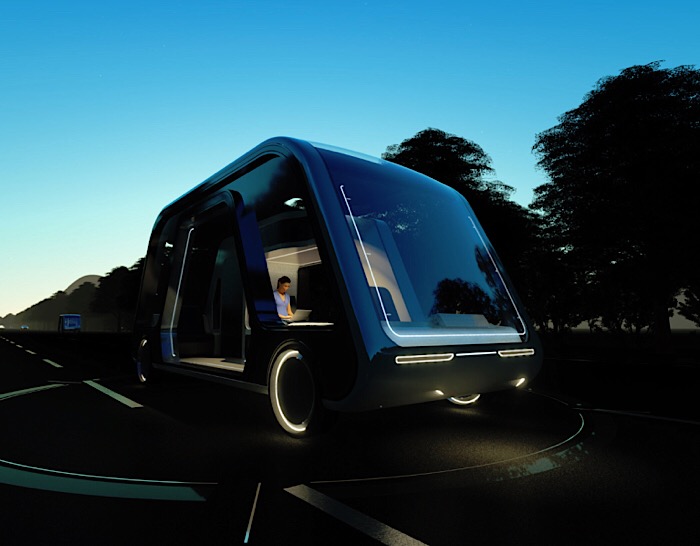
The “Uber for everything” boom in tech has led to plenty of on-demand solutions for everyday life, but one problem we didn’t even know existed is apparently mobile hotel rooms. A new concept for a rolling room just won an award for its forward thinking, but will it ever become a reality? We have out doubts.
The concept is called the Autonomous Travel Suite, or ATS for short. It comes from the mind of Steve Lee of the Aprilli Design Studio and it’s largely based on the self-driving vehicle technology of the future. The idea here is that instead of riding along in a car-like seat while a computer takes you to your destination, you’re actually free to move around the over-sized cabin.
The Guardian view on the future of AI: great power, great irresponsibility.
Looking over the year that has passed, it is a nice question whether human stupidity or artificial intelligence has done more to shape events. Perhaps it is the convergence of the two that we really need to fear.
Artificial intelligence is a term whose meaning constantly recedes. Computers, it turns out, can do things that only the cleverest humans once could. But at the same time they fail at tasks that even the stupidest humans accomplish without conscious difficulty.
At the moment the term is mostly used to refer to machine learning: the techniques that enable computer networks to discover patterns hidden in gigantic quantities of messy, real-world data. It’s something close to what parts of biological brains can do. Artificial intelligence in this sense is what enables self-driving cars, which have to be able to recognise and act appropriately towards their environment. It is what lies behind the eerie skills of face-recognition programs and what makes it possible for personal assistants such as smart speakers in the home to pick out spoken requests and act on them. And, of course, it is what powers the giant advertising and marketing industries in their relentless attempts to map and exploit our cognitive and emotional vulnerabilities.