Using gene editing to fight deadly genetic diseases

Experts share the latest advances at annual PQG conference 

By – Karen Feldscher

November 30, 2022 – Cutting-edge gene editing techniques hold enormous promise for tackling devastating diseases such as sickle cell disease, Huntington’s disease, and heart disease, according to experts.

At the 16th annual Program in Quantitative Genomics (PQG) conference, a two-day event held in early November and hosted by Harvard T.H. Chan School of Public Health, a dozen speakers spoke about recent and upcoming research on therapeutics and technologies targeting specific genetic mutations that cause disease. About 180 participants from around the world attended the virtual conference.

Continue reading… “Using gene editing to fight deadly genetic diseases”

SPACE STAYCATION 

INSIDE MULTI-MILLION DOLLAR PLAN TO BUILD A TOWN ON THE MOON USING LUNAR DUST

By Jona Jaupi

ONE 3D-printing company has revealed plans to build towns on the Moon’s surface.

Nasa has given 3D printing firm Icon $57.2 million to develop a plan that could help build infrastructure on the lunar surface.

Types of infrastructure would include landing pads, habitats, and roads on the lunar surface.

Not only would the developments be built for Nasa but for commercial companies, as well.

Icon, based in Austin, previously displayed its cutting-edge technology by 3D printing a 1,700-square-foot simulated Martian habitat.

The habitat dubbed Mars Dune Alpha was presented at the Johnson Space Center in Houston.

Nasa’s contract will help Icon research and develop space-based construction systems, specifically for its project Olympus.

This project will help to support the planned exploration of the Moon and beyond.

It’s also intended to be a multi-purpose construction system primarily using local lunar and Martian resources as building materials to further the efforts of NASA as well as commercial organizations to establish a sustained lunar presence.

“In order to explore other worlds, we need innovative new technologies adapted to those environments and our exploration needs,” said Niki Werkheiser, director of technology maturation in Nasa’s Space Technology Mission Directorate (STMD).

Continue reading… “SPACE STAYCATION “

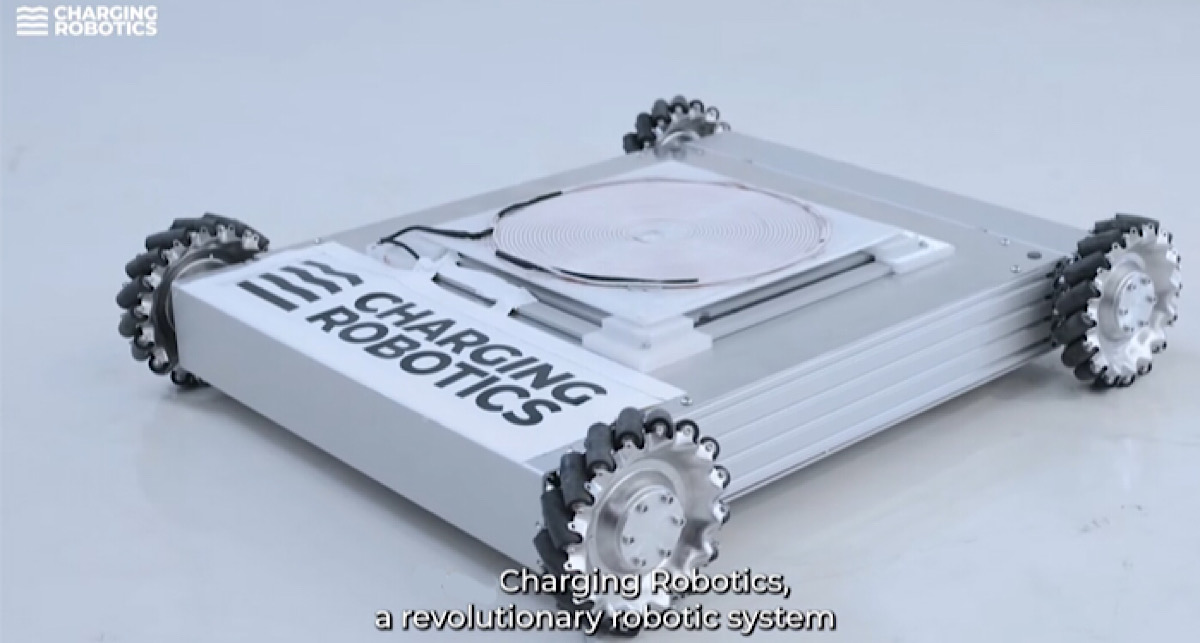
Charging Robotics to Launch Robotic EV Charging Station Pilot in Q1 2023

The service was designed to assist people with mobility difficulties. 

Charging Robotics Ltd. anticipates releasing the beta of its wireless charging robot user interface by the end of the year. The company, which is a subsidiary of Medigus, will release the software as part of a collaboration with Make My Day, which develops apps and services for electric vehicles.

Customers will be able to take advantage of Charing Robotics wireless charging service through an app developed by Make My Day. They will be able to request charging services, receive information about billing, review driving directions and analysis real-time data about the EV’s battery status, according to the companies. The app will also show customers the location of the nearby charging stations.

Based in Tel Aviv, Israel, Medigus Ltd. said it focuses on innovative growth partnerships, mainly in advanced medical solutions, digital commerce, and electric vehicle markets.

Continue reading… “Charging Robotics to Launch Robotic EV Charging Station Pilot in Q1 2023”

A self-powered ingestible sensor opens new avenues for gut research

UC San Diego Researchers develop a self-powered ingestible sensor system designed to monitor metabolites in the small intestine over time. Credit: David Ballot for the Jacobs School of Engineering, UC San Diego

By Emerson Dameron

Engineering researchers have developed a battery-free, pill-shaped ingestible biosensing system designed to provide continuous monitoring in the intestinal environment. It gives scientists the ability to monitor gut metabolites in real time, which wasn’t possible before. This feat of technological integration could unlock new understanding of intestinal metabolite composition, which significantly impacts human health overall.

The work, led by engineers at the University of California San Diego, appears in the December issue of the journal Nature Communications.

The ingestible, biofuel-driven sensor facilitates in-situ access to the small intestine, making glucose monitoring easier while generating continuous results. These measurements provide a critical component of tracking overall gastrointestinal health, a major factor in studying nutrition, diagnosing and treating various diseases, preventing obesity, and more.

“In our experiments, the battery-free biosensor technology continuously monitored glucose levels in the small intestines of pigs 14 hours after ingestion, yielding measurements every five seconds for two to five hours,” said Ernesto De La Paz Andres, a nanoengineering graduate student at UC San Diego and one of the co-first authors on the paper. “Our next step is to reduce the size of the pills from the current 2.6 cm in length so they will be easier for human subjects to swallow.”

Older methods for directly monitoring the inside of the small intestine can cause significant discomfort for patients while generating only single short data recordings of an environment that continuously changes. By contrast, this biosensor provides access to continuous data readings over time. The platform could also be used to develop new ways to study the microbiome of the small intestine. The “smart pill” approach could lead to simpler and cheaper ways to monitor the small intestine, which could lead to significant cost savings in the future. 

Continue reading… “A self-powered ingestible sensor opens new avenues for gut research”

Japan to open roads to autonomous vehicles in 2023

By Brianna Wessling

Japan’s National Policy Agency announced that it would lift a ban preventing SAE Level 4 autonomous vehicles from operating on Japanese roads. The change in policy will allow autonomous vehicles (AVs) to operate in a limited capacity in April 2023. 

The agency will announce more details on how the vehicles will be rolled out, where they’ll be available and how many will be on the roads after a public comment period scheduled to close at the end of November 2022. 

Japan hopes that it can offer mobility services using Level 4 AVs in 40 areas of the country by 2025, and in more than 100 areas by 2030. These services will likely include AVs that will be used as delivery robots or tour buses on routes in lightly populated areas. 

BOLDLY, a Tokyo-based company and subsidiary of SoftBank Corp., recently partnered with Auve Tech, an Estonian developer of autonomous shuttles, to deploy autonomous shuttles in Japan. The MiCa shuttles, which will be specifically designed for Japanese roadways, will hopefully be on roads by the end of fiscal year 2023. 

Continue reading… “Japan to open roads to autonomous vehicles in 2023”

Pantone’s 2023 Color of the Year revealed — and it’s unexpectedly bright

Written by Faith Karimi, CNN

Pantone has spoken. The color that will shape the year ahead is — drum roll, please — Viva Magenta. 

The global color authority reveals its Color of the Year every December, and its 2023 choice, announced Thursday, is a vibrant relative of the red family. 

Described as “a nuanced crimson tone” that balances warm and cool, Viva Magenta is “an unconventional shade for an unconventional time,” Pantone said in a statement unveiling its pick. 

“Powerful and empowering, it is an animated red that encourages experimentation and self-expression without restraint; an electrifying, boundaryless shade.” Pantone said of this year’s choice. Credit: Pantone

“Brave and fearless, (Viva Magenta) is a pulsating color whose exuberance promotes optimism and joy,” the statement added. “Powerful and empowering, it is an animated red that encourages experimentation and self-expression without restraint; an electrifying, boundaryless shade.” 

The company went on to describe the color as “audacious, witty and inclusive of all.”

The Pantone Color Institute’s choice is intended to reflect the latest trends across sectors including fashion, beauty, technology, design and home decor. It also serves as something of a mood ring, with shades chosen to capture the zeitgeist. 

Continue reading… “Pantone’s 2023 Color of the Year revealed — and it’s unexpectedly bright”

Epson Unveils New Moverio Augmented Reality Smart Glasses

With the introduction of the Moverio BT-45C and BT-45CS devices, Epson has unveiled its most recent line of Moverio augmented reality (AR) smart glasses. The company created these new glasses to provide smooth remote collaboration with a high-quality AR viewing experience.

The new Moverio models are designed explicitly for mission-critical tasks like troubleshooting, maintenance, inspection, and training. They support immersive, hands-free collaboration between on-site technicians and remote experts to help increase efficiency, improve safety, and decrease downtime.

“Field service is undergoing a transformation, with many businesses shifting to remote assistance and adopting immersive AR technology to help enhance work efficiency, save costs and improve workplace safety,” said Nathan Cheng, Associate Product Manager, Augmented Reality at Epson America, Inc.

The Moverio BT-45C and BT-45CS are equipped with brand-new Si-OLED technology, a binocular see-through Full HD display with a 34° field-of-view (FoV), and a proprietary optical engine to incorporate digital content with the outside world effectively. They are also compatible with a range of collaboration and remote assistance software.

The BT-45C headset may tether to several Android or Windows host devices with a USB-C interface to support numerous applications. The smart glasses are built with a rugged, robust design with better shock and dust resistance to withstand the most challenging and dynamic work environments. Epson says the smart glasses are designed for businesses working in manufacturing, automotive, field service, IT, logistics, construction, and more.

Continue reading… “Epson Unveils New Moverio Augmented Reality Smart Glasses”

Physicists Create a Wormhole Using a Quantum Computer

Researchers were able to send a signal through the open wormhole, though it’s not clear in what sense the wormhole can be said to exist.Credit: Kim Taylor/Quanta Magazine

Physicists have purportedly created the first-ever wormhole, a kind of tunnel theorized in 1935 by Albert Einstein and Nathan Rosen that leads from one place to another by passing into an extra dimension of space.

The wormhole emerged like a hologram out of quantum bits of information, or “qubits,” stored in tiny superconducting circuits. By manipulating the qubits, the physicists then sent information through the wormhole, they reported today in the journal Nature.

Continue reading… “Physicists Create a Wormhole Using a Quantum Computer”

The world’s first fully automated parking system has been approved for public use in Germany.

By Nick Flaherty

The system, with Level 4 autonomy, is in use at Stuttgart Airport for Mercedes cars and marks the start of a rollout of hundreds of systems in Germany.

The driverless parking system allows users to drop their Mercedes S-Class or EQS electric car at a drop off point after notifying an app. The system then checks that the route to a specific parking spot is clear and drives the vehicle autonomously to the correct location, wherever that might be in the parking garage.

Later, the vehicle returns to the pick-up point in exactly the same way. This relies on the interaction of the intelligent infrastructure supplied by Bosch and installed in the parking garage and Mercedes-Benz technology in the car.

The approval to SAE Level 4 is based around a fixed contained environment with known routes and clearly defined risks.

Bosch sensors in the parking garage monitor the driving corridor and its surroundings and provide the information needed to guide the vehicle. The technology in the vehicle converts the information it receives from the infrastructure into driving manoeuvres. This allows the vehicles to drive up and down ramps to move between stories in the parking garage. If the infrastructure sensors detect an obstacle, the vehicle brakes and safely comes to a complete stop. Only once the route is clear does it continue on its way.

Continue reading… “The world’s first fully automated parking system has been approved for public use in Germany.”

New Banana-Derived Therapy Is Effective Against All Known Coronaviruses and Flu Strains

According to the researchers, the therapy, H84T-BanLec, holds unique promise. They hope to start human testing soon. 

The potential therapy was derived from a banana protein.

A study published on January 13th, 2020 touted the development of a potential therapy that may be used to fight all known strains of the flu.

One week later, the first laboratory-confirmed case of SARS-CoV-2 triggered the two-and-a-half-year-long COVID-19 pandemic in the United States.

Interestingly, the worldwide research team behind the influenza report had also looked into the treatment of coronaviruses before the virus that temporarily halted their work arrived.

“At the time we thought MERS would be the big target, which we were worried about because of its 35% mortality rate,” said David Markovitz, M.D., professor of internal medicine, Division of Infectious Diseases at the University of Michigan Medical School. (MERS, or Middle Eastern Respiratory Syndrome, caused a brief outbreak in 2015 and resulted in 858 confirmed deaths.)

A study published in Cell Reports Medicine describes the effectiveness of H84T-BanLec against every coronavirus known to infect humans, including MERS, the original SARS, and SARS-CoV2, including the omicron variant. Markovitz is joined by two senior authors: Peter Hinterdorfer, Ph.D., of the Institute of Biophysics at Johannes Kepler University, and Kwok-Yung Yuen, MBBS, M.D., of the University of Hong Kong. Jasper Fuk-Woo Chan, M.D., of the University of Hong Kong, is the paper’s first author.

Continue reading… “New Banana-Derived Therapy Is Effective Against All Known Coronaviruses and Flu Strains”

Google’s Code-as-Policies Lets Robots Write Their Own Code

By Anthony Alford

Researchers from Google’s Robotics team have open-sourced Code-as-Policies(CaP), a robot control method that uses a large language model (LLM) to generate robot-control code that achieves a user-specified goal. CaP uses a hierarchical prompting technique for code generation that outperforms previous methods on the HumanEval code-generation benchmark.

The technique and experiments were described in a paper published on arXiv. CaP differs from previous attempts to use LLMs to control robots; instead of generating a sequence of high-level steps or policies to be invoked by the robot, CaP directly generates Python code for those policies. The Google team developed a set of prompting techniques that improved code-generation, including a new hierarchical prompting method. This technique achieved a new state-of-the art score of 39.8% pass@1 on the HumanEval benchmark. According to the Google team:

Code as policies is a step towards robots that can modify their behaviors and expand their capabilities accordingly. This can be enabling, but the flexibility also raises potential risks since synthesized programs (unless manually checked per runtime) may result in unintended behaviors with physical hardware. We can mitigate these risks with built-in safety checks that bound the control primitives that the system can access, but more work is needed to ensure new combinations of known primitives are equally safe. We welcome broad discussion on how to minimize these risks while maximizing the potential positive impacts towards more general-purpose robots.

Continue reading… “Google’s Code-as-Policies Lets Robots Write Their Own Code”

AI invents millions of materials that don’t yet exist

Artistic image of a graphene bolometer controlled by electric field

By Anthony Cuthbertson

‘Transformative tool’ is already being used in the hunt for more energy-dense electrodes for lithium-ion batteries.

Scientists have developed an artificial intelligence algorithm capable of predicting the structure and properties of more than 31 million materials that do not yet exist.

The AI tool, named M3GNet, could lead to the discovery of new materials with exceptional properties, according to the team from the University of California San Diego who created it.

M3GNet was able to populate a vast database of yet-to-be-synthesized materials instantaneously, which the engineers are already using in their hunt for more energy-dense electrodes for lithium-ion batteries used in everything from smartphones to electric cars.

The matterverse.ai database and the M3GNet algorithm could potentially expand the exploration space for materials by orders of magnitude.

UC San Diego nanoengineering professor Shyue Ping Ong described M3GNet as “an AlphaFold for materials”, referring to the breakthrough AI algorithm built by Google’s DeepMind that can predict protein structures.

“Similar to proteins, we need to know the structure of a material to predict its properties,” said Professor Ong.

“We truly believe that the M3GNet architecture is a transformative tool that can greatly expand our ability to explore new material chemistries and structures.”

Continue reading… “AI invents millions of materials that don’t yet exist”
Discover the Hidden Patterns of Tomorrow with Futurist Thomas Frey
Unlock Your Potential, Ignite Your Success.

By delving into the futuring techniques of Futurist Thomas Frey, you’ll embark on an enlightening journey.

Learn More about this exciting program.