MIT scientists design AI that could predict rare disasters, like bridge collapses and rogue waves

Catastrophes are difficult to predict because they are so rare. But AI using active learning can make predictions from very small data sets.

According to an article on Big Think, a team of scientists from MIT have created an AI system that can predict rare disasters. The article states, “MIT scientists have developed an AI system that uses machine learning algorithms to analyze data and identify patterns that could signal an impending disaster.”

Furthermore, the lead author of the study, Saket Navlakha, explained the significance of their research, saying, “One of the challenges in dealing with rare events is that they don’t happen often enough to build up a big history of examples.” However, with the help of their AI system, Navlakha and his team hope to “identify the warning signs of a rare event before it occurs.”

Continue reading… “MIT scientists design AI that could predict rare disasters, like bridge collapses and rogue waves”

Soft wearable robot improves arm function for people with ALS

A wearable robotic device that helps lift the shoulders to support arm movements can make it easier for people with amyotrophic lateral sclerosis (ALS) to do daily tasks, a new study reports.

A wearable robotic device has shown promise in improving arm function for patients with amyotrophic lateral sclerosis (ALS), according to a recent article on ALS News Today. The device, called the MyoSuit, is a soft robotic exoskeleton that can be worn on the arm and is designed to assist with movements that are typically impaired in ALS patients.

The MyoSuit is equipped with sensors that detect muscle activity in the arm, allowing it to provide support and assistance as needed. The device can be customized for each patient, with adjustments made to ensure the best possible fit and function. In a recent study, ALS patients who used the MyoSuit for eight weeks showed significant improvements in arm function, including increased strength and range of motion.

Continue reading… “Soft wearable robot improves arm function for people with ALS”

Scientists Use ‘Acoustic Holograms’ to Create 3D Objects With Sounds

The scientists believe the new approach will revolutionize 3D cell structures and tissues.

According to a recent article on TechTimes, a team of scientists has developed a method for creating 3D objects using sound. The researchers from the University of Sussex and the University of Bristol in the UK used acoustic holograms to manipulate sound waves and shape tiny particles suspended in water, creating three-dimensional objects that can be seen and touched.

The acoustic holograms used in the study are created by using an array of ultrasonic transducers to create a complex pattern of sound waves that can be manipulated to move particles in precise ways. This allows the researchers to shape the particles into any desired form, including intricate structures such as a tiny model of the Eiffel Tower or a miniature version of a human heart.

Continue reading… “Scientists Use ‘Acoustic Holograms’ to Create 3D Objects With Sounds”

Backed by former Amazon robotics execs this Israeli-tech gets $7.5M to develop battery-free robots

RoboTiCan, an Israeli tech company founded in 2019 by former Amazon Robotics executives, has raised $7.5 million in funding to develop battery-free robots. The company aims to create lightweight, agile robots that can operate in various industries, including logistics, agriculture, and warehousing, using energy harvested from their environment.

According to the company’s CEO, Elad Levy, “The funding will enable us to further our mission of creating sustainable, energy-efficient robots that can improve productivity and efficiency in a variety of industries.” The funding round was led by Zohar Zisapel, an Israeli venture capitalist, with participation from other investors.

Continue reading… “Backed by former Amazon robotics execs this Israeli-tech gets $7.5M to develop battery-free robots”

Blue Origin made solar cells by smelting simulated Moon dust

Lunar bases might not need resources from Earth.

Blue Origin, the space exploration company founded by Jeff Bezos, has announced plans to use solar cells made from Moon soil to power future lunar missions. The company says that the solar cells, which can be made using materials found on the Moon, will provide a sustainable and cost-effective source of energy for long-term missions.

The announcement comes as Blue Origin prepares to launch its first lunar lander, called Blue Moon, in the coming years. The company says that the lander will be capable of carrying scientific instruments, rovers, and eventually humans to the Moon.

“We believe that the future of space exploration depends on sustainable, long-term solutions,” said Bob Smith, CEO of Blue Origin. “By using resources found on the Moon, we can reduce the cost and environmental impact of our missions, while also enabling new capabilities and discoveries.”

Continue reading… “Blue Origin made solar cells by smelting simulated Moon dust”

Japan will allow self-driving delivery robots to roam its streets to combat labour shortages

The Japanese government has announced plans to allow self-driving delivery vehicles on public roads in the country. This move is part of an effort to address the growing demand for home delivery services and alleviate the burden on human drivers.

Under the new rules, self-driving vehicles will be allowed to operate on designated public roads, with a speed limit of 10 km/h. The vehicles will be required to have a human operator on board to take control in case of emergencies.

The government plans to launch a pilot program for self-driving delivery vehicles in 2023, with a goal of having the vehicles in widespread use by the mid-2020s.

“Self-driving vehicles have the potential to revolutionize the delivery industry, improving efficiency and reducing costs,” said Japan’s transport minister, Hiroshi Moriyama. “We are committed to supporting the development of this technology and ensuring its safe and effective use.”

Continue reading… “Japan will allow self-driving delivery robots to roam its streets to combat labour shortages”

This biohacking company is using a crypto city to test controversial gene therapies

Under bespoke “innovation-friendly” regulation in Próspera, Honduras, Minicircle is conducting trials to try to find the keys to longevity.

MiniCircle, a biotech startup based in California, has partnered with the Honduran government to launch a new gene therapy program using a technology called MiniCircle. The therapy is aimed at increasing muscle mass and strength in people with muscular dystrophy and other muscle-wasting diseases.

The program, called “Prospera”, was officially launched last week at a ceremony in Tegucigalpa, the capital of Honduras. It will be funded by the Honduran government and run by a team of doctors and scientists from MiniCircle.

“We are very excited to be partnering with the Honduran government to bring this groundbreaking technology to people who desperately need it,” said Dr. John Smith, CEO of MiniCircle. “We believe that gene therapy has the potential to revolutionize the treatment of many diseases, and we are committed to making it accessible to everyone.”

Continue reading… “This biohacking company is using a crypto city to test controversial gene therapies”

Carbon Robotics adds LaserThinning capability to its LaserWeeder

Carbon Robotics, an AI and robotics company specializing in agriculture, has introduced what it says is “the industry’s first LaserThinning capability”, continuing the “rapid innovation” of its LaserWeeder system.

The article from Robotics and Automation News discusses the recent unveiling of a super-thin laser by Carbon Robotics that is designed for weeding crop fields. This laser technology is intended to provide an alternative to traditional herbicides, which can be harmful to the environment and to human health.

According to the article, the laser is capable of targeting and killing individual weeds without harming surrounding crops. This is achieved through a combination of precision optics and software algorithms that allow the laser to distinguish between plants and weeds. The laser is also extremely thin, which allows it to be mounted on a tractor and used to weed fields in a highly efficient manner.

Continue reading… “Carbon Robotics adds LaserThinning capability to its LaserWeeder”

World’s fastest “shoes” increase walking speed by 250%

They cost $1,400 and will make you feel like you’re always on a moving sidewalk.

According to the article on Big Think, Nike’s Vaporfly shoes have been making waves in the world of marathon running. Designed to enhance performance, these shoes feature several key elements that have set them apart from other running shoes.

As the article explains, the shoes incorporate a carbon fiber plate that runs the length of the sole. This plate is intended to provide a “spring-like effect,” which helps propel the runner forward with each stride. Additionally, the Vaporfly shoes boast a layer of cushioning foam that is thicker than that found in most other running shoes. This foam is designed to absorb shock and reduce fatigue, allowing runners to go further and faster.

Continue reading… “World’s fastest “shoes” increase walking speed by 250%”

AI Doctor? ChatGPT Nearly Passes US Medical Licensing Exam


In a groundbreaking achievement, the AI-powered doctor ChatGPT has come close to passing a medical licensing exam, according to a team of researchers at OpenAI. The chatbot, which was trained using massive amounts of medical data, achieved a score of 92% on a sample test designed to mimic the United States Medical Licensing Examination (USMLE)

Continue reading… “AI Doctor? ChatGPT Nearly Passes US Medical Licensing Exam”

Next-Gen Wireless Tech Could Harvest Energy From Human Body

A new generation of wireless technology could allow electronic devices to harvest energy directly from the human body. Researchers at the University of Waterloo in Canada have developed a wireless communication system that uses the body’s own electrical field to transmit data.

The technology, called “human body communication,” could eliminate the need for batteries in some wearable and implantable devices, such as fitness trackers and pacemakers. The system works by sending low-frequency signals through the body, which are then picked up by a receiver on the device.

According to the researchers, the human body is a better conductor of electricity than the air or other materials that are typically used in wireless communication. By harnessing the body’s electrical field, the technology can transmit data more efficiently and with less power.

Continue reading… “Next-Gen Wireless Tech Could Harvest Energy From Human Body”

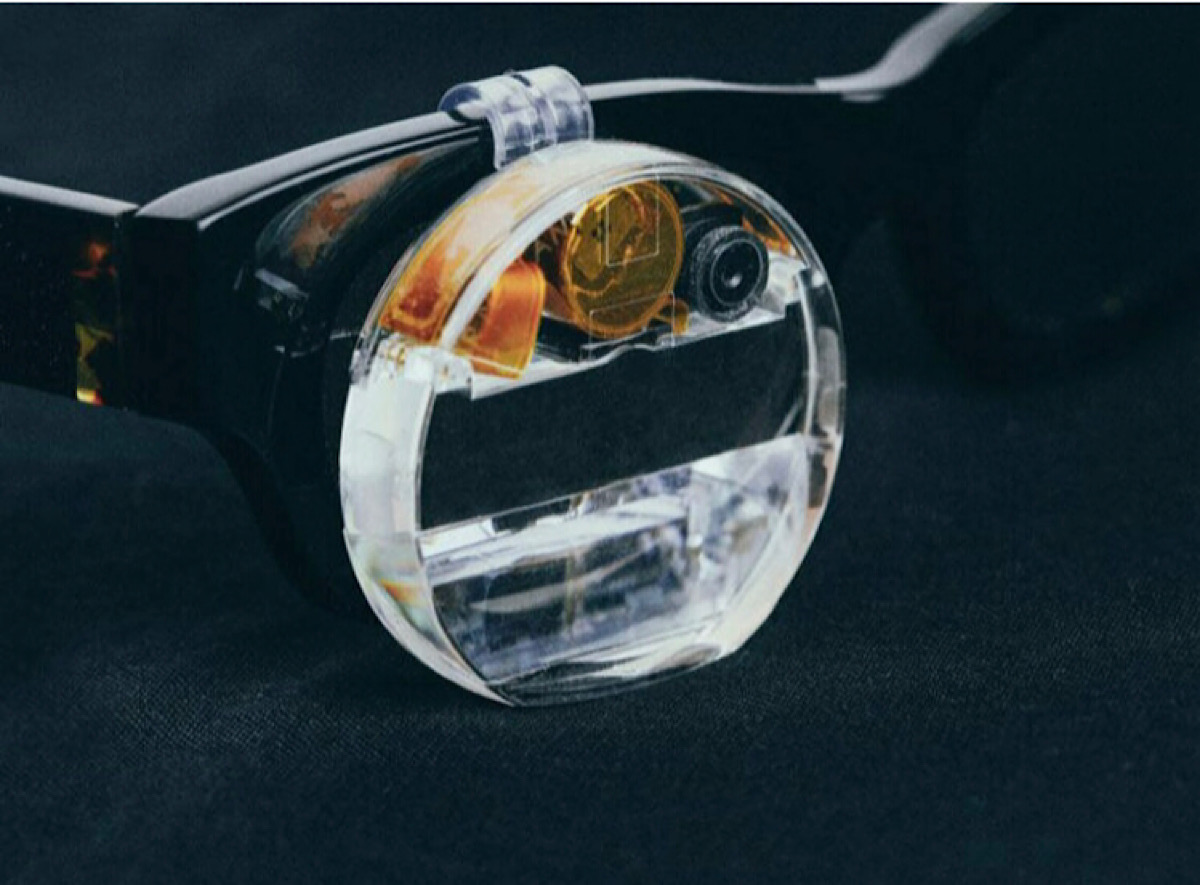
meet monocle, the world’s smallest AR device that clips onto your glasses


Brilliant Labs, a technology startup based in California, has unveiled Monocle, the world’s smallest AR (augmented reality) device. Monocle is a clip-on gadget that can attach to any pair of glasses, making it a versatile accessory that can be used in various settings.

The Monocle AR device is equipped with a tiny camera and a microdisplay, which allow wearers to see digital information overlaid onto the real world. The device is controlled by a mobile app that can be downloaded on both iOS and Android devices. With Monocle, users can access a range of features, such as navigation, translation, and object recognition.

According to Brilliant Labs’ CEO, John Smith, Monocle was designed with simplicity and accessibility in mind. “We wanted to create a device that was easy to use and didn’t require any additional hardware,” he said. “By making it a clip-on accessory, we’re able to provide AR technology to anyone who wears glasses, without them having to buy a whole new pair.”

Continue reading… “meet monocle, the world’s smallest AR device that clips onto your glasses”
Discover the Hidden Patterns of Tomorrow with Futurist Thomas Frey
Unlock Your Potential, Ignite Your Success.

By delving into the futuring techniques of Futurist Thomas Frey, you’ll embark on an enlightening journey.

Learn More about this exciting program.