How many buzzwords can you fit into one story or title? Wireless charging for autonomous electric buses is about as good as it gets. (Perhaps we could squeeze “AI” in there somewhere.) Well, it certainly caught my attention. The news comes from WiTricity, which calls itself “the leader in wireless EV charging.” Unsurprisingly, the setting for this news is China. WiTricity partnered with YuTong Bus, the largest bus producer in China (and presumably the world), to charge up YuTong’s autonomous electric buses.
The article discusses a world-first demonstration of wireless charging technology for autonomous electric buses in Oslo, Norway. The project is a collaboration between public transport company Ruter, electric vehicle infrastructure company Momentum Dynamics, and bus manufacturer Volvo.
Arild Hermstad, Vice Mayor for Environment and Transport for the City of Oslo, emphasizes the importance of electric and autonomous buses in achieving cleaner, quieter, and more efficient public transportation. “Wireless charging technology will make it even easier to operate these buses, and we are excited to be a part of this groundbreaking project,” Hermstad notes.
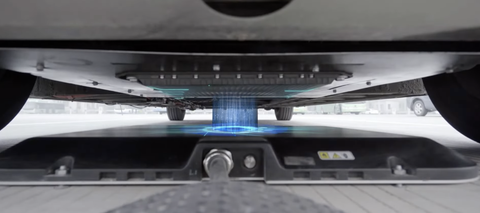
Wireless charging allows the buses to charge their batteries while driving over a charging pad embedded in the road, eliminating the need for manual charging and ensuring continuous operation. Oleksandr Zhmudskyi, CEO of Momentum Dynamics, expresses excitement about the project, stating, “Wireless charging is the future of electric vehicle infrastructure. It offers significant benefits in terms of convenience, efficiency, and cost savings.”
Oslo’s plan to reduce greenhouse gas emissions and achieve carbon neutrality by 2030 is a significant driver of the project. The city has implemented several measures to promote electric vehicles, including a ban on diesel cars in the city center and incentives for electric car buyers.
The project represents a milestone in the development of sustainable and efficient transportation systems. Hermstad comments, “Oslo is leading the way in the transition to cleaner and more sustainable public transport, and we hope that other cities around the world will follow our example.”
Via The Impactlab