Author: admin

GM and CATL Unveil Groundbreaking 6C Fast-Charging EV Battery

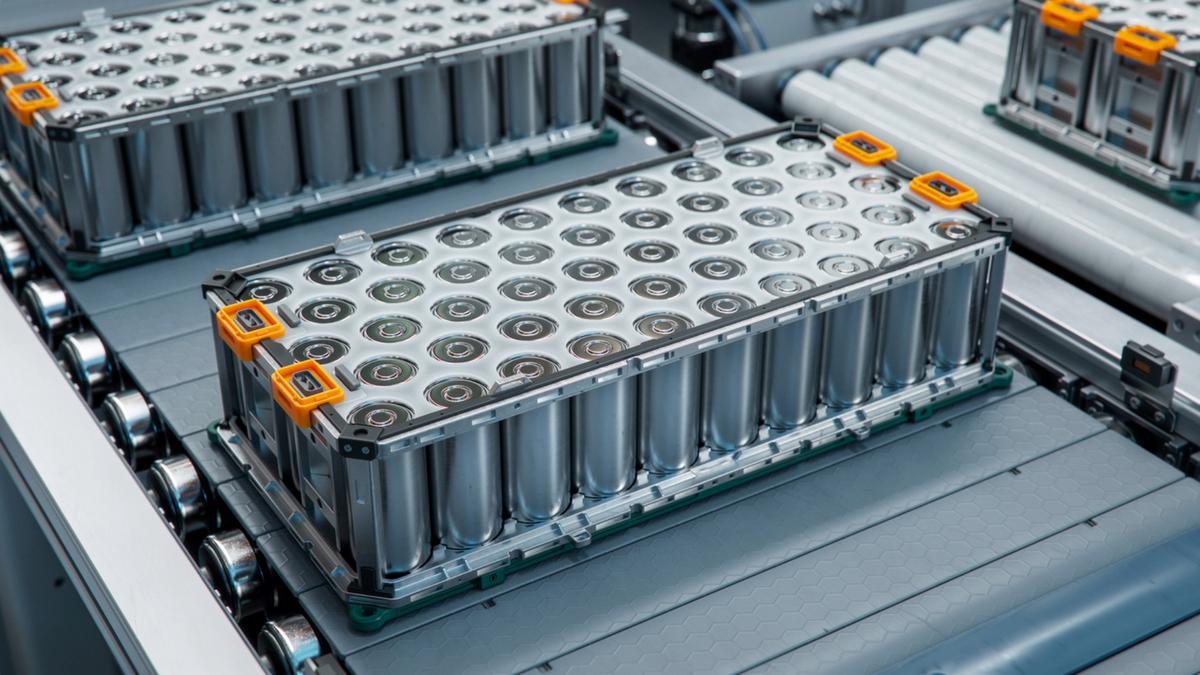
The competition to lead the electric vehicle (EV) market is intensifying, with charging speed emerging as a key factor. General Motors (GM) and its Chinese partner CATL have taken a significant step forward by introducing the fastest-charging EV battery to date.

This new battery, based on lithium iron phosphate (LFP) chemistry, boasts an impressive 6C ultra-fast charging capability. The “C” rating refers to a battery’s charging speed, and the 6C battery can fully charge in just 10 minutes, or “one-sixth of an hour,” according to the CnEV post.

Continue reading… “GM and CATL Unveil Groundbreaking 6C Fast-Charging EV Battery”

CRRC Unveils Powerful 20MW Wind Turbine for Offshore Market

Chinese state-owned manufacturer CRRC has revealed its plans to launch a 20MW wind turbine, one of the most powerful in the industry, aimed at the floating wind market. This groundbreaking model is designed to optimize the development of deep-water offshore wind resources, generating 40 kWh of electricity per rotation at full load wind speed.

The announcement was made at the WindEnergy Hamburg conference in Germany, where CRRC also showcased its latest advancements in wind turbine technology, supply chain management for wind power components, and integrated wind-solar-hydrogen-storage systems.

Continue reading… “CRRC Unveils Powerful 20MW Wind Turbine for Offshore Market”

MIT Develops 3D-Printed Glass Bricks for Sustainable Construction

Researchers at MIT have successfully created durable, interlocking glass bricks using 3D printing technology. These reusable bricks, which can withstand loads similar to concrete blocks, offer a promising sustainable alternative for future construction.

The engineers behind this innovation aim to promote a circular construction process by using recycled glass. The glass can be reshaped or repurposed at the end of a building’s life cycle, significantly reducing waste. In the future, these 3D-printed glass blocks could be used for building facades or interior walls, offering an eco-friendly substitute for traditional concrete.

Continue reading… “MIT Develops 3D-Printed Glass Bricks for Sustainable Construction”

Revolutionary Knee Exoskeletons: Enhancing Workplace Safety and Reducing Fatigue

Researchers at the University of Michigan have developed a groundbreaking set of knee exoskeletons, designed using commercially available knee braces and drone motors, which have shown remarkable effectiveness in reducing fatigue during lifting and carrying tasks. These exoskeletons not only help users maintain proper posture while lifting, even when fatigued, but also play a key role in preventing job-related injuries by promoting better lifting techniques.

Robert Gregg, a professor of robotics at U-M and the lead author of the study published in Science Robotics, explained the innovative approach: “Rather than directly bracing the back and giving up on proper lifting form, we strengthen the legs to maintain it. This differs from what’s more commonly done in industry.”

Continue reading… “Revolutionary Knee Exoskeletons: Enhancing Workplace Safety and Reducing Fatigue”

WaveAntenna: Turning Windows into 5G Base Stations

A revolutionary glass antenna, developed by Japanese company AGC in partnership with telecom giant NTT Docomo, has the potential to transform how 5G networks are deployed. Dubbed “WaveAntenna,” this innovative device can turn glass windows into 5G base stations, expanding network coverage in urban areas without the need for more towers.

Despite the ongoing roll-out of 5G for over four years, its coverage still lags behind 4G. The reason for this lies in the same technology that makes 5G faster—the higher frequency bands in the 24-100 GHz range. While these high frequencies reduce latency and boost speed, they have a shorter range compared to the lower frequencies used in 4G. As a result, 5G networks require a greater number of base stations to cover the same area as 4G, especially in densely populated urban environments where installing more towers is costly and complicated.

Continue reading… “WaveAntenna: Turning Windows into 5G Base Stations”

Amnovis Revolutionizes 3D Printing with Heat Treatment-Free Titanium Implants

Traditionally, 3D-printed titanium implants undergo post-production heat treatment to enhance material properties. However, Amnovis has pioneered a proprietary process that eliminates the need for this additional step, setting a new standard in the industry.

Ruben Wauthle, CEO and Co-founder of Amnovis, explained, “We developed and validated a proprietary process for pure titanium that requires no heat treatment. This unique innovation allows us to deliver faster, more cost-effective solutions for our customers while maintaining the highest quality standards.”

Continue reading… “Amnovis Revolutionizes 3D Printing with Heat Treatment-Free Titanium Implants”

Revolutionary Battery Technology Set to Transform Electric Vehicles

In the rapidly evolving electric vehicle (EV) industry, a groundbreaking innovation in battery technology is poised to dramatically enhance energy storage capacity. This breakthrough comes at a critical time, as the global shift toward EVs accelerates, making it the perfect moment for a transformative leap forward. Researchers at Pohang University of Science & Technology (POSTECH) have unveiled a new technique that boosts the energy storage capacity of batteries by an impressive tenfold. This advancement has the potential to revolutionize not just EVs, but the entire energy storage landscape.

A battery’s performance hinges on the efficiency of its anode, the component that stores energy during charging and releases it when in use. In most modern lithium-ion batteries, graphite is the material commonly used for anodes. However, silicon is emerging as a superior alternative due to its significantly higher energy capacity. The challenge with silicon, however, is its tendency to expand during battery reactions, compromising both the stability and safety of the battery.

Continue reading… “Revolutionary Battery Technology Set to Transform Electric Vehicles”

New Study Develops Models to Better Manage Pain During Surgery

The management of a patient’s subconscious pain response, known as “nociception,” during surgery can significantly impact the intensity of post-operative side effects and the need for further pain management. However, measuring pain is inherently subjective—especially when patients are unconscious.

In a groundbreaking study, researchers from MIT and Massachusetts General Hospital (MGH) have developed a set of statistical models to objectively quantify nociception during surgery. The findings, published in the Proceedings of the National Academy of Sciences, aim to assist anesthesiologists in optimizing drug dosages and minimizing post-operative pain and side effects.

Continue reading… “New Study Develops Models to Better Manage Pain During Surgery”

Drones Revolutionize Air Freight and Connectivity for Remote Areas

When Svilen and Konstantin Rangelov founded Dronamics in 2014 in Bulgaria, they aimed to revolutionize cargo deliveries across Europe. Their vision was to democratize next-day deliveries, ensuring even the remotest regions were connected to reliable, affordable air freight services.

The Rangelov brothers identified a significant gap in global trade: the lack of rapid, reliable cargo transportation to inaccessible areas. They believed drone technology could fill this void. “We set out to build a next-generation cargo aircraft to accelerate trade and enable same-day delivery for everyone, everywhere,” said Konstantin Rangelov, an aerospace engineer passionate about drones.

Continue reading… “Drones Revolutionize Air Freight and Connectivity for Remote Areas”

Revolutionizing Energy Harvesting: New Organic Thermoelectric Device Works at Room Temperature

A groundbreaking organic thermoelectric device has been developed, capable of generating energy at room temperature without requiring a temperature gradient. This innovation, which utilizes the unique properties of organic compounds, could transform energy harvesting methods, making it possible to efficiently capture energy from ambient temperatures. The team’s findings were published on September 19 in Nature Communications.

Thermoelectric devices are known for their ability to convert heat into electricity when a temperature gradient exists. These devices have gained attention for their potential to capture waste heat from industrial processes and energy systems. The most well-known applications of thermoelectric generators include powering space probes, such as NASA’s Mars Curiosity rover and Voyager probe, where heat from radioactive isotopes creates the temperature gradient needed to generate electricity. However, the widespread use of these devices has been limited by high production costs, hazardous materials, low energy efficiency, and the requirement for elevated temperatures.

Continue reading… “Revolutionizing Energy Harvesting: New Organic Thermoelectric Device Works at Room Temperature”

e-con Systems Unveils Cutting-Edge Camera Solutions for Robotics at VISION 2024

Cameras are rapidly advancing for various robotics applications, and e-con Systems is at the forefront of this technological evolution. At the upcoming VISION 2024 event in Stuttgart, Germany, the company will showcase its latest camera systems, designed to optimize performance across industries such as agriculture, medical, retail, industrial, and smart cities.

Since 2003, e-con Systems has been designing, developing, and manufacturing OEM cameras tailored to specific industry needs. Its diverse portfolio includes time-of-flight (ToF) cameras, MIPI camera modules, GMSL cameras, USB 3.1 Gen 1 cameras, stereo cameras, GigE cameras, and low-light cameras. These advanced systems are embedded in over 350 customer products worldwide.

Continue reading… “e-con Systems Unveils Cutting-Edge Camera Solutions for Robotics at VISION 2024”

Revolutionary Origami Sensors Detect Disease in Wastewater Using Mobile Phones

Scientists at Cranfield University have developed an innovative, low-cost method for detecting disease biomarkers in wastewater using origami-paper sensors. These sensors, which can be analyzed with a simple mobile phone camera, promise to transform public health strategies, particularly in response to pandemics.

“This method is evidence-based, simple, and cheap, without needing to take samples from individuals,” said Zhugen Yang, Professor of Biosensing and Environmental Health at Cranfield University and lead author of the study. “Testing one sample will cover many people’s information in the population, making it easier to understand infectious disease trends and improve prevention methods.”

Continue reading… “Revolutionary Origami Sensors Detect Disease in Wastewater Using Mobile Phones”
Discover the Hidden Patterns of Tomorrow with Futurist Thomas Frey
Unlock Your Potential, Ignite Your Success.

By delving into the futuring techniques of Futurist Thomas Frey, you’ll embark on an enlightening journey.

Learn More about this exciting program.