Author: admin

SOLARCYCLE Unveils $300 Million Solar Panel Recycling Plant to Boost Sustainability and Create Jobs in Georgia

SOLARCYCLE is making major strides in advancing solar sustainability with the launch of a new state-of-the-art recycling facility in Cedartown, Georgia. The facility, set to become operational by mid-2025, will have the capacity to recycle up to 10 million solar panels annually—equivalent to 2 million panels in its first year, with plans for expansion as demand for end-of-life solar solutions continues to rise.

This ambitious project is designed to address the growing need for responsible disposal and recycling as millions of solar panels installed over the past decade approach the end of their life cycle. The facility is a key part of SOLARCYCLE’s vision to provide an efficient, circular solution for solar energy waste, ensuring that valuable materials from retired panels are recovered and reused.

Continue reading… “SOLARCYCLE Unveils $300 Million Solar Panel Recycling Plant to Boost Sustainability and Create Jobs in Georgia”

Rwanda Researchers Discover Tree Species That Could Provide Clean Electricity for Rural Communities

Scientists from the Rwanda Forestry Authority have identified two types of trees that hold the potential to generate clean electricity, offering a sustainable energy solution for remote communities. This discovery could play a key role in Rwanda’s goal of achieving universal electricity access by 2030.

Despite significant progress in electrification, rural areas in Rwanda continue to face challenges with limited access to power. In response, researchers are exploring ways to produce electricity from biomass derived from sustainably cultivated plants. They are studying the energy potential of various tree species to find alternatives to conventional energy sources.

Continue reading… “Rwanda Researchers Discover Tree Species That Could Provide Clean Electricity for Rural Communities”

Flippy’s Future: Can Robots Revolutionize Fast-Food Kitchens?

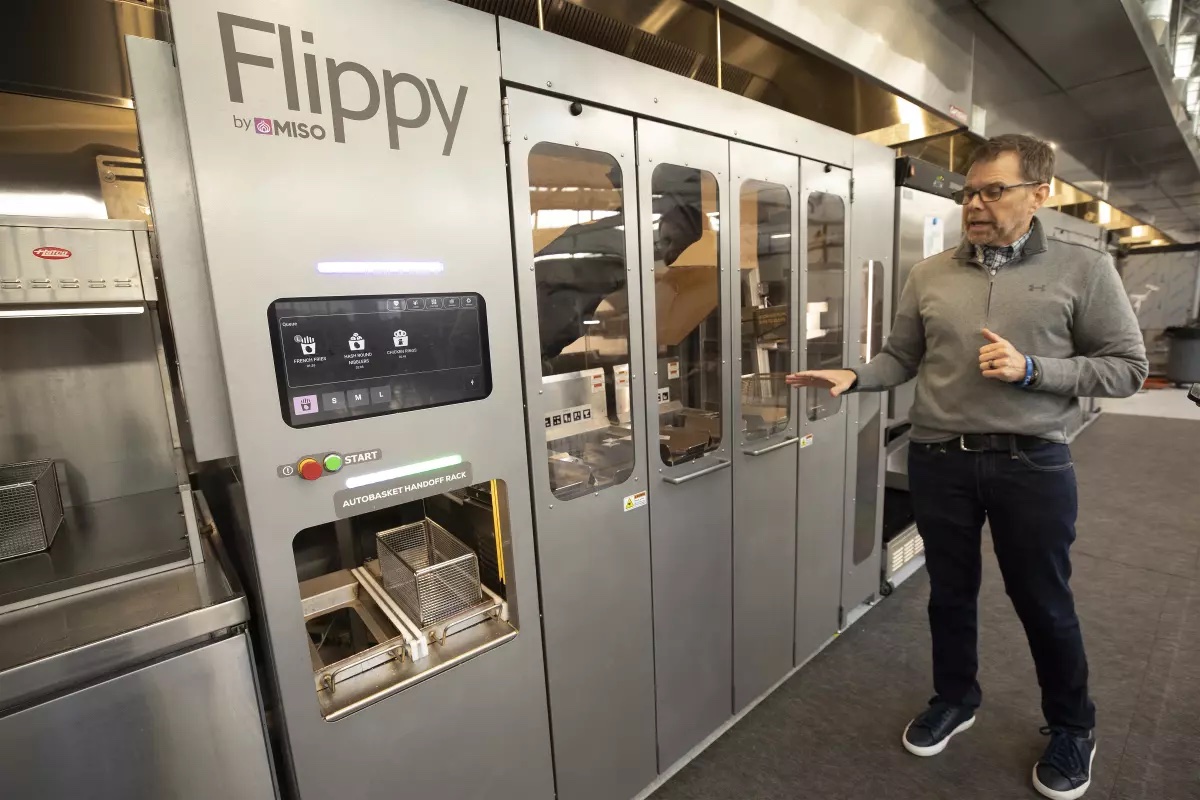
Inside Miso Robotics’ lab in downtown Pasadena, a collection of robots that once seemed like science fiction come to life lines the workbenches. Among them are Sippy, Chippy, and Drippy—robots designed to handle various kitchen tasks. But it’s Flippy, the latest innovation, that steals the spotlight. This robotic arm, designed to fry French fries and chicken nuggets at lightning speed, could change the future of fast food.

With the restaurant industry facing rising labor costs, including increases in minimum wage, Miso Robotics is betting big on automation. Fast-food chains, burdened by higher wages and employee turnover, are increasingly looking for ways to cut costs, streamline operations, and improve consistency. Flippy, which can process more than 100 baskets of fries per hour, is at the heart of this push. Compared to the roughly 70 baskets an average employee can manage in the same time, Flippy is not just faster—it’s also safer, sparing workers from the dangers of hot oil and grease slips.

Continue reading… “Flippy’s Future: Can Robots Revolutionize Fast-Food Kitchens?”

Concrete’s Carbon Dilemma: Building the Future of Data Centers While Tackling Climate Change

Along a dusty country road leading to ATL4, a massive new data center under construction east of Atlanta, the sight of dozens of cars and pickups parked haphazardly on narrow dirt shoulders is common. The out-of-state license plates are a clear sign of the skilled tradespeople from across the country who have descended on the site for one of the largest construction projects in the area. With the global battle for artificial intelligence (AI) dominance driving tech companies, utilities, and governments to invest upwards of US $1 trillion into capital expansion, data centers have become the critical infrastructure underpinning this competition. In this new era, data centers serve as the bunkers, factories, and laboratories of AI, powered by a seemingly insatiable need for concrete and electricity.

At first glance, the data industry might appear to be intangible, with its products existing as weightless bits and bytes. But standing next to the bustling construction site for DataBank’s ATL4, the enormity of the physical labor and materials involved is striking. The most prominent material in sight? Concrete—poured, pre-fabricated, and stacked in vast quantities. Big data is, quite literally, big concrete. And this poses a major challenge: concrete’s heavy environmental toll.

Continue reading… “Concrete’s Carbon Dilemma: Building the Future of Data Centers While Tackling Climate Change”

The Quantum Leap: Why Tech Giants are Betting on Quantum Computing’s Future

Quantum computing has long been the stuff of science fiction, but today it is a rapidly developing field that has attracted billions of dollars in investment from major technology companies like Google, IBM, and a host of well-funded startups. Despite the technology being years away from practical use, the potential of quantum computers to revolutionize industries from chemistry to machine learning has experts and investors alike convinced that it’s a game-changer.

The concept of building a computer based on the principles of quantum mechanics has been around since the 1980s. However, it’s only in the last few decades that scientists have made significant strides in developing large-scale quantum devices. Now, major tech players are investing heavily to accelerate the development of quantum computing.

Continue reading… “The Quantum Leap: Why Tech Giants are Betting on Quantum Computing’s Future”

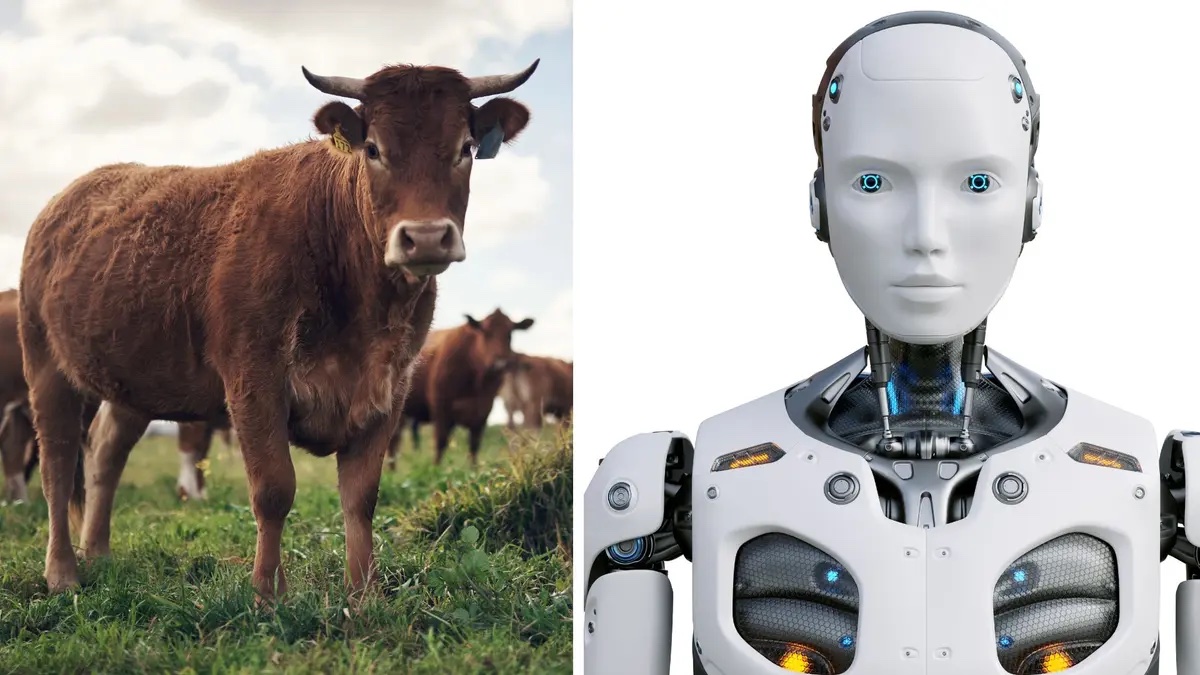
Virtual Cattle Herding Game Sheds Light on Human Navigation and Decision-Making

A virtual cattle herding game has offered researchers new insights into how people make decisions regarding movement and navigation. This unique study examined how dynamical perceptual-motor primitives (DPMPs)—basic movement models that simulate natural human behaviors—can be used to replicate human decision-making in navigation. Findings showed that a simple DPMP model was able to match nearly 80 percent of participants’ movement paths and predict their choices effectively, potentially benefiting AI and robotic navigation systems.

The research, conducted by a collaboration between Macquarie University in Australia, Scuola Superiore Meridionale, the University of Naples Federico II, the University of Bologna in Italy, and University College London, focused on real-time decision-making that mirrors everyday navigation challenges, like navigating crowded spaces or pursuing moving objects. Traditionally, navigation models rely on cognitive mapping, but this study supports a theory that human movement is less about complex planning and more about adapting to real-time influences from goals and obstacles.

Continue reading… “Virtual Cattle Herding Game Sheds Light on Human Navigation and Decision-Making”

China Unveils Record-Breaking Tunnel-Boring Machine for Massive Yangtze River Project

China has completed production on its largest-ever tunnel-boring machine (TBM), named Jianghai, meaning “river and ocean” in Chinese. This giant machine measures 16.64 meters (54.5 feet) in diameter and spans 475 feet (145 meters) in length, weighing approximately 5,000 metric tons (11 million pounds). Built through a partnership between China Railway Construction Heavy Industry (CRCHI) and China Railway 14th Bureau Group, Jianghai is the most massive TBM developed domestically in China to date.

The new TBM is set to tackle a challenging tunneling project beneath the Yangtze River in Jiangsu Province. The machine will bore a tunnel linking Nantong and Suzhou, a key section of a planned 24-mile (39-kilometer) highway scheduled for completion by 2028. At a depth of up to 246 feet (75 meters), the tunnel will extend roughly 7 miles (11.2 kilometers) under the Yangtze River. Due to the difficult terrain, which includes soft soil, underground water, and silt, traditional manual tunneling is unfeasible. Instead, Jianghai will proceed at a daily pace of 12 to 16 meters (39 to 52 feet), with the entire tunneling phase expected to last two and a half years. Precision is crucial for the project; to protect nearby river dams, the TBM’s path must stay within 1 centimeter (0.4 inches) of specifications.

Continue reading… “China Unveils Record-Breaking Tunnel-Boring Machine for Massive Yangtze River Project”

New “Nervous System” Technology Could Extend Drone Flight Time and Reduce Maintenance

Scientists at the University of Southampton have developed a groundbreaking drone technology that mimics a nervous system, enabling drones to stay operational longer while reducing maintenance needs. This innovative system uses advanced optical fibers that continuously monitor the drone’s structural integrity, effectively reducing the frequency of required inspections and boosting operational efficiency.

One of the key benefits of this optical fiber system is its ability to monitor stresses and strains on the drone in real time, similar to how a nervous system functions in the human body. Dr. Holmes from the university’s Optoelectronics Research Centre explained, “This is a kind of nervous system for drones. It sends back real-time information using light – rather than electricity – avoiding the interference issues common with electronic systems.”

Continue reading… “New “Nervous System” Technology Could Extend Drone Flight Time and Reduce Maintenance”

New Findings in Magnetism of Kagome Magnets Could Propel Quantum Computing and Superconductor Technologies

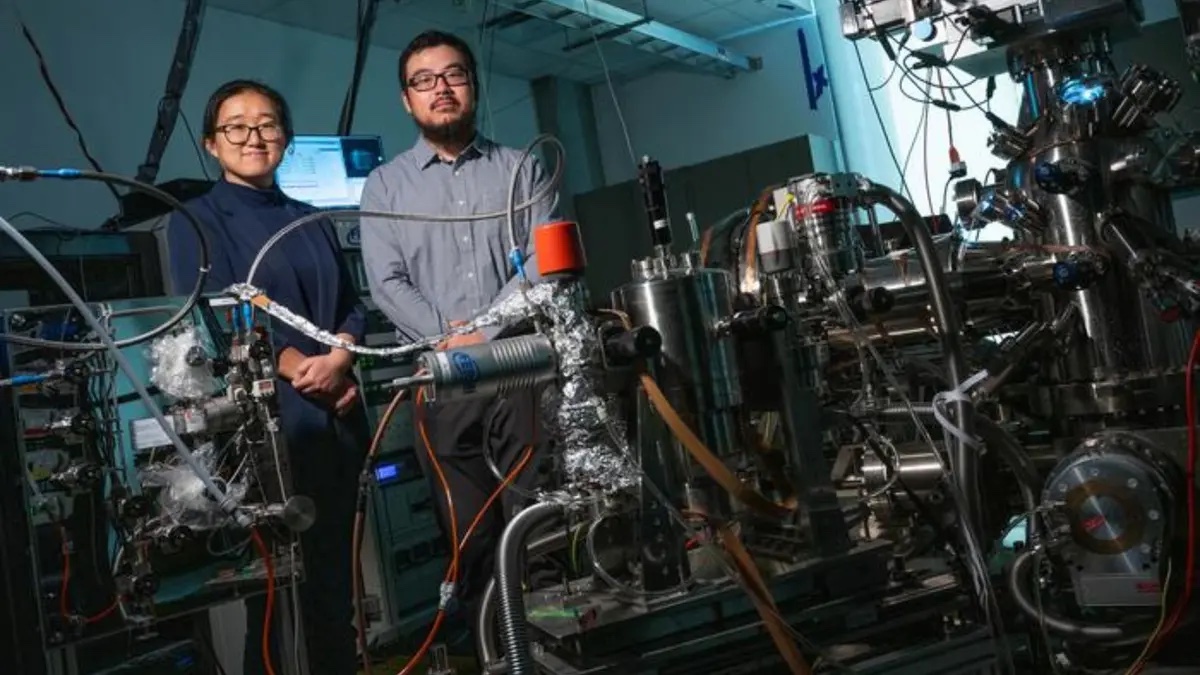
Researchers at Rice University have unveiled groundbreaking insights into magnetism and electronic interactions within advanced materials, potentially revolutionizing fields like quantum computing and high-temperature superconductors. Their study of iron-tin (FeSn) thin films has shifted the understanding of kagome magnets, which are structured in a pattern inspired by traditional Japanese basket weaving. The team discovered that FeSn’s magnetic properties are driven by localized electrons, rather than the previously believed mobile electrons—a revelation that could alter how scientists approach materials in quantum technology.

Despite these advancements, challenges remain in observing magnetic splitting at higher temperatures in kagome magnets. However, in a key development, the team was able to create high-quality FeSn thin films and analyze their electronic structure using a combination of molecular beam epitaxy and angle-resolved photoemission spectroscopy. Their findings showed that the kagome flat bands remained split even at elevated temperatures, a sign that localized electrons drive the material’s magnetic properties. This discovery underscores the complex role electron correlation plays in shaping magnetic behaviors in kagome structures.

Continue reading… “New Findings in Magnetism of Kagome Magnets Could Propel Quantum Computing and Superconductor Technologies”

New Algorithm Promises to Slash AI’s Soaring Energy Consumption by 95%

The rapid rise of artificial intelligence has sparked transformative advances across industries, but it has also introduced a major challenge: energy consumption. As more companies integrate AI technologies, the energy demands of these systems are increasing rapidly. While major players like Nvidia, Microsoft, and OpenAI have downplayed these concerns, one company, BitEnergy AI, believes it has a solution.

Researchers at BitEnergy AI have developed a new algorithm, Linear-Complexity Multiplication (L-Mul), which could drastically reduce AI energy usage by up to 95% without compromising performance. This breakthrough has the potential to reshape the AI landscape, offering a more sustainable approach to AI processing.

Continue reading… “New Algorithm Promises to Slash AI’s Soaring Energy Consumption by 95%”

CRISPR for Youthful Brains? How Gene Editing Could Help Reverse Brain Aging

Gene editing might not seem like the obvious solution for keeping brains young, yet recent research suggests that CRISPR technology could rejuvenate brain stem cells and even reverse aspects of aging. Stem cells, which are unspecialized cells capable of renewing themselves and differentiating into various cell types, could hold the key to age reversal, especially in neural tissues.

Though the potential application in humans is still speculative, recent discoveries in mice offer promising insights. A team led by Professor Anne Brunet at Stanford University successfully used CRISPR to boost aging mice’s brain function by disrupting neural stem cells, which then produced new, youthful neurons. According to Brunet, this process may enhance resilience in the older brain.

Continue reading… “CRISPR for Youthful Brains? How Gene Editing Could Help Reverse Brain Aging”

“Molecular Jackhammers”: How Scientists Are Using Near-Infrared Light to Destroy Cancer Cells

In a revolutionary study, researchers from Rice University have discovered a powerful new method to fight cancer by utilizing molecular vibrations triggered by near-infrared (NIR) light. This technique could pave the way for non-invasive cancer treatments that effectively destroy cancer cells with minimal impact on surrounding tissues.

The core of this breakthrough lies in a small dye molecule, traditionally used in medical imaging, that acts as a “molecular jackhammer.” When activated by NIR light, these molecules begin to vibrate in sync—a phenomenon known as plasmon resonance—which ultimately ruptures the membranes of cancer cells, effectively dismantling them.

Continue reading… ““Molecular Jackhammers”: How Scientists Are Using Near-Infrared Light to Destroy Cancer Cells”
Discover the Hidden Patterns of Tomorrow with Futurist Thomas Frey
Unlock Your Potential, Ignite Your Success.

By delving into the futuring techniques of Futurist Thomas Frey, you’ll embark on an enlightening journey.

Learn More about this exciting program.