Being a kid, flying cars were the norm, not the exception and you always assumed that your parents will definitely get such a thing the next time they’re shopping for a family car. Although different companies told us, that it’s just around the corner, it never materialized and Back To The Future never happened.
Tesla and SpaceX CEO Elon Musk may think flying cars are a bad idea, but several companies are working to make them a reality as early as next year.The vehicles these companies are working on aren’t the same from flying cars from “Back to the Future.” Rather, they are pursuing electric, vertical take-off and landing (VTOL) aircraft for shorter urban commutes.
Like the name suggests, these are vehicles that can take off without needing a runway.
Competition is mounting when it comes to the flying-car moonshot — here are 7 companies working on their own VTOL aircrafts:
A YouTube collection of grainy video clips highlights the progress Gravity founder Richard Browning has made toward his outlandish dream over the past year. Each seems more terrifying than the last, with multiple jet engines attached to his limbs in various configurations, as he hovers a few feet from the ground.
The press material attached to the announcement heralds the oil trader turned entrepreneur as a real life Iron Man, but it’s hard to shake the feeling that you’re watching some sort of backyard mad scientist, a few moments away from the world’s most dangerous Jack Ass stunt. Browning acknowledges how downright alarming the footage of the Daedelus rig appears, but shakes off any notion that he’s actually in danger at any point during the three-and-a-half minute package.
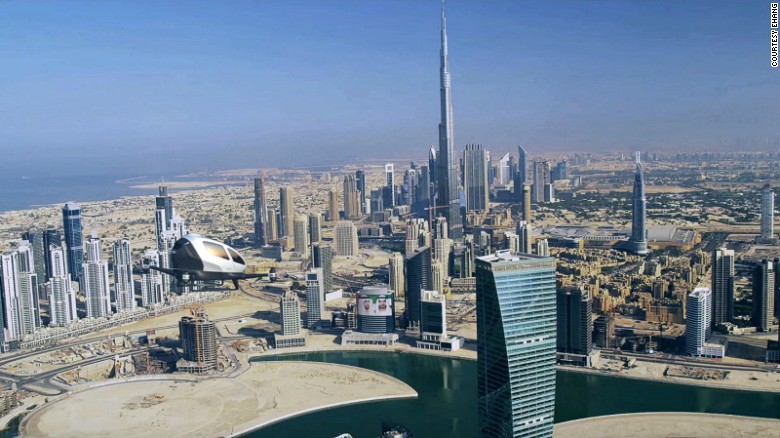
Dubai has announced yet another pioneering initiative, but this time it’s not the world’s first rotating skyscraper or 3D printed office. It’s a fleet of flying taxis.
Small enough to fit into a car parking space when folded up, the one-seater passenger drones made by Chinese company Ehang are set to start picking up passengers in July this year, according to Dubai’s Road and Transport Authority (RTA). Continue reading… “Driverless flying taxi service set to launch in Dubai”
Think of it as half drone, half motorcycle: A new hoverbike prototype aims to make flying as simple as riding a bike.
Hoversurf, a Russian drone startup, recently unveiled its Scorpion-3 hoverbike in a test- flight video — making it the first manned quadcopter that has undergone testing, reported Futurism, a science and technology news website.
A sleek new helicopter design was unveiled by Bell Helicopter at the Heli-Expo in Dallas, Texas.
Called the FCX-001, the next-generation machine will be built from sustainable materials and run on a hybrid power system. It will come equipped with augmented reality (AR), an artificial intelligence (AI) co-pilot, and rotor blades that morph depending on flight conditions.
One of the biggest obstacles keeping flying cars grounded isn’t necessarily figuring out how to make a vehicle capable of flight (hello, helicopters) but rather, designing something that can both fly and drive on the streets.
The flexibility of being able to do both is incredibly appealing but physical limitations on both sides of the spectrum impact the ability to efficiently accomplish the other task.
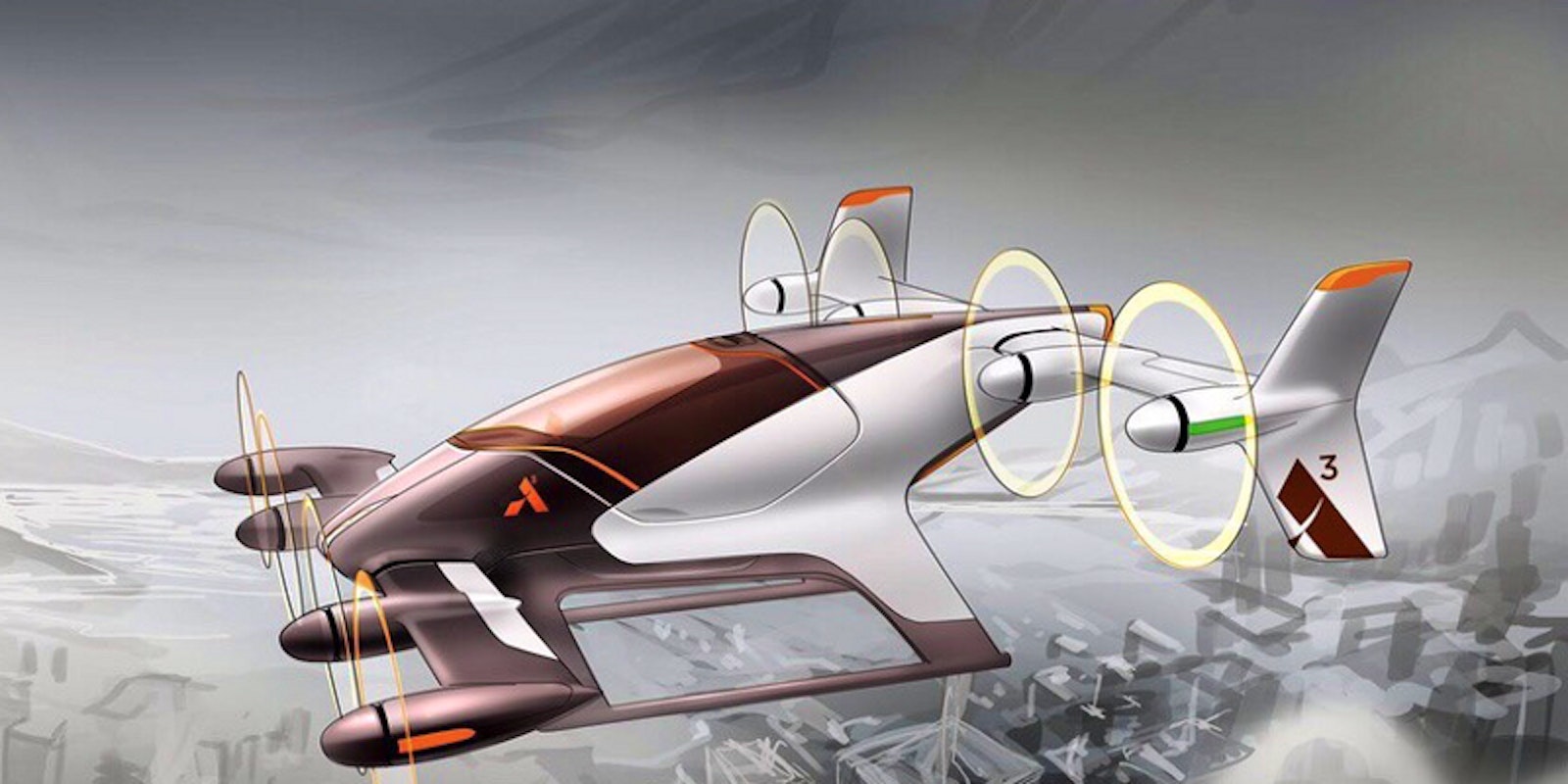
That’s where Airbus’ latest concept changes things up.
We live in a time where Level 5 autonomous cars are close to becoming a reality, and more than one company is working towards bringing humans to Mars. Consider all this, it’s almost surprising that flying cars haven’t taken to the skies yet. But it turns out we may not have to wait too long: Airbus is planning to test a prototype, not only for a flying car but an autonomous flying car.
In developing regions where lack of road infrastructure is problematic for those in the business of moving goods, drones are already having an impact. But also problematic is the fact that the people sending drones off to do the courier work kinda need them back again. A new cardboard drone being funded by DARPA won’t concern itself with such limitations, with the ability to deliver vital goods and disappear soon after the job is done.
We have seen a few aerial drones capable of venturing underwater, but none that can enter and exit the marine environment quite like the so-called AquaMav. Built by engineers at Imperial College London, the drone uses collapsible wings to dive like a fish-hunting seabird and scoop up water samples from beneath the surface, and then launch like a flying fish when it’s time to return to the skies.
This drone gun won’t destroy your drone, but it will take it down from over a mile away. By disabling signals keeping the drone afloat, such as GPS, the “DroneGun” can knock a drone off its course, keeping it from arriving at its destination.
Even as self-driving cars become more and more ubiquitous, there’s one problem that Silicon Valley hasn’t solved: the traffic jam. But Airbus Group, a U.S. aeronautics and space company, thinks that it has a solution. The company’s Silicon Valley branch recently announced it’s been working on a secret project titled “Vahana,” an autonomous flying vehicle that can be used for both passenger and cargo transport.