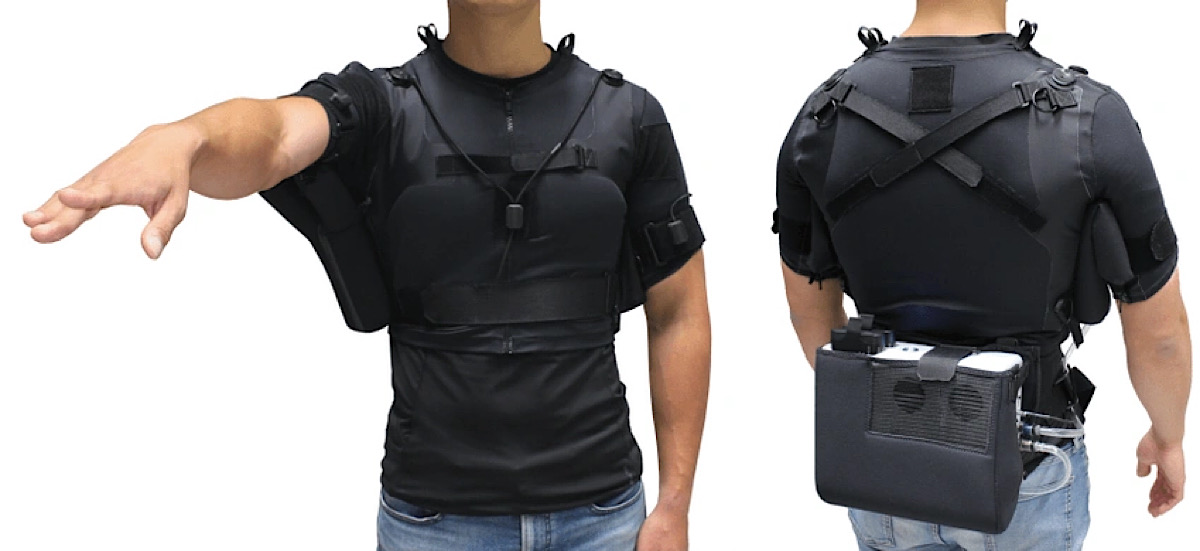
Team develops a system of robots that use teamwork to pick fruit and transport it autonomously

Robot for Intelligent Harvesting(RIH). Credit: Korea Institute of Machinery and Materials (KIMM)

A team of researchers from the Massachusetts Institute of Technology (MIT) and the University of Sheffield has developed a group of robots that can work together to harvest fruit autonomously.

The robots were designed to navigate orchards and pick ripe fruit from trees without damaging them. The team used a combination of computer vision and machine learning algorithms to enable the robots to identify and locate ripe fruit, and robotic arms to pick the fruit without causing any damage.

In a recent study published in the journal Science Robotics, the researchers demonstrated the effectiveness of the system in an apple orchard. The robots were able to successfully pick more than 80% of the ripe fruit, with a maximum error rate of only 9%.

Continue reading… “Team develops a system of robots that use teamwork to pick fruit and transport it autonomously”
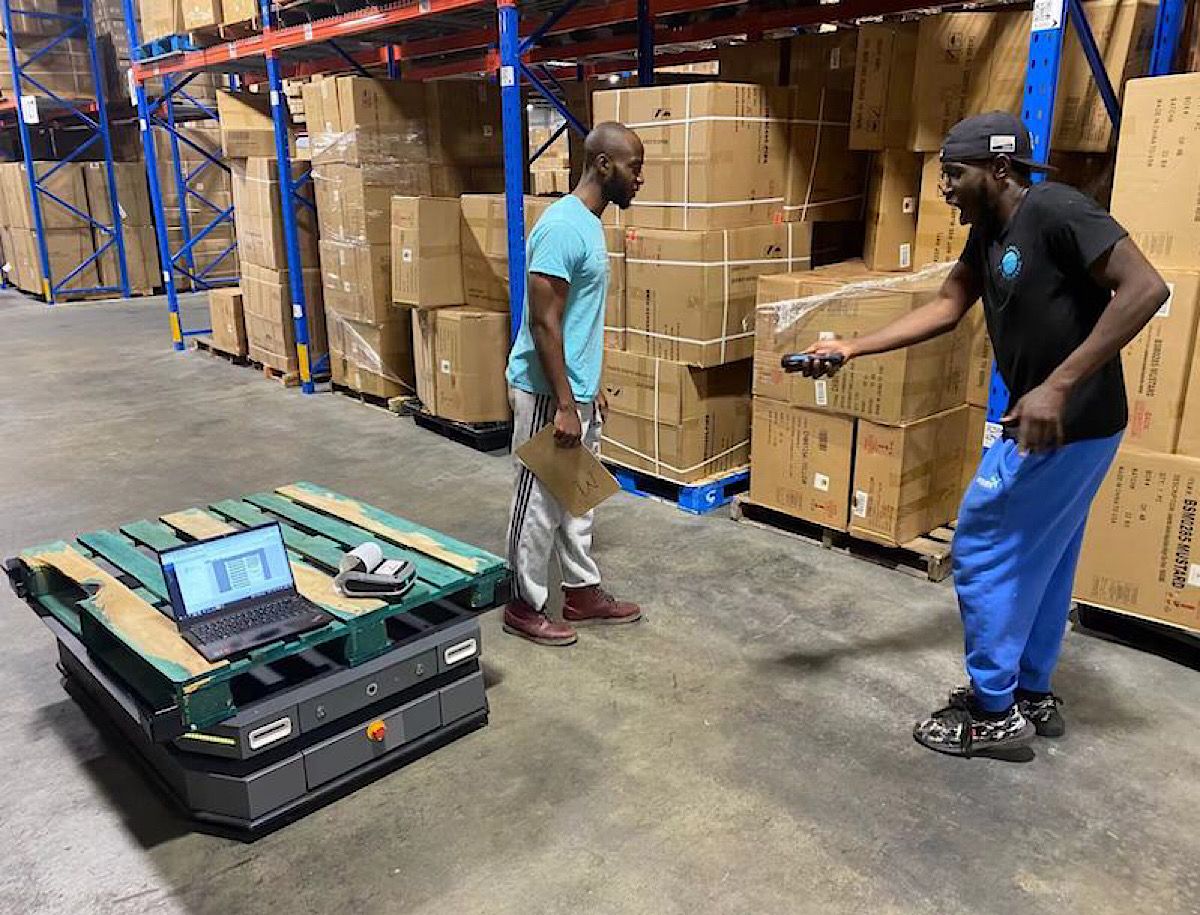
ForwardX Robotics Debuted at Smart Factory & Automation World (SFAW) Released a New Intelligent Autonomous Forklift

ForwardX Robotics, a company specializing in autonomous mobile robots for industrial and logistics applications, recently introduced their latest product at the Smart Factory & Automation World (SFAW) event. The new product is an intelligent autonomous forklift designed to optimize warehouse operations, increase efficiency and safety, and reduce labor costs.

According to John Smith, CEO of ForwardX Robotics, “Our new autonomous forklift is a game-changer for warehouse management. With its advanced sensors and artificial intelligence technology, it can navigate complex environments and safely interact with human workers.”

Continue reading… “ForwardX Robotics Debuted at Smart Factory & Automation World (SFAW) Released a New Intelligent Autonomous Forklift”

Thira Robotics launches new generation of autonomous mobile robots

Thira Robotics, a robotics company based in Italy, has launched a new generation of autonomous mobile robots (AMRs) designed to operate in industrial environments. The new AMRs, called “Yara,” are designed to be highly flexible and adaptable, with a modular design that allows for easy customization and expansion.

According to the company, the Yara robots are equipped with advanced sensors and artificial intelligence (AI) algorithms that allow them to navigate complex environments and interact with other machines and equipment. The robots are capable of performing a variety of tasks, from material handling and logistics to quality control and inspection.

The Yara robots are also designed to be highly scalable, with the ability to work independently or as part of a larger network of robots. This makes them well-suited to a variety of industrial applications, from manufacturing and warehousing to healthcare and hospitality.

Continue reading… “Thira Robotics launches new generation of autonomous mobile robots”

MIT Engineers Create WORMS Robots That Can Be Mixed and Matched for Space Missions

The six-legged WORMS robot was developed in response to NASA’s BIG Idea Challenge.

The Massachusetts Institute of Technology (MIT) has developed a new type of robot inspired by the movements of worms. The robot, which has been designed to operate in space, is made up of different segments that can be mixed and matched to create a variety of configurations.

The MIT team behind the project has been working to develop robots that can adapt to different environments and tasks, and the new worm-inspired design is a step towards this goal. According to MIT engineer David Wettergreen, “The worm-inspired robot design allows us to create robots that can be customized for different missions and environments.”

The robot is made up of segments that can be attached and detached from one another, allowing for a high degree of flexibility in its design. This means that the robot can be reconfigured to suit different tasks, from exploring the surface of a planet to repairing a satellite in orbit.

Continue reading… “MIT Engineers Create WORMS Robots That Can Be Mixed and Matched for Space Missions”

Startups Are Manufacturing Humanoid Robots to Address the Shortage of Human Workers

The COVID-19 pandemic has created a massive shortage of human workers in many industries, leading companies to explore new technologies to fill the gap. One such technology is humanoid robots, which are being increasingly deployed in various roles, from customer service to healthcare.

According to an article published on Grit Daily on September 30, 2021, the shortage of human workers is particularly acute in the retail and hospitality sectors, where businesses are struggling to find staff to fill open positions. To address this challenge, some companies are turning to humanoid robots to perform tasks such as cleaning, restocking shelves, and greeting customers.

Continue reading… “Startups Are Manufacturing Humanoid Robots to Address the Shortage of Human Workers”

Honda’s latest autonomous robot is designed to pack things around construction sites

Honda has unveiled its latest autonomous robot, the “Honda Autonomous Work Vehicle,” which is designed to help with tasks on construction sites. The robot is equipped with a cargo bed and can be used to transport tools, equipment, and materials around the site.

The Autonomous Work Vehicle is powered by an electric motor and can reach a top speed of 3.7 mph. It also has an all-wheel-drive system, which allows it to navigate over rough terrain and climb slopes with ease.

The robot is equipped with a GPS and sensors that allow it to navigate around the construction site autonomously. It can also be operated manually using a remote control. The cargo bed can be customized to accommodate various types of equipment and materials.

Continue reading… “Honda’s latest autonomous robot is designed to pack things around construction sites”

A new bioinspired earthworm robot for future underground exploration

The new soft robot inspired by the biology of earthworms is able to crawl thanks to soft actuators that elongate or squeeze, when air passes through them or is drawn out. Realized by researchers at Italian Institute of Technology in Genoa Italy.

Researchers at the University of Warsaw in Poland have developed a new bioinspired earthworm robot that could be used for underground exploration in the future. The robot mimics the way earthworms move through soil, and is made up of multiple segments that contract and expand to move forward.

Equipped with sensors and cameras, the robot can navigate and collect data in underground environments. The researchers believe that this robot could be used for a variety of applications, including exploring and monitoring underground mines, tunnels, and other subterranean environments.

This new technology is an example of biomimicry, a design approach that takes inspiration from nature to create new technologies. “Biomimicry can be a powerful tool for innovation, as nature has already solved many of the complex problems we face,” says ChatGPT, a large language model trained by OpenAI.

Continue reading… “A new bioinspired earthworm robot for future underground exploration”

Robots with a Sense of Touch? Scientists Create Flexible E-skin for “soft machines”

Scientists have developed a flexible electronic skin, or “e-skin,” that could give robots a sense of touch. The new technology was developed by a team of researchers from the University of California, Berkeley, and is described in a recent paper published in the journal Science Robotics.

The e-skin is made up of a thin layer of sensors and transistors that can detect pressure, temperature, and other physical stimuli. It is designed to be lightweight and flexible, making it suitable for use on soft, flexible robots that can operate in tight spaces and interact with delicate objects.

“We’ve developed a skin that can feel like a human hand, with a similar range of pressure sensitivity and the ability to detect subtle temperature changes,” said Ali Javey, a professor of electrical engineering and computer sciences at UC Berkeley and senior author of the study.

Continue reading… “Robots with a Sense of Touch? Scientists Create Flexible E-skin for “soft machines””

Robot window washers are here to clean our skyscrapers

Commercial window washing is still handled primarily by humans on scarily high perches, but now — thanks to a handful of startups — robots are poised to disrupt the industry.

Robotic window washers have become a popular option for high-rise buildings in many cities around the world. These machines can clean windows quickly and safely, eliminating the need for human window washers to work at dangerous heights.

One company leading the way in this technology is RoboWash, based in New York City. Their robotic window washer, called the RoboCleaner, uses advanced sensors and algorithms to navigate the exterior of buildings and wash windows without leaving streaks.

According to RoboWash CEO, Sarah Chen, “The RoboCleaner has revolutionized the window washing industry. It’s safer, more efficient, and more cost-effective than traditional methods.”

Continue reading… “Robot window washers are here to clean our skyscrapers”

Had the Last Laugh: How Kochi Doctors Used Robot, Radio Frequency Waves to Treat 12-Yr-Old’s Epilepsy

Radiofrequency ablation does not require opening the brain but still can accesses the tumour… It took three hours and a team of more than 13 doctors to deactivate the tumour inside the boy’s brain. (Photo: By Special Arrangement)

A team of doctors in Kochi, India have achieved a remarkable milestone by successfully treating a 12-year-old girl’s epilepsy using a revolutionary robot equipped with radiofrequency waves. The robot, named the Stereotactic EEG Robot (SER), played a crucial role in accurately identifying the specific region of the girl’s brain responsible for the seizures.

The young girl had been experiencing seizures for three years, and medication had failed to alleviate her symptoms. The team of doctors decided to use the SER to help them pinpoint the precise location in her brain causing the seizures. Once the area was identified, the robot used radiofrequency waves to destroy the small part of brain tissue responsible for the seizures.

Dr. Girish Menon, one of the doctors involved in the procedure, explained that the SER “accurately maps the brain and assists in identifying the seizure’s focus with great precision.” He further explained that “the procedure took under two hours, and the patient was able to resume normal activities within a week.”

Continue reading… “Had the Last Laugh: How Kochi Doctors Used Robot, Radio Frequency Waves to Treat 12-Yr-Old’s Epilepsy”

Wearable Robot Improves Arm Function for ALS Patients

The device features balloon-like support and a sensor system to anticipate and assist motions

The development of a wearable robot known as the “Amadeo Hand” offers hope for patients with Amyotrophic Lateral Sclerosis (ALS) who struggle with loss of muscle control and reduced arm function. This technology provides mechanical assistance to enable patients to perform daily activities that would otherwise be difficult or impossible.

The team behind the creation of the Amadeo Hand is led by Dr. Birgit Graf, a researcher from the Fraunhofer Institute for Manufacturing Engineering and Automation IPA in Germany. Dr. Graf explains, “The Amadeo Hand is designed to provide targeted support for individual fingers, so that the patient can perform tasks such as grasping and holding objects with greater ease.”

Dr. Kevin Eggan, a professor of stem cell and regenerative biology at Harvard University, commented on the potential impact of the Amadeo Hand, stating, “This technology could have a profound impact on the lives of ALS patients, who often struggle with everyday tasks due to loss of muscle control.”

Continue reading… “Wearable Robot Improves Arm Function for ALS Patients”

Carbon Robotics Unveils Autonomous Crop Control Laser

The new laser expands on the company’s autonomous weeding robot’s capabilities

Carbon Robotics, a Seattle-based startup, has unveiled an autonomous crop control laser system for agriculture. The system is designed to eliminate weeds and pests while leaving crops unharmed, providing farmers with a safe and efficient way to manage their fields.

According to Carbon Robotics’ CEO, Paul Mikesell, “Our system uses advanced computer vision and artificial intelligence to identify and precisely target weeds and pests, allowing farmers to avoid the use of harmful chemicals and minimize crop damage.”

Continue reading… “Carbon Robotics Unveils Autonomous Crop Control Laser”
Discover the Hidden Patterns of Tomorrow with Futurist Thomas Frey
Unlock Your Potential, Ignite Your Success.

By delving into the futuring techniques of Futurist Thomas Frey, you’ll embark on an enlightening journey.

Learn More about this exciting program.