Whisper Aero Unveils Electric Propulsion for Noiseless Flying Taxis

As the world eagerly anticipates the arrival of flying taxis in cities, concerns regarding the potential noise they would generate are being raised by urban residents. However, Tennessee-based startup Whisper Aero has recently revealed its electric propulsion technology, offering a solution for noiseless aerial transportation in the future.

Drones and vertical take-off and landing vehicles (VTOLs) have the potential to alleviate road congestion and revolutionize urban travel. Nevertheless, the noise emissions associated with these systems have been a source of frustration. After years of efforts to relocate airports away from cities, we find ourselves on the cusp of a future where noise pollution from above may become a concern, potentially hindering the prospects of air taxis within city limits.

In 2021, Mark Moore and Ian Villa, former colleagues at Uber Elevate, co-founded Whisper Aero with the aim of spearheading a silent revolution in electric propulsion and transforming noiseless flight into a reality. After eight months of development, the startup successfully flew a drone powered by its noiseless technology and has now unveiled the groundbreaking technology behind it.

Continue reading… “Whisper Aero Unveils Electric Propulsion for Noiseless Flying Taxis”
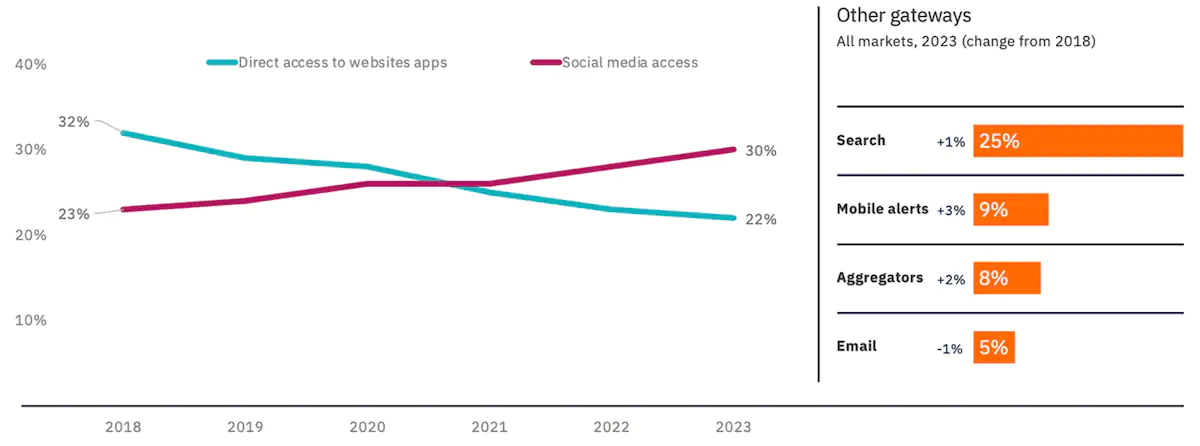
ABB Robotics Partners with Junglekeepers to Deploy YuMi Robot for Amazon Reforestation

In an innovative collaboration, ABB Robotics has joined forces with Junglekeepers, a U.S. non-profit organization, to utilize their advanced robot, YuMi, in the reforestation efforts of the Amazon. A recent press release by ABB highlights how this cutting-edge machine is automating planting tasks within a jungle laboratory, streamlining the process and enabling Junglekeepers’ volunteers to concentrate on more impactful work.

Sami Atiya, President of ABB Robotics and Discrete Automation, emphasized the significance of this partnership, stating, “ABB’s collaboration with Junglekeepers showcases the pivotal role of robotics and Cloud technology in combating deforestation, one of the major contributors to climate change.” He further added, “Our pilot program featuring the world’s most remote robot is helping automate highly repetitive tasks, freeing up rangers to undertake more important work in the rainforest and aiding in the conservation of their land.”

Continue reading… “ABB Robotics Partners with Junglekeepers to Deploy YuMi Robot for Amazon Reforestation”

The Evolving Landscape of News Consumption in the Digital Era

The traditional news media has long grappled with the challenges posed by the digital revolution, leading to a well-documented crisis in journalism. However, news organizations now face a more profound transformation driven by a generation that has grown up relying heavily on various digital media platforms.

Data from this year’s Reuters Institute Digital News Report reveals an accelerated shift towards digital, mobile, and media-rich environments. Today, news content is predominantly delivered through social media and increasingly popular video-led platforms like TikTok, rather than the perceived formal and antiquated outlets of “legacy” media such as newspapers and television.

The decline in consumption of traditional television news and print formats continues unabated, while online websites struggle to engage news users, despite the tumultuous times we live in. An essential benchmark of this shift is the preferred gateway for accessing news. Across the 46 countries surveyed in our annual report, social media has steadily gained popularity each year, often at the expense of direct access through traditional news websites or apps. Access through search engines and other aggregators has also seen a slight increase. It is crucial to note that direct connection remains strong in some markets, particularly in Northern Europe, where news interest and trust are relatively high. However, in other regions, notably parts of Asia, Latin America, and Africa, social media and aggregators dominate as the primary gateways, leaving news brands heavily reliant on third-party platforms for traffic.

Continue reading… “The Evolving Landscape of News Consumption in the Digital Era”

Paul McCartney Reveals AI was Used to Restore John Lennon’s Vocals for Upcoming Beatles Track

During an interview with the BBC, legendary Beatles singer-songwriter Paul McCartney disclosed that artificial intelligence (AI) was utilized to extract and enhance the vocals of his former bandmate, John Lennon, from an old recording. This breakthrough allowed Lennon’s voice to feature in an upcoming track.

McCartney, when asked about AI during the BBC’s “Today” program, expressed his fascination with the technology, stating, “It’s a very interesting thing, you know. It’s something we’re all sort of tackling at the moment and trying to deal with.”

According to McCartney, “Lord of the Rings” director Peter Jackson, who recently released the documentary “The Beatles: Get Back,” which showcased colorized and restored archival footage of the band, successfully extracted Lennon’s voice from a deteriorated cassette recording using AI. The technology distinguished Lennon’s vocals from instrumental and background interference.

Continue reading… “Paul McCartney Reveals AI was Used to Restore John Lennon’s Vocals for Upcoming Beatles Track”

China to Witness Largest Exodus of Millionaires Again This Year, New Research Finds

China, renowned for its booming economy and massive population, is set to experience the highest outflow of millionaires globally this year, as revealed by a recent study. Investment migration consultancy Henley & Partners reported that China is projected to lose the most number of dollar millionaires due to migration compared to any other country.

The data from the firm indicated that 10,800 high-net-worth individuals left China in 2022, and an additional 13,500 are expected to depart this year. This ongoing trend of millionaire exodus from China has persisted for the past decade, causing a deceleration in overall wealth growth in the country. Andrew Amoils, Head of Research at global wealth intelligence firm New World Wealth, emphasized the impact of these outflows, stating, “The recent outflows could be more damaging than usual. China’s economy grew strongly from 2000 to 2017, but wealth and millionaire growth in the country has been negligible since then when measured in U.S.-dollar terms.”

Following China, Henley & Partners predicts that India will witness a net loss of 6,500 millionaires this year, a decrease of 1,000 compared to 2022. Factors such as burdensome tax legislation and complex rules regarding outbound remittances have contributed to the increasing trend of investment migration from India, as stated by Sunita Singh-Dalal, Partner of Private Wealth and Family Offices at law firm Hourani.

Continue reading… “China to Witness Largest Exodus of Millionaires Again This Year, New Research Finds”

AI Enhancement Software CEO Counters Concerns, Emphasizing Collaboration between AI and Human Creativity

The CEO of a leading artificial intelligence (AI) image and video enhancement software company has responded to concerns regarding AI’s impact on employment in the art and entertainment industries, asserting that recent advancements will actually benefit creators by alleviating technical challenges.

Eric Yang, CEO of Topaz Labs, dismissed the notion that AI would replace human creativity, stating, “There’s a common fear that AI will replace humans, but we believe that we’ll instead see an explosion of AI-assisted human creativity and productivity in the next few years. People create art to tell stories to other people, and AI can never replace that,” Yang told Fox News Digital.

A research report from Goldman Sachs in March indicated that AI has the potential to automate up to 26% of employment tasks in media, design, arts, entertainment, and sports. However, artists’ opinions on generative AI have been divided. Some view AI-generated art and photo generators as “anti-artist,” as they rely on existing human artwork for training data obtained without consent or compensation. Others worry that AI’s ability to swiftly create work similar to that of established artists could lead the public to perceive photography and painting as easily replicable. These concerns are primarily directed toward generative AI models like MidJourney and Dall-E, rather than image or art enhancement tools.

Continue reading… “AI Enhancement Software CEO Counters Concerns, Emphasizing Collaboration between AI and Human Creativity”

Mori3: The Versatile Modular Robot for Space Exploration

Packing a full-sized robot for space travel presents challenges due to limited space inside rockets bound for the Moon or even Mars. To overcome this obstacle, engineers from the Swiss Federal Institute of Technology Lausanne (EPFL) have developed Mori3, a modular robot that can assemble from smaller parts, forming a connected swarm with a shared intelligence.

Mori3’s design allows it to transform from a basic triangle shape into various 3D objects using polygon meshing, as detailed in a recent publication in Nature Machine Intelligence. The aim is to create an origami-like robot that can adapt its size, shape, and function based on the environment and task at hand, making it suitable for future applications in Moon colonies and potentially on Mars. Each individual module may not seem impressive on its own, but when connected, the triangle pieces operate collectively as a swarm. The Mori3 robot possesses some level of autonomy, enabling it to modify its shape, attach to different modules, and establish communication among the pieces to form functional structures.

Continue reading… “Mori3: The Versatile Modular Robot for Space Exploration”

Telo Unveils Game-Changing Mini Electric Pickup Truck

Telo, an innovative company, has unveiled its mini electric pickup truck, finally offering a refreshing alternative to the dominating presence of hulking electric trucks on the road. Combining the functionality of a Toyota Tacoma with the compact footprint of a Mini Cooper, Telo’s design presents the best of both worlds, surpassing the massive size of current and upcoming EV pickups such as the Ford F-150 Lightning, Tesla Cybertruck, and Rivian R1T. Despite its compact nature, the Telo truck delivers an impressive range and is equally at ease maneuvering into tight city parking spaces or venturing out on exciting weekend adventures.

In terms of interior space, the Telo truck matches the Toyota Tacoma, comfortably accommodating up to five passengers in its default configuration. The exterior features a 60-inch bed, mirroring the truck bed length of the Tacoma. However, the entire Telo truck measures a mere 152 inches in length, 73 inches in width, and 66 inches in height—similar to the dimensions of a Mini Cooper.

Continue reading… “Telo Unveils Game-Changing Mini Electric Pickup Truck”

Varda Space Industries Deploys First Satellite, Pioneering Mass Production in Space

A California-based startup, Varda Space Industries, co-founded by a SpaceX veteran, made an exciting announcement as it successfully deployed its inaugural satellite, W-Series 1, into orbit. The company’s mission revolves around kickstarting the mass production of materials in space, either those impossible to manufacture on Earth or those that can be developed faster and with superior quality in microgravity conditions.

Excitement filled the air as Varda tweeted, “The world’s first space factory’s solar panels have found the sun, and it’s beginning to de-tumble,” shortly after the satellite was launched aboard SpaceX’s Transporter-8 mission on Monday, June 13.

The W-Series 1 satellite is situated within Rocket Lab’s Photon platform, a satellite solution also contracted by NASA for two upcoming Mars missions. Varda’s satellite launch is a crucial step in the company’s testing campaign to determine the feasibility of leveraging its satellite solution for pharmaceutical development in space.

The company was established by Will Bruey, a former SpaceX avionics engineer, and Delian Asparouhov from Peter Thiel’s Founders Fund. Varda’s primary objective is to enable the mass production of specific products in space. This goal has become increasingly achievable with the rise of private launch service providers like SpaceX and Rocket Lab, which have significantly enhanced accessibility to space in recent years.

Continue reading… “Varda Space Industries Deploys First Satellite, Pioneering Mass Production in Space”

Sound Waves Enter the Quantum Arena: University of Chicago Pioneers Phononic Quantum Computing

A weird and wonderful array of technologies are competing to become the standard-bearer for quantum computing. The latest contender wants to encode quantum information in sound waves.

One thing all quantum computers have in common is the fact that they manipulate information encoded in quantum states. But that’s where the similarities end because those quantum states can be induced in everything from superconducting circuits to trapped ions, ultra-cooled atoms, photons, and even silicon chips.

While some of these approaches have attracted more investment than others, we’re still a long way from the industry settling on a common platform. And in the world of academic research, experimentation still abounds.

Now, a team from the University of Chicago has taken crucial first steps towards building a quantum computer that can encode information in phonons, the fundamental quantum units that make up sound waves, in much the same way that photons make up light beams.

The basic principles of how you could create a “phononic” quantum computer are fairly similar to those used in “photonic” quantum computers. Both involve generating and detecting individual particles or quasiparticles and manipulating them using beamsplitters and phase shifters. Phonons are quasiparticles because although they act like particles as far as quantum mechanics are concerned, they are actually made up of the collective behavior of large numbers of atoms.

Continue reading… “Sound Waves Enter the Quantum Arena: University of Chicago Pioneers Phononic Quantum Computing”

Gitai Raises $30 Million to Develop Space Robot Workforce

In an unprecedented move, robots may soon be competing with astronauts for space-related tasks. Gitai, a Japanese robotics startup, has secured a new funding round of ¥4 billion ($30 million) to advance its mission of creating a workforce of space robots. The Tokyo-based company aims to significantly reduce the cost of space operations and minimize the risks to human life through the development of its remote-controlled space robots, as reported by Bloomberg.

The emergence of companies like SpaceX, with their partially reusable Falcon 9 rocket, has revolutionized the space industry by substantially lowering transportation costs to orbit. Gitai’s CEO, Sho Nakanose, discussed in an interview with Bloomberg TV how the company envisions the next frontier to be a substantial reduction in the cost and risk associated with space operations through the use of robotic workforces. Nakanose explained that Gitai’s robot arms and rovers have the potential to reduce operational costs for space missions by “100 times,” making them suitable for deployment on celestial bodies such as the Moon and Mars.

Continue reading… “Gitai Raises $30 Million to Develop Space Robot Workforce”

Serve Robotics Expands Uber Eats Partnership, Deploying 2,000 Autonomous Delivery Robots

Serve Robotics, the autonomous sidewalk delivery robot company spun out of Uber, is set to strengthen its collaboration with Uber Eats. The startup, backed by Nvidia, will now roll out up to 2,000 of its adorable robots through Uber’s platform in several markets across the United States. The partnership is scheduled to continue until early 2026, indicating both Serve’s commitment to mass commercialization of autonomous delivery robotics and Uber’s dedication to advancing autonomy in its services.

The initial partnership between Serve and Uber began as a pilot program in West Hollywood a year ago. Since then, the robotic deliveries facilitated by Uber have experienced a remarkable growth rate of over 30% month-over-month. Currently, more than 200 restaurants in West Hollywood, Hollywood, and Fairfax are participating in Serve’s delivery service. Serve’s CEO and co-founder, Ali Kashani, stated that the robots now operate daily from 10 a.m. to 9 p.m.

Kashani expressed optimism about the continuous growth of Serve’s presence on Uber Eats, revealing plans to expand the fleet of 100 robots in Los Angeles as delivery volume and coverage on Uber’s platform increase. The fleet is shared among Serve’s various partners, including 7-Eleven, which recently introduced robotic sidewalk delivery in LA. Although the specific markets for the expanded Uber partnership were not disclosed, Serve is considering San Jose, Dallas, and Vancouver as potential locations. The company has also completed successful pilot programs with Walmart in Arkansas and Pizza Hut in Vancouver.

Continue reading… “Serve Robotics Expands Uber Eats Partnership, Deploying 2,000 Autonomous Delivery Robots”
Discover the Hidden Patterns of Tomorrow with Futurist Thomas Frey
Unlock Your Potential, Ignite Your Success.

By delving into the futuring techniques of Futurist Thomas Frey, you’ll embark on an enlightening journey.

Learn More about this exciting program.