SolarBotanic Trees: Metal Canopies with Solar “Leaves” to Power EV Charging

In a bid to enhance the charging infrastructure for electric vehicles (EVs) in the UK, SolarBotanic Trees, a British startup, has designed metal trees equipped with a seven-meter canopy of solar panels that generate electricity. These innovative structures feature nano photovoltaic “leaves” that capture solar energy and may store it in a battery placed within the tree trunk. The company has successfully completed a half-scale prototype and aims to build and test a full-size version before commencing commercial production by the end of the year.

While the UK has seen rapid growth in EV charging infrastructure, with over 40,000 public charging points installed by April 2023, according to ZapMap, the demand still outpaces supply. The Climate Change Committee estimates that by 2032, 325,000 charging points will be required to support the expanding electric fleet. To address this shortfall, SolarBotanic Trees aims to collaborate with EV infrastructure providers. The company has already received its first order of 200 trees from Raw Charging Group, a leading supplier of EV charging infrastructure, for incorporation into their charging sites across the UK and Europe.

Solar trees offer an aesthetically pleasing solution compared to conventional solar-powered carports. While solar carports consist of solar panels mounted on structures resembling bus shelters, SolarBotanic Trees provide an attractive alternative. These trees have been featured in notable developments like Singapore’s Gardens by the Bay and the Sustainability Pavilion at Expo 2020 Dubai.

Continue reading… “SolarBotanic Trees: Metal Canopies with Solar “Leaves” to Power EV Charging”
Google Cloud and Mayo Clinic Join Forces to Revolutionize Healthcare with Generative AI

Google Cloud and the Mayo Clinic have unveiled a transformative partnership aimed at revolutionizing traditional healthcare through the use of generative artificial intelligence (AI), as announced on Wednesday. The collaboration will initially focus on leveraging Google Cloud’s Enterprise Search in Generative AI App Builder to enhance the efficiency of clinical workflows, facilitating easier access to information for clinicians and researchers while improving patient outcomes.

Mayo Clinic, renowned for its expertise in utilizing AI for positive impact, is a critical partner in the responsible implementation of this groundbreaking technology in healthcare. Google Cloud recognizes Mayo Clinic’s leadership in this space and their pivotal role in bringing transformative AI solutions to the healthcare industry.

In addition to this partnership announcement, Google Cloud revealed on Wednesday that its app builder is fully equipped to support Health Insurance Portability and Accountability Act (HIPAA) compliance, ensuring the secure handling of patient data.

Continue reading… “Google Cloud and Mayo Clinic Join Forces to Revolutionize Healthcare with Generative AI”

Airbus’ ROXY System: Transforming Lunar Regolith into Oxygen and Metals for Future Space Exploration

New advancements in space technologies continue to emerge, originating from both established and emerging companies. In 2020, Airbus, one of the largest players in the aerospace industry, unveiled a groundbreaking technology with significant implications for future lunar exploration missions. The Regolith to OXYgen and Metals Conversion (ROXY) system, developed by Airbus, has the potential to revolutionize the utilization of lunar resources over the next decade.

ROXY employs the regolith, the abundant lunar surface material, to produce vital resources such as oxygen, crucial for human survival and rocket fuel, along with metals that can be utilized for manufacturing tools, equipment, and even structures on the Moon. This innovative process bears similarities to MOXIE, an experiment carried by the Perseverance rover during its 2021 landing on Mars. However, when Airbus announced the successful test of ROXY in October 2020, MOXIE was still unproven and en route to Mars.

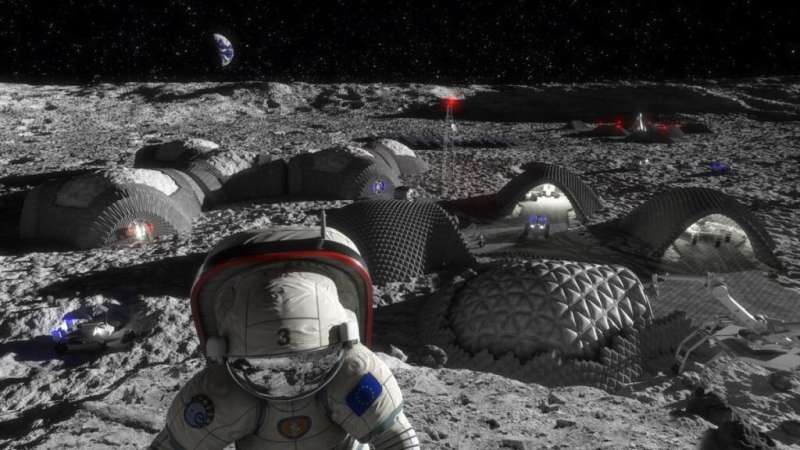
A key advantage of ROXY over MOXIE is its ability to generate metals, facilitating on-site production of tools, containers, and other essential objects on the Moon, eliminating the need to transport them from Earth. This aligns seamlessly with the ongoing efforts to introduce 3D printing technologies to lunar exploration, attracting the attention of multiple companies actively pursuing these endeavors.

Continue reading… “Airbus’ ROXY System: Transforming Lunar Regolith into Oxygen and Metals for Future Space Exploration”

Breakthrough in Remote-Controlled Ingestible Video Capsule Technology Expands Diagnostic Possibilities

Ingestible video capsule endoscopes have been revolutionizing medical diagnostics, but their limitations in control and movement have hindered their full potential. However, researchers at the GW School of Medicine & Health Sciences have recently unveiled a groundbreaking solution: a pill-shaped capsule named NaviCam, which can be remotely controlled throughout the digestive system, offering a promising alternative to traditional endoscopy.

The NaviCam employs an external magnet and video game-style joysticks, allowing physicians to steer the miniature video capsule with precision. By visualizing and capturing images of potential problem areas, this technology presents an innovative approach to screening for health issues such as ulcers or stomach cancer in the upper gastrointestinal tract.

Andrew Meltzer, a professor of Emergency Medicine at the GW School of Medicine & Health Sciences, highlighted the advantages of magnetically controlled capsules over invasive procedures, stating, “A traditional endoscopy is an invasive procedure for patients, not to mention it is costly due to the need for anesthesia and time off work.” The introduction of magnetically controlled capsules could provide a quick and non-invasive method for health problem screening.

Continue reading… “Breakthrough in Remote-Controlled Ingestible Video Capsule Technology Expands Diagnostic Possibilities”

Elon Musk’s Neuralink Advances in Brain-Computer Interface Technology

Elon Musk, the visionary entrepreneur behind SpaceX, is not limiting his ambitions to space exploration. His tech startup, Neuralink, aims to venture into the realm of the human brain. Recently, the company received approval from the Food and Drug Administration (FDA) to commence trials for implanting brain chips in humans.

While the exact start date of the trials is unknown, there is considerable excitement surrounding Neuralink’s development of a brain-computer interface. In just two years, the company’s valuation has skyrocketed from $2 billion to approximately $5 billion, according to Reuters. Although it may be years before widespread implementation of Neuralink’s technology, investors remain highly interested in its potential. Analyst Daniel Ives from Wedbush Securities remarked that as Neuralink proves its use cases and execution, investor attention will likely intensify. Given Musk’s track record with successful ventures like Tesla and SpaceX, the tech world is eagerly watching Neuralink’s progress in the coming years.

Neuralink’s primary objective in conducting human trials is to eventually enable individuals with paralysis to control computers or phones solely through brain activity. The Neuralink 1 implant, about the size of a large coin, consists of multiple chips, a wireless battery, and other electronics, all hermetically sealed. The implant includes ultra-thin threads that penetrate directly into the brain. Signals from the implant are transmitted via Bluetooth to a brain-computer interface (BCI), which can facilitate tasks such as controlling an onscreen cursor or manipulating a robotic limb. Musk has likened the device to a “Fitbit in your skull with tiny wires that go to your brain.”

Continue reading… “Elon Musk’s Neuralink Advances in Brain-Computer Interface Technology”

Octopuses Harness Unique RNA Editing Ability to Protect Nervous System

Octopuses have developed a remarkable defense mechanism to safeguard their delicate nervous system against extreme temperature variations. They possess the extraordinary ability to rapidly recode key proteins in their nerve cells, ensuring the uninterrupted functioning of critical neurological activities even during drastic temperature drops. This exceptional adaptation is made possible by their capacity to edit RNA on the fly, a superpower observed in select species of octopuses, squids, and cuttlefish.

Researchers at the University of Chicago’s Marine Biological Laboratory, led by marine biologist Joshua Rosenthal, have shed light on this unusual strategy through their recent study published in Cell. They highlight that while genetic information is typically considered fixed, environmental factors can influence the encoding of proteins. In cephalopods, this phenomenon occurs on a significant scale. Rosenthal explains, “RNA recoding gives organisms the option to express a diverse quiver of proteins when and where they choose. In cephalopods, most of the recoding is for proteins that are really important for nervous system function, so the natural question is, are they using this to acclimate to changes in their physical environment?”

Continue reading… “Octopuses Harness Unique RNA Editing Ability to Protect Nervous System”

Samsung Develops Ultra-Large AI System to Compete with Language Models

As AI gains popularity across industries, tech giants like Apple, Samsung, and Google are increasingly venturing into this field. Samsung has now revealed that its research division is working on an in-house “ultra-large AI system,” utilizing all available GPU resources. The company plans to release this AI system in July, positioning it as their take on large language models (LLMs), potentially rivaling the likes of Bard and ChatGPT.

While specific details about Samsung’s project are currently scarce, the company’s dedication to leveraging its GPU resources suggests promising developments. This move could also prompt Apple to deepen its AI involvement. Although Apple has been relatively quiet about artificial intelligence lately, competition in the market may spur the company to step up its efforts.

Continue reading… “Samsung Develops Ultra-Large AI System to Compete with Language Models”

Scientists Create Synthetic Molecules that Mimic Organic Molecules, Revolutionizing Molecular Understanding

A team of scientists from Radboud University has achieved a groundbreaking feat by developing synthetic molecules that closely resemble real organic molecules. Led by Alex Khajetoorians and Daniel Wegner, the collaborative effort has resulted in the ability to simulate the behavior of genuine molecules using artificial counterparts. This breakthrough enables researchers to manipulate molecule properties in unprecedented ways, shedding new light on how molecules undergo changes. The team’s remarkable findings have been published in the journal Science.

Emil Sierda, the lead experimenter at Radboud University, shared the origin of their groundbreaking idea, stating, “A few years ago, we had this audacious idea of constructing a quantum simulator. Our goal was to create synthetic molecules that closely resemble real ones. To achieve this, we developed a system capable of trapping electrons. Electrons envelop a molecule like a cloud, and we utilized these trapped electrons to construct artificial molecules.” The results they obtained were astonishing, with Sierda remarking, “The similarity between our artificial creations and genuine molecules was striking.”

Continue reading… “Scientists Create Synthetic Molecules that Mimic Organic Molecules, Revolutionizing Molecular Understanding”

Quantum Computer “Juizhang” Achieves Remarkable AI Processing Speeds, Pioneering China’s Quantum Computing Expertise

A groundbreaking quantum computer named Juizhang, developed by a team led by renowned scientist Pan Jianwei, has made a remarkable claim of being able to process artificial intelligence (AI) tasks 180 million times faster than conventional computers, as reported by the South China Morning Post. Pan Jianwei, often referred to as the “father of quantum” in China, has been instrumental in advancing the country’s expertise in quantum computing, marking a significant stride in the field.

Unlike traditional computing, where bits can only represent one or zero, a quantum computing unit, or qubit, has the unique ability to exist in both states simultaneously. This characteristic allows qubits to process information faster than classical computers by considering all possible combinations at once.

Continue reading… “Quantum Computer “Juizhang” Achieves Remarkable AI Processing Speeds, Pioneering China’s Quantum Computing Expertise”

Hurtigruten Norway Unveils Zero-Emission Cruise Ship Design to Tackle Environmental Challenges

Cruise ships have long been criticized for their detrimental environmental impact, with a single vessel emitting emissions equivalent to thousands of cars. Recognizing the urgent need for change, Norwegian cruise liner company Hurtigruten is taking a proactive approach to address the ecological emergencies facing the planet. Today, the company revealed the initial designs for a zero-emission cruise ship set to launch by the end of the decade, marking a significant step forward in sustainable maritime travel.

First introduced as “Sea Zero” in March 2022, the concept ship presented by Hurtigruten Norway showcases a revolutionary design. The vessel features three autonomous, retractable sail wing rigs reaching a height of 50 meters, housing approximately 1,500 square meters of solar panels. In addition to the sail wings, the ship will be powered by multiple 60-megawatt batteries, which recharge while in port, along with wind technology. The vessel’s advanced features include AI maneuvering capabilities, retractable thrusters, contra-rotating propellers, advanced hull coatings, and proactive hull cleaning technology.

Continue reading… “Hurtigruten Norway Unveils Zero-Emission Cruise Ship Design to Tackle Environmental Challenges”

Enhancing Bioprinting: Merging Techniques with Granular Biogels for Improved Cell Density and Functionality

Bioprinting, the process of printing living cells into functional tissues, presents a complex set of challenges. In a remarkable achievement, the Levato lab of UMC Utrecht, in collaboration with colleagues, has successfully combined two promising printing techniques to enhance cell density, cell survival, and specialization in bioprinted constructs. The key lies in the utilization of granular biogels or resins, as described in their publication in the journal Advanced Materials.

While bioprinting holds promise for creating functional tissues using stem cells, the integration of this intricate technology with delicate cells poses significant challenges. To ensure cell survival and tissue functionality, printed cells must receive optimal conditions for growth, mobility, and intercellular communication.

Continue reading… “Enhancing Bioprinting: Merging Techniques with Granular Biogels for Improved Cell Density and Functionality”

Groundbreaking Study Combines Volumetric Bioprinting and Melt Electrowriting to Create Functional Blood Vessels

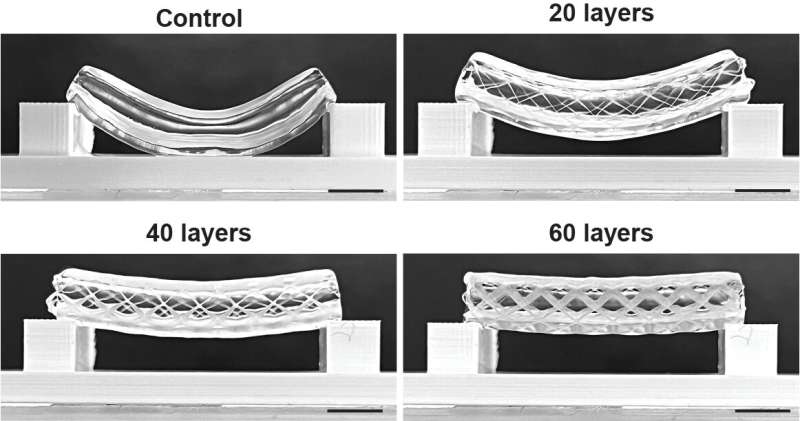
In a significant breakthrough, researchers have successfully combined volumetric bioprinting with melt electrowriting for the first time, as revealed in a study published in Advanced Materials. Led by the biofabrication lab of Regenerative Medicine Center Utrecht (RMCU), this innovative approach merges the speed and cell-friendly nature of volumetric printing with the structural strength required for the creation of functional blood vessels.

Volumetric printing, a technique pioneered by the RMCU biofabrication lab in 2019, offers rapid printing while enabling cells to survive the process. However, the resulting prints lack structural integrity due to the use of cell-friendly gels. This poses a challenge for blood vessels, which must endure high pressures and bending. To overcome this limitation, researchers aimed to combine volumetric bioprinting with melt electrowriting.

Continue reading… “Groundbreaking Study Combines Volumetric Bioprinting and Melt Electrowriting to Create Functional Blood Vessels”
Discover the Hidden Patterns of Tomorrow with Futurist Thomas Frey
Unlock Your Potential, Ignite Your Success.

By delving into the futuring techniques of Futurist Thomas Frey, you’ll embark on an enlightening journey.

Learn More about this exciting program.