The Role of AI in Transforming Industrial Operations: Opportunities and Challenges

In today’s industrial landscape, manufacturers are grappling with a myriad of challenges ranging from supply disruptions and price volatility to talent shortages and the sustainability imperative. To overcome these hurdles and unlock new value, leading manufacturers are turning to cutting-edge manufacturing technologies powered by artificial intelligence (AI).

These AI-powered technologies offer industrial companies fresh avenues to navigate through turbulence and significantly enhance operational performance. Moreover, recent technological breakthroughs, such as generative AI, have further expanded the potential applications of AI in manufacturing. While some companies have already made successful strides in implementing AI, many others are still in the early stages of their AI journey.

Continue reading… “The Role of AI in Transforming Industrial Operations: Opportunities and Challenges”
AST SpaceMobile Successfully Transmits 4G LTE Signal from Satellite to Smartphones

AST SpaceMobile, a company specializing in space-based cellular capabilities, announced a groundbreaking achievement this week. It successfully transmitted a 4G LTE signal from its BlueWalker 3 satellite to off-the-shelf smartphones in Hawaii using AT&T’s cellular network. With repeated download speeds exceeding 10 Mbps during testing, the signal was fast enough for normal browsing, messaging, and video streaming. This feat is remarkable because cell phones typically connect to ground-based cell towers rather than satellites, making it challenging to maintain cell service in remote areas or on boats at sea. However, AST SpaceMobile’s satellite technology opens up the possibility of expanding coverage to almost any location on the planet, eliminating concerns about signal dead zones.

Continue reading… “AST SpaceMobile Successfully Transmits 4G LTE Signal from Satellite to Smartphones”

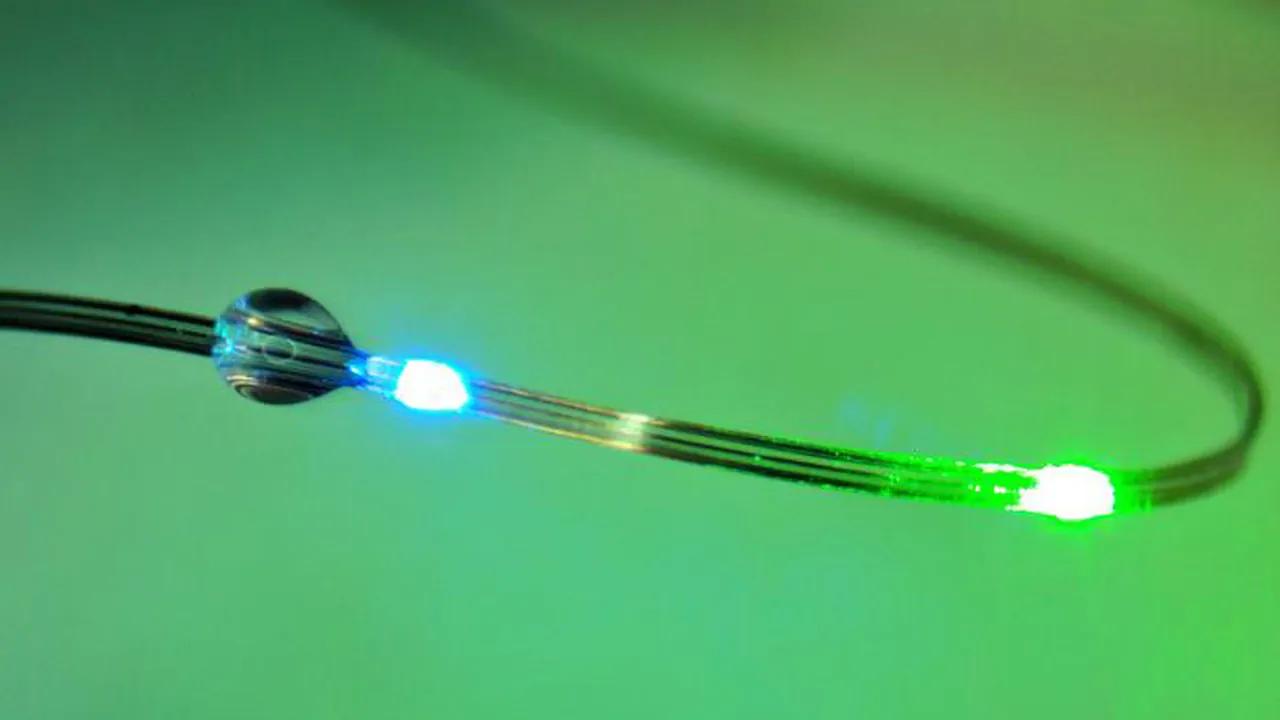
Probing the Brain-Gut Connection: Engineers Develop Fiber Technology for Neural Circuit Control

The intricate communication network between the brain and the digestive tract plays a vital role in regulating feeding behaviors and mental states. Recent research has suggested its involvement in various neurological disorders. To explore these connections, engineers at MIT have introduced a novel technology that enables the manipulation of neural circuits linking the gut and the brain in mice. By utilizing specially designed fibers embedded with sensors and light sources for optogenetic stimulation, the researchers demonstrated their ability to induce sensations of fullness or reward-seeking behavior by manipulating intestinal cells.

The study, published in Nature Biotechnology, represents a significant advancement in understanding the interplay between the brain and other organs in the body. The researchers are particularly interested in exploring the correlations observed between digestive health and neurological conditions such as autism and Parkinson’s disease. Their breakthrough lies in the millisecond precision of optogenetics, allowing for the investigation of gut-brain interactions in behaving animals.

Continue reading… “Probing the Brain-Gut Connection: Engineers Develop Fiber Technology for Neural Circuit Control”

Pangolin-Inspired Soft Robot Unveiled for Minimally Invasive Medical Procedures

A groundbreaking study published this week reveals the development of a small robot inspired by pangolins, designed to perform safe and minimally invasive medical procedures inside the human body. These untethered soft robots have the potential to access hard-to-reach regions, such as the stomach and small intestine, by morphing their shape.

Contrary to the conventional perception of robots as rigid, metallic structures filled with circuitry, one of the most exciting advancements in robotics lies in the realm of “soft robotics.” This field focuses on animated materials capable of performing tasks without the typical wiring and circuitry. An example is the recently introduced “gelbot,” a heat-manipulated soft robot capable of inching along.

Continue reading… “Pangolin-Inspired Soft Robot Unveiled for Minimally Invasive Medical Procedures”

Leveraging Road Infrastructure: Sensors Embedded in Pavement Markers Enhance Autonomous Driving

Self-driving electric vehicles continue to face significant challenges on their journey towards reliability. However, researchers from the Department of Energy’s Oak Ridge National Laboratory (ORNL) and Western Michigan University (WMU) are collaborating to drive solutions from outside the vehicle itself, by integrating sensors and processing into road infrastructure.

In partnership with other organizations, ORNL engineers are placing low-powered sensors within reflective raised pavement markers, commonly used to assist drivers in identifying lanes. These microchips transmit road shape information to passing cars, even in situations where vehicle cameras or remote laser sensing (LiDAR) may be unreliable due to factors like fog, snow, or glare.

Continue reading… “Leveraging Road Infrastructure: Sensors Embedded in Pavement Markers Enhance Autonomous Driving”

Electric Flying Taxis: A Promising Yet Challenging Future of Urban Air Mobility

As the aviation industry gears up for a future of non-polluting electric taxis soaring through the skies, the Paris region is set to make history during the 2024 Olympic and Paralympic Games. Plans are underway to introduce a small fleet of electric flying taxis, offering multiple routes and transforming the way people travel. German company Volocopter aims to be the first to commercially operate these taxis, pending approval from European regulators, with the ambition of even having French President Emmanuel Macron as a VIP passenger.

Continue reading… “Electric Flying Taxis: A Promising Yet Challenging Future of Urban Air Mobility”

The Evolving Landscape of AI and NLP: Transforming Human-Machine Interaction

Over the past year, the global digital paradigm has experienced a remarkable evolution, particularly in how humans engage with machines. One standout element of this transformation is the growing familiarity people of all ages have developed with artificial intelligence (AI) models, with OpenAI’s ChatGPT being a prime example.

Driving this revolution are the advancements in natural language processing (NLP) and conversational AI. NLP, a subfield of AI, focuses on the interaction between computers and humans using everyday language and speech patterns. Its primary goal is to read, decipher, understand, and make human language understandable and accessible to users.

NLP combines computational linguistics, machine learning, statistics, and deep learning to enable machines to comprehend, interpret, generate, and respond to human language in a meaningful and contextually appropriate manner.

Continue reading… “The Evolving Landscape of AI and NLP: Transforming Human-Machine Interaction”

Illuminating the Night: Capturing the Artistry of Light Cones through Drone Photography

In recent months, Elliot McGucken, a photographer and physicist, has embarked on nocturnal expeditions into the wilderness of southern California armed with a camera and a drone. His journeys have taken him to breathtaking locations such as the Trona Pinnacles and the Mobius Arch formation, where he goes beyond capturing landscapes and celestial bodies. McGucken employs his drone to add a captivating element to his photographs: giant spiraling cones of light. These luminous hourglass shapes, achieved through long-exposure shots lasting several minutes, are artistic representations of a fascinating physics concept known as a light cone.

“I’ve always been fascinated by the light cone, as it often goes unnoticed,” shares McGucken in an interview with Smithsonian magazine. Through his project, he hopes to inspire a sense of wonder in people and ignite their curiosity. “People should take the time to contemplate and marvel at this phenomenon,” he adds.

Continue reading… “Illuminating the Night: Capturing the Artistry of Light Cones through Drone Photography”

Harvesting Water from Thin Air: A Promising Solution for Independent Water Supply

Water scarcity and the need for reliable drinking water sources have sparked interest in atmospheric water generators, which have the ability to extract water vapor from the air and convert it into liquid. While these devices hold immense potential for drought-stricken regions and areas lacking safe water sources, they also offer benefits for residences, commercial buildings, off-grid homes, and emergency preparedness kits. The current state of water quality and accessibility highlights the urgency of exploring alternative water production and purification methods:

Continue reading… “Harvesting Water from Thin Air: A Promising Solution for Independent Water Supply”

Suzuki Partners with Japanese Start-up to Manufacture Flying Cars in Landmark Deal

Automaker Suzuki has announced its partnership with Japanese start-up SkyDrive to produce revolutionary “flying cars” starting from next year. As per the agreement, Suzuki will collaborate with SkyDrive, a leading flying car start-up in Japan, and establish a subsidiary that will utilize a Suzuki-owned plant to manufacture these vehicles by spring 2024. This groundbreaking venture aims to create innovative products that contribute to a future where aerial transportation becomes a part of people’s daily lives. Toshihiro Suzuki, President of Suzuki Motor Corporation, expressed excitement about the collaboration and the shared vision of leveraging the sky for transportation.

The Advanced Flying Car Concept: The flying cars, resembling helicopters in appearance, will have the capability to vertically take off and land using multiple rotors. Primarily designed to carry a small number of passengers, some models are also equipped for land use. SkyDrive recently unveiled plans to enhance their vehicle, allowing it to accommodate three individuals, instead of the previous two, as demonstrated at the Paris Airshow.

Continue reading… “Suzuki Partners with Japanese Start-up to Manufacture Flying Cars in Landmark Deal”

Pangolin-Inspired Tiny Robot Holds Promise for Biomedical Applications

Scientists have successfully developed a miniature robot, drawing inspiration from the pangolin, that has the potential to navigate and perform various tasks within the human body. Designed to operate in hard-to-reach areas like the stomach and small intestine, the soft robot exhibits capabilities such as delivering cargo, generating heat, and controlling bleeding. Although the robot has only been tested on practice tissue thus far, its creators emphasize the need for further evaluation. The preliminary experiments demonstrated the robot’s ability to reach temperatures of up to 70 degrees Celsius, perform medical treatments with potential applications in cancer treatment and hemorrhage control, and deliver drugs. Magnetic soft robots made from pliable metals have long been envisioned as a valuable tool for non-invasive medical procedures. However, their development has faced challenges regarding safety and functionality.

Continue reading… “Pangolin-Inspired Tiny Robot Holds Promise for Biomedical Applications”

RNA Nanoparticle Therapy Shows Promise in Halting the Spread of Multiple Myeloma

A groundbreaking study published in PNAS reveals that an RNA nanoparticle therapy has the potential to prevent the spread of multiple myeloma (MM), a type of bone marrow cancer, in mice. Administered alone or in combination with an FDA-approved MM drug, the therapy demonstrated reduced tumor burden and increased survival rates in the mouse model. This research, conducted by scientists at the University of Pennsylvania School of Engineering and Applied Science, presents a promising avenue for treating this incurable disease.

Understanding Multiple Myeloma: Multiple myeloma affects plasma cells, a type of white blood cell found in the bone marrow. These cells produce antibodies that aid in fighting infections. However, MM leads to the production of abnormal proteins that negatively impact various bodily functions, including kidney health and blood cell production. The aggressive nature and rapid mutation rate of MM make it challenging to treat effectively. In 2020 alone, MM was responsible for over 100,000 deaths worldwide, and patients with advanced and chemotherapy-resistant MM typically have a survival rate of just six to nine months. Innovative therapies are urgently needed to improve patient outcomes.

Continue reading… “RNA Nanoparticle Therapy Shows Promise in Halting the Spread of Multiple Myeloma”
Discover the Hidden Patterns of Tomorrow with Futurist Thomas Frey
Unlock Your Potential, Ignite Your Success.

By delving into the futuring techniques of Futurist Thomas Frey, you’ll embark on an enlightening journey.

Learn More about this exciting program.