Pneumatics Bring Power and Maneuverability to Legged Robots Inspired by Cheetahs

Legged robots have gained popularity due to the use of electric motors, providing controlled movement for robotic limbs. However, when it comes to achieving the instantaneous power of biological muscles, electric motors fall short. To address this, researchers from the University of Cape Town have turned to an old-school alternative—pneumatics. Inspired by the rapid maneuvers of cheetahs, they have demonstrated that pneumatics can offer high force-to-weight ratios, built-in compliance, and cost-effective solutions, making them a viable option for powerful and agile legged robots.

The use of hydraulics in legged robots can be complicated, expensive, and messy if accidents occur. Furthermore, while hydraulics are easier to model and control, they lack forgiveness in real-world applications. Pneumatics, on the other hand, offer simplicity, relatively low cost, and compliance that hydraulics lack. The challenge lies in controlling pneumatics effectively due to the compressibility of air, which disrupts traditional control methods. Nevertheless, researchers have found that complex control may not be necessary to mimic cheetah-like locomotion.

Continue reading… “Pneumatics Bring Power and Maneuverability to Legged Robots Inspired by Cheetahs”

IBM’s AI Model Generates Antiviral Molecules to Combat COVID-19 and Future Pandemics

A groundbreaking study conducted by researchers from IBM, Oxford University, and Diamond Light Source demonstrates the potential of IBM’s AI model, MoLFormer, in generating antiviral molecules. These molecules have shown efficacy against multiple target virus proteins, including SARS-CoV-2, the virus responsible for COVID-19. The findings, published in Science Advances, highlight how AI can accelerate the drug discovery process, paving the way for faster response to future pandemics.

The collaboration between IBM, Oxford University, and Diamond Light Source began when a group of computer scientists at IBM set out to explore the possibilities of generative AI in designing novel molecules to combat SARS-CoV-2. Initially skeptical, experts like David Stuart from Oxford University, renowned for his work on HIV, SARS, and Ebola, joined forces with IBM and embarked on a three-year journey. Their goal was to demonstrate that generative AI could identify viable starting points for antivirals through collaboration with Enamine Ltd., a chemical supplier, and other researchers at Oxford.

Continue reading… “IBM’s AI Model Generates Antiviral Molecules to Combat COVID-19 and Future Pandemics”

Hydrogen-Powered Train Unveiled in North America, Paving the Way for Green Transportation

A remarkable milestone in green transportation has been achieved with the introduction of North America’s first hydrogen-powered train. The groundbreaking project, which commenced earlier this month, aims to demonstrate the viability of hydrogen as a clean alternative to diesel fuel on railways where traditional electrification methods are challenging.

The train, named M4 (Multi-Modal Mobility Morphobot), has been developed by French company Alstom and is currently operating on a captivating two-and-a-half-hour journey through central Quebec. The demonstration showcases how electricity stored as hydrogen can effectively replace diesel, offering a greener solution for rail travel. With up to 120 passengers on board, the tourist train runs from Quebec City’s Montmorency Falls to Baie-Saint-Paul along the Train de Charlevoix route on Wednesdays through Sundays until September 30.

Continue reading… “Hydrogen-Powered Train Unveiled in North America, Paving the Way for Green Transportation”

M4: A Shape-Shifting Robot Redefining Locomotion Capabilities

A groundbreaking robot named M4 (Multi-Modal Mobility Morphobot) has emerged as a real-life Transformer, showcasing an extraordinary range of motion capabilities. Developed by a team led by Professor Mory Gharib at Caltech’s Center for Autonomous Systems and Technologies (CAST), M4 can autonomously adapt its body to achieve eight distinct types of motion, enabling it to navigate various terrains with unparalleled versatility.

The brainchild of Professor Gharib and Assistant Professor Alireza Ramezani from Northeastern University, M4 opens up a world of possibilities in fields ranging from medical transportation to space exploration. The research team, including Eric Sihite, Reza Nemovi, and Arash Kalantari, aimed to design a robot that showcases exceptional mobility and diverse locomotion modes, resulting in the successful realization of the M4 project.

The robot’s remarkable flexibility is further enhanced by artificial intelligence, allowing it to select the most effective mode of locomotion based on the terrain it encounters. For instance, M4 can roll on four wheels, stand on two wheels like a meerkat to overcome obstacles, walk using wheel-like feet, transform its wheels into rotors for flight, and even tackle steep slopes using two rotors. The seamless transition between these modes showcases the power of M4’s adaptability.

By employing artificial intelligence and reconfigurable appendages, M4 can repurpose its components to optimize its locomotion capabilities. When faced with an unfamiliar environment, M4 can analyze the situation and adjust its form accordingly. For example, it can roll on wheels for energy efficiency but switch to a bipedal stance to gain a better view of the surroundings. If confronted with an impassable obstacle, M4 can transform its wheels into rotors and effortlessly fly over the obstruction before returning to its rolling mode.

Professor Gharib emphasizes that robots equipped with multi-modal components and aided by artificial intelligence are key to navigating unknown environments successfully. One of M4’s notable features is its ability to repurpose its appendages as wheels, legs, or thrusters. When standing on two wheels, M4’s folding wheels provide balance, and when flying, all four wheels fold up, allowing the propellers to lift the robot off the ground.

The design of M4 draws inspiration from nature, taking cues from animals such as chukar birds and sea lions. By studying how these creatures utilize their appendages for various locomotion strategies, the research team incorporated similar concepts into M4’s design. Although nature has previously inspired biologists with examples of appendage repurposing, engineering is now exploring these concepts in greater depth.

Equipped with autonomous capabilities, M4 can navigate complex environments and make informed decisions about the most suitable mode of locomotion. It has undergone successful outdoor testing on Caltech’s campus, showcasing its ability to adapt to diverse terrains.

The Nature Communications paper, titled “Multi-Modal Mobility Morphobot (M4), A Platform to Inspect Appendage Repurposing for Locomotion Plasticity Enhancement,” highlights the significant advancements achieved through the development of M4 and the potential it holds for revolutionizing the field of robotics.

AI Tool Offers Hope to Infertile Men in Sperm Identification

A new artificial intelligence (AI) tool has the potential to revolutionize the process of identifying viable sperm, offering hope to severely infertile men seeking to father biological children. Developed by researchers from the University of Technology Sydney, this algorithm can significantly improve the efficiency and accuracy of sperm identification, replacing the time-consuming manual methods used by embryologists.

Lead author Dale Goss explains that the AI tool has the capability to provide increased chances for patients with minimal prospects of fathering their own biological children. By streamlining the identification of sperm in samples, the algorithm not only enhances the chances of conception but also reduces stress on sperm and improves laboratory efficiency.

Continue reading… “AI Tool Offers Hope to Infertile Men in Sperm Identification”

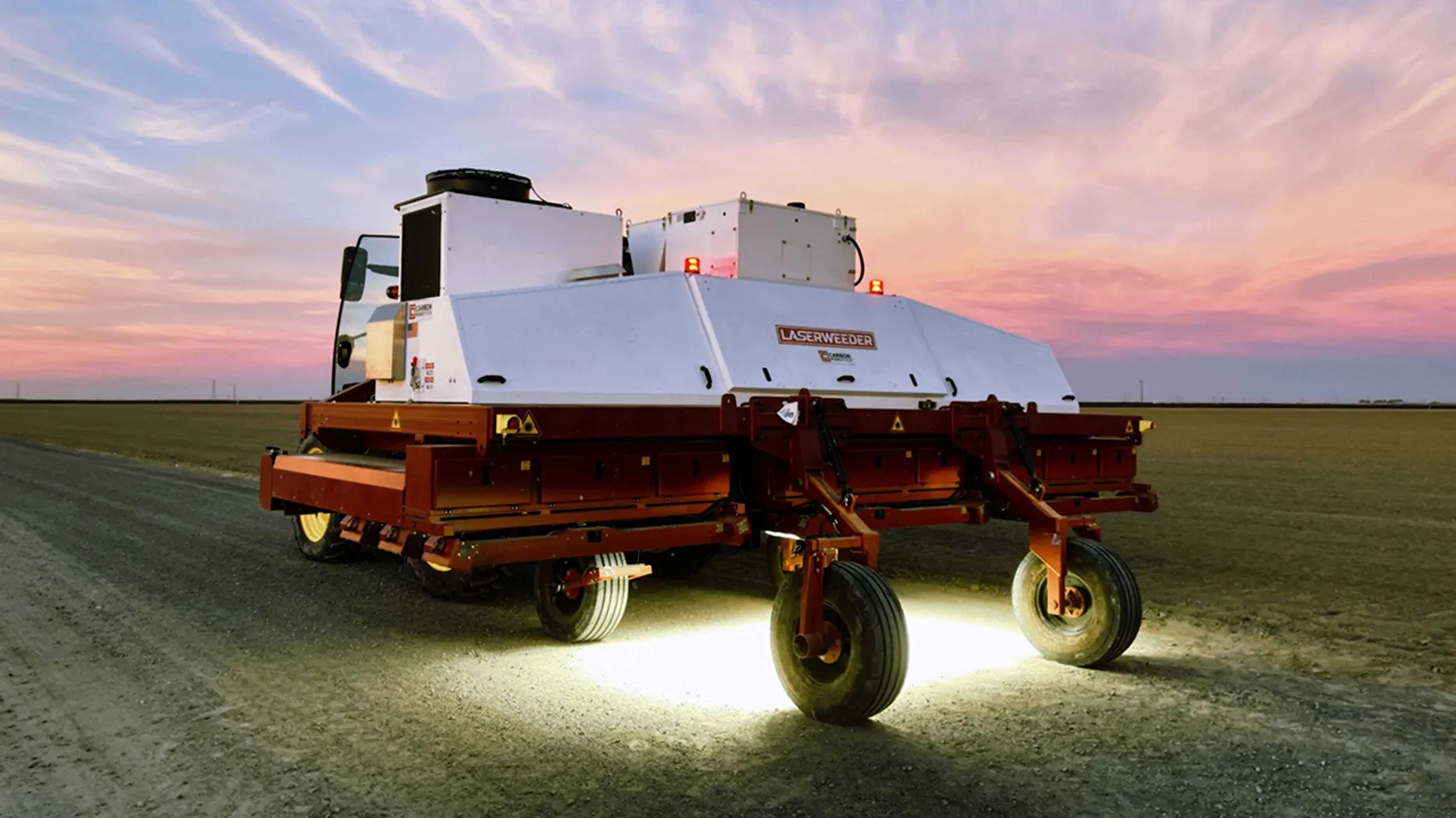
Carbon Robotics Introduces LaserWeeder: AI-Powered Solution for Efficient Weed Control in Farming

Carbon Robotics, a leader in the AI space, is now shipping its innovative LaserWeeder to farms across the United States. This cutting-edge machine utilizes lasers and robotics to effectively eliminate weeds from fields, offering farmers a fast and accurate solution.

Weeds have long been recognized as one of the most challenging and time-consuming aspects of farming. The LaserWeeder, developed by Carbon Robotics, can remove over 200,000 weeds per hour and provide up to 80% cost savings in weed control, according to the company.

Continue reading… “Carbon Robotics Introduces LaserWeeder: AI-Powered Solution for Efficient Weed Control in Farming”

Breakthrough Memory Design by University of Cambridge Promises Enhanced Performance and Energy Efficiency

A team of researchers from the University of Cambridge has introduced an innovative computer memory design that holds the potential to significantly enhance performance and reduce energy consumption in internet and communications technologies.

According to the university, the growing demands of artificial intelligence (AI), algorithms, and data-driven technologies are projected to consume over 30% of global electricity within the next decade. The researchers attribute a large part of this energy demand to the limitations of current computer memory technologies.

Continue reading… “Breakthrough Memory Design by University of Cambridge Promises Enhanced Performance and Energy Efficiency”

The Bionic Professor: Advancing Wearable Robotics with AI for Assistive Technologies

Brokoslaw Laschowski, known as “the bionic professor” to his students at the University of Toronto, is making remarkable strides in the field of wearable robotics. As a research scientist at the KITE Research Institute and an assistant professor in the Faculty of Applied Science & Engineering, Laschowski and his team are developing wearable robots empowered by artificial intelligence (AI) that can make independent decisions, much like autonomous cars.

Their groundbreaking work encompasses bionic prosthetic legs, exoskeletons, AI-powered smart glasses, and neural interfaces. Primarily focused on medical applications, Laschowski aims to assist individuals with physical disabilities, striving to design technology that allows seamless human-machine synergy in meaningful ways. By incorporating computer vision, he seeks to merge humans and machines, drawing inspiration from autonomous cars’ use of vision for path planning and control.

Continue reading… “The Bionic Professor: Advancing Wearable Robotics with AI for Assistive Technologies”

Amazon’s Expressive Robots Reshape Fulfillment Centers and Human-Machine Dynamics

In a sprawling warehouse in Reading, Massachusetts, Amazon has deployed a fleet of distinctive robots named Proteus that are revolutionizing the interaction between humans and automation. With their LED-rendered eyes, lidar sensors, and expressive features, these robots aim to enhance communication and collaboration with human workers. Sophie Li, a software engineer at Amazon, explains that allowing Proteus to express happiness can contribute to its effectiveness in working alongside people.

Proteus, slated for deployment aboard the Lunar Gateway as part of the Artemis mission, is just one example of the new wave of smarter robots entering Amazon’s fulfillment centers. These robots are taking on tasks previously handled by humans, such as the Sparrow robot that demonstrates human-like dexterity in picking products from storage cubbies. With these advancements, Amazon is poised for a company-wide and industry-wide shift in the balance between automation and human involvement.

Continue reading… “Amazon’s Expressive Robots Reshape Fulfillment Centers and Human-Machine Dynamics”

China Set to Surpass Japan as World’s Largest Car Exporter with Booming EV Shipments

China is on track to overtake Japan as the world’s largest car exporter in 2023, driven by a surge in electric vehicle (EV) shipments, according to research firm Canalys. The anticipated growth in Chinese EV exports is projected to reach 1.3 million in 2023, nearly double the 679,000 EVs exported in 2022, as reported by the China Association of Automobile Manufacturers (CAAM). Overall vehicle exports from China are expected to reach 4.4 million in 2023, up from 3.1 million in 2022.

While Japan’s car exports were estimated at 3.8 million in 2022, official data suggests the figure is closer to 3.5 million, according to the South China Morning Post. Nevertheless, China’s booming EV exports, accounting for 30% of all exports, will propel the country to surpass Japan and secure the top spot this year, following its overtaking of Germany in 2022. Mainland Chinese automakers are targeting key markets in Southeast Asia, Europe, Africa, India, and Latin America, with a well-established automotive supply chain at home enhancing their global competitiveness.

Continue reading… “China Set to Surpass Japan as World’s Largest Car Exporter with Booming EV Shipments”

Tesla’s EV Charging Dominance Spurs Revenue Potential and Highlights Business Model Innovation

Tesla’s supremacy in the electric vehicle (EV) market continues to expand, encompassing not only vehicle production but also EV-related infrastructure. Recently, both GM and Ford announced plans for their EVs to be compatible with Tesla chargers, solidifying Tesla’s position as a leader in the charging network space.

Tesla’s foray into the charging business was originally unintentional. The ongoing debate about charging infrastructure prompted Tesla to construct its own network, not with the aim of generating profit but rather to assure buyers that they could travel across the country without concerns of running out of power.

Continue reading… “Tesla’s EV Charging Dominance Spurs Revenue Potential and Highlights Business Model Innovation”

Greater Bay Technology Unveils Revolutionary All-Weather EV Battery

Chinese startup Greater Bay Technology has made a bold claim, stating that its new electric vehicle (EV) battery, called the Phoenix cell, can function seamlessly in any weather condition. The battery utilizes superconducting materials and innovative thermal management techniques, enabling it to rapidly adjust freezing temperatures to normal room temperature within just five minutes, as reported by Bloomberg.

Extreme temperatures have long posed challenges for EV batteries, reducing their charging efficiency when temperatures drop below freezing (32 degrees Fahrenheit or zero degrees Celsius). This limitation has hindered the reliability of EV range for owners. Carmakers have previously resorted to incorporating heat pumps to maintain optimal battery temperatures, but this approach has proven to be inefficient.

Continue reading… “Greater Bay Technology Unveils Revolutionary All-Weather EV Battery”
Discover the Hidden Patterns of Tomorrow with Futurist Thomas Frey
Unlock Your Potential, Ignite Your Success.

By delving into the futuring techniques of Futurist Thomas Frey, you’ll embark on an enlightening journey.

Learn More about this exciting program.