Quantum Simulator Offers New Insights into Relativity and Quantum Theory

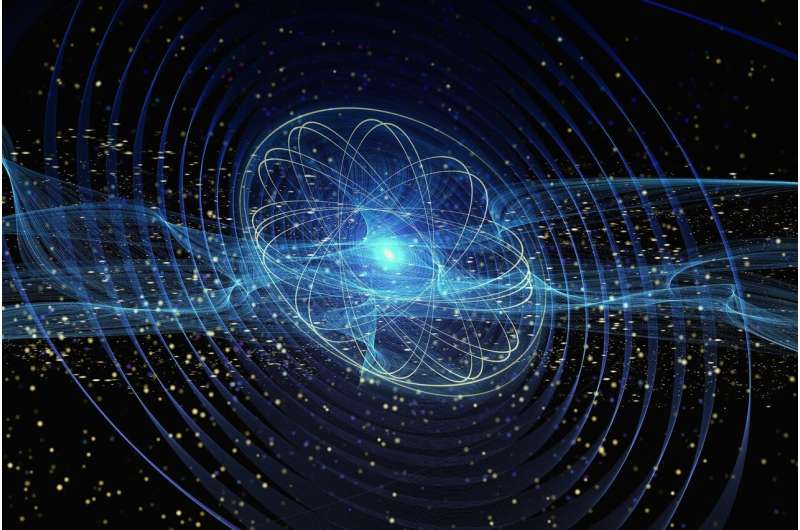
The interplay between the theory of relativity and quantum theory remains an intriguing challenge in scientific research. While each theory effectively explains phenomena at different scales, reconciling them into a unified framework has proven elusive. This pursuit of a “quantum theory of gravity” stands as one of the foremost unsolved tasks in science. The complexity of the mathematical equations involved and the difficulty in conducting appropriate experiments have contributed to the ongoing quest.

At the TU Wien in Vienna, Austria, an innovative approach has emerged: the utilization of a “quantum simulator” to explore these fundamental questions. Rather than directly investigating quantum particles in curved spacetime, researchers construct a “model system” that offers analogies and insights into the desired system. Excitingly, the team has demonstrated the exceptional effectiveness of this quantum simulator.

Continue reading… “Quantum Simulator Offers New Insights into Relativity and Quantum Theory”

NASA Achieves Record-Breaking Data Transfer in Space Using Laser System

NASA’s TBIRD (TeraByte InfraRed Delivery) satellite, a compact satellite the size of a tissue box, has set a remarkable milestone by achieving the fastest data transfer rate ever recorded in space. According to a recent NASA post, TBIRD demonstrated a space-to-ground optical link speed of 200 gigabits per second (Gbps) on April 28. This orbital laser light communications system doubled its own previous record, set less than a year ago.

NASA emphasizes that “ultra-high-speed” optical communication has the potential to transmit significantly more information compared to traditional space communication systems. Recognizing its potential, NASA has announced plans to test this technology during its Artemis II mission scheduled for next year, which could enable Moon-bound astronauts to stream high-definition footage back to Earth in near real-time.

Continue reading… “NASA Achieves Record-Breaking Data Transfer in Space Using Laser System”

Artificial Intelligence Unlocks Insights into Alzheimer’s Disease and Potential Treatments

Researchers from the University of Arizona College of Medicine – Tucson and Harvard University have utilized the power of artificial intelligence (AI) to delve deep into the human brain, mapping the molecular changes that occur in healthy neurons as Alzheimer’s disease progresses. The findings, published in Nature Communications Biology, shed light on potential drug targets and causes of the neurodegenerative disorder.

Alzheimer’s disease poses a significant challenge in the field of medicine, with its complex nature leading to irreversible symptoms such as dementia, memory loss, and personality changes. While drugs can alleviate certain symptoms, discovering a cure has remained elusive, mainly due to the unclear cause of the disease.

Continue reading… “Artificial Intelligence Unlocks Insights into Alzheimer’s Disease and Potential Treatments”

Wendy’s Set to Test Underground Robot System for Lightning-Fast Food Delivery to Cars

Wendy’s Co. has joined forces with hyperlogistics company Pipedream to initiate a pilot program for a groundbreaking food delivery system that promises to bring orders to designated parking spots within seconds, the fast-food chain announced on Wednesday.

Recognizing the importance of speedy and accurate service in ensuring customer satisfaction, Deepak Ajmani, Wendy’s U.S. chief operations officer, expressed the company’s commitment to enhancing the ordering experience.

Under the partnership with Pipedream, Wendy’s will implement the Instant Pickup system, which leverages an underground autonomous robot network to transport meals from the kitchen to an exterior portal. This innovative solution allows customers who place online orders to conveniently receive their food without leaving their vehicles.

Continue reading… “Wendy’s Set to Test Underground Robot System for Lightning-Fast Food Delivery to Cars”

Tesla Bot AI Humanoid Robots Unveil Impressive New Capabilities


Tesla AI engineers, developers, and designers have recently unveiled a captivating demonstration video showcasing the current capabilities of their latest creation: artificial intelligent humanoid robots. During Elon Musk’s shareholder event, investors were given an exclusive preview of the robots’ remarkable skills, as highlighted in the embedded video below.

According to Tesla, the robots have achieved significant milestones, including the ability to walk forward, pick up objects, and even recognize various items. This video demonstration serves as a testament to the impressive progress made by Tesla in the field of robotics.

The Tesla Bot has been specifically designed to tackle tasks that are either hazardous, repetitive, or monotonous for human workers. With a height estimated at around 5’8″ and a carrying capacity of up to 45 lbs, the Tesla Bot aims to be a versatile assistant. It boasts a maximum walking speed of 5 mph, utilizing technologies similar to those found in Tesla’s renowned vehicles. This includes the utilization of the autopilot system for autonomous navigation, as well as advanced sensors and cameras for perceiving and understanding its surroundings.

Continue reading… “Tesla Bot AI Humanoid Robots Unveil Impressive New Capabilities”

Satellite Resurrection: How a Bold Heat Shield Design Could Reshape the Future of Space Exploration

A Welsh design firm called Space Forge is making strides in the development of reusable satellites with their innovative foldable heat shield. Unlike retired satellites that usually disintegrate upon reentry into Earth’s atmosphere, Space Forge’s shield, named Pridwen after King Arthur’s legendary shield, is engineered with a durable alloy capable of withstanding the extreme temperatures generated by atmospheric friction. The company has been dedicated to perfecting this technology for over four years, thanks to funding from the U.K. Space Agency and the European Space Agency (ESA).

Pridwen is designed to unfold prior to reentry, effectively redirecting heat away from the satellite and enabling a controlled descent back to Earth for future use. This breakthrough aims to emulate SpaceX’s success in revolutionizing the rocket industry through the reusability of its Falcon 9 boosters. Space Forge seeks to replicate this achievement with satellites, which are typically rendered useless at the end of their operational lives.

Continue reading… “Satellite Resurrection: How a Bold Heat Shield Design Could Reshape the Future of Space Exploration”

Breaking Boundaries: Waterloo Engineers Develop AI Robot Companion for Dementia Patients

The number of people living with dementia is expected to rise significantly in the coming years, potentially doubling in the United States by 2050, according to projections. One of the challenges faced by individuals with dementia is the loss of long-term episodic memories, including important details such as first-day-of-school experiences or sensory information like sights and smells.

Episodic memories are stored in the hippocampus, which is often affected by dementia, causing difficulties in recalling recent events. With no known cure for dementia, treatment focuses on slowing its progression and enhancing quality of life.

To address these challenges, engineers at the University of Waterloo have developed a robot designed to assist people with dementia in locating misplaced items such as medicines and glasses. Dr. Ali Ayub, a postdoctoral fellow in electrical and computer engineering, and his team presented their research at the ACM/IEEE International Conference on Human-Robot Interaction this year.

Continue reading… “Breaking Boundaries: Waterloo Engineers Develop AI Robot Companion for Dementia Patients”

NASA Unveils Plans for Nuclear Rocket Launch in 2027

NASA has disclosed further details about its upcoming nuclear rocket launch scheduled for 2027. The agency has joined forces with the Defense Advanced Research Projects Agency (DARPA) to conduct a test flight of a nuclear rocket on a conventional vehicle launch, focusing on examining the engine’s performance and ensuring its adherence to expectations.

During a recent meeting of NASA’s Advisory Council, Dr. Anthony Calomino, NASA’s space nuclear technology portfolio Manager, highlighted the safety measures implemented in the nuclear rocket launch plans. He emphasized that the reactor would remain inactive until it is securely distanced from Earth, emphasizing NASA’s commitment to ensuring the mission’s safety.

NASA’s involvement in the development of nuclear technology for space applications centers around three main designs: nuclear fission surface power generation (similar to a conventional nuclear power plant), nuclear electric propulsion, and nuclear thermal propulsion. The agency is presently collaborating with six contractors, including Lockheed Martin, BIWXT, Westinghouse, Aerojet Rocketdyne, Intuit Machines, and X-Energy, to develop a concept for a 40-kilowatt-electric lunar fission surface plant.

Continue reading… “NASA Unveils Plans for Nuclear Rocket Launch in 2027”

Artificial Intelligence Powers Breakthrough in Large-Scale Atom Simulations

Utilizing the computational prowess of one of the world’s top supercomputers, scientists have achieved the most accurate simulation to date of objects consisting of tens of millions of atoms, thanks to the integration of artificial intelligence (AI) techniques. Previous simulations that delved into the behavior and interaction of atoms were limited to small molecules due to the immense computational power required. Although there are methods to simulate larger atom counts over time, they heavily rely on approximations and fail to provide intricate molecular details.

A team led by Boris Kozinsky at Harvard University has developed a tool named Allegro, which leverages AI to perform precise simulations of systems containing tens of millions of atoms. To demonstrate the capabilities of their approach, Kozinsky and his team employed Perlmutter, the world’s eighth most powerful supercomputer, to simulate the complex interplay of 44 million atoms constituting the protein shell of HIV. Additionally, they successfully simulated other vital biological molecules such as cellulose, a protein associated with haemophilia, and a widespread tobacco plant virus.

Continue reading… “Artificial Intelligence Powers Breakthrough in Large-Scale Atom Simulations”

Exploring the Cosmos: NASA’s Snake-like Robot Eyes Alien Worlds

Mars, the moon, and even distant moons of Saturn and Jupiter—these celestial bodies have one thing in common: they are home to a different kind of inhabitant, robots. Humans have only sent their scientific devices to these extraterrestrial worlds, but now NASA is planning to send a groundbreaking slithering snake-bot into the depths of space.

The team at NASA’s Jet Propulsion Laboratory (JPL) has been diligently developing a snake-inspired robot named Exobiology Extant Life Surveyor, or EELS, since 2019. EELS is designed not only to navigate various terrains on Earth but also to explore the intriguing landscapes of other planets within our solar system.

Continue reading… “Exploring the Cosmos: NASA’s Snake-like Robot Eyes Alien Worlds”

Gaming Meets Artificial Intelligence: Step Inside Google’s AI-Driven Game Universe

The rise of artificial intelligence (AI) has brought about significant changes in the tech industry, permeating various sectors and capturing the interest of the masses. From AI art-generating apps like DALL-E mini to the creation of stunning artwork based on text prompts, its popularity continues to grow. However, as more companies embrace AI, concerns arise regarding its potential for misuse and the potential impact on employment.

In an effort to promote responsible AI use, Google recently announced measures aimed at enhancing transparency when utilizing the technology for art production. While acknowledging the legitimate concerns, it is worth noting that individuals who enjoy AI for personal entertainment can also explore another aspect of the technology: mobile gaming.

Continue reading… “Gaming Meets Artificial Intelligence: Step Inside Google’s AI-Driven Game Universe”

Delft University Unveils Highly Efficient Hydrogen Car Set to Break World Records

A student team from Delft University of Technology in the Netherlands has introduced what could potentially be the most efficient hydrogen car in the world. Named ERXII, this groundbreaking vehicle aims to cover a remarkable distance of over 2,000km using just 1kg of hydrogen fuel. To put it into perspective, this distance is equivalent to the stretch between Amsterdam and Kyiv.

The ERXII’s capabilities will be put to the test in June at Shell’s Eco-Marathon event in France. The Eco-Runner will compete against student teams from across Europe to break the world record for the longest distance traveled on hydrogen without refueling. The current record, set in 2022 by a methanol fuel-cell-powered Renault Zoe, stands at 2,056km. The 80kg carbon fiber vehicle has been meticulously designed to maximize aerodynamics. With a constant speed of 45kph, the ERXII is projected to cover 2,056km within a span of three days.

Continue reading… “Delft University Unveils Highly Efficient Hydrogen Car Set to Break World Records”
Discover the Hidden Patterns of Tomorrow with Futurist Thomas Frey
Unlock Your Potential, Ignite Your Success.

By delving into the futuring techniques of Futurist Thomas Frey, you’ll embark on an enlightening journey.

Learn More about this exciting program.