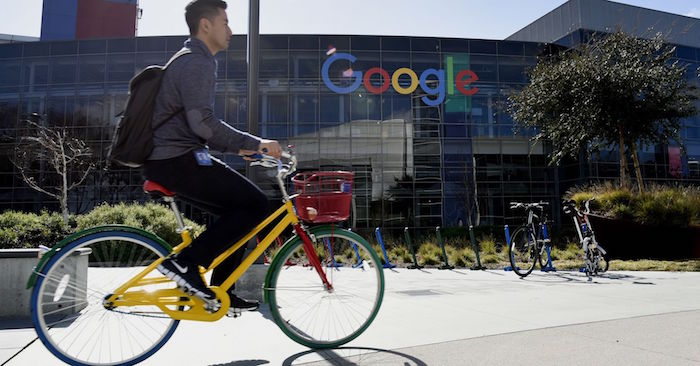
8 companies offering work-from-home jobs that don’t require a college degree

105172555-Googleplex_Campus.1910x1000

In an effort to secure the best talent on the market, more and more companies are expanding their applicant pool to include professionals without a traditional college degree.

Job search site Glassdoor compiled a list of who some of these companies are, with top employers like Apple, Google and IBM making the cut. Recently, FlexJobs examined that list to see which companies are also in their database with open positions that allow employees to work from anywhere. (FlexJobs notes that while some of the available work-from-home positions at these companies do require a college degree, there are many open positions that don’t.)

Take a look at the list below to see which flexible companies you should consider working for if you don’t have a four-year college education:

Continue reading… “8 companies offering work-from-home jobs that don’t require a college degree”

Too few cybersecurity professionals is a gigantic problem for 2019

Hacker team coding at laptop and computer monitor at hackathon in dark office

As the new year begins gaining steam, there is ostensibly a piece of good news on the cyber front. Major cyberattacks have been in a lull in recent months, and still are.

The good tidings are fleeting, however. Attacks typically come in waves. The next one is due, and 2019 will be the worst year yet — a sad reality as companies increasingly pursue digitization to drive efficiency and simultaneously move into the “target zone” of cyberattacks.

This bad news is compounded by the harsh reality that there are not nearly enough cybersecurity pros to properly respond to all the threats.

Continue reading… “Too few cybersecurity professionals is a gigantic problem for 2019”

Airbus mulls single-pilot flights as Artificial Intelligence could enable autonomous planes

thumbnail-f4ac8338724a4d8ef71d5a8e7dc08edb-e1511704223806

Skift Take Airbus acknowledges that the “explainability” of artificial intelligence is an impediment to getting regulators to sign off on certain products. Passengers will definitely need some very good explainers, too.

Though autopilot is not a new technology, Airbus’s Chief Technology Office Grazia Vittadini said the company is hoping current advances in artificial intelligence will help complete the step to completely autonomous planes.

Continue reading… “Airbus mulls single-pilot flights as Artificial Intelligence could enable autonomous planes”

Amazon built an electronic vest to improve worker/robot interactions

Robotic-Safety-Vest

Over the course of the last year, Amazon began rolling out a new worker safety wearable to 25+ sites. From the looks of it, the Robotic Tech Vest is really more like a pair of suspenders attached to an electronic utility belt. The Amazon Robotics-designed product was created to keep workers safe when they need to enter a space in order to fix a robotic system or retrieve fallen items. Built-in sensors alert Amazon’s robotic systems to the wearer’s presence, and they slow down to avoid collision.

The vest is designed to work in tandem with the robots’ existing obstacle avoidance detection.

Continue reading… “Amazon built an electronic vest to improve worker/robot interactions”

Molecular machinery that makes potent antibiotic revealed after decades of research

Enzymerender2

Discovery by Rutgers and other scientists could lead to new antibiotics and anticancer drugs

The 3D structure of McbBCD, an enzyme (protein) that makes the potent antibiotic microcin B17 from a smaller protein known as a peptide, as revealed by X-ray crystallography. The red spheres show chemical “cycles” formed by the enzyme that are required for antibacterial activity.

Scientists at Rutgers and universities in Russia, Poland and England have solved a nearly 30-year mystery – how the molecular machinery works in an enzyme that makes a potent antibiotic.

Continue reading… “Molecular machinery that makes potent antibiotic revealed after decades of research”

We can now grow perfect human blood vessels in a lab

Screenshot 2019-02-03 09.52.02

The latest game changer in diabetes research might not be a new drug or a therapy. Instead, it could be a system of human blood vessels virtually identical to the ones currently transporting blood throughout your body.

What makes these blood vessels special is that they are the first ones grown in a lab — and they’ve already generated a new lead in diabetes treatment.

Continue reading… “We can now grow perfect human blood vessels in a lab”

Giving poop is the new giving blood

 Screenshot 2019-02-02 12.59.36

A side effect of donating blood is the self-satisfaction in knowing that you’ve done your duty to help save a life. The whole process only takes about 15 minutes and you’re rewarded with a juice box and free cookies. While giving blood is super important—and always will be—if you really want to go the extra mile, you should consider donating your poop for use in fecal transplants, too.

According to a new report published in the journal Frontiers in Cellular and Infection Microbiology, “super-donors” are those whose microbiomes are swarming with good bacteria—ideal candidates to provide material for fecal transplants. With the help of these super poopers, doctors are working to eradicate irritable bowel syndrome, allergies, type 2 diabetes, asthma, Alzheimer’s disease, and certain cancers.

Continue reading… “Giving poop is the new giving blood”

World leaders at Davos call for global rules on tech

 merlin_149622171_39cffa56-dbd1-4dda-b764-22c407e2e4c4-superJumbo

DAVOS, Switzerland — Leaders of Japan, South Africa, China and Germany issued a series of calls on Wednesday for global oversight of the tech sector, in a clear signal of growing international interest in seizing greater regulatory supervision of an industry led by the United States.

Prime Minister Shinzo Abe of Japan said his country would use its chairmanship of the Group of 20 nations this year to push forward a new international system for the oversight of how data is used. Data governance will be the theme when the group’s presidents and prime ministers gather in June in Osaka for their annual summit meeting.

The emphasis will be on expanding World Trade Organization rules to encompass trade in data as well as goods and services, he said. “I would like Osaka G20 to be long remembered as the summit that started worldwide data governance,” Mr. Abe said in a speech at the World Economic Forum in Davos, Switzerland.

Continue reading… “World leaders at Davos call for global rules on tech”

Undersea basecamp for ocean explorers

Screenshot 2019-02-02 11.35.27

New submersible “tent” lets divers nap, eat, and decompress beneath the waves

SINCE THE DAWN of the modern SCUBA age ushered in by Jacques Cousteau in the early 1940s, ocean explorers have been seeking new ways to stay under the sea for longer stretches. Restricted by tank size and human physiology under pressure, SCUBA divers must periodically come up for air, sometimes within just minutes of hitting bottom.

Enter the Ocean Space Habitat, conceived of as sort of underwater “basecamp.”

Designed and recently patented by National Geographic explorer Michael Lombardi and Winslow Burleson, an associate professor at New York University, the inflatable Ocean Space Habitat is a portable life-support system for divers who want to go deeper and stay longer than conventional SCUBA allows.

Continue reading… “Undersea basecamp for ocean explorers”

12 awesome flying cars and taxis currently in development

171003-volocopter-mn-1400_d1e739239561c79d689564fc11aa1312.fit-2000w

These flying cars want to take your commute to new heights

We were promised that the future would bring flying cars, right? We were. And the good news is that tech entrepreneurs around the world are finally getting started on creating what are commonly known as VTOL (Vertical Take-Off and Landing, pronounced vee-toll) vehicles designed at car size.

Of course, no one is ready for flying cars quite yet. There’s no infrastructure to support them, and a whole new set of auto laws would have to be drawn up to regulate them (like personal drones, but a thousand times worse). The first commercial VTOLs we will see won’t be hanging out at the local auto dealer—they’ll be taxi services built to shuttle people from part of a city to another.

Here’s all the current projects that want to put you in the seat of a flying car.

Continue reading… “12 awesome flying cars and taxis currently in development”

A study on driverless car ethics offers a troubling look into our values

 Lester-DriverlessCars

To figure out how autonomous vehicles should respond during potentially fatal collisions, a group of scientists set out to learn what decisions human drivers would make.

The first time Azim Shariff met Iyad Rahwan—the first real time, after communicating with him by phone and e-mail—was in a driverless car. It was November, 2012, and Rahwan, a thirty-four-year-old professor of computing and information science, was researching artificial intelligence at the Masdar Institute of Science and Technology, a university in Abu Dhabi. He was eager to explore how concepts within psychology—including social networks and collective reasoning—might inform machine learning, but there were few psychologists working in the U.A.E. Shariff, a thirty-one-year-old with wild hair and expressive eyebrows, was teaching psychology at New York University’s campus in Abu Dhabi; he guesses that he was one of four research psychologists in the region at the time, an estimate that Rahwan told me “doesn’t sound like an exaggeration.” Rahwan cold-e-mailed Shariff and invited him to visit his research group.

Continue reading… “A study on driverless car ethics offers a troubling look into our values”

Amazon has made its own autonomous six-wheeled delivery robot

Amazon is entering the robot delivery game with an electric hamper on wheels it’s calling the Amazon Scout. The e-commerce giant is the latest company to try its hand at this sort of automated, last-mile delivery solution, following a crop of startups, as well as experiments by larger firms like Domino’s Pizza and PepsiCo.

Details about the Scout are thin on the ground, but the design looks similar to existing robots. In fact, the Scout looks almost identical to devices from Starship Technologies, an Estonian startup that was an early entrant to the field. (In a statement to The Verge after this story was published, a spokesperson for Starship Technologies said “[w]e’re huge believers in autonomous delivery robots. As the company that created this category, it’s great to see others realizing the potential.”)

Continue reading… “Amazon has made its own autonomous six-wheeled delivery robot”

Discover the Hidden Patterns of Tomorrow with Futurist Thomas Frey
Unlock Your Potential, Ignite Your Success.

By delving into the futuring techniques of Futurist Thomas Frey, you’ll embark on an enlightening journey.

Learn More about this exciting program.