Neuralink Goes Global: Elon Musk’s Brain Chip Heads to the UK for High-Stakes Human Trials

The future just got a UK passport.

In a bold expansion beyond U.S. borders, Neuralink—the brain-computer interface (BCI) startup founded by Elon Musk—has launched its first European clinical trial. The UK has become ground zero for testing the next phase of mind-controlled technology, as seven British patients with severe paralysis prepare to have a coin-sized chip implanted directly into their brains.

Let’s be clear: this isn’t a sci-fi plot. It’s happening now.

Working alongside the University College London Hospitals and Newcastle upon Tyne Hospitals, Neuralink is testing whether its N1 chip can allow paralyzed individuals to control digital devices with nothing but thought. Type an email? Open an app? Play a game? All without lifting a finger. For the right patient, this could be a leap from locked-in to logged-on.

Continue reading… “Neuralink Goes Global: Elon Musk’s Brain Chip Heads to the UK for High-Stakes Human Trials”

The Great Educational Awakening:Why Learning Must Become Earning

The most profound question facing humanity isn’t whether AI will change education—it’s whether we’ll have the courage to let it save us from an educational system that’s systematically failing millions while enriching a privileged few.

The Uncomfortable Truth We’re All Avoiding

Why do we persist with an educational model that transforms curious five-year-olds into debt-laden twenty-two-year-olds who can recite Shakespeare but can’t balance a budget, code a website, or solve real-world problems? Simon Sinek reminds us to start with why, so let’s ask the uncomfortable question: What if our entire approach to education is fundamentally backwards?

Continue reading… “The Great Educational Awakening:Why Learning Must Become Earning”

The Propeller Revolution Is Here—and It’s Loopy

Since the age of steamships, propellers haven’t changed much. Same basic shape. Same basic inefficiencies. Until now.

Enter Sharrow Engineering—a Detroit-based disruptor with a bold claim: they’ve reinvented the propeller. Not tweaked. Not optimized. Reinvented.

Their invention? A hypnotic, closed-loop design that looks more like modern art than marine hardware. But this loopy shape isn’t just for show—it eliminates the drag-inducing tip vortices that have plagued traditional propellers since the 1830s. The result? Up to 30% more fuel efficiency, drastically reduced noise and vibration, and handling so smooth it feels like piloting a completely different vessel.

Continue reading… “The Propeller Revolution Is Here—and It’s Loopy”

The Death of Middle Management and the Rise of the Mini-CEO

Everyone’s asking whether AI will kill their job.

Wrong question.

The real story isn’t about who gets replaced. It’s about who gets upgraded. Because AI isn’t just reshaping tasks—it’s obliterating the entire concept of traditional management.

Middle managers were never the stars. They were the routers. They translated executive direction downward and aggregated employee output upward. Necessary? Sure. But revolutionary? Never.

Continue reading… “The Death of Middle Management and the Rise of the Mini-CEO”

The Ground Beneath You Is Now a Battery—And It’s Already Working

For over a century, humanity has stored electricity by pumping water uphill and letting it flow back down. It’s a clever trick—but now we’re thinking deeper. Literally.

What if we could turn the Earth itself into a rechargeable battery?

That’s exactly what a Texas-based company called Quidnet is doing. Their new technology—Geomechanical Energy Storage (GES)—uses high-pressure water injections into layers of impermeable rock to store massive amounts of energy for months, with zero leakage.

Not hours. Not days. Months.

Continue reading… “The Ground Beneath You Is Now a Battery—And It’s Already Working”

They Bleed, Therefore They Live: Mini Organs Just Crossed the Threshold of Life

For years, mini organs—organoids—have been stuck in a paradox. We could grow them. We could watch them twitch, pulse, and mimic the basic behaviors of hearts, brains, livers, and lungs. But they couldn’t survive long enough to matter.

Why? Because they didn’t bleed.

Without blood vessels, these lab-grown miracles died from the inside out—hollow promise at the core. Now, two groundbreaking studies have rewritten that fate. Scientists have finally cracked the code to vascularize organoids, breathing life into what were once biological shadows.

Continue reading… “They Bleed, Therefore They Live: Mini Organs Just Crossed the Threshold of Life”

Sunlight, a Sponge, and the End of Thirst: Scientists Unleash Scalable, Energy-Free Desalination

Forget billion-dollar desalination plants, complex filters, or energy-hungry infrastructure. The next revolution in clean water might just come from a 3D-printed sponge and the sun.

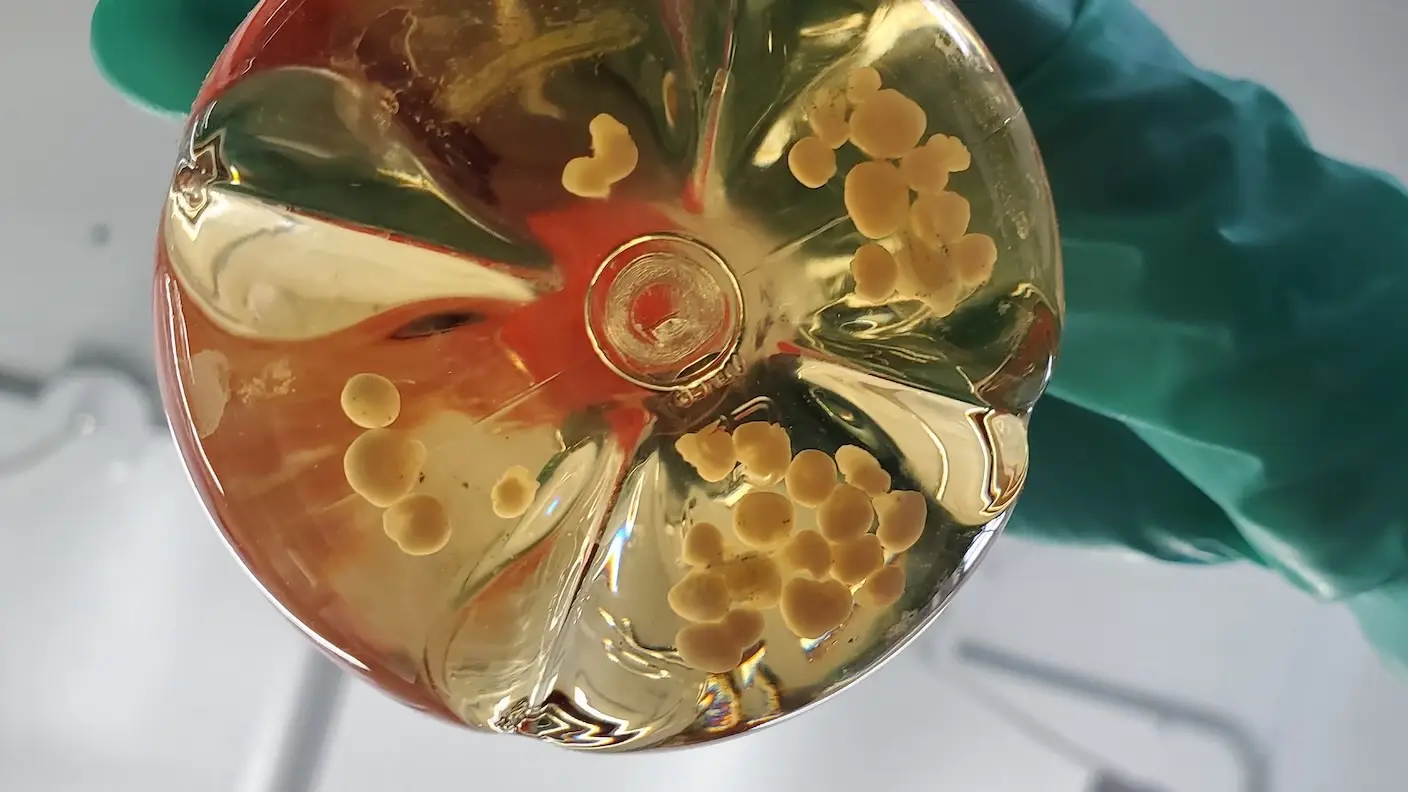
In a radical leap forward, researchers at the American Chemical Society have developed a lightweight, porous aerogel that turns salty seawater into fresh, drinkable water using nothing more than natural sunlight and a curved piece of plastic. No electricity. No pressure systems. Just a sun-powered sponge that could fit in your backpack—and possibly save millions.

Continue reading… “Sunlight, a Sponge, and the End of Thirst: Scientists Unleash Scalable, Energy-Free Desalination”

Plastic’s Chemical Jailbreak: Scientists Slash Recycling Costs with One Enzyme-Fueled Hack

The world’s dirtiest material may have just met its molecular match.

In a stunning breakthrough, scientists have unveiled a new enzymatic recycling method that turns plastic’s worst traits into profit-generating advantages—and it all hinges on a single, brilliantly simple chemical switch.

Led by researchers from the U.S. Department of Energy’s National Renewable Energy Laboratory (NREL), the University of Massachusetts Lowell, and the University of Portsmouth, the new process promises to break down PET—the world’s most-used plastic—faster, cheaper, and cleaner than ever before. Forget decades of hype around theoretical recycling utopias. This one actually works.

Continue reading… “Plastic’s Chemical Jailbreak: Scientists Slash Recycling Costs with One Enzyme-Fueled Hack”

Google’s AI Is Decoding the Genetic “Dark Matter” That Controls Us All

For years, scientists stared at the human genome and shrugged. We mapped it, sequenced it, even gave it a name—the Human Genome Project. But when it came to understanding what most of that DNA actually does, we were flying blind. Only about 2% of our genetic code directly tells cells which proteins to build. The rest—an eerie 98%—was long dismissed as “junk.”

Not anymore.

Google DeepMind just dropped a molecular bombshell: AlphaGenome, an AI that doesn’t just read your DNA—it predicts how the darkest corners of it control your body’s machinery. It’s not just looking at genes. It’s reading the switches, regulators, silencers, enhancers, and hidden messages that tell those genes when, where, and how to act.

Continue reading… “Google’s AI Is Decoding the Genetic “Dark Matter” That Controls Us All”

Twelve Financial Superpowers We Haven’t Invented Yet – The Untapped Potential of Blockchain

By Futurist Thomas Frey

Beyond the Bank

For over a century, traditional banking has defined our relationship with money. It enables savings, lending, credit, and global payments—but it also comes with deep structural limitations. Banks operate within the rigid boundaries of jurisdictional regulation, depend heavily on trusted intermediaries, and are burdened by aging infrastructure. In the modern age, opening an account still requires identity verification through government documents, credit assessments based on opaque criteria, and slow, manual settlement systems. Cross-border transactions can take days. Sending money to someone in another country might involve five institutions and three sets of fees. Innovation within this system is, by design, incremental.

Blockchain technology, by contrast, invites us to rethink what money can do. It isn’t just a more efficient payment rail or a decentralized ledger for currency—it’s a sandbox for entirely new kinds of financial behavior. Blockchain offers a programmable substrate for value itself, untethered from the constraints of geography and bureaucracy. As we move beyond simply digitizing existing financial models, we unlock a future in which value flows, transforms, and self-executes without permission. In this emerging space, a new generation of capabilities is waiting to be born—financial superpowers that the current banking world simply cannot imagine, let alone implement.

Continue reading… “Twelve Financial Superpowers We Haven’t Invented Yet – The Untapped Potential of Blockchain”


Air. Water. Anywhere: Students Build a 3D-Printed Drone That Flies, Swims—and Breaks the Rules of Physics

In a Danish lab filled with student prototypes and secondhand electronics, something extraordinary has taken flight—and dived straight into the pool.

A team of applied industrial electronics students at Aalborg University has pulled off a jaw-dropping feat: a fully 3D-printed hybrid drone that takes off, plunges underwater, swims like a mechanical fish, and then explodes back into the air—no pause, no manual switch, just seamless transition between two fundamentally different worlds.

Forget what you know about drones. This isn’t a toy with wings. It’s a shape-shifting robot that obeys no single environment and no conventional engineering playbook.

Continue reading… “Air. Water. Anywhere: Students Build a 3D-Printed Drone That Flies, Swims—and Breaks the Rules of Physics”

No Scalpel, No Sternum, No Problem: Surgeons Replace Heart Valve Through the Neck in Robotic World First

Heart surgery just went from brutal to barely noticeable.

In a world-first operation that borders on science fiction, surgeons at the Cleveland Clinic have replaced a failing heart valve through a tiny incision in the neck—no cracked chest, no rib spreaders, no weeks-long recovery. Just four precision-guided robotic arms, a hidden scar along a neck crease, and a surgical team that rewrote the rulebook on aortic valve replacement.

Dr. Marijan Koprivanac, the mastermind behind the procedure, didn’t just avoid the sternum—he eliminated it from the equation entirely. Traditional aortic valve replacement (AVR) means opening the chest wide, a brutal process that carries pain, risk, and lengthy rehab. Even the “minimally invasive” versions still involve partial sternotomies or rib incisions. But not this.

This time, the surgeons went in through the front of the neck.

Continue reading… “No Scalpel, No Sternum, No Problem: Surgeons Replace Heart Valve Through the Neck in Robotic World First”
Discover the Hidden Patterns of Tomorrow with Futurist Thomas Frey
Unlock Your Potential, Ignite Your Success.

By delving into the futuring techniques of Futurist Thomas Frey, you’ll embark on an enlightening journey.

Learn More about this exciting program.