The Driverless Revolution Series Part 6: The Daily Life Revolution—How AVs Change Where We Live, Work, and Spend Time

By Futurist Thomas Frey

The Commute That Isn’t

It’s 2042. James lives in Boulder, Colorado. He works in downtown Denver—35 miles away.

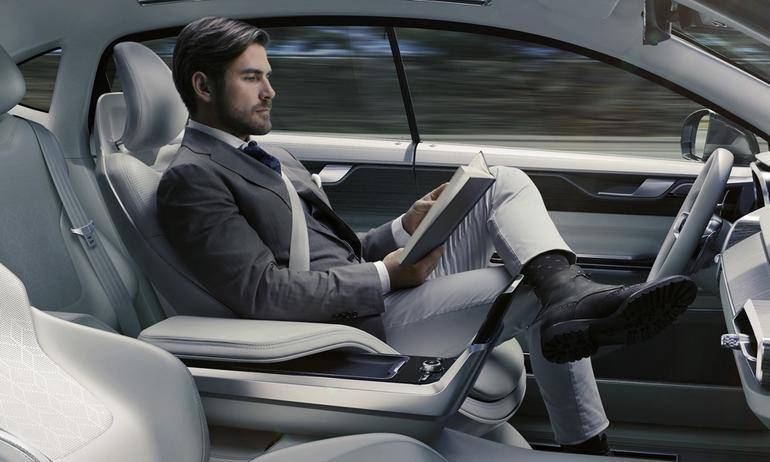
Every morning at 6:30 AM, an autonomous vehicle arrives at his house. He gets in with his coffee, opens his laptop, and starts working. By the time he arrives at his office at 7:45 AM, he’s already answered emails, reviewed documents, and attended a virtual meeting.

His evening commute? Same thing. He leaves the office at 5:00 PM, works in the AV until 6:15 PM, then walks in his front door having completed a full workday plus 90 minutes of commute-time productivity.

His wife Sarah does something different. She sleeps during her morning commute—the AV picks her up at 7:00 AM, she naps for 45 minutes, and wakes up refreshed when the car announces arrival at her office at 7:45 AM. Evening commute? She reads novels. Watches shows. Catches up with friends via video chat. Her commute time is leisure time.

Their teenage daughter Emma takes an AV to high school. She does homework during the 20-minute ride.

Here’s what changed: The family moved from a small apartment near Denver to a large house in Boulder. Why? Because commute time stopped being wasted time. When you can work or sleep or read during your commute, distance matters less.

This is what autonomous vehicles do to daily life. They don’t just change transportation—they change where we live, how we work, when we travel, and what we do with our time.

Continue reading… “The Driverless Revolution Series Part 6: The Daily Life Revolution—How AVs Change Where We Live, Work, and Spend Time”
The Driverless Revolution Series Part 4: Freedom at Last—How AVs Liberate the Elderly, Disabled, and Mobility-Constrained

By Futurist Thomas Frey

The Day Margaret Stopped Driving

Margaret is 76. She stopped driving last year after her doctor said her vision and reaction time weren’t safe anymore. She didn’t argue—she’d been feeling less confident behind the wheel for a while.

That decision made her a prisoner in her own home.

She lives in a nice house in suburban Phoenix. Her daughter lives 40 minutes away. Her doctor is 15 minutes away. The grocery store is 8 minutes away. Her church is 12 minutes away. Her friends from her book club are scattered across the metro area.

None of this is walkable. There’s no public transit. Uber costs $25-40 for a round trip to the grocery store, which is ridiculous for a 15-minute errand. She can’t ask her daughter to drive her everywhere—her daughter works full-time and has her own kids to worry about.

So Margaret sees her doctor less than she should. She misses church sometimes. She can’t attend book club anymore. She orders groceries online but it’s not the same as shopping herself. She’s lonely, isolated, and depressed.

This is the reality for millions of elderly Americans. About 25% of people over 65 don’t drive anymore. For people over 85, it’s closer to 50%. They lose independence precisely when they most need to maintain it.

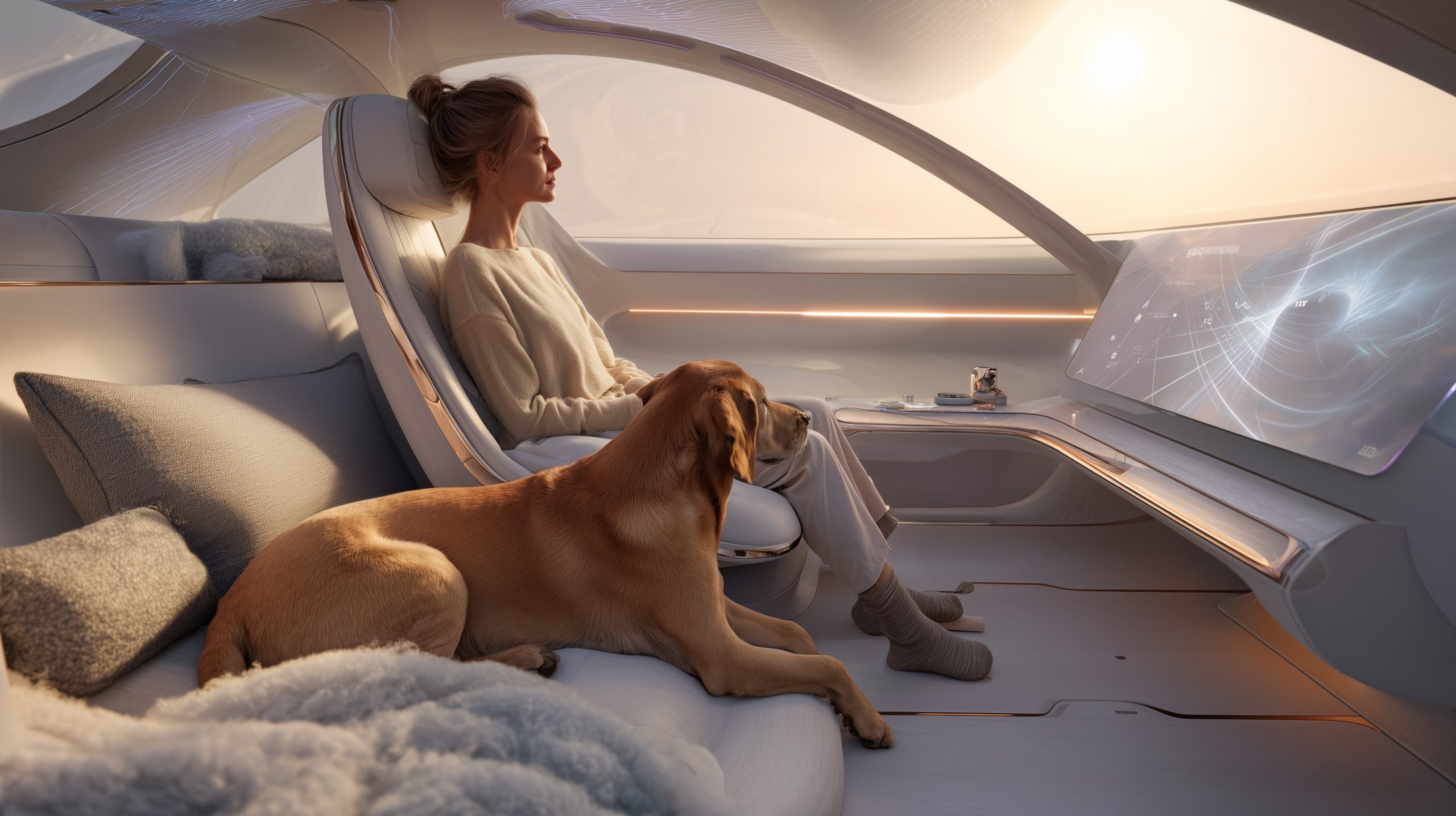
But Margaret is 76 in 2025. If she were 76 in 2040, her life would be completely different. Because by then, she could summon an autonomous vehicle to take her anywhere, anytime, for a fraction of today’s ride-share costs.

She’d keep her independence into her 80s, maybe 90s. She’d stay connected to her community. She’d manage her own medical care. She’d remain active and engaged instead of isolated and declining.

This isn’t hypothetical. This is what autonomous vehicles will do for the elderly. And it’s one of the most unambiguously positive impacts of the technology.

Continue reading… “The Driverless Revolution Series Part 4: Freedom at Last—How AVs Liberate the Elderly, Disabled, and Mobility-Constrained”

The Driverless Revolution Series Part 2: The 5 Million Job Extinction—Drivers, Traffic Cops, and the Unemployment Crisis

By Futurist Thomas Frey

The Largest Job Loss in American History

In 1900, 40% of American workers were farmers. By 2000, less than 2% were. That transition took a century and still caused massive social disruption—farms failed, rural towns collapsed, generations struggled to adapt.

We’re about to do something similar in 15 years, not 100.

By my count, approximately 5 million Americans make their living directly from driving or managing drivers. Not building cars or selling cars—actually driving them or enforcing rules about driving.

Here’s the rough breakdown:

  • 3.5 million truck drivers
  • 500,000+ taxi, Uber, and Lyft drivers
  • 300,000+ bus drivers (school, transit, tour)
  • 100,000+ delivery drivers (though this overlaps with trucking)
  • Tens of thousands of traffic police
  • Tens of thousands of parking enforcement officers
  • Unknown thousands in DMV operations, driving instruction, traffic courts

These are real jobs. Middle-class jobs. Jobs that support families, pay mortgages, send kids to college.

Between 2030 and 2045, most of these jobs disappear. Not because the work isn’t valuable—it is. But because autonomous vehicles do it better, safer, and far cheaper.

This isn’t speculation. It’s math. And the math is brutal.

Continue reading… “The Driverless Revolution Series Part 2: The 5 Million Job Extinction—Drivers, Traffic Cops, and the Unemployment Crisis”

Intel predicts a $7 trillion economy for self-driving vehicles

self-driving-car-concept-2

The race to be the first to deploy autonomous vehicles is on among carmakers, emerging startups, and tech giants. Amid this constant news cycle of deals and drama, the purpose of all of it can get lost — or at least a bit muddied. What exactly are these companies racing for?

Continue reading… “Intel predicts a $7 trillion economy for self-driving vehicles”

How will maintenance change with the autonomous vehicle?

All machines eventually break down. Self-driving vehicles are no exception.

Autonomous vehicles pose two problems for the future of vehicles. The removal of the driver means there is no person providing feedback on how the vehicle performs over time. You are removing the point-person who says “something feels wrong, this needs to be checked out.” An autonomous truck could easily arrive at its destination with one fewer wheels than it left with at its origin without recognizing there is a problem.

Continue reading… “How will maintenance change with the autonomous vehicle?”

Domino’s has already outperformed every tech stock, now robots will deliver its pizzas

Over the last decade, the stock price of Domino’s Pizza has crushed that of Apple, Google, Amazon, and Facebook mainly because it stopped making pizza that tasted like cardboard. Now it’s innovating on the labor front with plans to test robots as substitutes for your friendly pizza delivery guy. “With our growth plans over the next five to 10 years, we simply won’t have enough delivery drivers if we do not look to add to our fleet through initiatives such as this,” Domino’s chief executive said in a statement announcing the pilot program.

Continue reading… “Domino’s has already outperformed every tech stock, now robots will deliver its pizzas”

AImotive aims to convert regular cars into driverless ones inexpensively

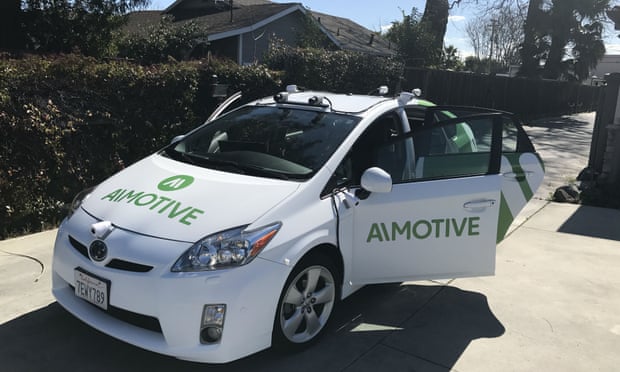
The AImotive office is in a small converted house at the end of a quiet residential street in sunny Mountain View, spitting distance from Google’s headquarters. Outside is a branded Toyota Prius covered in cameras, one of three autonomous cars the Hungarian company is testing in the sleepy neighborhood. It’s a popular testing ground: one of Google’s driverless cars, now operating under spin-out company Waymo, zips past the office each lunchtime.

Continue reading… “AImotive aims to convert regular cars into driverless ones inexpensively”

Starship Technologies develops self-driving robot that can deliver groceries for $1.50

starship

Starship is a new company that is promising to disrupt local delivery with the launch of a self-driving robot that can deliver groceries to customers’ doors in under 30 minutes for less than $1.50 (£1). The Starship robot has been developed by Skype co-founders Ahti Heinla and Janus Friis. It drives on pavements at an average speed of 4mph, and uses proprietary mapping and navigation technology to avoid crashing into obstacles.

Toyota plans to have self-driving cars on the road by 2020

Toyota

Japanese car maker Toyota announced this month that it has planned to have self-driving cars commercially available by 2020 — the same year Nissan, General Motors and Google plan to have autonomous vehicles on the road.

Continue reading… “Toyota plans to have self-driving cars on the road by 2020”

Discover the Hidden Patterns of Tomorrow with Futurist Thomas Frey
Unlock Your Potential, Ignite Your Success.

By delving into the futuring techniques of Futurist Thomas Frey, you’ll embark on an enlightening journey.

Learn More about this exciting program.