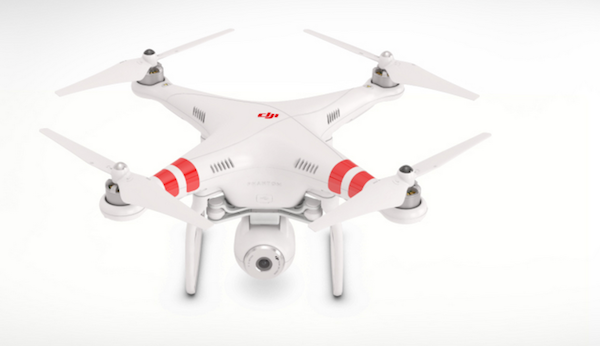
A man crashed a quadcopter on a busy street in New York City in September. Footage has accidentally been shot of the inside of someone’s apartment. Drones cause problems, but the technology is too exciting to write off. (Video)
Face-reading technology raises many questions about privacy and surveillance.
Private emotions are often revealed in tiny, fleeting facial expressions, visible only to a best friend — or to a skilled poker player. Now, computer software is using frame-by-frame video analysis to read subtle muscular changes that flash across our faces in milliseconds, signaling emotions like happiness, sadness and disgust.
U.K.-based Fripp Design has found a surprising application with 3D printing: prosthetic eyes. Fripp Design says it can churn out as many as 150 prosthetic eyes an hour, and sell them for as low as $160 each. That’s a major improvement over glass prosthetic eyes, which not only take weeks to make, but also sell for thousands of dollars.
Both Evacuated Tube Transport Technologies (ET3) and Hyperloop want to compete against California High Speed Rail (HSR). So, ET3 has begun an Indiegogo campaign to fund the legal research and drafting of a California proposition that will remove the obstacles holding back ET3 and Hyperloop from competing to deliver a next generation ground transportation system that the traffic and smog ridden residents of California deserve.
Sebastian Thrun, founder of Udacity, captivated the world with visions of self-driving cars and Google Glass and has signed up 16 million students for online classes. So why is he pivoting away from MOOC’s? Thrun says, “We don’t educate people as others wished, or as I wished.”
Xiaomi, a Chinese smartphone manufacturer, has just sold 150,000 units of its latest flagship device, the Mi-3, in under 10 minutes – using only a chat app: Tencent-owned WeChat.
Devices with “smart” technology these aren’t only our phones. It seems as if everything from watches to toothbrushes are integrating intelligent tech into its design.
Sometimes it’s hard to gauge just how much things have changed with the surge in mobile devices. Sure, we know they’re popular, are loaded with awesome cameras and apps, and ensure we’re connected to the digital world throughout the day, but how have these devices changed society as a whole?
Scientists have spent so much time making amazing airplanes, such as this solar-powered one that flew cross-country using the power of the sun. But, for all that great work, there’s been surprisingly little work in the creation of better paper airplanes. Luckily, PowerUp 3.0 fixes this oversight.
Since the 1970’s, space-based solar power has been a futuristic fantasy but the advent of 21st century 3-D printing may bring it a step closer to reality. (Video)
Human beings make terrible drivers. They talk on the phone and run red lights, signal to the left and turn to the right. They drink too much beer and plow into trees or veer into traffic as they swat at their kids. They have blind spots, leg cramps, seizures, and heart attacks. They rubberneck, hotdog, and take pity on turtles, cause fender benders, pileups, and head-on collisions. They nod off at the wheel, wrestle with maps, fiddle with knobs, have marital spats, take the curve too late, take the curve too hard, spill coffee in their laps, and flip over their cars. Of the ten million accidents that Americans are in every year, nine and a half million are their own damn fault.
This has been the worst year ever for the TV business. According to Citi Research, audience ratings have collapsed: Aside from a brief respite during the Olympics, there has been only negative ratings growth on broadcast and cable TV since September 2011.