Key facts as India surpasses China as the world’s most populous country

The recent news that India has surpassed China to become the world’s most populous country has generated significant attention and discussion. According to a recent article in Pew Research Center’s Fact Tank, India’s population is currently estimated to be around 1.39 billion, while China’s is estimated to be around 1.36 billion.

The article quotes various experts and provides important context about India’s population growth and its potential implications. For example, it cites Sanjay Kumar, director of the Centre for the Study of Developing Societies in Delhi, who notes that India is experiencing significant demographic changes, including a growing youth population and a declining fertility rate. He suggests that these changes could have important implications for India’s economy and social development in the coming decades.

Continue reading… “Key facts as India surpasses China as the world’s most populous country”
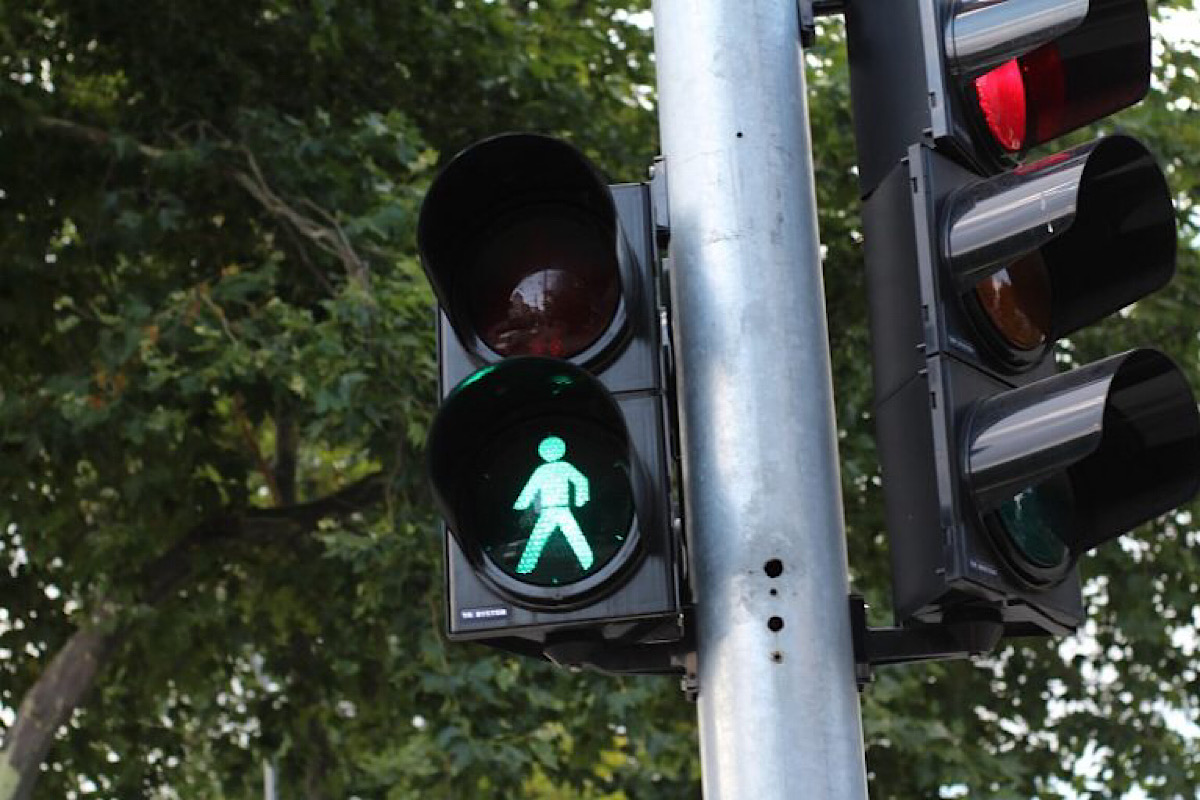
Scientists propose a fourth light on traffic signals for self-driving cars

A proposal by researchers at the University of Waterloo in Canada to add a fourth light to traffic signals that would be specifically for communicating with self-driving cars.

The proposed light, which would be blue in color, would indicate to autonomous vehicles that they have been detected by the traffic signal system and that it is safe to proceed through the intersection. This would help ensure that self-driving cars are able to navigate through intersections safely and efficiently, without relying on human drivers to interpret traditional traffic signals.

According to the researchers, the addition of a fourth light to traffic signals could help facilitate the widespread adoption of autonomous vehicles and improve overall traffic flow. However, they note that more research is needed to evaluate the effectiveness of this approach and to determine how it would be implemented in practice.

Continue reading… “Scientists propose a fourth light on traffic signals for self-driving cars”

Autonomous steering system keeps human drivers engaged

The Attention-Driven Steering (ADS) system, which aims to improve driver engagement and awareness in semi-autonomous vehicles, was developed by researchers at the University of Waterloo in Canada, including Krzysztof Czarnecki, a professor in the Department of Electrical and Computer Engineering.

In a research paper titled “Attention-Driven Steering for Semi-Autonomous Vehicles,” the team provides technical details about the system’s design and implementation. According to Czarnecki, “ADS uses a camera to track the driver’s eye movements and a machine learning algorithm to predict the direction they are looking in. The system then adjusts the vehicle’s steering angle to keep it moving in the same direction as the driver’s gaze.”

Continue reading… “Autonomous steering system keeps human drivers engaged”

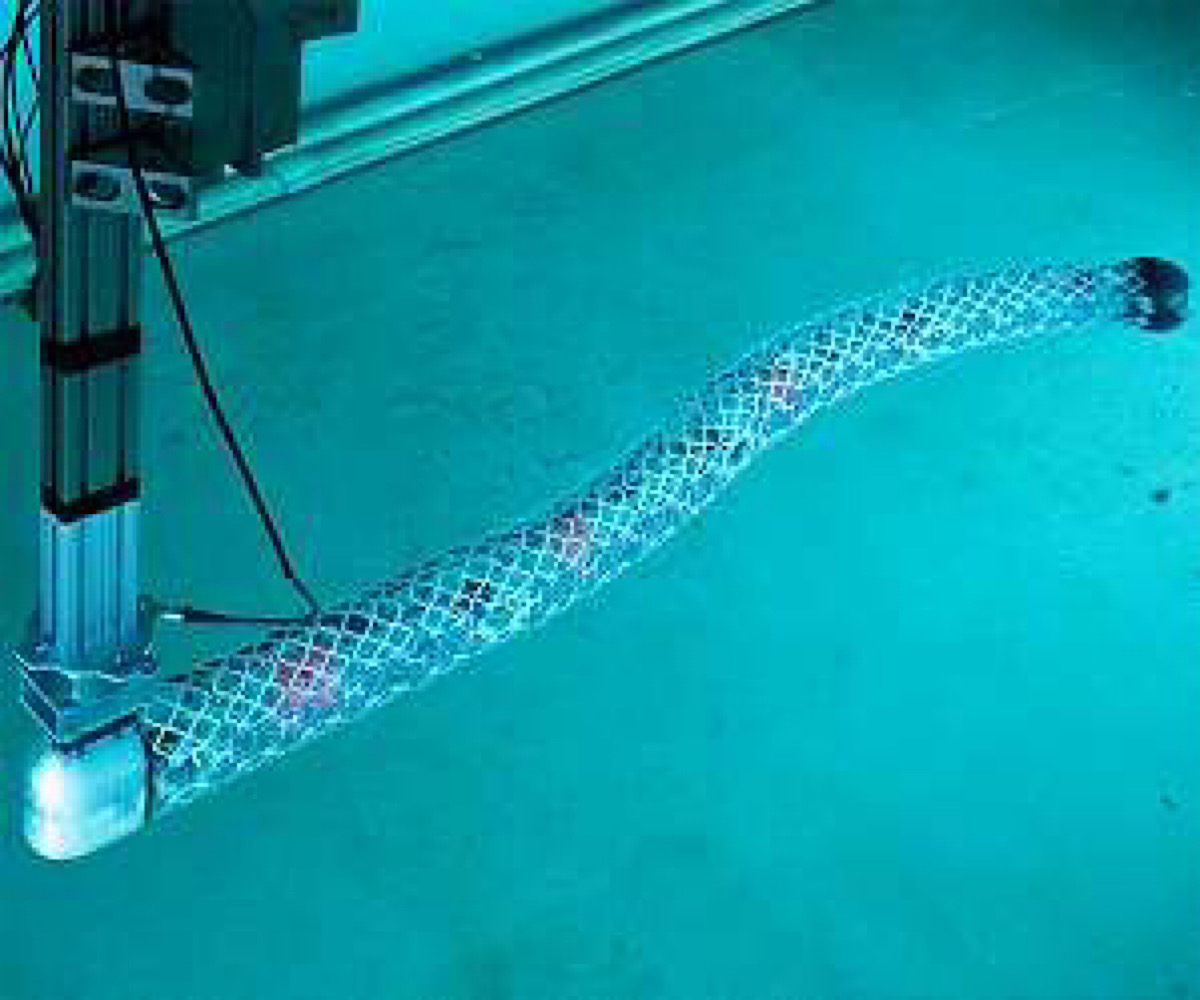
Engineers devise a modular system to produce efficient, scalable aquabots

As reported on Space Daily’s website, a team of engineers has developed a modular system to create efficient and scalable aquatic robots, or “aquabots.” The system was developed by a team of researchers from the Harvard John A. Paulson School of Engineering and Applied Sciences (SEAS) and the Wyss Institute for Biologically Inspired Engineering at Harvard University.

The system is designed to enable the creation of aquabots that can adapt to different tasks and environments, allowing for greater efficiency and scalability in their production. In describing the system, the article states that “The modular design allows for rapid design and fabrication of a range of different robotic platforms, including single- and multi-limbed robots, biomimetic robots, and soft robots.”

Continue reading…Engineers devise a modular system to produce efficient, scalable aquabots

Inside Nasa’s brand new futuristic aircraft which has no front window for pilots to see ahead

The display can switch to different channels at eyewatering speeds, matching that of a single honeybee wing flap

According to an article published on The Sun’s website, NASA has developed a new aircraft that does not feature a front window. In describing the design of the aircraft, the author states that “The futuristic-looking craft uses a camera system instead of a traditional cockpit windscreen, with pilots relying on screens inside the cabin to see what’s ahead.”

This new aircraft, known as the X-59 Quiet Supersonic Technology (QueSST) aircraft, has been designed to “fly faster than the speed of sound without producing the deafening sonic boom that’s typical of supersonic planes.” NASA has partnered with Lockheed Martin to build and test the QueSST, with the goal of using it to “gather information on how members of the public react to the sound of a sonic boom.”

Continue reading… “Inside Nasa’s brand new futuristic aircraft which has no front window for pilots to see ahead”

Carnegie Mellon’s AI-Powered FRIDA Robot Collaborates With Humans To Create Art

FRIDA, a robotic arm with a paintbrush taped to it, uses artificial intelligence to collaborate with humans on works of art. Here, it works on a portrait of Ruth Bader Ginsburg.

The Carnegie Mellon University School of Computer Science has unveiled its latest robotic creation, named Frida. This humanoid robot is designed to interact with people and perform tasks that require physical dexterity, such as picking up and manipulating objects.

According to Manuela Veloso, Dean of the School of Computer Science, “Frida is a significant step forward in our quest to create robots that can collaborate with humans in a natural and intuitive way.”

Frida has a sophisticated sensor system that allows her to perceive her environment and react to changes in real-time. She can also recognize and respond to human gestures and expressions, making her a highly adaptable and versatile robot.

Continue reading… “Carnegie Mellon’s AI-Powered FRIDA Robot Collaborates With Humans To Create Art”

A NEW AI-POWERED PLATFORM IS ABOUT TO CHANGE THE WAY WE SHOP FOR FOOD

By curating groceries based on personal taste, you’ll never buy the wrong thing again

Spoon Guru, a new AI-powered platform, is set to revolutionize the way we shop for food. According to Markus Stripf, co-founder of Spoon Guru, the platform is designed to cater to every dietary preference and make the entire grocery shopping experience more inclusive. By using AI algorithms to personalize food recommendations based on users’ dietary needs, preferences, and restrictions, Spoon Guru makes it easier for customers to find the products they need.

The platform has already been adopted by major retailers such as Tesco and Woolworths. Paul Wilkinson, Director of Tesco Group, stated that Spoon Guru helps customers find products that meet their individual needs and preferences. Meanwhile, Martin Woolley, Head of Product Development at Woolworths, believes that the technology will enable customers to easily find the products they need, while also discovering new ones that they might not have considered before.

Continue reading… “A NEW AI-POWERED PLATFORM IS ABOUT TO CHANGE THE WAY WE SHOP FOR FOOD”

Scientists reproduced a gravity field- 1,000 times stronger than Earth’s gravity

The study overcomes the effects of Earth’s gravity, replicating conditions on other planets, stars.

A recent discovery has shed new light on one of the most intriguing phenomena in the universe. Astronomers have found an incredibly strong gravity field, approximately 1,000 times more potent than Earth’s gravity, surrounding a rare type of neutron star known as a magnetar.

The magnetar in question is located approximately 30,000 light-years away from Earth and was discovered by a team of scientists from the University of Amsterdam and the University of Cambridge. The researchers used observations from the European Space Agency’s XMM-Newton satellite to measure the strength of the magnetar’s gravity field.

Continue reading… “Scientists reproduced a gravity field- 1,000 times stronger than Earth’s gravity”

Intuitive Machines to Shift IM-1 Mission’s Landing Site to Moon’s South Pole Region

An article on ExecutiveBiz reports that Intuitive Machines, a Texas-based aerospace and defense company, is moving the landing site for its IM-1 spacecraft to the south pole region of the moon. The author quotes Steve Altemus, president and CEO of Intuitive Machines, who explains that the new landing site will enable the company to collect data and conduct experiments in an area that has not been explored before.

Altemus adds that “the south pole region of the moon is an exciting and important area to explore, and we believe that our mission will provide valuable insights into the moon’s geology and potential resources.”

The article also mentions that the IM-1 mission is part of NASA’s Commercial Lunar Payload Services (CLPS) program, which aims to enable the delivery of scientific instruments and payloads to the moon. Intuitive Machines is one of several private companies that have been selected by NASA to participate in the program.

Continue reading… “Intuitive Machines to Shift IM-1 Mission’s Landing Site to Moon’s South Pole Region”

A Voice Bank is born, with artificial intelligence for ALS patients – Healthcare

According to an article on Breaking Latest News, a voice bank powered by artificial intelligence (AI) has been developed for patients with amyotrophic lateral sclerosis (ALS). The article cites Dr. Carlo Rinaldi, a consultant neurologist at the Sheffield Institute for Translational Neuroscience (SITraN) who led the research team.

Dr. Rinaldi explains that patients with ALS gradually lose their ability to speak, which can significantly impact their quality of life. The voice bank, developed in collaboration with Scottish startup, SpeakUnique, enables patients to record their voices before they lose their ability to speak. The AI technology then creates a synthetic voice that closely resembles the patient’s natural voice.

The article also mentions the work of Professor Chris McDermott, a neurologist and researcher at SITraN who emphasizes the importance of preserving the unique voice of ALS patients. Professor McDermott states that “Voice banking is becoming an important part of the care that we offer to patients with ALS, and AI technology is helping to enhance the process.”

Continue reading… “A Voice Bank is born, with artificial intelligence for ALS patients – Healthcare”

Machine Learning May be Key to Tracking Space Debris

Tiny fragments of space debris pose threats to operating satellites and spacecraft. Researchers are building a platform to track them and predict their movements. Image: NASA

An article published on the ASME (American Society of Mechanical Engineers) website discusses how machine learning can be utilized to track space debris. The author quotes Dr. Moriba Jah, an associate professor of aerospace engineering and engineering mechanics at the University of Texas at Austin, who stresses the significance of tracking space debris. Dr. Jah warns that space debris is becoming an increasingly pressing issue that will compromise our ability to use space in the future.

Dr. Jah further explains that conventional approaches to tracking space debris are insufficient, and machine learning has the potential to significantly enhance our ability to monitor and forecast the movements of objects in space. The author also mentions the work of Dr. Mark Matney, an orbital debris scientist at NASA, who is leading a project to leverage machine learning to track debris in geostationary orbit. Dr. Matney emphasizes the importance of machine learning, stating that “machine learning is going to be essential for helping us stay ahead of the debris problem and protect our valuable space assets.”

Continue reading… “Machine Learning May be Key to Tracking Space Debris”

ARTIFICIAL INTELLIGENCE BREAKTHROUGH LETS HUMANS ‘TALK’ WITH BATS AND BEES ‘CHANGING WHAT WE KNOW’ ABOUT NATURE

According to the article on The Sun, scientists are working on developing artificial intelligence (AI) that could allow humans to communicate with animals. The research is being carried out by a team at Con Slobodchikoff, a professor emeritus at Northern Arizona University, in the US.

The team is using machine learning algorithms to analyze the sounds and body language of different animals, with the aim of developing a universal language that can be understood by both humans and animals. The technology could potentially be used to communicate with a wide range of animals, including dogs, cats, and even wild animals.

According to Slobodchikoff, “The whole idea is to try to get an appreciation for what animals are trying to communicate to us, and then see if there is some way that we can communicate back to them in a way that they can understand.”

The potential applications of this technology are vast, with implications for animal welfare, conservation, and even human-animal relationships. For example, the technology could be used to better understand the needs of pets, or to communicate with endangered species in the wild.

However, the development of this technology is not without its challenges. Animals communicate in a variety of ways, and it can be difficult to determine which signals are meaningful and which are not. Additionally, it can be difficult to accurately interpret the meaning of animal sounds and body language.

Despite these challenges, the team at Northern Arizona University is optimistic about the potential of this technology. As Slobodchikoff explains, “We think we can get there. We’re not there yet, but we think it’s possible.”

Via The Impactlab

Discover the Hidden Patterns of Tomorrow with Futurist Thomas Frey
Unlock Your Potential, Ignite Your Success.

By delving into the futuring techniques of Futurist Thomas Frey, you’ll embark on an enlightening journey.

Learn More about this exciting program.