Scotland unveiled the first turbine for the MeyGen tidal stream project, the world’s first large-scale tidal energy farm. The project will initially install four turbines, but will eventually have 269 turbines, enough to power 175,000 homes.
Comma.ai, the self-driving car startup helmed by iPhone hacker George Hotz, has unveiled new details about its first commercial product, the newly named Comma One. According to a report from TechCrunch, the company claims this $999 after-market kit will allow buyers to give their cars semi-autonomous abilities on a par with Tesla’s Autopilot. The physical product will be shipping before the end of the year, says Comma.ai, and will require a $24 monthly subscription fee for access to Comma.ai’s software, as well as certain in-car features like electronic power steering. The aim, said Hotz when we spoke to him earlier this year, is to provide “ghost riding for the masses.”
Microsoft has vowed to “solve the problem of cancer” within a decade by using ground-breaking computer science to crack the code of diseased cells so they can be reprogrammed back to a healthy state.
Last week, hackers forced a well-known security journalist to take down his site after hitting him for more than two days with an unprecedented flood of traffic.
That cyberattack was powered by something the internet had never seen before: an army made of more than one million hacked Internet of Things devices.
The hackers, whose identity is still unknown at this point, used not one, but two networks—commonly referred to as “botnets” in hacking lingo—made of around 980,000 and 500,000 hacked devices, mostly internet-connected cameras, according to Level 3 Communications, one of the world’s largest internet backbone providers. The attackers used all those cameras and other unsecured online devices to connect to the journalists’ website, pummeling the site with requests in an attempt to make it collapse.
If you’ve felt like Netflix’s US catalog has shrunk dramatically since the company started making its own shows and movies, you’re absolutely right.
Since 2012, Netflix’s selection of titles has dropped over 50%, from roughly 11,000 titles to about 5,300, according to streaming blog Exstreamist, which cites multiple former Netflix employees.
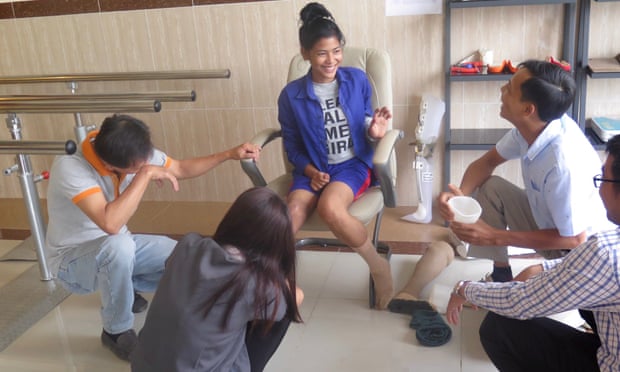
Groundbreaking 3D printing and scanning techniques are improving access to fully customisable artificial limbs
Before the vehicle that she was travelling in flipped over and trapped her right leg, Leakhena Laing was a happy teenager who enjoyed climbing trees and playing football with friends. After her limb was amputated, she could only sit and watch.
My dad, a former Wall Street trader always advised me “cash is king” and to “hold on to it” when the economy gets tough.
But in the Netherlands, cash is definitely not getting the royal treatment. In so many places, it has simply ceased to be recognised as legal tender. More and more Dutch stores, from upscale health-food store Marqt to my local baker and bagel shop, take pin — or debit — cards exclusively. Some retailers even describe going cash-free as “cleaner” or “safer”.
Skyscrapers in the City of London could soon be built by robots rather than by people, according to the boss of one of the UK’s biggest construction firms. The result would be huge productivity gains as more work could be done by fewer people – but also mass layoffs as traditionally labour-intensive construction projects hire fewer and fewer staff.
If you had to pick a tech industry buzzword for 2016, “machine learning” would be a good choice. Every other company, it seems, is packing the phrase into their pitches, and it’s having an effect.