Researchers Create A Gene Therapy Treatment That May Prevent Alzheimer’s

Alzheimer’s disease is devastating both for those who suffer from it and for those who love them. It is also expensive. It’s estimated that the current worldwide cost of coping with Alzheimer’s is $818 billion. A cure for Alzheimer’s is not available and current treatments for the disease focus on mitigating symptoms rather than eliminating causes.

Continue reading… “Researchers Create A Gene Therapy Treatment That May Prevent Alzheimer’s”

Indigo Is Mapping Plant Microbiomes To Produce The Next Generation Of Crops


David Perry thinks the secret to agricultural challenges like drought resistance might lie in the bacteria that live in a bunch of grass on the beach.

That’s just one example that Indigo, a company that analyzes the microbiomes of plants to produce seed coatings that impart various attributes, is looking into as a way to combat difficult conditions for various crops. Indigo is launching today after having raised $56 million in financing over the course of its life.

Continue reading… “Indigo Is Mapping Plant Microbiomes To Produce The Next Generation Of Crops”

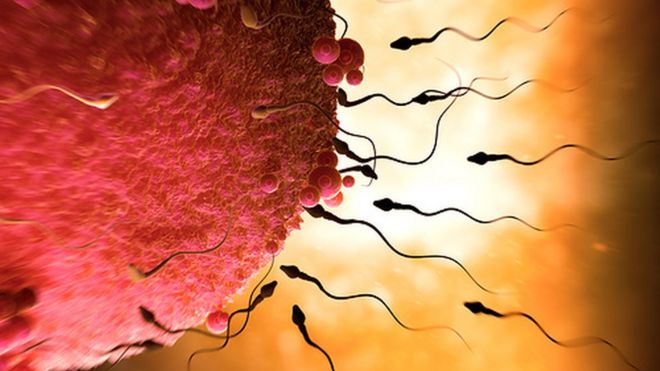
Scientists say making babies without eggs may be a possibile

Scientists say early experiments suggest it may one day be possible to make babies without using eggs.

They have succeeded in creating healthy baby mice by tricking sperm into believing they were fertilising normal eggs.

The findings in Nature Communications, could, in the distant future, mean women can be removed from the baby-making process, say the researchers.

For now, the work helps to explain some of the details of fertilisation.

Continue reading… “Scientists say making babies without eggs may be a possibile”

Nanotech bandage: Healing wounds in days

Egyptian researchers have developed a bandage embedded with nanoparticles for the treatment of wounds using the anti-epilepsy drug Phenytoin, known for its capacity to treat skin injuries.

The bandage can heal wounds in a few days, after just one application to soft tissue. Wounds normally take several days to a few weeks to heal completely, and some may only heal after several months or up to two years.

Continue reading… “Nanotech bandage: Healing wounds in days”

Plastic Surgeons Can Now 3D Print Your Future Nose Job

Whether it’s rhinoplasty or breast augmentation, the general timeline of a cosmetic surgery consultation is relatively consistent: a patient walks in with an idea—often equipped with pictures—and a plastic surgeon outlines what they can do.

Historically, doctors have evolved from sketching proposed changes to embracing two-dimensional imaging on computers to incorporating 3D imaging. Now, some practices are adopting 3D printed models to offer patients a sort of blueprint that they can physically hold and touch with their own hands, and make the $13.5 billion cosmetic procedure industry even more accessible.

Continue reading… “Plastic Surgeons Can Now 3D Print Your Future Nose Job”

Bill Gates Doubles His Bet That Mosquitoes Will Be Wiped Out with Gene Editing

But the technology for extinguishing species is dividing conservationists.

The Bill and Melinda Gates Foundation plans to double the sum it is spending to create a mosquito-killing technology that relies on CRISPR gene editing.

Continue reading… “Bill Gates Doubles His Bet That Mosquitoes Will Be Wiped Out with Gene Editing”

Robots perform surgery inside your eyeballs

The R2D2 is magnitudes more stable than the steadiest surgeon’s hand.

Doctors at Oxford University made medical history recently by successfully completing the first robot-assisted intraocular surgery. Robert MacLaren, Professor of Ophthalmology at the university, and his team managed to gently peel off a 1/1000th millimeter membrane from the inside of a patient’s eye. To do so, the team relied on a cutting-edge medical device known as the Robotic Retinal Dissection Device, or R2D2.

Continue reading… “Robots perform surgery inside your eyeballs”

Google’s Ray Kurzweil: The Business Of Extending Human Life Going Into “High Gear”

The futurist says that we’re getting closer and closer to “reprogramming” the human body.

Over the last many centuries, human life expectancy has very gradually lengthened with improved health and medical technologies and research. In the next 20 years, we can expect our expected life spans to be extended at a far more rapid pace than in the past.

Continue reading… “Google’s Ray Kurzweil: The Business Of Extending Human Life Going Into “High Gear””

Remote control of the brain is coming. How will it be used?

brain-remote

Controlling the minds of others from a distance has long been a favourite science fiction theme – but recent advances in genetics and neuroscience suggest that we might soon have that power for real.

Just over a decade ago, the bioengineer Karl Deisseroth and his colleagues at Stanford University published their paper on the optical control of the brain – now known as optogenetics – in which the firing pattern of neurons is controlled by light.

Continue reading… “Remote control of the brain is coming. How will it be used?”

“Brain Malware”: How Hackers could get inside your brain

1470222159035804

Hackers have spyware in your mind. You’re minding your business, playing a game or scrolling through social media, and all the while they’re gathering your most private information direct from your brain signals. Your likes and dislikes. Your political preferences. Your sexuality. Your PIN.

Continue reading… ““Brain Malware”: How Hackers could get inside your brain”

Scientists explore cells in virtual reality

After generations of peering into a microscope to examine cells, scientists could simply stroll straight through one.

Calling his project the “stuff of science fiction,” director of the 3D Visualisation Aesthetics Lab at the University of New South Wales (UNSW) John McGhee is letting people come face-to-face with a breast cancer cell.

Continue reading… “Scientists explore cells in virtual reality”

Researchers Develop Edible Food Packaging Made of Milk

Back in 1967, when Mike Nichols made the film The Graduate, plastics were the way of the future. Today, although much of our food is in fact wrapped in plastic films, we now know better. Plastics are most decidedly not the way of the future for several reasons: They create a massive amount of waste, they’re not actually that great at preventing spoilage, and they may very well be lousy for your health.

Continue reading… “Researchers Develop Edible Food Packaging Made of Milk”

Discover the Hidden Patterns of Tomorrow with Futurist Thomas Frey
Unlock Your Potential, Ignite Your Success.

By delving into the futuring techniques of Futurist Thomas Frey, you’ll embark on an enlightening journey.

Learn More about this exciting program.