The list of benefits to purchasing an electric car has long included cleaner air and cheaper fuel, and now the American Lung Association (ALA) has added another to the list: government savings.
Spinach is no longer just a superfood. By embedding leaves with carbon nanotubes, MIT engineers have transformed spinach plants into sensors that can detect explosives and wirelessly relay that information to a handheld device similar to a smartphone.
After sensing dangerous chemicals, the carbon-nanotube-enhanced plants send an alert.
Tech behemoths Google, Facebook, Microsoft, IBM and Amazon announced this week that they are teaming up to develop new standards for Artificial Intelligence (AI). It’s a much-needed move. Soon AI will change everything from warfare to our bodies. But we don’t want to become slaves to the robots, so how do we stop the Terminators?
Traffic lights are finally getting smarter in Pittsburgh.
Thanks to a new pilot program from the tech startup Rapid Flow Technologies, Steel City now boasts 50 intersections whose stoplights are running artificial intelligence software known as Surtrac that reduces wait times on empty or lightly-traveled roads.
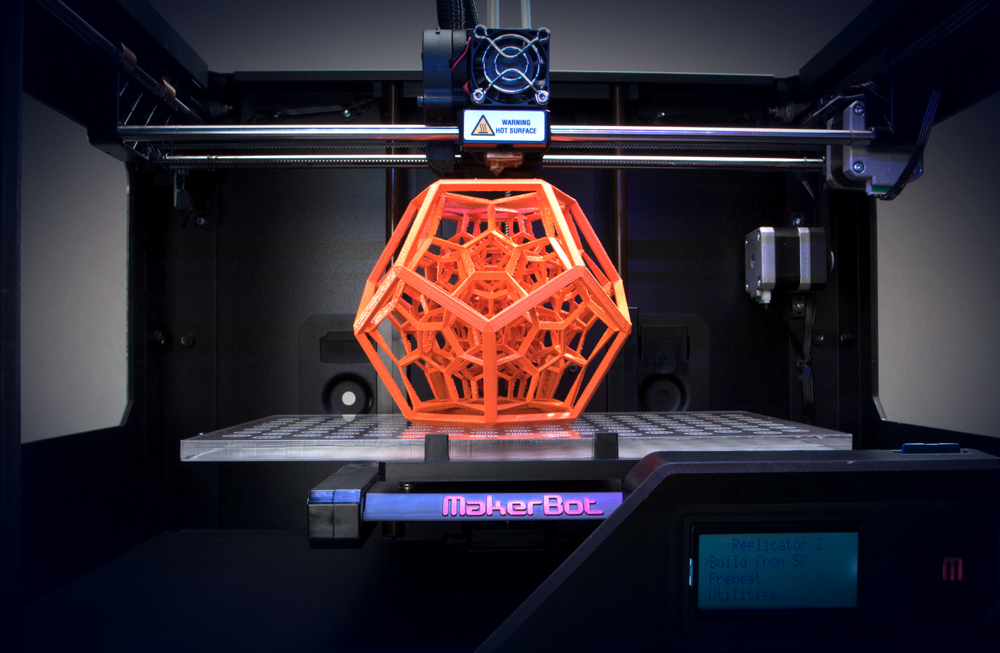
Futurist Thomas Frey is in town to talk to a Greater Des Moines Partnership breakfast Friday. I caught up with him by phone to discuss how our metro is likely to change as disruptive technologies pile up. By the time we were done, I had half-jokingly asked him if Iowa could 3-D print a mountain range, a much-wanted perk here in the flatlands.
The artificial intelligence that beat human players in Go can now learn from its own memory. Google’s DeepMind AI, according to its programmers, is now capable of intelligently building on what’s already inside its memory.
Robots are now just as good at transcribing speech as humans.
According to a paper published yesterday, a team of Microsoft engineers in the Artificial Intelligence and Research division reported their system reached a word error rate (WER) of 5.9 percent, a figure that is roughly equal to that of human abilities.
In the early morning hours of October 20th, an 18-wheeler tractor trailer pulled into Colorado Springs, Colorado, bearing 50,000 frosty cans of Budweiser beer. Normally, this would not be a noteworthy occurrence, but this truck was driving itself, marking the first time that commercial cargo was shipped by a self-driving vehicle.
NASA recently tested drones to serve as unmanned air traffic controllers, according to Recode.
The tests, which were conducted at the Reno, Nevada, airport, are part of a larger research project spearheaded by NASA and the Federal Aviation Administration (FAA) to develop an unmanned air traffic control system.
Stretched, trijet 50-seat configuration to be tested by subscale supersonic demonstrator
Guy Norris Los Angeles
Boom Time
More than half a century after development of the Concorde was launched, progress toward economically viable supersonic airliners has proved elusive. But now a Silicon Valley-backed startup says the ingredients for a successful, small, faster-than-sound airliner are in place, thanks to a new wave of enabling technology and a market primed with the need for speed.
Since first unveiling plans earlier this year for a 40-seat, twin-engine, supersonic transport, Denver-based Boom Technology has revised and fine-tuned the design that will cruise at Mach 2.2 for the same ticket price as subsonic business class. The aircraft has since been stretched to seat up to 50 and is now reconfigured as a trijet to permit immediate use on long overwater routes.