Bio-Inspired Breakthrough: Scientists Develop Bone-Mimicking 3D Printing Material

In a major step forward for regenerative medicine, researchers have developed a new bioceramic material that closely mimics the micro- and nanoscale structure of natural bone. The team overcame significant technical challenges by leveraging prenucleation clusters—tiny molecular structures naturally found in bone that play a key role in guiding mineralization.

By incorporating these clusters into a transparent calcium phosphate resin, the researchers were able to replicate the intricate architecture of real bone, bringing them one step closer to creating implants that don’t just support the body but become part of it. Their groundbreaking results were recently published in Advanced Materials.

Continue reading… “Bio-Inspired Breakthrough: Scientists Develop Bone-Mimicking 3D Printing Material”

Turning Trash into Tech: German Scientists Transform Household Plastic Waste into 3D Printing Gold

Germany is tackling its mounting plastic waste crisis head-on with an innovative approach led by the Fraunhofer Institute for Manufacturing Technology and Advanced Materials (IFAM). In 2023 alone, the country generated a staggering 5.6 million metric tons of plastic waste—most of it single-use packaging consumed in homes. With less than a third of that being recyclable, scientists are under pressure to find new ways to reuse this waste.

Fraunhofer IFAM has developed a cutting-edge system that converts everyday household plastic waste into high-quality filaments used for 3D printing. The breakthrough comes at a critical time as industries increasingly demand sustainable materials for manufacturing.

Continue reading… “Turning Trash into Tech: German Scientists Transform Household Plastic Waste into 3D Printing Gold”

Reclaiming Voices: New Brain-to-Speech Tech Restores Natural Communication for the Paralyzed

For millions of people around the world who have lost the ability to speak due to conditions like stroke, ALS, or traumatic brain injuries, a groundbreaking breakthrough is offering renewed hope. Scientists have developed a cutting-edge system that translates brain activity directly into speech in real time, allowing individuals with severe paralysis to communicate naturally once again.

Unlike earlier technologies that introduced awkward delays into conversation, this new “brain-to-voice neuroprosthesis” responds almost instantly to the user’s intent to speak. It processes brain signals in tiny 80-millisecond chunks, enabling fluid, real-time speech that closely mirrors natural conversation.

Continue reading… “Reclaiming Voices: New Brain-to-Speech Tech Restores Natural Communication for the Paralyzed”

Ultra-Thin Lightsail Brings Interstellar Travel Closer to Reality

In a groundbreaking development that could accelerate humanity’s journey to the stars, scientists have created an ultra-thin, ultra-reflective lightsail membrane designed to ride laser beams at unprecedented speeds. This advancement may one day enable small spacecraft to travel to neighboring star systems like Alpha Centauri in just a few decades—rather than thousands of years.

Developed through a collaboration between researchers at Brown University and the Delft University of Technology (TU Delft) in the Netherlands, the lightsail measures 60 millimeters on each side but is just 200 nanometers thick—thinner than a human hair. What sets this new design apart is its surface, which is patterned with billions of nanoscale holes. These features dramatically reduce the sail’s weight while enhancing its reflectivity, allowing it to better harness the pressure of light for acceleration.

Continue reading… “Ultra-Thin Lightsail Brings Interstellar Travel Closer to Reality”

Bioprinted Fat Brings Burn Treatment Closer to a Breakthrough

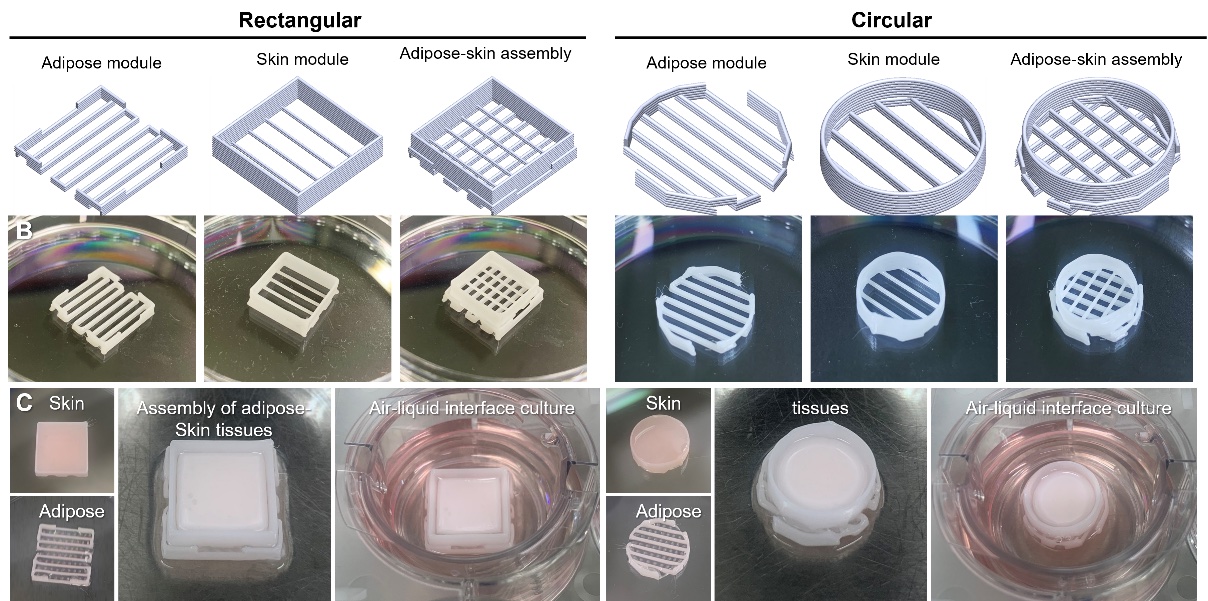
Bioprinting is steadily progressing toward its ambitious goal of creating functional, transplantable tissues and organs. While researchers around the world are focused on printing hearts, cartilage, and other complex body parts, a team from Korea’s Pusan National University has made a crucial advancement in a less flashy—but medically vital—area: 3D printing adipose tissue, commonly known as fat. Their findings, published in Advanced Functional Materials, could mark a major leap forward in wound healing and skin regeneration.

Although printing fat tissue might not sound revolutionary at first glance, adipose tissue plays a critical role in the body. It’s found throughout the body as visceral fat protecting organs, in bones, and under the skin as subcutaneous fat. More importantly, fat is a major component of healthy skin and essential to the body’s natural wound-healing processes. That makes it an ideal target for bioprinting research focused on skin repair—particularly for treating severe burns.

Continue reading… “Bioprinted Fat Brings Burn Treatment Closer to a Breakthrough”

Breakthrough System to Actively Remove Microplastics from Water in a Single Cycle

A team of researchers at North Carolina State University has unveiled an innovative proof of concept for a system that actively removes microplastics from water in just one cycle. The groundbreaking findings, published in the journal Advanced Functional Materials, offer promising potential for improving efforts to cleanse oceans and other water bodies from harmful microplastics that pose a risk to both human health and the environment.

The research, led by Orlin Velev, S. Frank and Doris Culberson Distinguished Professor of Chemical and Biomolecular Engineering at NC State, aims to address the growing issue of microplastic contamination in water. Velev and his team have designed a system that utilizes soft, self-dispersing particles that can actively capture and remove microplastics from water. The concept works by allowing the particles to sink, trap the microplastics, and then rise to the surface, where the contaminants can be easily collected.

Continue reading… “Breakthrough System to Actively Remove Microplastics from Water in a Single Cycle”

Hyperian Aerospace Unveils Hypersonic Cargo Aircraft to Revolutionize Global Shipping

Hyperian Aerospace, a US-based firm, has unveiled plans for a game-changing hypersonic cargo aircraft designed to drastically speed up global shipping. The aircraft, named HYPERLiner Cargo, promises to travel at a staggering Mach 10—about 7,672 miles per hour—revolutionizing the way goods are delivered worldwide.

According to Hyperian Aerospace, the HYPERLiner would be capable of delivering up to 10 tons of cargo anywhere in the world in under 1.5 hours. For comparison, this means goods could travel from New York to London in just 27 minutes, from New York to Dubai in 54 minutes, and even reach Sydney from New York in just 90 minutes. The aircraft is expected to be powered by hydrogen, a clean energy source that will significantly reduce carbon dioxide emissions, contributing to a more sustainable future for air logistics.

Continue reading… “Hyperian Aerospace Unveils Hypersonic Cargo Aircraft to Revolutionize Global Shipping”

Overcoming the Limitations of Aqueous Supercapacitors with Hybrid Electrolyte Design

Supercapacitors, also known as ultracapacitors or electric double-layer capacitors, are crucial components in modern electrical systems. They are commonly used in regenerative braking systems for vehicles, power supplies, and various electronic devices. These energy storage devices, unlike batteries that store energy through chemical reactions, use ion separation to store energy.

While traditional capacitors are widely used for their ability to rapidly release energy, supercapacitors offer an advanced solution with much higher energy storage capacity. They achieve this by using high-surface-area electrodes and a liquid electrolyte that contains ions. In essence, supercapacitors are designed to store and discharge electrical energy more efficiently than conventional capacitors.

Continue reading… “Overcoming the Limitations of Aqueous Supercapacitors with Hybrid Electrolyte Design”

Jetson ONE’s First Production Model Soars with Successful Maiden Flight

The Jetson ONE has officially completed its maiden flight, marking a major milestone in the development of electric vertical takeoff and landing (eVTOL) aircraft. Known as SN1, this compact flying car showed exceptional stability during flight and landed smoothly without any issues, as demonstrated in a newly released video.

The SN1 is proving to be a solid foundation for what promises to be the first of many Jetson ONE units to come. “The excitement from our community has been incredible,” the company stated. “Your enthusiasm fuels our drive as we move full speed ahead, with serial production now underway.”

Continue reading… “Jetson ONE’s First Production Model Soars with Successful Maiden Flight”

Innovative Construction Methods Aim to Tackle America’s Housing Crisis

As housing costs skyrocket and the availability of affordable homes dwindles, millions of Americans are struggling to secure a place to live. To address this escalating crisis, builders are increasingly turning to innovative construction techniques that promise to speed up the building process, cut costs, and boost the housing supply. From 3D printing to modular homes and even hemp-based construction materials, these unconventional methods are paving the way for more affordable and sustainable housing solutions.

The shortage of both homes for sale and rental properties is one of the most pressing challenges facing the United States today. According to Adrianne Todman, former acting secretary of the U.S. Department of Housing and Urban Development, the lack of affordable housing can only be remedied through the adoption of more innovative construction practices. Todman pointed out that had we embraced these methods decades ago, the current housing crisis might have been less severe.

Continue reading… “Innovative Construction Methods Aim to Tackle America’s Housing Crisis”

Coral-Inspired Carbon Capture Method Paves the Way for Carbon-Negative Building Materials

A revolutionary new approach, inspired by the natural processes of coral reefs, promises to capture carbon dioxide from the atmosphere and transform it into durable, fire-resistant building materials. Developed by researchers at the University of Southern California (USC), this method provides a promising solution for carbon-negative construction and is detailed in a recent study published in npj Advanced Manufacturing. By mimicking coral’s ability to create robust structures while sequestering carbon, the new approach results in mineral-polymer composites with extraordinary mechanical strength, fracture toughness, and fire resistance.

The idea behind this breakthrough stems from the natural world, particularly the way coral reefs sequester carbon dioxide and form solid, resilient structures. Coral reefs naturally capture carbon dioxide from the atmosphere through photosynthesis, converting it into aragonite, a type of calcium carbonate, which builds the reef’s hard skeletons. This biological process, known as biomineralization, was the key inspiration behind the USC team’s innovation.

Continue reading… “Coral-Inspired Carbon Capture Method Paves the Way for Carbon-Negative Building Materials”

Robotic Industry Breakthrough: Chrissy Snow Comes to Life Through AI and Humanoid Technology

The world of robotics is evolving at an extraordinary pace, and a new collaboration between two leading firms has demonstrated just how far it’s come. Through a combination of open-source robotics, lip-sync technology, and advanced AI, a humanoid robot has successfully assumed the personality of a beloved TV character: Chrissy Snow, as portrayed by Suzanne Somers in the iconic 70s and 80s TV sitcom Three’s Company.

This remarkable achievement was made possible by Realbotix, a prominent creator of humanoid robots, and Hollo.AI, a conversational AI platform specializing in character-based digital twins and AI personality engines. The partnership brought Chrissy Snow back to life in a way never seen before, combining cutting-edge robotics and AI to create a physical and conversational representation of the character.

Continue reading… “Robotic Industry Breakthrough: Chrissy Snow Comes to Life Through AI and Humanoid Technology”