Wireless charging was all the rage in smartphones a few years ago, but most device makers have backed off on the technology. Many phones simply charge super-fast via a cable now. The wireless charging fatigue is due in part to the range limitation of the technology. True wireless power is still a no-go in consumer technology, but Disney Research has developed a version that might work in the future. Its volumetric wireless power system can keep hundreds of devices powered with no wires whatsoever. The main drawback: you have to live in a metal box.
Think of it as half drone, half motorcycle: A new hoverbike prototype aims to make flying as simple as riding a bike.
Hoversurf, a Russian drone startup, recently unveiled its Scorpion-3 hoverbike in a test- flight video — making it the first manned quadcopter that has undergone testing, reported Futurism, a science and technology news website.
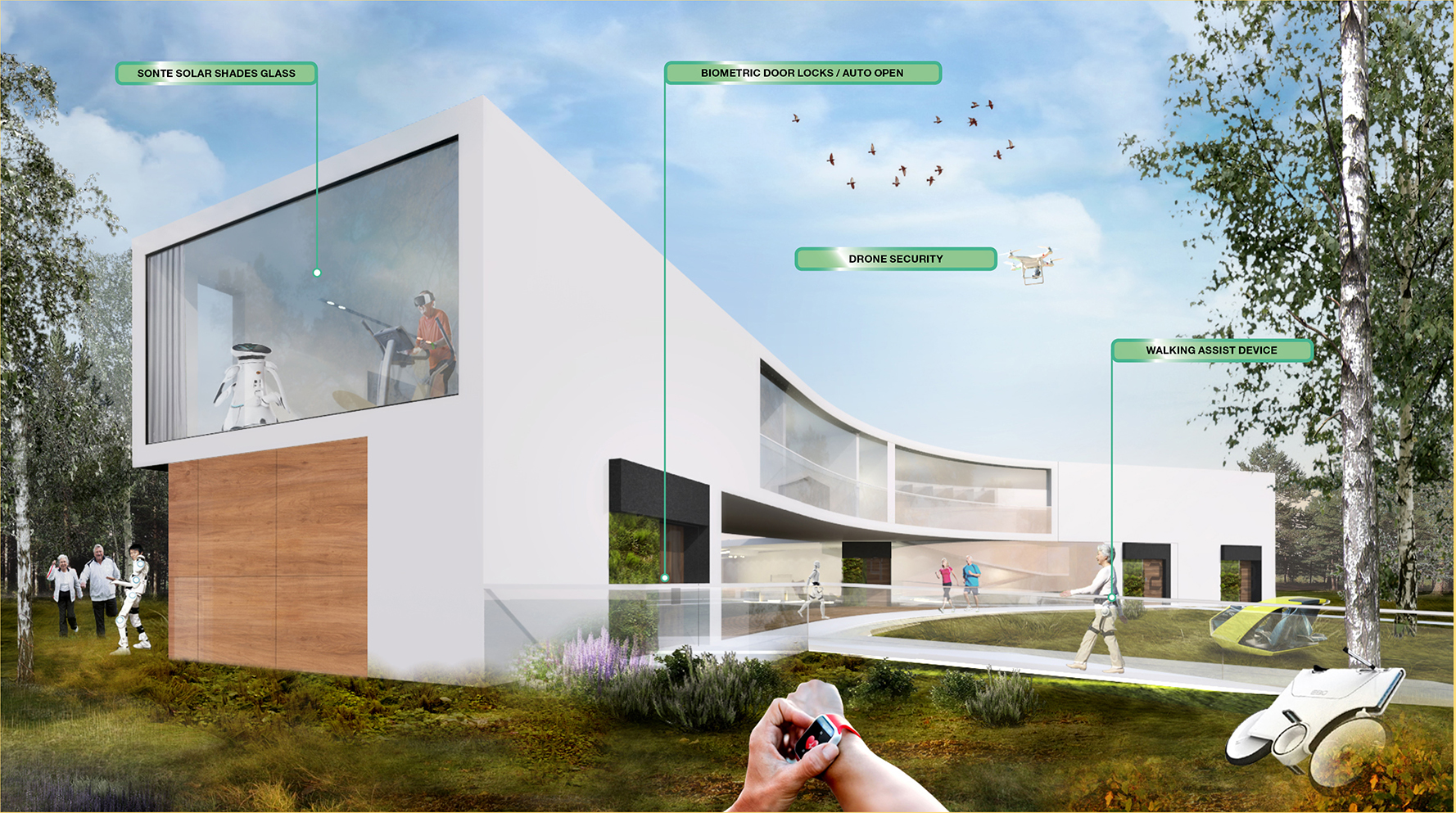
A new report predicts intelligent ‘Cognitive Homes’ of the future will be able to assess and manage our needs and desires in later life.
Almost 32 million people will be aged 60 or over in the UK by 2039. But what sort of living environment do older people face when they leave the workplace and embark on the next chapter of their lives?
While most of the attention around autonomous vehicles has centered on “everyday drivers,” there is one effort that goes off in an entirely different direction. An offshoot of Formula E, Roborace aims to launch a parallel series of races conducted entirely without human drivers. The effort has taken longer than planned, but is getting closer to reality. At MWC in Barcelona this week, Roborace showed off the complete design of its first race car. Until now, it has been using awkward-looking “devbots” that have a seat for a driver to test its software and hardware designs.
Imagine you could inject a special, electrically conductive fluid into a rose, which then spreads out through the plant and grows into it. Imagine creating an entire garden or forest of cyborg plants that act as a gigantic, biological computer network.
Well, imagine no more – scientists from Sweden’s Linköping University have successfully managed to perform the former, while looking forward to the latter in the future.
The US Army’s Armament Research, Development and Engineering Center (ARDEC) has successfully fired the first 3D-printed grenade from a 3D-printed grenade launcher. Part of a demonstration of how such technology can be used to greatly speed up prototyping and modification of weapons while lowering costs, the grenade launcher, called RAMBO (Rapid Additively Manufactured Ballistics Ordnance), was based on an M203A1 grenade launcher and every component, with the exception of the springs and fasteners, was manufactured using additive manufacturing.
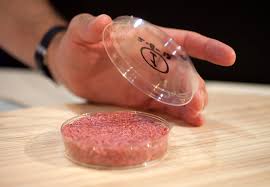
Lab-grown meat could be on your plate within the next five years. For the past few years, the barrier to getting test-tube meat into the hands of consumers has been the cost of production. In 2013, it was around $325,000 to make this stuff in a lab, but the process has been refined, and the cost now is just $11.36.
Tim Berners-Lee, who invented the World Wide Web, now wants to save it.
The computer scientist who wrote the blueprint for what would become the World Wide Web 28 years ago today is alarmed at what has happened to it in the past year.
“Over the past 12 months, I’ve become increasingly worried about three new trends, which I believe we must tackle in order for the web to fulfill its true potential as a tool which serves all of humanity,” he said in a statement issued from London. He cited compromised personal data; fake news that he says has “spread like wildfire”; and the lack of regulation in political advertising, which he says threatens democracy.
Even years into the deployment of the internet, many believed that it was still a fad. Of course, the internet has since become a major influence on our lives, from how we buy goods and services, to the ways we socialize with friends, to the Arab Spring, to the 2016 U.S. presidential election. Yet, in the 1990s, the mainstream press scoffed when Nicholas Negroponte predicted that most of us would soon be reading our news online rather than from a newspaper.
Fast forward two decades: Will we soon be seeing a similar impact from cryptocurrencies and blockchains? There are certainly many parallels. Like the internet, cryptocurrencies such as Bitcoin are driven by advances in core technologies along with a new, open architecture — the Bitcoin blockchain. Like the internet, this technology is designed to be decentralized, with “layers,” where each layer is defined by an interoperable open protocol on top of which companies, as well as individuals, can build products and services. Like the internet, in the early stages of development there are many competing technologies, so it’s important to specify which blockchain you’re talking about. And, like the internet, blockchain technology is strongest when everyone is using the same network, so in the future we might all be talking about “the” blockchain.
The inevitability of aging may be no more than yet another biological theory that scientific advances will retire in the near future. Some scientists today say that longevity is a societal concept that we may no longer need to uphold as a static law of nature, but instead, as one that can be rewritten to our benefit.
Researchers from fields spanning genetics to artificial intelligence (AI) are working towards a future where we will have to stop using a “midlife crisis” to justify our ill-advised decisions (but is it really ever the wrong time to buy a Porsche?).
While there have been innumerable theoretical ideas and initiatives for dodging the Grim Reaper, many actual strategies that are being developed today fall into one of two camps: biomedical or technological.
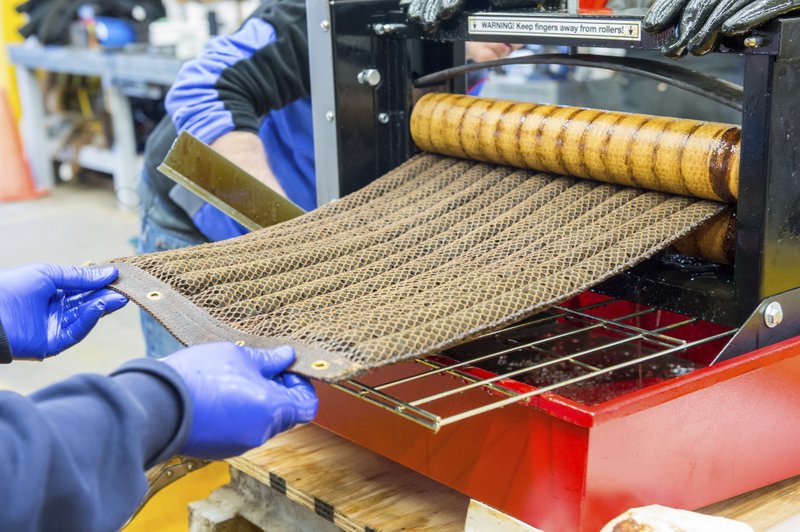
Federal researchers have created a new tool to clean up oil spills by tinkering with the kind of foam found in seat cushions.
The modified foam can soak up oil floating on water and lurking below the surface, and then can be repeatedly wrung out and reused, the researchers say.
It “just bounces back like a kitchen sponge,” said co-inventor Seth Darling, a scientist at the Argonne National Laboratory near Chicago.
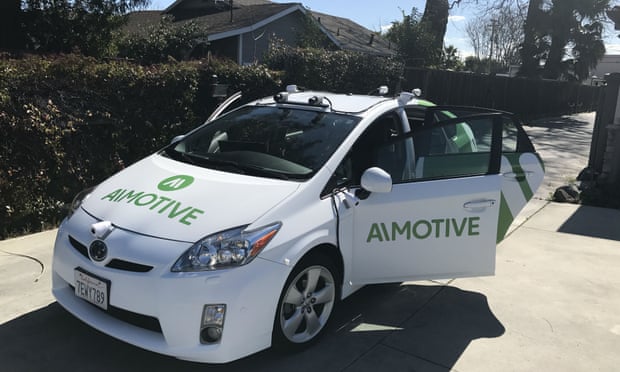
The AImotive office is in a small converted house at the end of a quiet residential street in sunny Mountain View, spitting distance from Google’s headquarters. Outside is a branded Toyota Prius covered in cameras, one of three autonomous cars the Hungarian company is testing in the sleepy neighborhood. It’s a popular testing ground: one of Google’s driverless cars, now operating under spin-out company Waymo, zips past the office each lunchtime.