Transforming Plant Health: Scientists Engineer Microbiomes to Combat Diseases

In a groundbreaking achievement, scientists have achieved a significant breakthrough by engineering the microbiome of plants, increasing the prevalence of beneficial bacteria that serve as a shield against diseases. This remarkable discovery, recently published in Nature Communications, is the result of collaborative research between the University of Southampton, China, and Austria. Its implications extend far beyond agriculture, as it has the potential to revolutionize plant health and reduce the need for harmful pesticides.

Much like the human body’s microbiome, consisting of diverse microorganisms residing in and around us, plants also host a multitude of bacteria, fungi, viruses, and other microorganisms within their roots, stems, and leaves. Over the past decade, scientists have been delving into the intricate world of plant microbiomes to understand their influence on plant health and susceptibility to diseases.

Continue reading… “Transforming Plant Health: Scientists Engineer Microbiomes to Combat Diseases”

The Future of Smartphones: Detecting Air Quality and Smoke Levels

A startup named Mobile Physics is spearheading a technological breakthrough that could equip future smartphones with the capability to detect air quality and smoke levels, providing users with crucial alerts about potentially hazardous conditions. Qualcomm and STMicroelectronics are collaborating to embed this innovation in an upcoming Android phone platform.

Why It Matters

Air pollution has emerged as an increasingly pressing health concern, especially with the changing climate:

  • Wildfires, growing in intensity, are adversely impacting air quality in various regions, including the United States.
  • Events like last summer’s eerie orange skies highlight the growing need for awareness about dangerous toxin levels in the environment.
Continue reading… “The Future of Smartphones: Detecting Air Quality and Smoke Levels”

Samsung Unveils Next-Generation Sensors to Elevate Machine Vision Technology

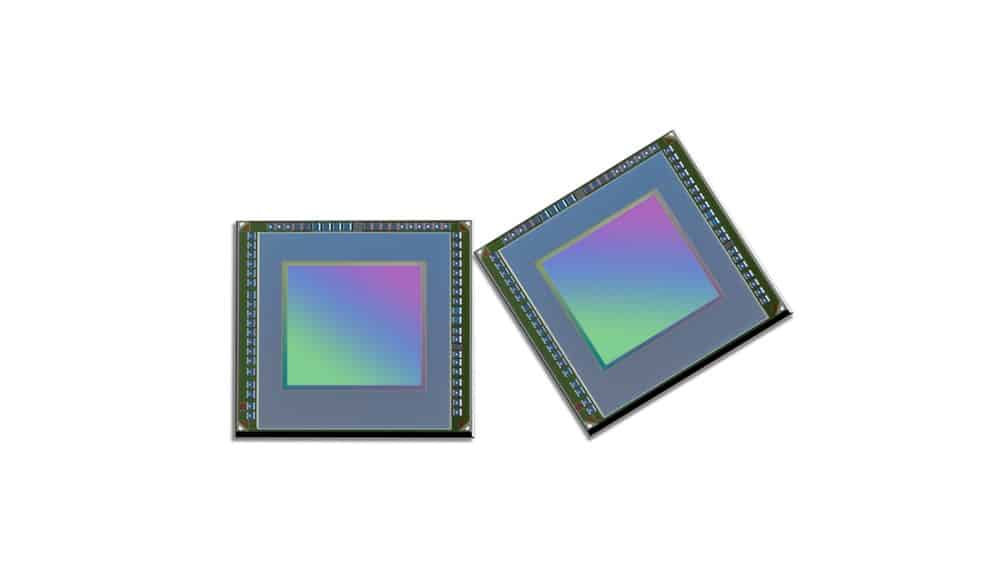
Samsung has recently introduced two cutting-edge sensors as part of its Isocell Vizion family, poised to revolutionize machine vision technology. These sensors have been meticulously crafted to elevate 3D imaging capabilities and enhance image clarity in motion, with one holding remarkable promise for facial recognition and iris biometrics applications.

The Isocell Vizion 63D stands out by incorporating Time-of-Flight (ToF) technology, which precisely measures the time taken by light to travel from the sensor, bounce off objects, and return to the sensor. This sophisticated technology plays a pivotal role in generating 3D representations of the surrounding environment, making it exceptionally valuable for applications like virtual and augmented reality, iris biometrics, facial detection, and gesture recognition. To craft a three-dimensional perspective, the sensor gauges the phase shift between emitted and reflected light, a distinguishing feature of iToF technology that ensures exceptional accuracy.

Continue reading… “Samsung Unveils Next-Generation Sensors to Elevate Machine Vision Technology”

“Brainoware”: Biohybrid Computer Combining Human Brain Organoid and AI Shows Promise in Speech Recognition

In a groundbreaking development, researchers from the University of Indiana Bloomington (UIB) have introduced a new biohybrid computer named “Brainoware,” which merges a “brain organoid” with traditional artificial intelligence (AI). This innovative system demonstrated its potential by achieving 78% accuracy in a speech recognition task, highlighting the possibilities of enhancing computing capabilities with elements of human biology.

The rationale behind this endeavor stems from the remarkable energy efficiency of the human brain. While supercomputers require 20 megawatts of power for processing over a quintillion calculations per second, the human brain accomplishes equivalent tasks with a mere 20 watts. Inspired by this efficiency, scientists explored the idea of augmenting computers by integrating them with three-dimensional clusters of lab-grown human brain cells, known as brain organoids.

Continue reading… ““Brainoware”: Biohybrid Computer Combining Human Brain Organoid and AI Shows Promise in Speech Recognition”

Advancements in Quantum Communication: Russia and China Successfully Demonstrate Secure Satellite-Based Communication

In a groundbreaking development following recent quantum communication demonstrations using undersea fiber optics, scientists from Russia and China have achieved a significant milestone by successfully demonstrating quantum communication over satellite. The test utilized China’s quantum satellite, known as “Mozi,” marking a collaborative effort to establish advanced encrypted communication networks that are shielded from external scrutiny, potentially benefiting BRICS-aligned countries.

The successful experiment was conducted from a ground station near Moscow, Russia, to another station close to Urumqi, China, covering a distance of over 3,800 kilometers, as reported by the South China Morning Post.

Continue reading… “Advancements in Quantum Communication: Russia and China Successfully Demonstrate Secure Satellite-Based Communication”

Groundbreaking Achievement: Georgia Tech Researchers Develop First Graphene Semiconductor

In a pioneering breakthrough, researchers at the Georgia Institute of Technology have successfully crafted the world’s inaugural functional semiconductor made from graphene, a single sheet of carbon atoms bound together by the strongest known bonds. Published in Nature, the research signals a promising avenue for the future of electronics, particularly as silicon, the predominant material in contemporary electronics, approaches its limits in the face of escalating computing speeds and diminishing device sizes.

Leading the charge is Walter de Heer, Regents’ Professor of physics at Georgia Tech, who spearheaded a team based in Atlanta, Georgia, and Tianjin, China. The team’s achievement centers on creating a graphene semiconductor compatible with conventional microelectronics processing methods—a critical requirement for a viable alternative to silicon.

Continue reading… “Groundbreaking Achievement: Georgia Tech Researchers Develop First Graphene Semiconductor”

Amazon Embarks on Hydrogen Fuel Production at Fulfillment Centers in Sustainability Drive

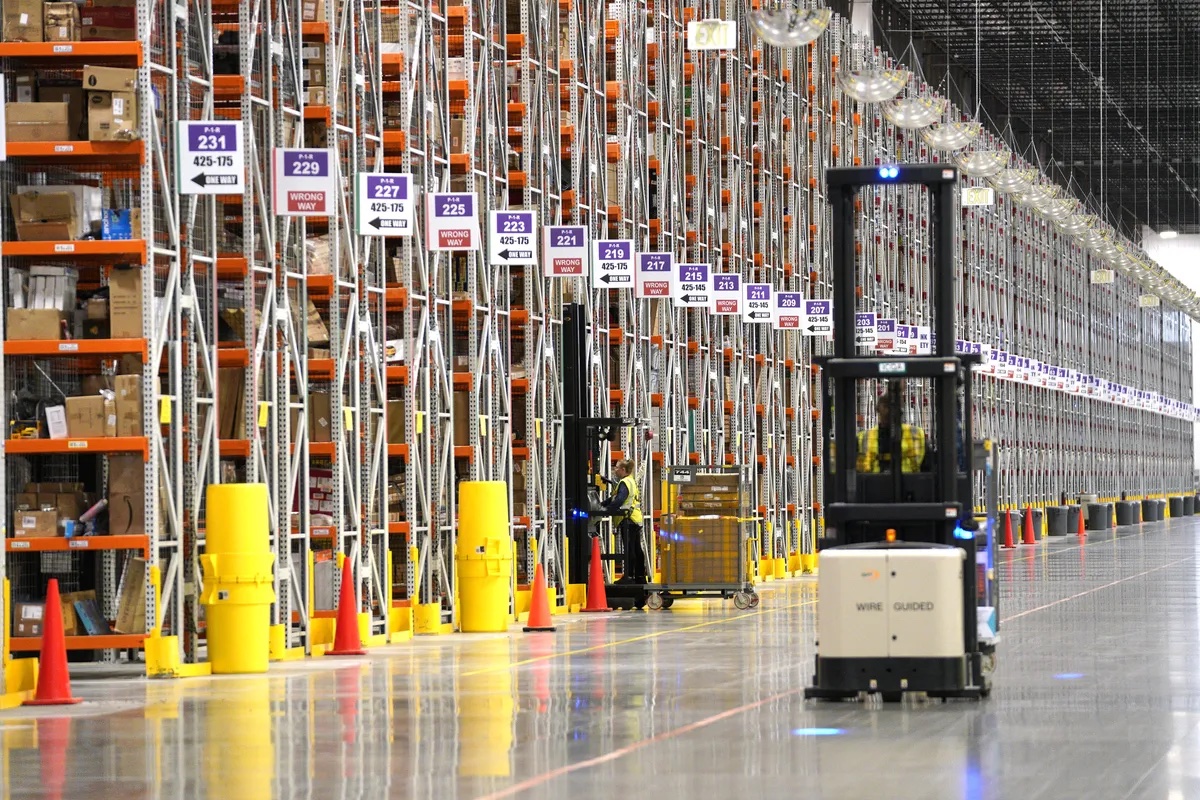
Amazon has recently unveiled plans to venture into hydrogen fuel production at its fulfillment centers, signaling a strategic move towards sustainable energy solutions. In collaboration with hydrogen technology company Plug Power, Amazon has initiated the installation of the first electrolyzer, a device designed to split water molecules and produce hydrogen, at its fulfillment center located in Aurora, Colorado.

The primary purpose of this electrolyzer is to generate fuel for approximately 225 forklift trucks operating at the site. However, Plug Power asserts that the equipment has the capacity to provide fuel for up to 400 hydrogen fuel cell-powered forklifts. This initiative marks Amazon’s inaugural attempt to produce hydrogen on-site, with indications suggesting a potential expansion of such efforts in the future.

Continue reading… “Amazon Embarks on Hydrogen Fuel Production at Fulfillment Centers in Sustainability Drive”

Baidu’s Ernie Bot Surpasses 100 Million Users, Igniting AI Chatbot Competition

In a groundbreaking development within the artificial intelligence (AI) realm, Baidu, the Chinese tech giant, proudly announced that its AI creation, Ernie bot, has achieved an extraordinary milestone by attracting over 100 million users. This revelation sparked a 3% surge in Baidu’s U.S. shares, highlighting the increasing significance of AI-driven products in the tech industry. As Ernie bot steps into the ring with its rival, ChatGPT, backed by Microsoft, the competition in the AI chatbot space takes center stage.

Ernie Bot’s Phenomenal Growth

Ernie bot, Baidu’s AI brainchild, has achieved an impressive feat, garnering a user base that has crossed the 100 million mark. Unlike ChatGPT, which reported 100 million weekly active users in November, Baidu did not specify whether Ernie bot’s user numbers represent active users or are cumulative. This ambiguity adds intrigue to Ernie bot’s success story, leaving industry observers eager to unravel the specifics of its user engagement.

Continue reading… “Baidu’s Ernie Bot Surpasses 100 Million Users, Igniting AI Chatbot Competition”

Pluri’s Revolutionary Approach: Transforming the Future of Meat Production and Sustainability

Pluri has successfully navigated obstacles by leveraging two decades of experience in cell expansion, integrating nature’s wisdom into biotechnology to drive innovation beyond limits. Yanay, an expert in the field, emphasizes Pluri’s unique strategy: observing and replicating nature’s wisdom rather than reinventing the wheel. Pluri’s cell scaffolding approach, mimicking the tissue environment, sets it apart from conventional technologies, leading to over 140 granted patents for cell expansion.

The cultivation of meat holds profound implications for sustaining a rapidly growing population and protecting the environment. With global meat consumption reaching 360 million tonnes annually, traditional animal farming’s environmental impact is alarming, consuming a third of habitable land and freshwater. The looming challenge of a forecasted 9.3 billion population by 2050, coupled with climate change exacerbating food insecurity, paints a dire picture. To meet the escalating demand, a 60% increase in food production by 2050 is required, as per the UN Food and Agriculture Organization.

Continue reading… “Pluri’s Revolutionary Approach: Transforming the Future of Meat Production and Sustainability”

Raytheon’s Cutting-Edge Mission: High-Power Microwave Antenna Systems for Rapid Airborne Threat Defense

Raytheon, a subsidiary of RTX, has secured a crucial role in national defense by being tasked with designing, building, and testing advanced high-power microwave antenna directed-energy systems for the Pentagon. The announcement, made by RTX, emphasizes the critical capabilities of these antennae, which are set to track and engage various airborne threats at the speed of light. Notably, these systems are engineered to be rugged and transportable, facilitating swift front-line deployment wherever needed.

Directed Energy Front-line Electromagnetic Neutralization and Defeat (DEFEND)

Under a $31.3 million contract awarded by the Naval Surface Warfare Center Dahlgren Division, Raytheon is committed to delivering prototype equipment to both the U.S. Navy and Air Force. This initiative falls under the umbrella of the Directed Energy Front-line Electromagnetic Neutralization and Defeat (DEFEND) program, spanning a three-year agreement.

Continue reading… “Raytheon’s Cutting-Edge Mission: High-Power Microwave Antenna Systems for Rapid Airborne Threat Defense”

Lenovo’s Latest Innovation: A 27-Inch 4K Monitor Redefining 3D Content Rendering

Lenovo has unveiled its cutting-edge 27-inch 4K monitor, the ThinkVision 27 3D, showcasing an impressive glasses-free 3D rendering capability. Premiered at IFA 2023, this revolutionary monitor leverages a combination of proprietary hardware and software technologies, projecting distinct images to each eye to create a captivating 3D effect that brings visual content to life.

The ThinkVision 27 3D features a switchable lenticular lens and real-time eye-tracking technology, complemented by the accompanying 3D Explorer software. This software includes a 3D player and a Software Development Kit (SDK), providing content creators, particularly 3D graphic designers and developers, with the tools to craft immersive 3D applications.

Continue reading… “Lenovo’s Latest Innovation: A 27-Inch 4K Monitor Redefining 3D Content Rendering”

Jeff Bezos’ Monumental Vision: The 10,000-Year Clock in West Texas

In a visionary endeavor, Jeff Bezos, the founder of Amazon and the world’s wealthiest retailer, is investing $42 million to create a clock that will endure for 10,000 years. Nestled inside a mountain in West Texas, the 10,000-Year Clock is designed to tick once a year, bong once a century, and cuckoo once a millennium, symbolizing long-term thinking and our responsibility to the future.

This mechanical marvel utilizes the Earth’s thermal cycles to power itself, featuring components such as a solar synchronizer, a pendulum, a chime generator, and various gears and dials. Towering at 500 feet, the clock spans the entire height of the mountain and is synchronized with the sun daily, tracking the year, century, and millennium. With a chime generator producing over 3.5 million unique bell chime sequences, the clock guarantees that each day’s soundscape is distinct.

Continue reading… “Jeff Bezos’ Monumental Vision: The 10,000-Year Clock in West Texas”