World’s First Commuter Electric Plane Is Preparing for Maiden Flight

The prototype e-plane, named Alice, can accommodate nine passengers and two crew members.

By Sissi Cao 

The world’s first all-electric “commuter” plane, Alice, made by Israeli company Eviation, is preparing for its first test flight at an airport near Seattle.

A prototype of Alice was spotted on Monday at Arlington Municipal Airport north of Seattle, Washington, where it performed engine tests in preparation for a high-speed taxi test.

Alice made its first public appearance at the Paris Air Show in 2019. Eviation claimed the electric aircraft could reduce maintenance and operating costs by up to 70 percent compared with commercial jets. The latest iteration of Alice features a fly-by-wire system made by Honeywell and boasts a range of 440 nautical miles and a maximum cruise speed of 250 knots.

Alice’s “commuter” configuration can accommodate nine passengers and a crew of two. The plane can also be transformed into an “executive” configuration, designed for fewer people in business class-like seating, and a “cargo” configuration that offers a 450-cubic-foot, temperature-controlled cargo bay.

Eviation CEO Omer Bar-Yohay told FLYING magazine on Monday that Alice was only “five to six [nice weather] testing days away from starting the flight campaign.”

Eviation took Alice for a low-speed taxi test on December 17, the same date 118 years ago when the Wright Brothers test flew their first airplane. Bar-Yohay posted a video of the test on Twitter the next day and wrote, “December 17th, 1903 was a historic day as the Wright Brothers changed the world forever with the first powered flight. We just taxied Alice yesterday…no big deal.”

Continue reading… “World’s First Commuter Electric Plane Is Preparing for Maiden Flight”

Nuro’s newest autonomous delivery bot is designed for the masses

There’s even an airbag on the exterior

By Kirsten Korosec

Nuro showed off Wednesday one of the final pieces of its commercial autonomous delivery strategy.

The startup, which has raised more than $2.13 billion since former Google engineers Dave Ferguson and Jiajun Zhu founded the company in June 2016, unveiled a third-generation electric autonomous delivery vehicle designed for commercial operations and manufactured in partnership with BYD North America.

Nuro has dropped the alpha-numeric nomenclature (R1 and then R2) for this delivery bot that is designed to haul packages, not people. Instead, the vehicle is called “Nuro” — a self-titled album of sorts meant to introduce the robot to the masses and a name that illustrates where this flagship model sits within the company. If it’s not clear, the “Nuro” is at the top.

The Nuro bot is not a sidewalk delivery bot. This new generation, and all of Nuro’s previous iterations, are meant for the road.

Continue reading… “Nuro’s newest autonomous delivery bot is designed for the masses”

Meta Reality Realms Launches First NFT Collection Backed by Real-World Land Properties

Image 1: Eden Prime  

First-Ever NFTs Backed By Real Land Assets

DENVER, Jan. 07, 2022 (GLOBE NEWSWIRE) —  Meta Reality Realms announced today its official launch introducing its first-ever NFT collection of real-world properties.  

As part of its launch, anyone will now have the opportunity to turn their real-world properties and assets into NFTs to be sold on the blockchain. This original take on NFTs, spearheaded by Meta Reality Realms, is the first of its kind to allow investors that own physical land to obtain both a physical and virtual warranty deed for their property.  

Each deed allows investors to not just own the digital art but also the blockchain-based NFT ID, which is expected to unlock endless possibilities in future Augmented Reality Zone sites that will exist both physically and virtually.  

“Alongside cryptocurrency, land will be the most important asset to own in the future,” explained Meta Reality Realms founder and CEO, Aaron Beltran. “Our NFTs are backed by real-world assets that anyone should be thinking about investing in, as the future of augmented reality gets closer.”

The future of Augmented Reality Zone sites is still progressing. By bringing awareness to NFTs backed by physical property, Meta Reality Realms is committed to preparing investors for the virtual future. 

Meta Reality Realms is the first company to allow real land ownership to be purchased and sold on the blockchain.

Continue reading… “Meta Reality Realms Launches First NFT Collection Backed by Real-World Land Properties”

Hyundai’s robot vision of the future is unexpectedly realistic

By Shane McGlaun

Typically we think of automotive manufacturer Hyundai, its cars and SUVs that come to mind. Hyundai is on hand at CES 2022, and it has revealed something that isn’t automotive-related but is aimed at ushering in a new type of mobility. The product is called the Plug & Drive (PnD) Robotic Module, and Hyundai says it’s designed to enable the Mobility of Things (MoT) concept. Via Hyundai

Hyundai says PnD is a modular platform that adds mobility to traditionally inanimate objects. The platform can be used to mobilize large and small objects and build robots. Hyundai has a stated goal of creating robots using the new platform that would allow personal mobility, connected communication, and the ability for the devices to operate atomically.

Continue reading… “Hyundai’s robot vision of the future is unexpectedly realistic”

Futurati Podcast with Danica Remy

Listen on Youtube

Listen on the Futurati Podcast website. 

Danica Remy is the President of the B612 Foundation, an organization dedicated to protecting Earth from asteroid impacts. She co-founded the international program “Asteroid Day”, supported by the Government of Luxembourg and sanctioned by the United Nations, as an official day to increase global awareness and education of asteroids.

Related

Continue reading… “Futurati Podcast with Danica Remy”

Engineering Artificial Lungs With Help From Lizards

The lizard lung forms quickly by a leveraging simple mechanical process the researchers likened to a mesh stress ball, the common toy. As fluid fills the developing lung, the inner membrane pushes out against smooth muscle tissue. The muscle separates into a honeycomb-shaped mesh and the membrane bulges out through the gaps, creating the surface area needed for gas exchange. Credit: Image courtesy Celeste Nelson and Michael PalmerRead time:  5 minutesGet PDF Version

When it comes to studying lungs, humans take up all the air, but it turns out scientists have a lot to learn from lizards.

A new study from Princeton University shows how the brown anole lizard solves one of nature’s most complex problems — breathing — with ultimate simplicity. Whereas human lungs develop over months and years into baroque tree-like structures, the anole lung develops in just a few days into crude lobes covered with bulbous protuberances. These gourd-like structures, while far less refined, allow the lizard to exchange oxygen for waste gases just as human lungs do. And because they grow quickly by leveraging simple mechanical processes, anole lungs provide new inspiration for engineers designing advanced biotechnologies.

Continue reading… “Engineering Artificial Lungs With Help From Lizards”

Robot hand moves closer to human abilities

Fig. 1: Overview of the ILDA. a Configuration of the ILDA hand composed of five robotic fingers with fingertip sensors, the palm side integrating the actuators, and the controller and attachment. b ILDA hand with covers. c Ease of attachment of the ILDA hand to a developed robotic arm. d Actions performed using the ILDA hand such as grasping and manipulating everyday life tools, showing delicate and strong grasping.

by Bob Yirka

A team of researchers affiliated with multiple institutions in Korea has developed a robot hand that has abilities similar to human hands. In their paper published in the journal Nature Communications, the group describes how they achieved a high level of dexterity while keeping the hand’s size and weight low enough to attach to a robot arm.

Creating robot hands with the dexterity, strength and flexibility of human hands is a challenging task for engineers—typically, some attributes are discarded to allow for others. In this new effort, the researchers developed a new robot hand based on a linkage-driven mechanism that allows it to articulate similarly to the human hand. They began their work by conducting a survey of existing robot hands and assessing their strengths and weaknesses. They then drew up a list of features they believed their hand should have, such as fingertip force, a high degree of controllability, low cost and high dexterity.

The researchers call their new hand an integrated, linkage-driven dexterous anthropomorphic (IDLA) robotic hand, and just like its human counterpart, it has four fingers and a thumb, each with three joints. And also like the human hand, it has fingertip sensors. The hand is also just 22 centimeters long. Overall, it has 20 joints, which gives it 15 degrees of motion—it is also strong, able to exert a crushing force of 34 Newtons—and it weighs just 1.1.kg.

Continue reading… “Robot hand moves closer to human abilities”

Rigetti Computing Announces Next-Generation 40Q and 80Q Quantum Systems

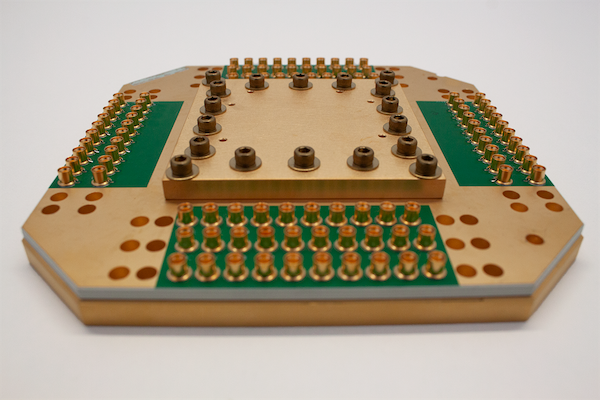
Rigetti’s 80-qubit Aspen-M: a commercial multi-chip quantum processor.

BERKELEY, Calif., Dec. 15, 2021 — Rigetti Computing, a pioneer in hybrid quantum-classical computing, today introduced its next-generation “Aspen-M” 80-qubit quantum computer into private beta. Aspen-M is the world’s first commercial multi-chip quantum processor, solving a critical scaling challenge in the race toward fault-tolerant quantum computing. The Aspen-M processor leverages Rigetti’s proprietary multi-chip technology and is assembled from two 40-qubit chips.

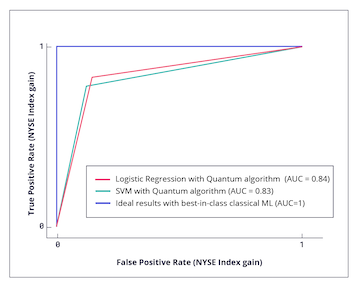
Separately, a new Aspen system based on a single-chip 40-qubit processor will be released today for general availability on Rigetti Quantum Cloud Services, the Strangeworks Ecosystem, and Amazon Braket.In addition, Rigetti announced it is collaborating with Deloitte, a multinational professional services company, and Strangeworks, a leading managed quantum service provider, to explore quantum applications in material simulation, optimization, and machine learning using Rigetti’s new scalable processors.

These latest Rigetti Aspen superconducting processors incorporate improvements in scale, speed, and fidelity—three metrics critical to unlocking broad commercial value. In addition to more than doubling the processor size over its previous generation, the systems powered by these processors deliver a 2.5x speedup in quantum processing times and reduce readout errors by up to 50 percent, drastically improving the reliability of quantum program results.

“With these systems, we’ve reached a critical milestone in the emerging quantum advantage era,” said Chad Rigetti, founder and CEO of Rigetti Computing. “Our machines are now at a scale and speed where they can process the real-world data sets that underpin high-impact applications. We believe these systems give researchers and enterprises the best platform to pursue quantum advantage on real problems.”

Continue reading… “Rigetti Computing Announces Next-Generation 40Q and 80Q Quantum Systems”

Researchers Create a Camera the Size of a Salt Grain Using Neural Nano-Optics

By Michelle Horton 

A team of researchers from Princeton and the University of Washington created a new camera that captures stunning images and measures in at only a half-millimeter—the size of a coarse grain of salt. 

Optical metasurfaces rely on a new method of light manipulation, using cylindrical posts set on a small, square surface. The posts, which vary in geometry, work like antennas that can capture incoming photons (waves of electromagnetic radiation). These waves are then sent as signals from the metasurface to a computer to interpret and produce an image.

Continue reading… “Researchers Create a Camera the Size of a Salt Grain Using Neural Nano-Optics”

Bird-Shaped Flying Car Phractyl Macrobat Is a Bonkers, Idealistic Take on Air Mobility

eVTOLs haven’t “arrived” yet, despite earlier predictions that man will be enjoying personal flight no later than 2020. The latest estimates claim that UAMs (Urban Air Mobility solutions) will go into production within a decade, but it will still be another while before they go mainstream.

By Elena Gorgan

The upside to the extended wait is that it allows for more time to perfect battery technology which, in turn, will offer Phractyl the chance to finalize the design on the most bonkers and idealistic aircraft ever. As the “most genius”artist on the face of the planet would say (*Kanye West): OF ALL TIME.

This is Macrobat, an all-electric PAV (Personal Aerial Vehicle) like no other before. You could call it a flying-car birdoplane, and the people behind it, a team of researchers and designers from Africa, would probably appreciate it. Introduced in mid-November (hat tip to Interesting Engineering), it is now raising funds toward further developing the study and building a first functional prototype. 

Phractyl, the name of the startup, stands for the PHRontier for Agile Complex Technology sYstem evoLution. Macrobat was named so because “bats are the only mammals that can fly, and the Macrobat facilitates the flight of another type of mammal (badum-tish),” as the description on the official website reads. As you can see, the people behind the project have a very healthy sense of humor, which probably helps when it comes to selling an idea as bonkers as this.

Continue reading… “Bird-Shaped Flying Car Phractyl Macrobat Is a Bonkers, Idealistic Take on Air Mobility”