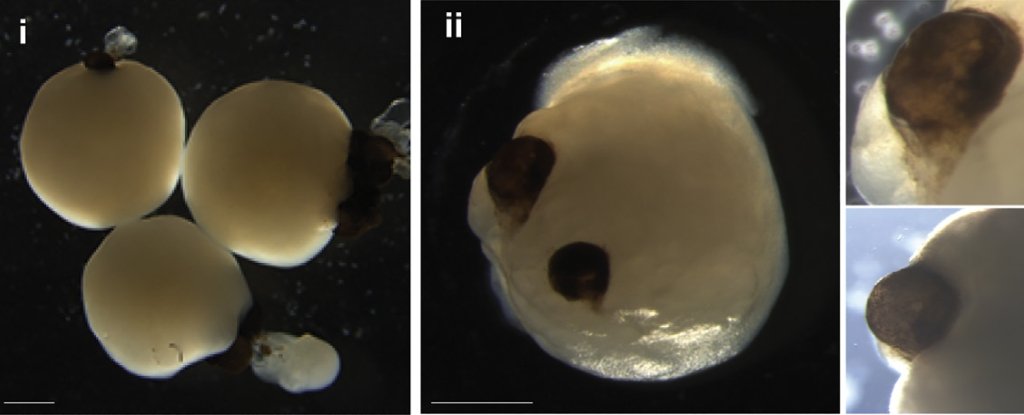
In a groundbreaking discovery reported in a 2021 paper, miniature brains cultivated in a laboratory from stem cells spontaneously evolved rudimentary eye structures, shedding light on the intricate process of eye differentiation and development. These tiny, human-derived brain organoids, resembling three-dimensional brain tissue blobs, showcased bilateral optic cups, mirroring the developmental patterns observed in human embryos. This astonishing revelation not only deepens our understanding of eye development but also holds significant potential for studying brain-eye interactions, modeling congenital retinal disorders, and advancing personalized drug testing and transplantation therapies.
Neuroscientist Jay Gopalakrishnan from the University Hospital Düsseldorf in Germany emphasized the remarkable capability of brain organoids to generate primitive sensory structures sensitive to light, housing cell types akin to those in the human body. Unlike true brains, these “mini brains” are structured from induced pluripotent stem cells, offering a unique platform for ethical research into drug responses, cell development, and, in this case, eye development.
Continue reading… “Glimpsing into the Future: Lab-Grown Mini Brains Develop Primitive Eyes””


