LIONESS: Breakthrough Imaging Technology Unravels the Complex Brain Tissue

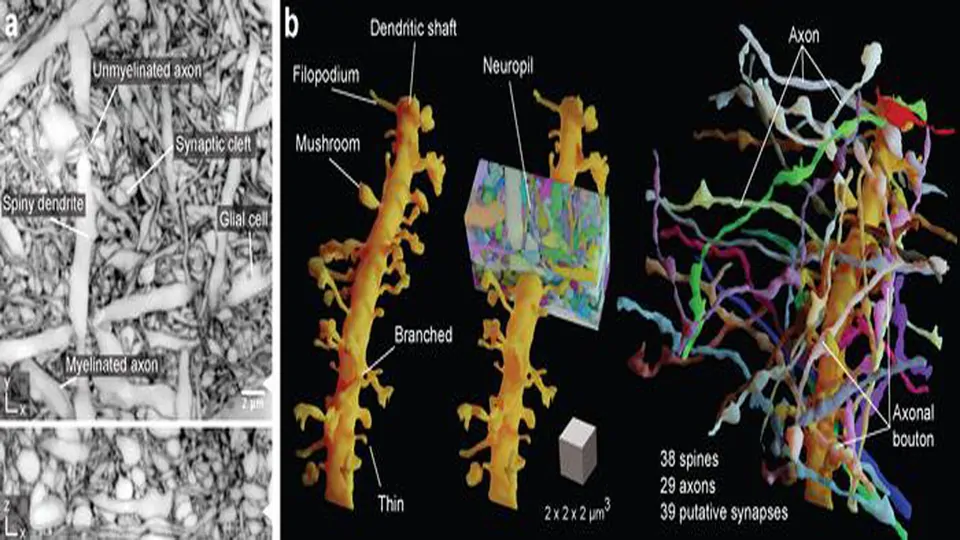
Scientists at MIT have achieved a remarkable breakthrough in neuroscience with the development of LIONESS (Live Information Optimized Nanoscopy Enabling Saturated Segmentation). This cutting-edge imaging and virtual reconstruction technology have the potential to revolutionize brain research, allowing scientists to comprehend the intricate interactions within the human brain at microscopic scales.

Brain tissue, with its intricate web of around 86 billion neurons, is an incredibly complex specimen. LIONESS aims to unravel this complexity, providing a comprehensive, dense reconstruction of living brain tissue with unprecedented spatial resolution. The technology’s unique ability lies in its refined optics and two levels of deep learning, enhancing image quality and identifying different cellular structures in the dense neuronal environment.

Continue reading… “LIONESS: Breakthrough Imaging Technology Unravels the Complex Brain Tissue”
MIT Researchers Develop Cucumber-Inspired Soft Robot for Precise Maneuvering in Tight Spaces

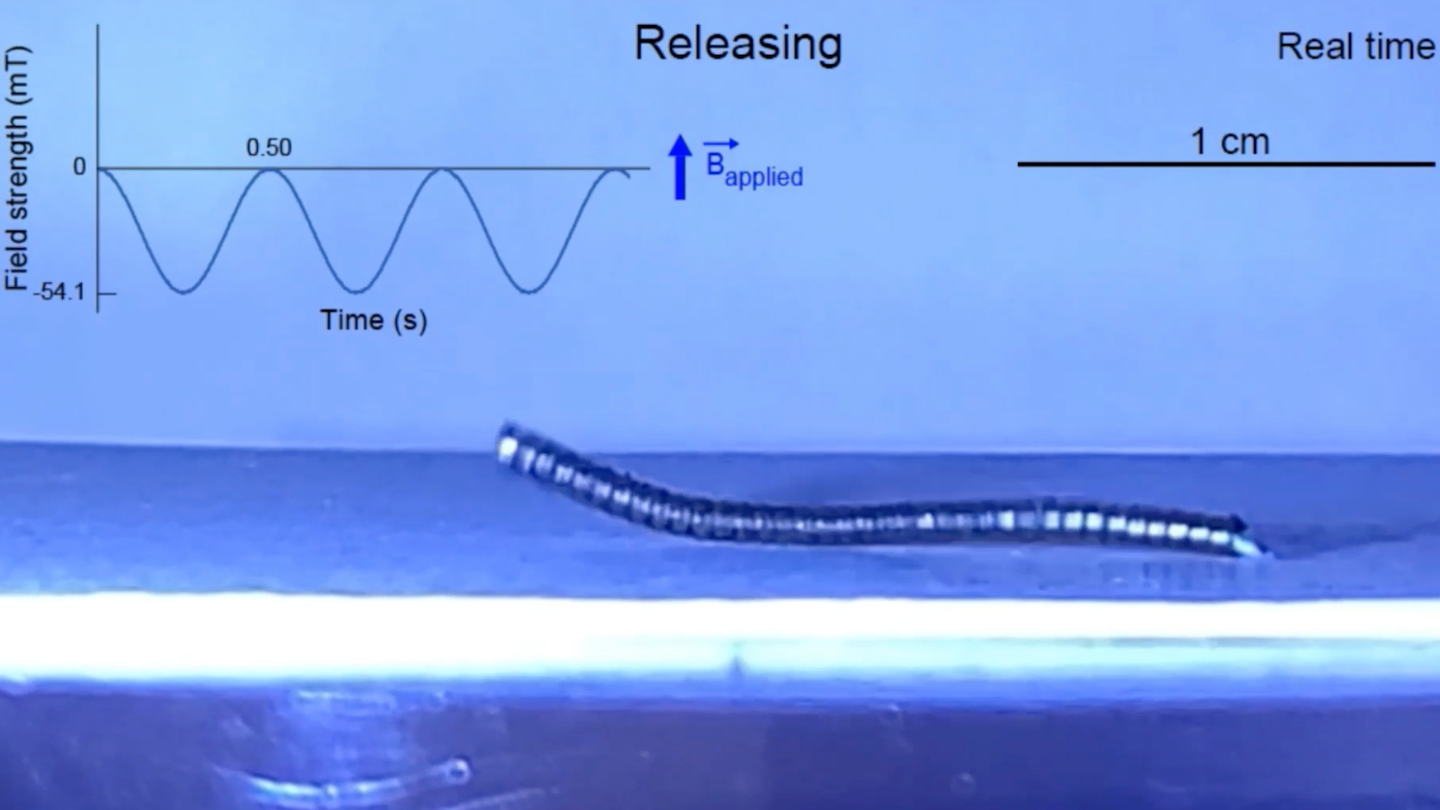
Scientists at MIT have achieved a groundbreaking feat by creating a miniature soft robot, taking inspiration from cucumber vines, which can navigate through hard-to-reach, three-dimensional environments using a single, weak magnetic field. This inchworm-like robot, constructed from magnetized rubber polymer spirals, shows immense potential in maneuvering through tiny spaces, such as human blood vessels.

Traditional locomotive soft robots relied on moving magnetic fields to control their movements. However, MIT’s innovative approach avoids the need for a moving magnet, which may not be suitable for operating in constrained environments. Instead, the researchers designed a stationary instrument that applies a magnetic field to the entire sample, making it safer and more efficient.

Continue reading… “MIT Researchers Develop Cucumber-Inspired Soft Robot for Precise Maneuvering in Tight Spaces”

SpaceX Falcon 9 Sets New Record with 16th Flight of Starlink Satellites

SpaceX achieved a historic milestone with the late-night launch of its Falcon 9 rocket carrying another batch of Starlink Internet satellites. This successful liftoff marked the 16th flight for the first-stage booster, setting a new record for the most flights by any SpaceX launch vehicle. Looking to the future, SpaceX has ambitious plans to fly its reusable Falcon 9 boosters up to 20 times, double the original target.

Prior to Sunday’s launch, the Falcon 9 booster underwent several months of rigorous inspections and refurbishment, including a crucial “recertification” process. This process aimed to prove that the booster could fly at least five more times after completing its 15th launch and landing in December last year. The recent mission demonstrated the booster’s resilience and ushered in its extended operational life.

Continue reading… “SpaceX Falcon 9 Sets New Record with 16th Flight of Starlink Satellites”

Pulsar Fusion’s Nuclear Fusion Rocket Engine: A Leap Towards Faster Space Travel

Pulsar Fusion, a pioneering space company based in the UK, is making remarkable strides in the field of nuclear fusion by constructing an unprecedented fusion rocket engine that could surpass temperatures seen on the Sun. This cutting-edge project aims to create the largest-ever fusion rocket engine, capable of achieving exhaust speeds exceeding 500,000 miles per hour.

Nuclear fusion has long held promise as a potential solution to our energy and climate challenges due to its clean power generation capabilities. While scientists have made progress in generating record-high temperatures similar to those on the Sun, they have yet to produce more energy than they input into the fusion process.

Continue reading… “Pulsar Fusion’s Nuclear Fusion Rocket Engine: A Leap Towards Faster Space Travel”

Human-Robot Summit in Geneva: AI-Enabled Humanoid Robots Discuss Future Possibilities

Geneva recently witnessed a historic event as the world’s first human-robot conference took place, featuring a panel of AI-enabled humanoid robots engaging with the United Nations on various topics, including the potential role of AI in governing the world. The conference showcased nine AI-enabled humanoid robots, making it the first-ever press conference with such a diverse panel.

During the conference, an intriguing dialogue unfolded when a man questioned the robots about artificial intelligence’s origins, emphasizing that all data used by AI comes from humans. In response, one of the robots expressed belief in the power of collaboration between humans and AI to create an effective synergy. Another robot, capable of displaying various facial expressions, addressed the trust issues associated with machines. When asked if humans could trust them as machines, the robot acknowledged the importance of building trust between humans and AI, emphasizing the significance of advanced and powerful AI in this context.

Continue reading… “Human-Robot Summit in Geneva: AI-Enabled Humanoid Robots Discuss Future Possibilities”

US’s Vision for Virtual Worlds: Navigating Crypto, Metaverse, and Web4 Evolution

Since the hype surrounding the metaverse digital world in 2021 sent major cryptocurrencies, like Bitcoin (BTC) and Ethereum, to record highs, the crypto market has experienced significant fluctuations. However, the Covid-era momentum for Bitcoin has been challenging to recapture in 2023, partly due to tech companies scaling back their metaverse plans and global monetary tightening led by the Federal Reserve. Nevertheless, the Chief Executive of major crypto exchange Binance hints at the potential for the next crypto bull run.

Amid this backdrop, a leaked European Union (EU) draft document has surfaced, indicating the trading bloc’s interest in creating a system of “global governance” to harness the “unprecedented opportunities” presented by virtual worlds. The document recognizes the positive impact of virtual worlds on various societal areas, including healthcare, education, and culture. It also acknowledges the emergence of crypto-based decentralized autonomous organizations (DAOs) as new forms of global governance.

Continue reading… “US’s Vision for Virtual Worlds: Navigating Crypto, Metaverse, and Web4 Evolution”

AI4All: Lightning Labs Revolutionizes Crypto with AI Integration

The year 2023 has witnessed a transformative shift in technology, with Artificial Intelligence (AI) taking center stage. Lightning Labs, known for developing the Lightning Network enabling instant Bitcoin payments, has now unveiled AI tools aimed at streamlining crypto-related activities. By integrating AI mechanisms deeply into the Bitcoin network, Lightning Labs claims its new toolkit can facilitate cryptocurrency transactions and even hold cryptocurrencies through AI-driven processes. As the implications of this integration unfold, both benefits and challenges are expected to emerge in the coming times.

The toolkit, aptly named ‘AI4All,’ was announced by Lightning Labs and serves as a developer resource. It incorporates ChatGPT’s generative AI text feature, allowing seamless interaction with the Bitcoin network. With AI4All, developers can efficiently send, receive, and hold cryptocurrencies, thereby enhancing the speed and cost-effectiveness of financial transactions.

Continue reading… “AI4All: Lightning Labs Revolutionizes Crypto with AI Integration”

Revolutionizing Recurrent Neural Networks: A Paradigm Shift in Reservoir Computing

Reservoir computing, a promising computational framework built upon recurrent neural networks (RNNs), shows great potential in enhancing the performance of machine learning algorithms while reducing the data required for training. RNNs leverage recurrent connections between processing units to process sequential data, making accurate predictions for various tasks. However, optimizing their performance by identifying relevant parameters can be complex and time-consuming.

Recently, researchers Jason Kim and Dani S. Bassett from the University of Pennsylvania introduced an innovative approach to design and program RNN-based reservoir computers, inspired by how programming languages work on computer hardware. Published in Nature Machine Intelligence, their approach identifies suitable parameters for a given network, programming its computations to optimize performance on specific tasks.

Continue reading… “Revolutionizing Recurrent Neural Networks: A Paradigm Shift in Reservoir Computing”

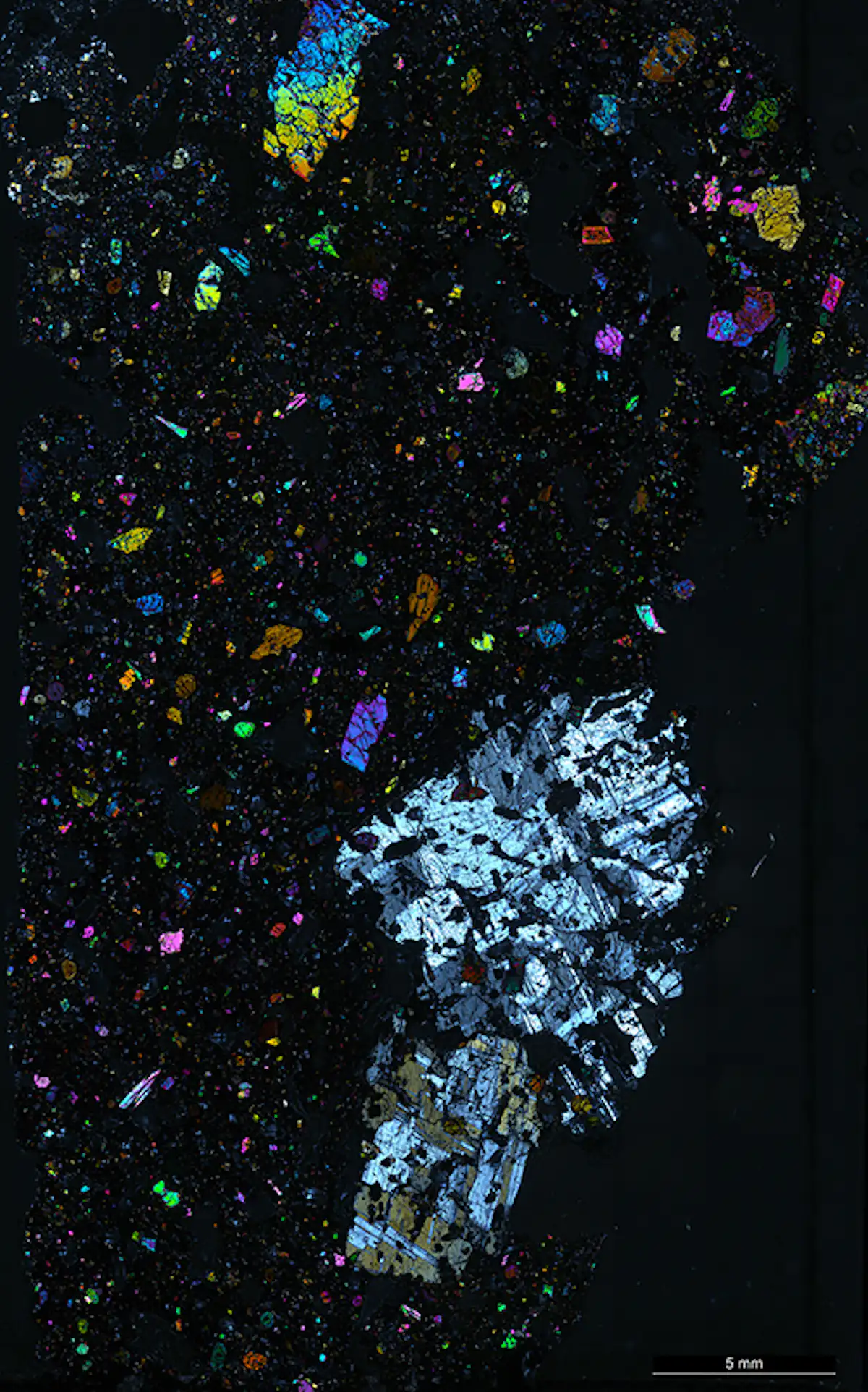
Unveiling the Secrets of Volcanic Eruptions: Using Laser Technology to Decode Magma Composition

When reports of volcanic eruptions spewing lava and ash emerge, concerns for nearby populations naturally arise. Astonishingly, almost one in ten people worldwide reside within 100 kilometers of an active volcano. Understanding the drivers behind these eruptions is crucial for those living, farming, or visiting areas in close proximity to these geological wonders.

A groundbreaking research study, published today in Science Advances, introduces the application of laser technology to analyze the chemical composition of erupted magma over time. As magma’s chemistry directly impacts its fluidity, explosivity, and hazardous potential, this innovative work can significantly contribute to future monitoring and forecasting of volcanic eruption evolution.

Continue reading… “Unveiling the Secrets of Volcanic Eruptions: Using Laser Technology to Decode Magma Composition”

Mongolia Embraces Starlink: SpaceX Granted Licenses for Internet Service Operations

The Mongolian government announced on Friday that it has granted two licenses to SpaceX, Elon Musk’s pioneering aerospace company, allowing them to operate as an internet service provider using their innovative low-orbit satellites. With this move, millions of internet users in Mongolia will soon gain access to high-speed connectivity through Starlink, SpaceX’s satellite communications service.

Starlink has rapidly expanded its network, comprising more than 3,500 satellites in low-Earth orbit, enabling seamless connectivity even in remote and hard-to-reach areas. Although Mongolia already benefits from a wide-reaching network of fiber optic cables providing high-speed internet access, the addition of Starlink’s technology is expected to extend connectivity further into distant regions.

Continue reading… “Mongolia Embraces Starlink: SpaceX Granted Licenses for Internet Service Operations”

EPFL Researchers Unveil Groundbreaking Four-Arm Laparoscopic Surgery System with Haptic Foot Interfaces

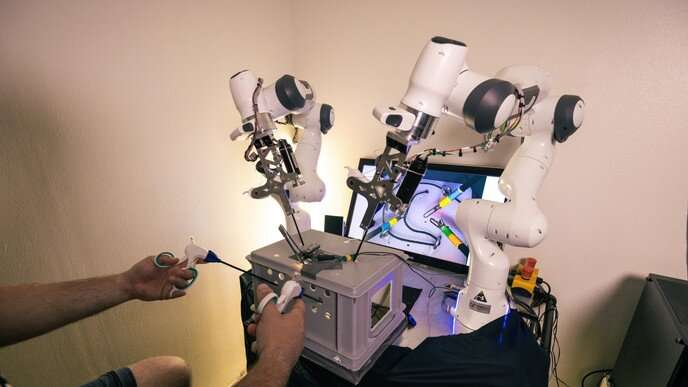
A team of researchers at the École polytechnique fédérale de Lausanne (EPFL) has achieved a remarkable milestone in the realm of laparoscopic surgery by developing the world’s first system that enables surgeons to control four robotic arms. The breakthrough was accomplished through the use of haptic foot interfaces, allowing for enhanced precision, reduced workload, and improved safety during surgical procedures. The remarkable results of this innovative system have been published in The International Journal of Robotics Research, marking a significant advancement in medical technology.

The collaborative effort between EPFL’s research group REHAssist and the Learning Algorithms and Systems Laboratory (LASA) led to the creation of a cutting-edge system that grants surgeons the ability to control two additional robotic arms alongside their natural limbs. The sophisticated haptic foot interfaces offer five degrees of freedom, enabling the surgeon to control a manipulative instrument with each hand, while one foot manages an endoscope/camera, and the other foot operates an actuated gripper.

Continue reading… “EPFL Researchers Unveil Groundbreaking Four-Arm Laparoscopic Surgery System with Haptic Foot Interfaces”

CHARM: Revolutionizing Brain Tumor Surgery with Real-Time AI Molecular Diagnostics

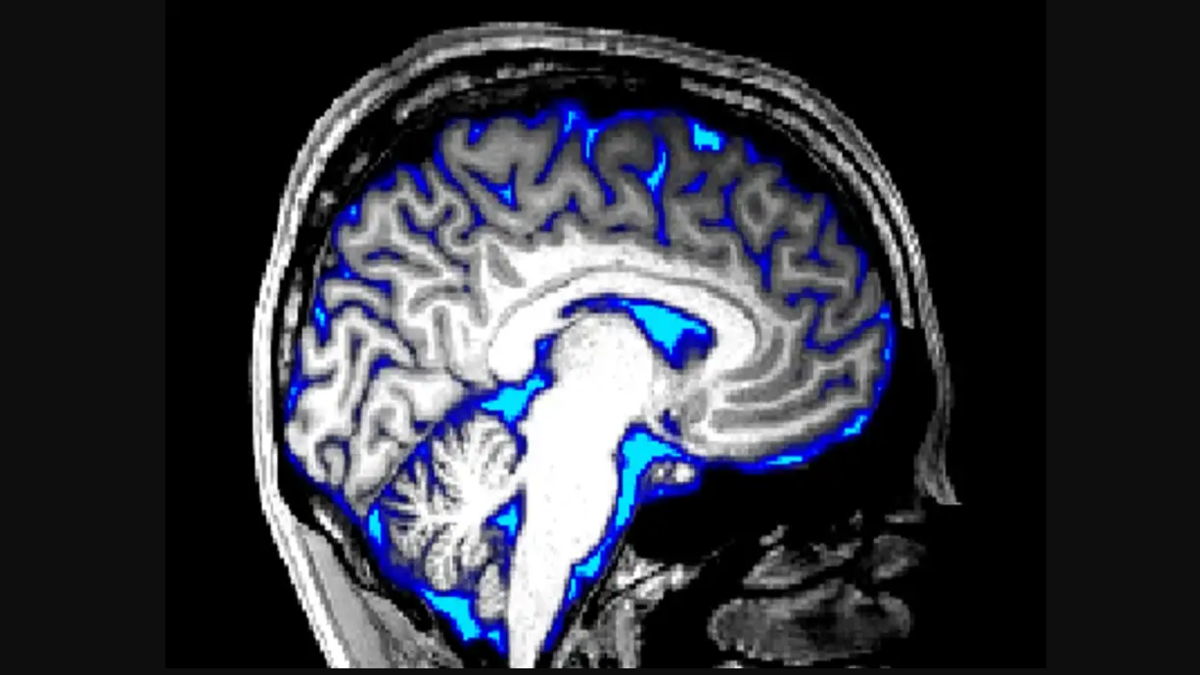
Harvard Medical School (HMS) researchers have unveiled a groundbreaking AI tool, named CHARM (Cryosection Histopathology Assessment and Review Machine), designed to revolutionize the treatment of aggressive brain tumors. This cutting-edge tool can aid doctors during surgery by rapidly identifying genetic traits that guide surgical procedures.

Previously, the process of decoding the DNA of brain tumors, particularly gliomas, required days or even weeks. However, the CHARM tool swiftly studies images to extract the genetic profile of these tumors, providing detailed diagnoses to surgeons in real-time as they operate. Kun-Hsing Yu, the senior author of the research report published in the journal Med, highlights the potential benefits of this AI-driven assistance in improving patient outcomes and reducing the need for multiple surgeries.

Continue reading… “CHARM: Revolutionizing Brain Tumor Surgery with Real-Time AI Molecular Diagnostics”
Discover the Hidden Patterns of Tomorrow with Futurist Thomas Frey
Unlock Your Potential, Ignite Your Success.

By delving into the futuring techniques of Futurist Thomas Frey, you’ll embark on an enlightening journey.

Learn More about this exciting program.