Botbar Coffee: Brooklyn’s First Robot-Run Coffee Shop Takes Center Stage

“Let the robot make your coffee” is the captivating tagline behind Botbar Coffee, a unique coffee shop set to open soon in Brooklyn. Located at 666 Manhattan Avenue, amidst Greenpoint’s bustling cafe scene, Botbar Coffee aims to revolutionize the industry with its robotic workforce. With signage already in place, the shop’s manager, Sunny Lam, confirms that food service will commence within the next two weeks, promising an innovative coffee experience for patrons.

Breaking New Ground:

Botbar Coffee stands out as the first of its kind in New York City, introducing a concept where robots take charge of pulling espresso shots. While the idea of robotic coffee preparation is not entirely new, with a robotic arm already serving drinks at San Francisco International Airport since 2021, Botbar Coffee brings this technology to the heart of Brooklyn. In Seattle, coffee start-up Artly has also gained attention by securing $8.3 million in funding to establish a series of automated cafes.

Continue reading… “Botbar Coffee: Brooklyn’s First Robot-Run Coffee Shop Takes Center Stage”

Lifesaving Radio: AI-Driven Music Enhances Surgical Performance

The powerful connection between music and enhanced performance extends beyond athletic arenas and gym workouts. Now, with the assistance of artificial intelligence (AI), music is revolutionizing the operating room, aiding surgeons in achieving better results. NextMed Health, in collaboration with Klick Health, a health marketing agency, has launched Lifesaving Radio, the world’s first AI-based healthcare radio station. Carefully curated with over 30 hours of hard rock music, Lifesaving Radio aims to optimize surgical performance for peak efficiency.

The Intersection of Technology and Medicine:

Dr. Daniel Kraft, a physician and scientist based in Stanford, California, established NextMed Health in 2011 to explore the transformative potential of technology in healthcare. Recognizing that 90% of surgeons and surgical residents already listen to music during procedures, Dr. Kraft believes that AI technology can further enhance the music-medicine connection. Personalized playlists can assist doctors in orchestrating their movements, timing, and harmonization in the operating room. The Lifesaving Radio project exemplifies the convergence of various technologies to improve healthcare outcomes.

Continue reading… “Lifesaving Radio: AI-Driven Music Enhances Surgical Performance”

Sanctuary AI Successfully Deploys Human-Like Intelligence Robots in Commercial Partnership with Canadian Tire Corporation

Sanctuary Cognitive Systems Corporation (Sanctuary AI) has achieved a significant milestone in its pursuit of creating human-like intelligence in general-purpose robots. The company announced the successful deployment of its unique system, marking the world’s first implementation of such advanced technology at a customer commercial facility through its collaboration with Canadian Tire Corporation (CTC).

Commercial Deployment at Mark’s Retail Store:

The groundbreaking deployment took place at a Mark’s retail store in Langley, BC, Canada, setting a precedent for utilizing general-purpose robots in a real-life commercial environment. During the week-long pilot program at the CTC-owned store, the general-purpose robot underwent rigorous testing, successfully completing 110 retail-related tasks. These tasks encompassed various front and back-of-store activities, including merchandise picking and packing, cleaning, tagging, labeling, folding, and more. Sanctuary AI’s prior laboratory testing ensured a seamless integration of their technology in a commercial setting.

Continue reading… “Sanctuary AI Successfully Deploys Human-Like Intelligence Robots in Commercial Partnership with Canadian Tire Corporation”

Revolutionary Study Reveals Neuronal Reorganization Key to Restoring Walking Abilities in Paralyzed Patients

The intricate coordination of neurons in the lumbar spinal cord plays a vital role in enabling walking. However, severe spinal cord injuries disrupt the communication between the brain and these neurons, resulting in permanent paralysis. In a groundbreaking study conducted by scientists at the NeuroRestore research center, a breakthrough discovery has been made, identifying the specific type of neuron activated and remodeled through spinal cord stimulation. This finding has led to the restoration of motor function, allowing paralyzed patients to stand, walk, and rebuild their muscles, significantly improving their quality of life.

Reactivating Neurons through Electrical Stimulation:

Previously, isolated case studies hinted at the potential of epidural electrical stimulation (EES) in reactivating nonfunctional neurons in the lumbar spinal cord, enabling paralyzed individuals to regain the ability to walk. The application of EES during neurorehabilitation (EESREHAB) has shown even more promising results, enhancing the recovery of walking abilities, even when the stimulation is turned off. This new study, published in Nature, expands on these findings and demonstrates the efficacy of this therapy in nine patients, with sustained motor function improvement even after the completion of the neurorehabilitation process and cessation of electrical stimulation.

Continue reading… “Revolutionary Study Reveals Neuronal Reorganization Key to Restoring Walking Abilities in Paralyzed Patients”

Intramotev Paves the Way for Electric Freight Trains with Battery-Electric Autonomous Rail Cars

While electric trains have become a common sight in commuter rail systems, the freight shipping industry has yet to embrace this eco-friendly technology. However, the tide is turning as Intramotev, a St. Louis-based company, aims to revolutionize the locomotive landscape with its fleet of battery-electric autonomous rail cars, eliminating the need for diesel fuel.

The Evolution of Diesel-Electric Trains:

Diesel-electric locomotives emerged in the 1920s as a more efficient alternative to steam-driven trains. They offered labor-saving capabilities and cost-cutting advantages. Unlike steam locomotives that required multiple crews, diesel-electric trains could be operated by a single locomotive coupled with others.

The Need for Further Improvement:

While diesel-electric trains represented an improvement over their steam-driven predecessors, there is still room for enhancement. A 2021 study published in Nature Energy highlights the current state of affairs, noting that diesel-electric drives in US locomotives emit 35 million tonnes of CO2 annually, leading to approximately 1,000 premature deaths and $6.5 billion in health damage costs.

Continue reading… “Intramotev Paves the Way for Electric Freight Trains with Battery-Electric Autonomous Rail Cars”

U.S. Navy’s Monstrous Kraken Device Aids NASA’s Study on Astronaut Motion Sickness

The U.S. Navy’s formidable Kraken device is set to assist NASA in a groundbreaking study aimed at mitigating the effects of spaceflight on astronauts. By subjecting a group of active duty service members to intense accelerations and disorienting motions, the study aims to uncover ways to alleviate symptoms of dizziness, nausea, and vertigo that astronauts commonly experience during space missions.

Unleashing the Kraken:

NASA announced that 24 active duty service members will have the opportunity to experience a 60-minute ride aboard the 50-foot-long Kraken machine. This monstrous device, capable of reaching accelerations up to three times the force of gravity, will simulate the physical stresses encountered by astronauts during spaceflight. The goal is to enable scientists to develop strategies for reducing the discomfort experienced by astronauts upon reentry into Earth’s gravity.

Continue reading… “U.S. Navy’s Monstrous Kraken Device Aids NASA’s Study on Astronaut Motion Sickness”

Advancements in Apomixis: Paving the Way for Easier Hybrid Seed Production

In the realm of plant breeding, the creation of hybrid seed offers tremendous potential for boosting crop yields and introducing valuable traits. However, the process of producing hybrid seed is often complex and labor-intensive, particularly in species like rice. But recent breakthroughs in the field of apomixis, a process that enables clonal reproduction in plants, hold the promise of simplifying hybrid seed production. Scientists have made significant strides in genetically engineering crops to reproduce through apomixis, offering a potential game-changer for the agricultural industry and smallholder farmers alike.

Harnessing the Power of Hybrid Vigor:

Hybrid vigor, a phenomenon characterized by the robustness and resilience of hybrid plants, arises from the crossing of two inbred parent strains. Although the exact mechanisms behind the superiority of hybrids are not fully understood, it is believed that favorable versions of genes from one parent dominate the weaker, recessive genes from the other. This concept has revolutionized the yield of various crops, including maize and sorghum, increasing productivity by up to 50% and enhancing traits such as drought tolerance.

Continue reading… “Advancements in Apomixis: Paving the Way for Easier Hybrid Seed Production”

Unveiling the Phenomenon: Phantom Limbs Sense Temperature Changes

When individuals lose a limb, they often experience a curious phenomenon known as a phantom limb, where they perceive sensations in the region of the missing appendage as if it were still present. Despite extensive research, scientists have yet to fully comprehend the underlying causes of this intriguing phenomenon. In a groundbreaking development, a recent paper published in the journal Science reveals that individuals with phantom limb sensations can also experience changes in temperature. This newfound understanding may pave the way for the creation of advanced prosthetics that incorporate thermal sensation, providing amputees with a more immersive and natural experience.

Detecting Temperature in Phantom Limbs:

A team of researchers from Italy and Switzerland has discovered that amputees can perceive temperature changes in their phantom limbs. For instance, if heat is applied to the residual limb, some individuals may be able to discern the sensation and even articulate phrases like, “You’re warming up my left index finger.” While scientists were aware of amputees experiencing tactile sensations and pain in their phantom limbs, this is the first documented evidence of temperature detection.

Continue reading… “Unveiling the Phenomenon: Phantom Limbs Sense Temperature Changes”

Spacetop: Revolutionizing Personal Computing with Augmented Reality

Introduction:

Sightful, an Israeli-based company, has unveiled Spacetop, an augmented reality (AR) laptop that has been in development for over three years. With a team comprising over 60 experts in spatial computing, including veterans from Apple, Microsoft, and Magic Leap, Spacetop represents the next generation in personal computing and introduces AR seamlessly into users’ daily lives. By combining customized hardware and a proprietary spatial environment, Spacetop redefines the boundaries of traditional laptops, offering users a unique and expansive virtual workspace that can be customized to enhance creativity, all while maintaining the familiar laptop form factor. It’s like having a 100-inch laptop experience in a backpack.

Bridging the Gap:

The creators of Spacetop recognized a crossroads between the centrality of laptops in our daily work lives and the limitations of current technology in accommodating the modern “work from anywhere” mentality. Simultaneously, augmented reality held immense potential but lacked a practical everyday use case. According to Tamir Berliner, CEO of Sightful, this perfect moment called for a significant paradigm shift in a device we are all familiar with, and the Spacetop Early Access program is the first step in that transformative journey.

Continue reading… “Spacetop: Revolutionizing Personal Computing with Augmented Reality”

Innovating Space Food: From Breath-Based Protein Shakes to Fungus Burgers

The future of space food is taking an intriguing turn as researchers explore unconventional solutions such as protein shakes made from astronaut breath and burgers crafted from fungus. For years, astronauts have relied on pre-packaged meals or the occasional harvested lettuce during their space missions. However, with aspirations of venturing beyond Earth’s orbit, NASA has initiated a competition aimed at revolutionizing sustainable space food. As missions to Mars and the moon become increasingly feasible, the challenge seeks to develop a food system capable of supporting long-duration journeys and establishing a new era of nourishment in space.

The Deep Space Food Challenge:

Recognizing the limitations of the current pre-packaged food system, NASA launched the Deep Space Food Challenge in January 2021. The competition invited companies to propose innovative methods for creating sustainable food options suitable for future space missions. After receiving approximately 200 entries, the selection process narrowed down the field to 11 teams in January 2023. Eight teams from the United States and three international teams were granted $20,000 each to advance to phase 3. On May 19, NASA revealed the finalists who will progress to the final phase, culminating in the announcement of winners in April 2024 following rigorous testing of their proposals.

Continue reading… “Innovating Space Food: From Breath-Based Protein Shakes to Fungus Burgers”

Harnessing Sunlight: Artificial Leaf Converts CO2 to Eco-Friendly Fuels

Electric vehicles are widely regarded as the future of zero-emissions transportation. However, researchers have now introduced a groundbreaking innovation—an “artificial leaf” that harnesses sunlight to convert water and carbon dioxide into low-emission fuels, such as ethanol and propanol. This revolutionary technology mimics the process of photosynthesis used by plants to generate energy. By submerging the leaf in CO2-infused water and exposing it to light, the reaction occurs, resulting in the creation of green fuels. This remarkable breakthrough has the potential to enable cars of the future to produce fuels on-the-go using surrounding sunlight, CO2, and water vapor from the air.

Continue reading… “Harnessing Sunlight: Artificial Leaf Converts CO2 to Eco-Friendly Fuels”

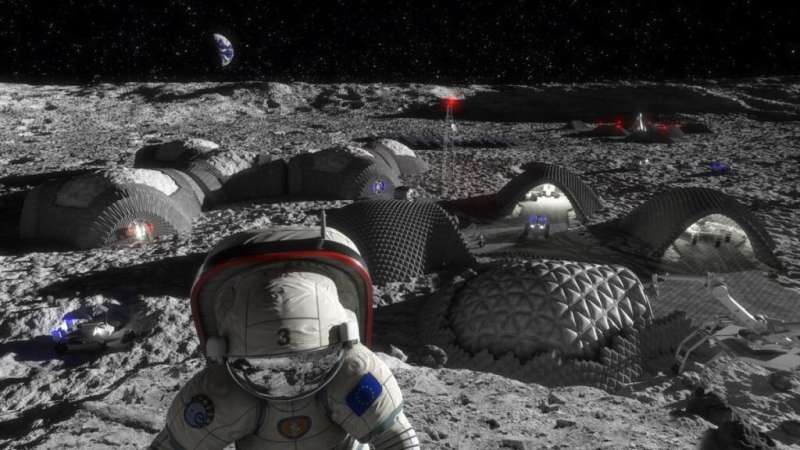
Blue Origin Secures NASA Contract for Moon Landing, Following SpaceX’s Previous Success

Jeff Bezos’ rocket company, Blue Origin, has emerged victorious in a NASA contract competition to land astronauts on the moon. This achievement comes two years after SpaceX won a similar contract, marking a significant milestone for Blue Origin. The $3.4 billion contract awarded on Friday will enable Blue Origin to lead a team in developing a lunar lander named Blue Moon, which is set to transport astronauts to the lunar surface as early as 2029, following SpaceX’s initial crew landings.

Details of the Contract and NASA’s Objectives:

While NASA will continue to utilize its own rockets and capsules to transport astronauts to lunar orbit, the agency aims to transition to private companies for the subsequent phases. By involving private entities, NASA Administrator Bill Nelson emphasizes the agency’s goal of exploring different landing options as it embarks on a return to the moon, more than 50 years after the conclusion of the Apollo moonshots.

To establish a sustainable presence on the moon, Blue Origin is investing billions of dollars in addition to the NASA contract. John Couluris, Blue Origin’s vice president, highlights the challenges that lie ahead before successful astronaut landings and returns can be achieved.

Continue reading… “Blue Origin Secures NASA Contract for Moon Landing, Following SpaceX’s Previous Success”
Discover the Hidden Patterns of Tomorrow with Futurist Thomas Frey
Unlock Your Potential, Ignite Your Success.

By delving into the futuring techniques of Futurist Thomas Frey, you’ll embark on an enlightening journey.

Learn More about this exciting program.