Solar panels that can generate electricity at night have been developed at Stanford

By RINA TORCHINSKY

A team of engineers at Stanford University have developed a solar cell that can generate some electricity at night.

The research comes at a moment when the number of solar jobs and residential installations are rising.

While standard solar panels can provide electricity during the day, this device can serve as a “continuous renewable power source for both day- and nighttime,” according to the study published this week in the journal Applied Physics Letters.

The device incorporates a thermoelectric generator, which can pull electricity from the small difference in temperature between the ambient air and the solar cell itself.

Continue reading… “Solar panels that can generate electricity at night have been developed at Stanford”

Lion Burger, Tiger Steak From Lab-Grown Meat Hit the Market

Tiger steak for dinner?

By Tasos Kokkinidis

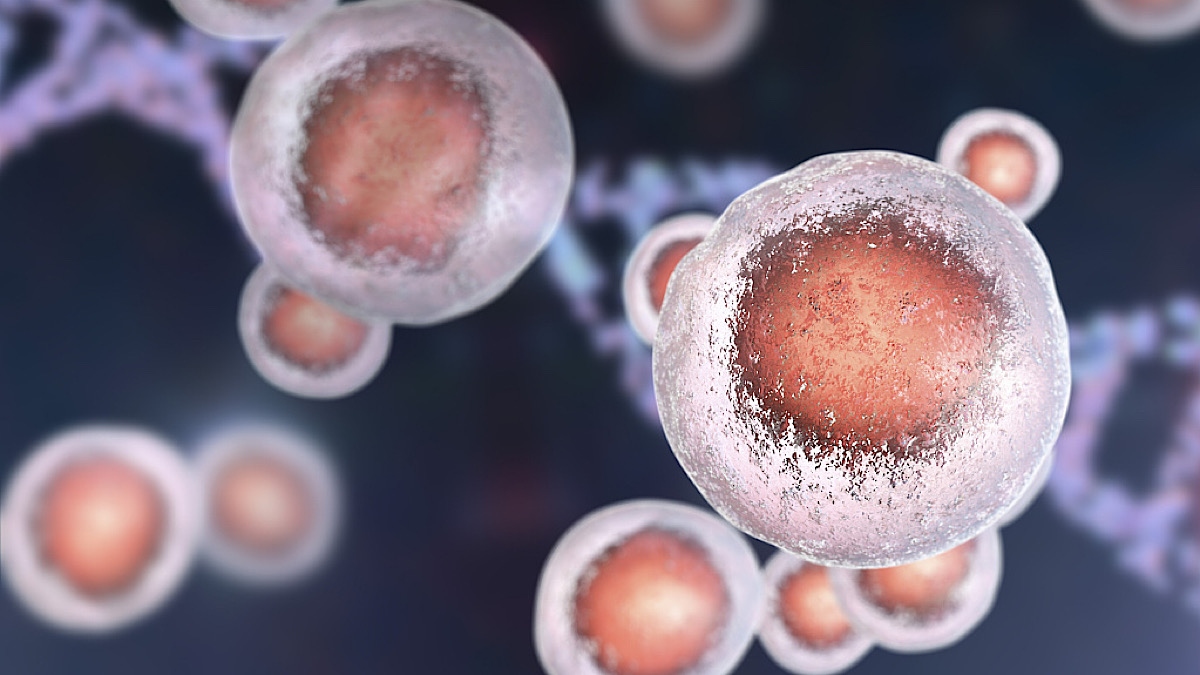
A British company called Primeval Foods is pitching lab-grown meat, such as lion burgers, tiger steaks, and zebra sushi rolls to climate-conscious consumers.

The company says it wants consumers of plant-based meat alternatives to switch to lab-grown meats in a bid to preserve the planet.

Lab-grown meat is produced by cultivating animal cells directly to produce food from any species without slaughtering animals. It also allows producers to replicate the sensory and nutritional profiles of conventional meat.

Although most companies focus on the most common meat categories in demand, such as chicken, beef and pork, Primeval Foods may be the first of its kind to entice consumers with exotic “cultured” meat products.

Continue reading… “Lion Burger, Tiger Steak From Lab-Grown Meat Hit the Market”

PickNik Robotics partners with Sierra Space to build robots for deep space missions and space habitats

PickNik Robotics and Sierra Space have agreed a collaboration which will explore the implementation of robotic autonomy and controllability for autonomous maintenance of space habitat environments.

 BY SAM FRANCIS 

PickNik Robotics is a robotics software and engineering services company, while Sierra Space is a commercial space company with 1,100 employees, more than 500 missions and over 30 years of space flight heritage.

The companies anticipate that the robotic autonomy solutions developed with this collaboration will significantly improve the ability to support low Earth orbit (LEO), lunar and deep space missions. 

PickNik Robotics’ expertise in robotic manipulation paired with Sierra Space’s LIFE habitat (Large Integrated Flexible Environment) product lines will help enable extended mission durations that benefit from remote-controlled automation.

Sierra Space aims to build the future of space transportation and destinations to enable a vibrant, growing commercial space economy in LEO.

Continue reading… “PickNik Robotics partners with Sierra Space to build robots for deep space missions and space habitats”

How AR and AI are making Zurich a smarter and safer city

David Weber, Head of Smart City Zurich, gives an inside look of how Zurich uses tech like AR, AI and digital twins to improve the city’s infrastructure and safety. 

By Liew Ming En
It can be difficult for Ironman to differentiate friend from foe when speeding through the skies. But he can easily do so with the augmented reality (AR) technology inbuilt in his suit, which automatically targets enemies and avoids civilians.

AR in the real world is still a long way away from science fiction films like Ironman, but progress in recent years is revealing use cases in various sectors. In Zurich, for example, AR is used to visualise how planned buildings will look before they are constructed.

David Weber, the Head of Smart City Zurich, shares how Zurich uses tech like AR, AI and digital twins to improve urban planning, increase citizen participation, and better citizen safety.

Continue reading… “How AR and AI are making Zurich a smarter and safer city”

Google’s self-driving startup Waymo is introducing fully driverless rides to San Francisco

Waymo self-driving autonomous car.

By Urooba Jamal 

  • The company is initially limiting the rides to its employees before opening up to the public.
  • Waymo’s autonomous vehicles have been operating in San Francisco, but with safety specialists in the driver’s seat.
  • The company first began offering autonomous rides in Arizona in 2017.

Google’s self-driving startup Waymo has begun operating fully driverless rides in San Francisco, the company announced on Wednesday.

The company said that the service is just for its employees at the moment, but it hopes to open the service to the general public soon. The company’s vehicles have been operating in the city for years, but with safety specialists in the driver’s seat. 

Continue reading… “Google’s self-driving startup Waymo is introducing fully driverless rides to San Francisco”

New AI-driven algorithm can detect autism in brain ‘fingerprints’

By Adam Hadhazy,  Stanford University

Stanford researchers have developed an algorithm that may help discern if someone has autism by looking at brain scans. The novel algorithm, driven by recent advances in artificial intelligence (AI), also successfully predicts the severity of autism symptoms in individual patients. With further honing, the algorithm could lead to earlier diagnoses, more targeted therapies, and broadened understanding of autism’s origins in the brain.

The algorithm pores over data gathered through functional magnetic resonance imaging (fMRI) scans. These scans capture patterns of neural activity throughout the brain. By mapping this activity over time in the brain’s many regions, the algorithm generates neural activity “fingerprints.” Although unique for each individual just like real fingerprints, the brain fingerprints nevertheless share similar features, allowing them to be sorted and classified.

As described in a new study published in Biological Psychiatry, the algorithm assessed brain scans from a sample of approximately 1,100 patients. With 82% accuracy, the algorithm selected out a group of patients whom human clinicians had diagnosed with autism.

“Although autism is one of the most common neurodevelopmental disorders, there is so much about it that we still don’t understand,” says lead author Kaustubh Supekar, a Stanford clinical assistant professor of psychiatry and behavioral sciences and Stanford HAI affiliate faculty. “In this study, we’ve shown that our AI-driven brain ‘fingerprinting’ model could potentially be a powerful new tool in advancing diagnosis and treatment.”

Continue reading… “New AI-driven algorithm can detect autism in brain ‘fingerprints’”

Artificial fingertip gives robots nearly humanlike touch

3D printed skin reacts to texture and shape like our skin

Robots can be programmed to lift a car and even help perform some surgeries, but when it comes to picking up an object they have not touched before, such as an egg, they often fail miserably. Now, engineers have come up with an artificial fingertip that overcomes that limitation. The advance enables machines to sense the textures of these surfaces a lot like a human fingertip does.

The researchers are “bringing the fields of natural and artificial touch closer together … a necessary step to improve robotic touch,” says Mandayam Srinivasan, a touch researcher at the University College London who was not involved with the work.

Engineers have long sought to make robots as dexterous as people. One approach involves equipping them with artificial nerves. But, “The current state of robotic touch is generally far inferior to human tactile abilities,” Srinivasan says.

So, when researchers at the University of Bristol began designing an artificial fingertip in 2009, they used human skin as a guide. Their first fingertip—assembled by hand—was about the size of a soda can. By 2018, they had switched to 3D printing. That made it possible to make the tip and all its components about the size of an adult’s big toe and more easily create a series of layers approximating the multilayered structure of human skin. More recently, the scientists have incorporated neural networks into the fingertip, which they call TacTip. The neural networks help a robot quickly process what it’s sensing and react accordingly—seemingly just like a real finger.

Continue reading… “Artificial fingertip gives robots nearly humanlike touch”

A ‘STUNNING’ LEVEL OF STUDENT DISCONNECTION

Professors are reporting record numbers of students checked out, stressed out, and unsure of their future.

By Beth McMurtrie

In 20 years of teaching at Doane University, Kate Marley has never seen anything like it. Twenty to 30 percent of her students do not show up for class or complete any of the assignments. The moment she begins to speak, she says, their brains seem to shut off. If she asks questions on what she’s been talking about, they don’t have any idea. On tests they struggle to recall basic information.

“Stunning” is the word she uses to describe the level of disengagement she and her colleagues have witnessed across the Nebraska campus. “I don’t seem to be capable of motivating them to read textbooks or complete assignments,” she says of that portion of her students. “They are kind kids. They are really nice to know and talk with. I enjoy them as people.” But, she says, “I can’t figure out how to help them learn.”

Marley, a biology professor, hesitates to talk to her students about the issue, for fear of making them self-conscious, but she has a pretty good idea of what is happening. In addition to two years of shifting among online, hybrid, and in-person classes, many students have suffered deaths in their families, financial insecurity, or other pandemic-related trauma. That adds up to a lot of stress and exhaustion. In a first-year seminar last fall, Marley says, she provided mental-health counseling referrals to seven out of her 17 students.

Continue reading… “A ‘STUNNING’ LEVEL OF STUDENT DISCONNECTION”

The space economy is ready for lift-off: First into orbit, and then to the Moon

For graduate students with good ideas for the space industry, now is the time to get your foot in the door, NASA leaders said at the 37th annual Space Symposium.

2022 is set to be a major year for the space economy. According to the Space Foundation, 15 new launch vehicles are set to debut this year, more than any other year in space history. Last year, US spaceports had more launches than any year since 1967, and the number is climbing. Meanwhile, employment in the core US space industry employment is at a 10-year high. 

The momentum is there for a flourishing space economy that, according to NASA leaders, could in 20 years take public and private missions beyond low Earth orbit (LEO), with services and infrastructure on the lunar surface and in cislunar space. It’s a fast-growing economy, NASA leaders said at the 37th Space Symposium, that offers promising opportunities for young people who want to get their foot in the door. 

The space economy is already a $400 billion industry “and on the way to $1 trillion, and I suspect it’ll get there faster than we think,” James Reuter, associate administrator for the Space Technology Mission Directorate (STMD) at NASA, said during a panel this week at the 37th Space Symposium in Colorado Springs. 

“It’s not just venture capitalists that are geeks for space” that are bringing this economy to life, Reuter said. “It’s also much more conventional people looking for opportunities. There’s a lot more opportunities for capital investment.” 

And while investments in LEO are a mainstay, he said, “there’s a strong push towards cislunar space… We’re seeing a lot of investment we can take advantage of.” 

Continue reading… “The space economy is ready for lift-off: First into orbit, and then to the Moon”

This startup designed an electric cargo ship to cross the ocean

Until recently, most experts would have argued that battery-electric ships weren’t feasible for traveling across oceans.

BY ADELE PETERS

Designing an electric cargo ship isn’t as easy as making an electric car—and until recently, most experts would have argued that battery-electric ships weren’t feasible for traveling across oceans. A giant cargo ship might theoretically need a battery that weighs 1.6 billion pounds, more than the ship could carry. But one startup plans to soon begin crossing the Pacific with smaller electric ships that swap batteries at ports along the way, in a system that it says could prove cheaper than shipping with fossil fuels.

“We started with the problem of decarbonizing ocean freight, and finding a way to make it not cost more,” says Steven Henderson, cofounder and CEO of the startup, called Fleetzero, part of the most recent cohort at the tech accelerator Y Combinator. Henderson and cofounder Michael Carter both worked in the shipping industry and saw that there was a major challenge with the industry’s goals to cut emissions: The existing alternatives were far more expensive than the status quo. Ammonia or green hydrogen power, for example, could cost as much as four times more than the heavy fuel oil that ships use today. Engines also had to be redesigned to burn alternative liquid fuels, adding to the cost. “We realized that this isn’t good for the industry if this is our future, and not good for the world if rates go up,” says Carter. The company’s new approach means that customers will see no change to their freight costs.

Continue reading… “This startup designed an electric cargo ship to cross the ocean”

FedEx testing autonomous drone delivery to cut the cargo middle mile

FedEx will begin testing autonomous cargo drone delivery with Elroy Air.

By Dashveenjit Kaur

The shipping giant wants to put the Chaparral aircraft through real-life testing by next year, within its middle-mile operations—a range of 300-500 miles. 6 April 2022 

  • The Chaparral aircraft is an eVTOL drone delivery cargo system that can autonomously pick up 300-500 pounds of cargo and air-deliver by up to 300 miles
  • The test would involve moving shipments between sortation locations
  • Both companies have worked together since 2020 with FedEx providing Elroy Air insight into its needs and preference

Just two months after Elroy Air, the company that developed the first end-to-end autonomous vertical take-off and landing (VTOL) aerial cargo system, unveiled its pre-production aircraft — the Chaparral, shipping giant FedEx Corp plans to put it through real-life testing by 2023. The autonomous cargo drone which is made to carry between 35-to-225kg of goods for delivery over a distance of up to 480km, would be tested between the perimeters of FedEx’s sortation locations.

Continue reading… “FedEx testing autonomous drone delivery to cut the cargo middle mile”

UPS Tries Out ‘eQuad’ Electric Bikes For Urban Deliveries

 Luke Wake, UPS vice president of fleet maintenance and engineering, shows off “eQuad” electric bikes

UPS was trying out a four-wheeled “eQuad” electric cargo bike for deliveries in densely packed urban areas, where bikes have better and easier access, to complement its push into electric vehicles.

UPS said on Friday it was trying out a four-wheeled “eQuad” electric cargo bike for deliveries in densely packed urban areas, where bikes have better and easier access, to complement its push into electric vehicles.

The package-delivery giant is trialing around 100 of the electric bikes, designed and built by British firm Fernhay, in seven European markets and will also launch trials in the United States and some Asian markets, Luke Wake, UPS vice president of fleet maintenance and engineering, told Reuters.

UPS said it would also use four-wheeled electric bikes from other manufacturers for the trials, but did not disclose names.

Continue reading… “UPS Tries Out ‘eQuad’ Electric Bikes For Urban Deliveries”
Discover the Hidden Patterns of Tomorrow with Futurist Thomas Frey
Unlock Your Potential, Ignite Your Success.

By delving into the futuring techniques of Futurist Thomas Frey, you’ll embark on an enlightening journey.

Learn More about this exciting program.