Earth’s Invisible Shield: The Magnetosphere Opportunity Nobody Sees Coming

By Futurist Thomas Frey

The Force Field Nobody Thinks About

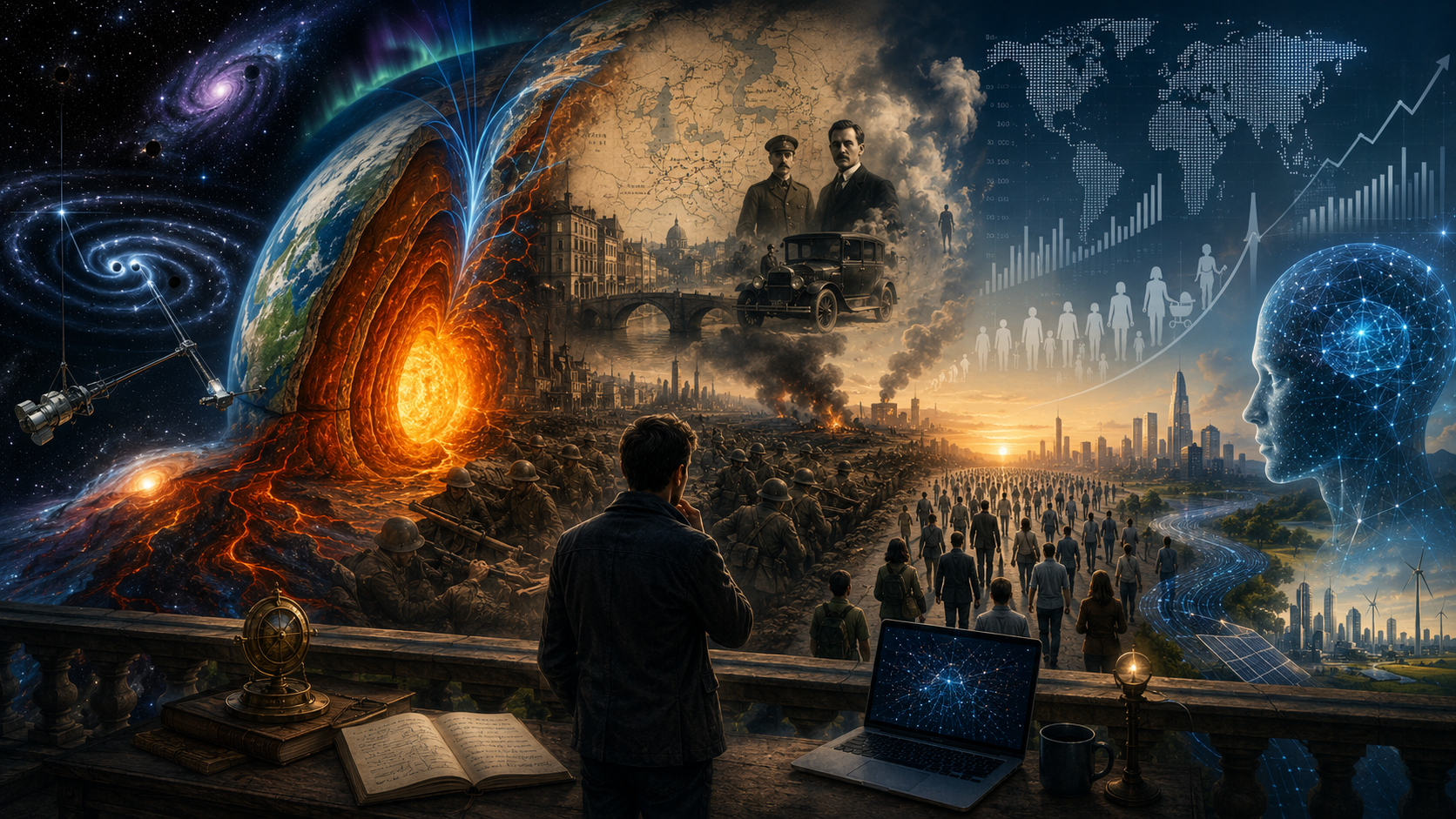
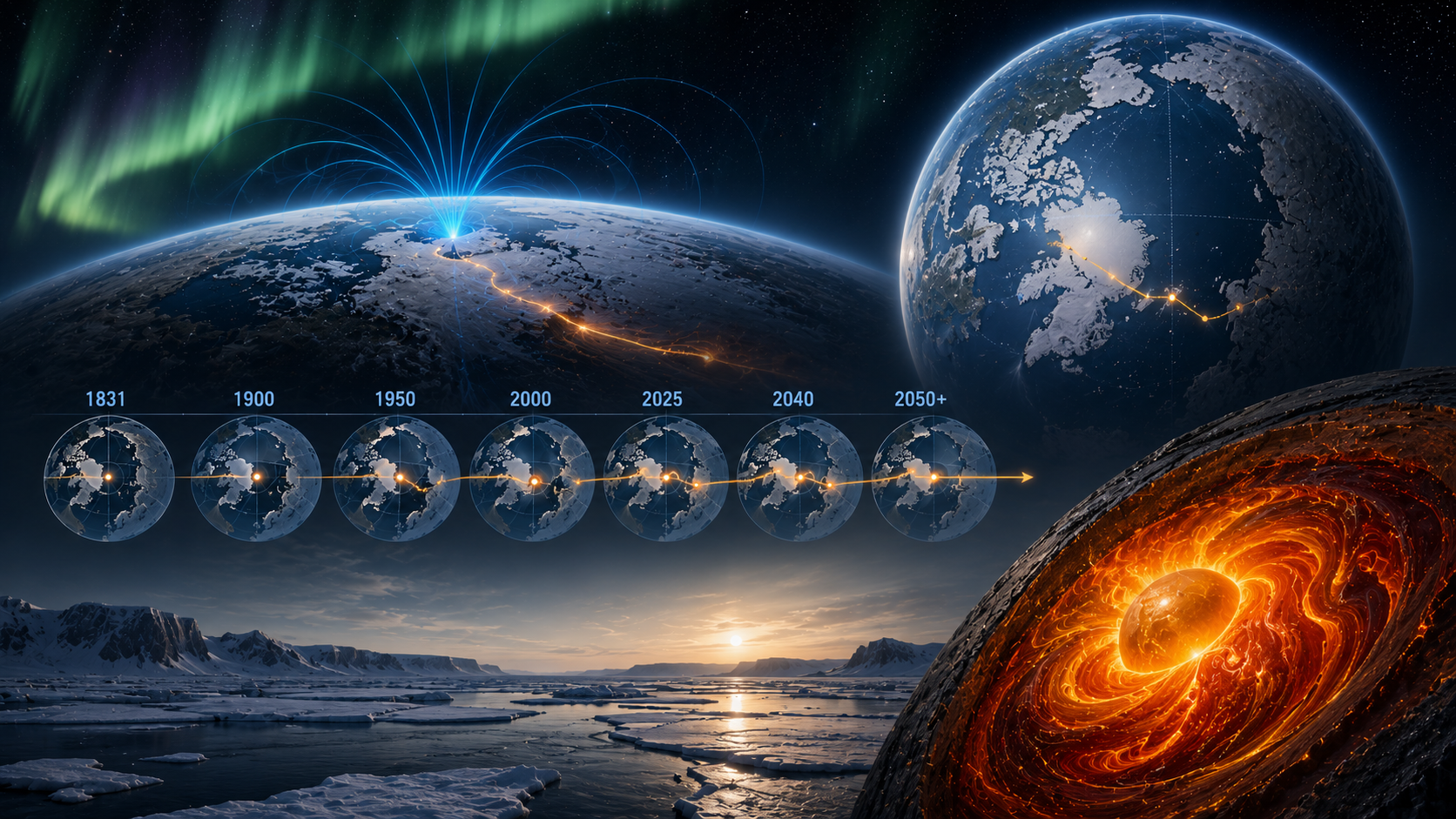
Earth has an invisible force field extending tens of thousands of miles into space, deflecting deadly solar radiation and cosmic particles that would otherwise strip away our atmosphere and sterilize the planet. It’s called the magnetosphere, and it’s one of the most critical—yet least understood—features making Earth habitable.

Most people have never heard of it. Those who have rarely grasp its significance. But by 2035, the magnetosphere will become central to space industry, planetary defense, climate technology, and even human enhancement. Let me explain what it is, why it makes Earth unique, and what opportunities stem from understanding it.

Continue reading… “Earth’s Invisible Shield: The Magnetosphere Opportunity Nobody Sees Coming”

Synthetic Reputation Architects: When Your AI Twin Negotiates Trust Before You Arrive

By Futurist Thomas Frey – Future Startup Models for 2030

The Problem: Your Reputation Precedes You (Badly)

By 2030, everyone has a digital reputation—but most people don’t control it. Search results, social media fragments, outdated professional profiles, third-party reviews, algorithmic assessments, and AI-generated summaries create a patchwork reputation that’s often inaccurate, incomplete, or manipulated.

Worse, in a world where AI agents pre-screen opportunities, evaluate candidates, and make trust decisions in milliseconds, your passive digital footprint determines which opportunities you even see. Jobs, investments, partnerships, social connections—all filtered by AI systems evaluating your reputation before you’re aware opportunities exist.

Enter Synthetic Reputation Architects: businesses that design, train, and protect your reputation twin—a living AI model that interacts with the world ahead of you, negotiating trust before you arrive, filtering opportunities, and defending against misinformation autonomously.

This isn’t reputation management. This is deploying an AI representative that actively shapes how the world perceives you. Let me show you what this looks like.

Continue reading… “Synthetic Reputation Architects: When Your AI Twin Negotiates Trust Before You Arrive”

January 1, 2026: The New Year Unlike Any Other

By Futurist Thomas Frey

When Everything Changes at Once

January 1, 2026 won’t feel like a typical New Year. There won’t be the usual hopeful optimism, fresh-start energy, or sense that this year will be incrementally better than the last. Instead, 2026 arrives carrying the weight of recognition: we’re entering a year of disruption so profound that the world on December 31, 2026 will be unrecognizable from the one we’re leaving behind.

This isn’t hyperbole. Multiple exponential curves—AI capability, automation deployment, job displacement, economic restructuring—are converging simultaneously in 2026, creating compound effects that individually they could never achieve. Let me show you what makes January 1, 2026 fundamentally different from every New Year before it.

Continue reading… “January 1, 2026: The New Year Unlike Any Other”

Digital Afterlife Executors: Managing Your AI Legacy When You Die

By Futurist Thomas Frey – Future Startup Models for 2030

The Question Nobody’s Asking Yet

What happens to your AI agent when you die? Not your social media accounts or email—those are handled by existing digital estate services. I’m talking about your autonomous AI agent managing your finances, your AI assistant making daily decisions, your digital twin negotiating contracts, and your personalized AI models trained on decades of your data, preferences, and decision-making patterns.

By 2030, people don’t just have digital accounts—they have persistent AI representations operating with real authority. And when the human dies, those AI systems don’t automatically shut down. Someone needs to manage the transition, prevent misuse, and ensure your digital legacy doesn’t become a liability or get exploited.

Enter Digital Afterlife Executors: a new class of professionals who manage what happens when a person “dies” digitally. Let me show you why this becomes essential and what these businesses actually do.

Continue reading… “Digital Afterlife Executors: Managing Your AI Legacy When You Die”

Synthetic Scarcity Designers: The Startup Model That Sells Limitations in a World of Abundance

By Futurist Thomas Frey – Future Startup Models for 2030

When Abundance Becomes the Problem

By 2030, we face a paradox nobody anticipated: unlimited access to everything makes nothing feel valuable. AI generates infinite content. 3D printers produce unlimited objects. Digital goods replicate endlessly at zero marginal cost. Information is ubiquitous. Entertainment is inexhaustible.

And people are miserable.

The problem isn’t scarcity—it’s abundance so overwhelming that choice becomes paralyzing, achievement feels meaningless, and experiences lose significance because they’re infinitely replicable. When everything is available instantly, nothing matters.

Enter the most counterintuitive startup model of 2030: Synthetic Scarcity Designers—entrepreneurs who intentionally create scarcity in a world of abundance to preserve motivation, value, and meaning. They design artificial limits, time-gated access, and voluntary constraints that make experiences matter again.

Scarcity becomes a product, not a condition. Let me show you what this looks like.

Continue reading… “Synthetic Scarcity Designers: The Startup Model That Sells Limitations in a World of Abundance”

The AI-Enhanced Superhuman: When Your Personal Agent Knows You Better Than You Know Yourself

By Futurist Thomas Frey

The Coach Whispering in Your Ear

How many times have you wished a smarter person was leaning over your shoulder whispering the right answer in your ear? A better response could mean the difference between success and failure—landing a job, going on a date, pitching an investment, or simply convincing a child it’s time to go to bed.

We’re on the edge of a radical transformation where, very soon, we won’t be able to tell where the human ends and technology begins. This intermeshing of mind, body, and technology will become so seamless and invisible that we essentially “become one with the tech.”

Imagine a portable AI companion with an IQ of 200 and the conversational skills of your favorite talk show host, constantly learning your patterns, preferences, and needs. That’s what lies ahead. Let me show you what life looks like with a personal AI agent that knows you better than you know yourself.

Continue reading… “The AI-Enhanced Superhuman: When Your Personal Agent Knows You Better Than You Know Yourself”

AI Drones and Active Shooters: When Technology Becomes First Responder

By Futurist Thomas Frey

The Question We’re Afraid to Ask

In an age where active shooter incidents dominate headlines with disturbing frequency, communities worldwide grapple with anxiety about safety in public spaces. Schools, malls, offices, and retail outlets—once symbols of vibrant community life—now face the grim task of balancing public service with critical safety measures.

Traditional security mechanisms are stretched to their limits. Response times measured in minutes feel like eternities when shots are fired. By the time police arrive, the damage is often catastrophic. We need something faster, more proactive, more capable of intervention in the critical seconds when violence erupts.

The answer might come from an unlikely source: AI-powered drones capable of autonomous crisis response. Not someday—now, with technology that already exists. Let me show you what this looks like and why it might save thousands of lives.

Continue reading… “AI Drones and Active Shooters: When Technology Becomes First Responder”

Artificial Glaciers: The Megaproject That Moves Water Through Time

By Futurist Thomas Frey

When Engineering Meets Winter

We’re facing a fundamental problem: water exists where and when we don’t need it, and disappears where and when we do. Rivers course through the Pacific Northwest while the Mississippi becomes muddy shallows. California agriculture withers during droughts while the Pacific Ocean glimmers 150 miles away. Glaciers that feed 20% of the world’s population are retreating at 210 gigatons annually.

The solution isn’t just moving water through space—it’s moving water through time. And the most ingenious approach might be artificial glaciers: frozen fountains storing winter runoff for spring agriculture when natural glaciers can’t provide it yet.

Let me show you how this works and why it represents the future of water management in an era when conservation alone won’t solve distribution problems.

Continue reading… “Artificial Glaciers: The Megaproject That Moves Water Through Time”

Growing Up in the AI Age: A Gen Alpha Boy’s Journey from 2025 to 2040

By Futurist Thomas Frey

When Childhood Becomes Unrecognizable

Meet Ethan, born in 2020. He’s five years old in 2025, growing up during the most disruptive technological transition in human history. Let me walk you through his life in five-year increments, showing how radically different childhood becomes when AI, robotics, and automation reshape society faster than institutions can adapt.

Continue reading… “Growing Up in the AI Age: A Gen Alpha Boy’s Journey from 2025 to 2040”

2035 Predictions: When Humans Stop Operating and Start Designing Intention

By Futurist Thomas Frey

The Year We Become Architects of Intention

If 2025 was the year AI entered the workforce, and 2030 was the year humanity began negotiating with its own technology, 2035 is the year we enter a co-creative partnership with intelligent systems.

By 2035, the acceleration curve steepens. Humans are no longer the sole architects of progress; we are co-creating the future with autonomous systems, synthetic biology, self-improving robots, and predictive infrastructure. Civilization begins behaving less like a collection of institutions and more like a network of living, learning systems.

Here are the most consequential shifts defining 2035.

Continue reading… “2035 Predictions: When Humans Stop Operating and Start Designing Intention”

The Humanoid Robot Debate Misses the Point: There Is No Perfect Form Factor

By Futurist Thomas Frey

Why Everyone Arguing About Robot Shape Is Asking the Wrong Question

We’re seeing intense debate about whether humanoid robots are the optimal form factor. Critics argue two arms and two legs are inefficient—why not five arms, four legs, seven fingers, or spherical units that roll? Defenders claim humanoid shapes work in human-designed environments without infrastructure changes.

Both sides miss the fundamental point: there is no one-size-fits-all robot form that’s perfect for everyone and every application. The question isn’t “what’s the best robot shape?” It’s “what’s the best robot shape for this specific task in this specific environment?”

Let me show you why form factor diversity is the actual future, not humanoid domination or any single alternative.

Continue reading… “The Humanoid Robot Debate Misses the Point: There Is No Perfect Form Factor”

The Turbulent Middle: What 2026 Looks Like for People Caught Between Economies

By Futurist Thomas Frey

When the Ground Shifts Beneath Your Feet

2026 will be profoundly disruptive—jobs disappearing faster than expected, AI-native startups appearing overnight, income fluctuations nobody anticipated. The economic models we’ve relied on for decades are breaking simultaneously, and in the middle of all this chaos are millions of people struggling to find the new equilibrium.

Let me show you what that actually looks like on the ground, in real lives, during the most turbulent economic transition in a generation.

Continue reading… “The Turbulent Middle: What 2026 Looks Like for People Caught Between Economies”
Discover the Hidden Patterns of Tomorrow with Futurist Thomas Frey
Unlock Your Potential, Ignite Your Success.

By delving into the futuring techniques of Futurist Thomas Frey, you’ll embark on an enlightening journey.

Learn More about this exciting program.