Top 5 Predictions for VR/AR Breakthroughs

FDD98010-832B-4875-9E5B-F4CA45614E4C

Convergence is accelerating disruption… everywhere!

Exponential technologies are colliding into each other, reinventing products, services and industries.

In this third installment of our Convergence Catalyzer series, I’ll be synthesizing key insights from my annual entrepreneurs’ mastermind event, Abundance 360, which takes place every January in Beverly Hills. This five-blog series looks at 3D Printing, Artificial Intelligence, VR/AR, Energy & Transportation, and Blockchain.

Today, let’s dive into Virtual and Augmented Reality…

Continue reading… “Top 5 Predictions for VR/AR Breakthroughs”

The new digital divide is between people who opt out of algorithms and people who don’t

D2A2333B-DF46-4E7A-8381-17F40216FF50

Every aspect of life can be guided by artificial intelligence algorithms—from choosing what route to take for your morning commute, to deciding whom to take on a date, to complex legal and judicial matters such as predictive policing.

Big tech companies like Google and Facebook use AI to obtain insights on their gargantuan trove of detailed customer data. This allows them to monetize users’ collective preferences through practices such as micro-targeting, a strategy used by advertisers to narrowly target specific sets of users.

In parallel, many people now trust platforms and algorithms more than their own governments and civic society. An October 2018 study suggested that people demonstrate “algorithm appreciation,” to the extent that they would rely on advice more when they think it is from an algorithm than from a human.

Continue reading… “The new digital divide is between people who opt out of algorithms and people who don’t”

Oxford philosopher’s newest hypothesis predicts the rise of super villains

0AEC6D66-F7ED-45E4-BD4E-E3AB3A770D7C

 Oxford philosopher and founding director of the Future of Humanity Institute Nick Bostrom‘s latest research paper seems to indicate our species could be on a collision course with a technology-fueled super villain.

Will a deranged lunatic soon have the capabilities to take the entire world hostage? Can our nation’s leaders do anything to stop this inevitable tragedy? Will the caped crusader rescue his sidekick before the Joker’s sinister trap springs?

Continue reading… “Oxford philosopher’s newest hypothesis predicts the rise of super villains”

CRISPR gene editing is coming for the womb


77DC99B8-1437-4B7F-AA6C-CFA32CF16818

When an unborn baby is diagnosed with a life-threatening defect, it can be devastating. So some scientists hope to treat the fetus in the uterus, using gene editing.

WILLIAM PERANTEAU IS the guy parents call when they’ve received the kind of bad news that sinks stomachs and wrenches hearts. Sometimes it’s a shadow on an ultrasound or a few base pairs out of place on a prenatal genetic test, revealing that an unborn child has a life-threatening developmental defect. Pediatric surgeons like Peranteau, who works at Children’s Hospital of Philadelphia, usually can’t try to fix these abnormalities until their patients leave their mother’s bodies behind. And by then it might be too late.

It’s with the memory of the families he couldn’t help in the back of his mind that Peranteau has joined a small group of scientists trying to bring the fast-moving field of gene editing to the womb. Such editing in humans is a long way off, but a spate of recent advances in mouse studies highlight its potential advantages over other methods of using Crispr to snip away diseases. Parents confronted with an in utero diagnosis are often faced with only two options: terminate the pregnancy or prepare to care for a child who may require multiple invasive surgeries over the course of their lifetime just to survive. Prenatal gene editing may offer a third potential path. “What we see as the future is a minimally invasive way of treating these abnormalities at their genetic origin instead,” says Peranteau.

Continue reading… “CRISPR gene editing is coming for the womb”

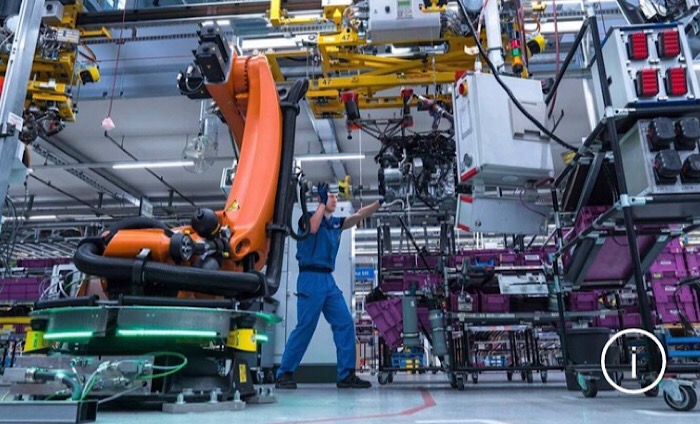
At these factories, robots are making jobs better for workers

729083BA-5659-46B4-A5A1-E335B843A105A worker leads a large industrial robot at the BMW Group Plant Regensburg, Germany.

Any minute now, some speculate, workers around the world will be asked to make way for robots.

Their arrival may be welcome in some cases. Our latest research suggests that when robots—or automated manufacturing technology—take over jobs that are oriented around repetitive tasks, operators are able to move onto more exciting and productive work.

This was the case at 16 “lighthouses of manufacturing,” which were identified as part of a joint McKinsey and World Economic Forum project presented at Davos.

Continue reading… “At these factories, robots are making jobs better for workers”

AI Ethics: Seven Traps


2018_AI_Banner_Twitter_1000x563px.indd

The question of how to ensure that technological innovation in machine learning and artificial intelligence leads to ethically desirable—or, more minimally, ethically defensible—impacts on society has generated much public debate in recent years. Most of these discussions have been accompanied by a strong sense of urgency: as more and more studies about algorithmic bias have shown, the risk that emerging technologies will not only reflect, but also exacerbate structural injustice in society is significant.

So which ethical principles ought to govern machine learning systems in order to prevent morally and politically objectionable outcomes? In other words: what is AI Ethics? And indeed, “is ethical AI even possible?”, as a recent New York Times article asks?

Continue reading… “AI Ethics: Seven Traps”

CRISPR is now being used on humans in the U.S.

30D186F1-5D03-4606-BC1C-4AEE9016C84E

The gene editing trial has two patients so far.

CRISPR therapies are entering the mainstream.

The first U.S. trial of CRISPR in humans has begun, NPR reported Tuesday. Two patients are currently being treated as part of a University of Pennsylvania study. Per NPR, both have difficult-to-treat forms of cancer and both have relapsed after regular treatments. As part of the trial, researchers are taking immune cells from the patients’ own bodies and editing them with CRISPR before putting them back in. The hope is that these edited cells will be better at identifying and attacking the cancer than their unaltered counterparts. According to the U.S. government clinical trial registry, the researchers are hoping to enroll 18 people in their study. But it’s not certain yet whether they’ll be approved for that many subjects, reports Jon Fingas for Engadget.

Continue reading… “CRISPR is now being used on humans in the U.S.”

Very risky business: the pros and cons of insurance companies embracing artificial intelligence

CE60F742-1393-4BE5-81D6-33BE1845C13B

The enabling technology for insurers to use AI is the ‘ecosystem’ of sensors known as the internet of things.

It’s a new day not very far in the future. You wake up; your wristwatch has recorded how long you’ve slept, and monitored your heartbeat and breathing. You drive to work; car sensors track your speed and braking. You pick up some breakfast on your way, paying electronically; the transaction and the calorie content of your meal are recorded.

Then you have a car accident. You phone your insurance company. Your call is answered immediately. The voice on the other end knows your name and amiably chats to you about your pet cat and how your favourite football team did on the weekend.

You’re talking to a chat-bot. The reason it “knows” so much about you is because the insurance company is using artificial intelligence to scrape information about you from social media. It knows a lot more besides, because you’ve agreed to let it monitor your personal devices in exchange for cheaper insurance premiums.

Continue reading… “Very risky business: the pros and cons of insurance companies embracing artificial intelligence”

Fiat vs Cryptocurrency: Pros and Cons


3F4077BA-6DC4-4117-8819-4F4754728B87

While some early adapters may not need convincing to join the cryptocurrency craze, others are left wondering, what exactly is it good for? I can’t put it in my bank, I can’t use it at (most) stores, what can I do with cryptocurrencies? Before we get into the ins and outs of cryptocurrency and how it can be used, first let’s look at some of the similarities and differences between fiat and cryptocurrency.

Continue reading… “Fiat vs Cryptocurrency: Pros and Cons”

Should athletes be allowed to enhance their genes?


5DEC3FF8-7029-4D46-8F3D-A039F1EBA58F

So-called gene doping is banned in sports, but some philosophers argue that it’s the way of the future

Scientists first developed gene therapy techniques in the 1990s, exploring ways to treat disease by modifying malfunctioning cells. In 1997, a team at John Hopkins University edited genes to create what the media called “Schwarzenegger mice,” which had twice the normal amount of muscle.

The researchers’ goal was to develop treatments for muscle-wasting conditions, including old age, but the same technique could theoretically be used to add muscle bulk to athletes, a concept called gene doping. Doctors could, theoretically, inject cells with enhanced genes into the relevant body part or use a benign virus to deliver modified cells. These superhumans could be the elite athletes of the future — athletes who perform faster, higher, and stronger than any “natural” human ever could.

Continue reading… “Should athletes be allowed to enhance their genes?”

AI brought a 60-year old music-making machine to life

 A45DC264-0DF1-4D9E-8004-39A6DD40D6FB

Sound artist Yuri Suzuki used AI to complete Raymond Scott’s Electronium vision.

If you’ve seen Looney Tunes or The Simpsons, you’ve probably heard Raymond Scott’s music — which was adapted for those and other cartoons. But there’s a good chance you haven’t heard of Scott himself. A musician and inventor, Scott was ahead of his time. As early as the 1950s, he began working on the Electronium, a kind of music synthesizer that he hoped would perform and compose music simultaneously. While Scott invested $1 million and more than a decade in Electronium, he died before it was complete. Now, Fast Company reports, Pentagram partner and sound artist Yuri Suzuki has picked up where Scott left off.

Suzuki worked in partnership with the design studio Counterpoint and used Google’s Magenta AI to generate music the way Scott envisioned. Like the Electronium, Suzuki’s version has three panels. First, a player taps a melody, or even a few notes, on the center panel. Then, the AI uses that to compose music, which is shown on the right. And finally, the player can use the panel on the left to manipulate the music by adding effects or beats. It’s the kind of human-computer collaboration Scott dreamed of but didn’t have the digital technology to complete.

Continue reading… “AI brought a 60-year old music-making machine to life”

Maryland test confirms drones can safely deliver human organs


C6128F35-F032-4E68-99C8-CF652AC2808EDrone with organ delivery box.

Researchers from the University of Maryland attach a cooler containing a kidney to a DJI M600 Pro drone in preparation for a test flight.

When a patient who needs an organ transplantation is finally matched with a donor, every second matters. A longer wait between when an organ is removed from a donor and when it is placed into a recipient is associated with poorer organ function following transplantation. To maximize the chances of success, organs must be shipped from A to B as quickly and as safely as possible—and a recent test run suggests that drones are up to the task.

One transplant surgeon’s personal experience at the operating table, waiting for organs to arrive, prompted him to think of new forms of delivery. “I frequently encounter situations where there’s simply no way to get an organ to me fast enough to do a transplant, and then those life-saving organs do not get transplanted into my patient,” says Dr. Joseph Scalea of the University of Maryland Medical Center. “And that’s frustrating, so I wanted to develop a better system for doing that.”

Continue reading… “Maryland test confirms drones can safely deliver human organs”

Discover the Hidden Patterns of Tomorrow with Futurist Thomas Frey
Unlock Your Potential, Ignite Your Success.

By delving into the futuring techniques of Futurist Thomas Frey, you’ll embark on an enlightening journey.

Learn More about this exciting program.