When Mason Wilde was 4 years old, he took apart his mother’s dining room table and gliding ottoman. He pretty much built a computer from scratch last year. Wilde has always had a passion for figuring out how things work.
Bitcoin will start its transformation from a mere currency into an entire open-source.
Bitcoin’s valuation didn’t just skyrocket in 2013, but its infrastructure, services, and adoption exploded as well, culminating in recent announcements that major online retailer Overstock.com and NBA team the Sacramento Kings would accept the digital currency as payment.
We saw such a change in web design over the last couple of years that it is unbelievable to anticipate what could possibly the next hot things. What trends will flourish this year and which ones will fade off? This year the design scene will be very interesting to watch as there will be a bunch of changes going on making for some exciting new trends actually.
The growing percentage reflects, in part, the increasing average age at which women give birth for the first time.
In 2012, more test-tube babies were born in the United States than ever before, and they constituted a higher percentage of total births than at any time since the technology was introduced in the 1980s, according to a report released on Monday.
You won’t necessarily sacrifice comfort by living in a tiny house, at least not according to work-at-home husband and wife team Andrew and Gabriella Morrison. They live in a 221 square foot home, which is dubbed hOMe. The tiny hose is designed in a way that maximizes each part of the living space, giving the appearance of being a much larger house than it is. The home greatly resembles a shipping container from the outside due to its shape, and is only 8 feet and 6 inches wide. (Photos)
Even though African-Americans make up 50% of murder victims (they are only 12% of the population) most death sentences that are handed out for killing are for white people.
Futurist Thomas Frey: In 1998, a column I wrote for The Futurist Magazine took issue with the state of computer displays. Viewing the vast and growing Internet through a little square box on our desk was, in my opinion, the equivalent of watching a baseball game through a knothole.
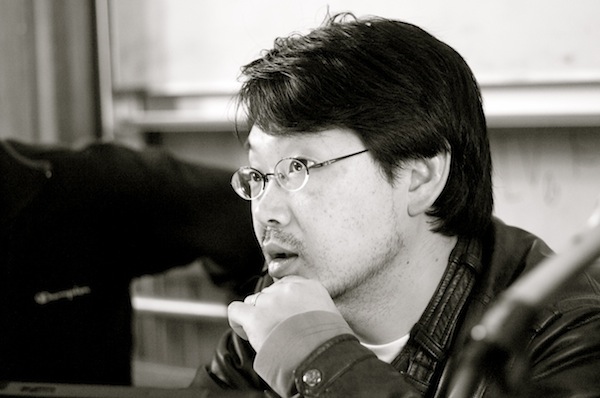
Yukihiro “Matz” Matsumoto, creator of the Ruby programming language in 1995
Have you ever wondered how computers got started and where programming languages came from?
In the beginning, Charles Babbage’s difference engine could only be made to execute tasks by changing the gears which executed the calculations. Thus, the earliest form of a computer language was physical motion. Eventually, physical motion was replaced by electrical signals when the US Government built the ENIAC in 1942. It followed many of the same principles of Babbage’s engine and hence, could only be “programmed” by presetting switches and rewiring the entire system for each new “program” or calculation. This process proved to be very tedious. (Photos)
Genius happens when a seasoned mind sees a problem with fresh eyes.
The former frontman of the band LCD Soundsystem, James Murphy, made what he called the biggest mistake of his life at 21, when he turned down a writing job on a sitcom that was about to launch.
We’re going to see artificial intelligence do more and more.
We have seen a lot of advances in the past few years. We have seen cars that drive themselves, humanoid robots, speech recognition and synthesis systems, 3D printers, Jeopardy!-champion computers. These aren’t even the crowning achievements of the computer era. They’re the warm-up acts. As we move deeper into the second machine age we’ll see more and more such wonders, and they’ll become more and more impressive.
A clever folding door from Austrian artist Klemens Torggler has been making the design blog rounds the past few days. It’s the kind of poetic reinvention of a familiar object that makes you wonder why nobody thought of such a radical innovation before. (Videos)
The Ivanpah Solar Electric Generating System, the world’s largest solar power plant, takes 300,000 computer-controlled mirrors, each 7 feet high and 10 feet wide and controls them with computers to focus the Sun’s light to the top of 459-foot towers where water is turned into steam to power turbines. (Photos)