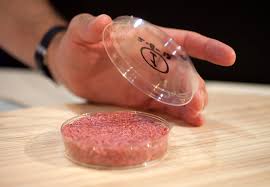
Lab-grown meat could be on your plate within the next five years. For the past few years, the barrier to getting test-tube meat into the hands of consumers has been the cost of production. In 2013, it was around $325,000 to make this stuff in a lab, but the process has been refined, and the cost now is just $11.36.
On April 10-14 the newly launched DaVinci Tech Academy will be hosting an intensive week-long workshop called “Inside the Mind of a Futurist.” Throughout this event, Michael Cushman and I will be unveiling a number of unusual processes for probing into the future.
Tim Berners-Lee, who invented the World Wide Web, now wants to save it.
The computer scientist who wrote the blueprint for what would become the World Wide Web 28 years ago today is alarmed at what has happened to it in the past year.
“Over the past 12 months, I’ve become increasingly worried about three new trends, which I believe we must tackle in order for the web to fulfill its true potential as a tool which serves all of humanity,” he said in a statement issued from London. He cited compromised personal data; fake news that he says has “spread like wildfire”; and the lack of regulation in political advertising, which he says threatens democracy.
One of the biggest obstacles keeping flying cars grounded isn’t necessarily figuring out how to make a vehicle capable of flight (hello, helicopters) but rather, designing something that can both fly and drive on the streets.
The flexibility of being able to do both is incredibly appealing but physical limitations on both sides of the spectrum impact the ability to efficiently accomplish the other task.
That’s where Airbus’ latest concept changes things up.
When should a criminal defendant be required to await trial in jail rather than at home? Software could significantly improve judges’ ability to make that call—reducing crime or the number of people stuck waiting in jail.
In a new study from the National Bureau of Economic Research, economists and computer scientists trained an algorithm to predict whether defendants were a flight risk from their rap sheet and court records using data from hundreds of thousands of cases in New York City. When tested on over a hundred thousand more cases that it hadn’t seen before, the algorithm proved better at predicting what defendants will do after release than judges.
Even years into the deployment of the internet, many believed that it was still a fad. Of course, the internet has since become a major influence on our lives, from how we buy goods and services, to the ways we socialize with friends, to the Arab Spring, to the 2016 U.S. presidential election. Yet, in the 1990s, the mainstream press scoffed when Nicholas Negroponte predicted that most of us would soon be reading our news online rather than from a newspaper.
Fast forward two decades: Will we soon be seeing a similar impact from cryptocurrencies and blockchains? There are certainly many parallels. Like the internet, cryptocurrencies such as Bitcoin are driven by advances in core technologies along with a new, open architecture — the Bitcoin blockchain. Like the internet, this technology is designed to be decentralized, with “layers,” where each layer is defined by an interoperable open protocol on top of which companies, as well as individuals, can build products and services. Like the internet, in the early stages of development there are many competing technologies, so it’s important to specify which blockchain you’re talking about. And, like the internet, blockchain technology is strongest when everyone is using the same network, so in the future we might all be talking about “the” blockchain.
The inevitability of aging may be no more than yet another biological theory that scientific advances will retire in the near future. Some scientists today say that longevity is a societal concept that we may no longer need to uphold as a static law of nature, but instead, as one that can be rewritten to our benefit.
Researchers from fields spanning genetics to artificial intelligence (AI) are working towards a future where we will have to stop using a “midlife crisis” to justify our ill-advised decisions (but is it really ever the wrong time to buy a Porsche?).
While there have been innumerable theoretical ideas and initiatives for dodging the Grim Reaper, many actual strategies that are being developed today fall into one of two camps: biomedical or technological.
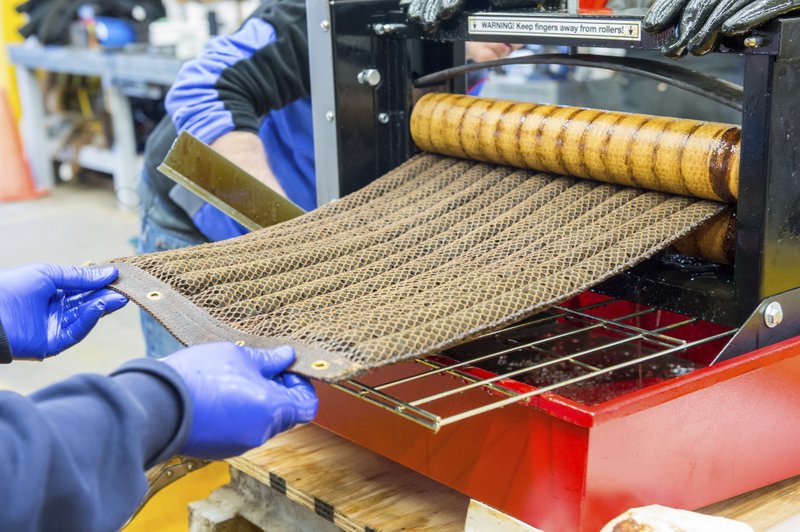
Federal researchers have created a new tool to clean up oil spills by tinkering with the kind of foam found in seat cushions.
The modified foam can soak up oil floating on water and lurking below the surface, and then can be repeatedly wrung out and reused, the researchers say.
It “just bounces back like a kitchen sponge,” said co-inventor Seth Darling, a scientist at the Argonne National Laboratory near Chicago.
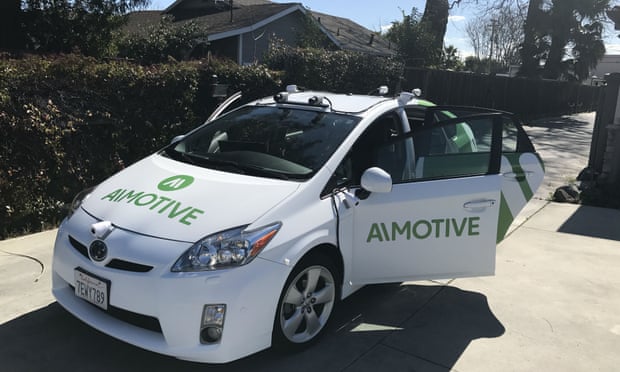
The AImotive office is in a small converted house at the end of a quiet residential street in sunny Mountain View, spitting distance from Google’s headquarters. Outside is a branded Toyota Prius covered in cameras, one of three autonomous cars the Hungarian company is testing in the sleepy neighborhood. It’s a popular testing ground: one of Google’s driverless cars, now operating under spin-out company Waymo, zips past the office each lunchtime.
DNA contains information about a living organism. It codes everything in an living being. That’s why it makes sense for corporations like Microsoft to invest in research that studies how DNA can be used to store data. Unlike most of the existing data storage devices out there, DNA doesn’t degrade over time, plus it’s very compact. For example, just four grams of DNA can contain a year’s worth of information produced by all of humanity combined. Continue reading… “New Study Confirms That the Future of Data Storage Is in DNA”
It may sound strange, but a number of prominent people have been asking this question lately. As fears about the impact of automation grow, calls for a “robot tax” are gaining momentum. Earlier this month, the European parliament considered one for the EU. Benoît Hamon, the French Socialist party presidential candidate who is often described as his country’s Bernie Sanders, has put a robot tax in his platform. Even Bill Gates recently endorsed the idea.