These 10 Colleges Have Produced The Most Billionaire Alumni

By Kenrick Cai

American universities dominate, but it’s not all Ivy Leaguers on the 2021 World’s Billionaires list.

The 2,755 people on Forbes’ 2021 World’s Billionaires list received their undergraduate degrees all over the world, from Al-Azhar University in Egypt to the Zhejiang University of Technology in China. Hundreds did not attend college at all, or left before obtaining a diploma, including a pair of Harvard dropouts who are among the five richest people in the world: Bill Gates and Mark Zuckerberg.

But among the billionaires who completed their undergraduate education, a few schools stand out. Harvard leads the way, with at least 29 billionaire alumni on the Forbes list. (We found information about the undergraduate education of a majority, but not all, of the list members.) Four other Ivy League universities make the top ten. Nine of these ten schools are located in the United States—MIT and a trio of California schools round out the American colleges—although their alumni hold diverse citizenship, from Colombia to Ireland to the Philippines. The lone non-U.S. school? The University of Mumbai, a public university in India that is one of the largest colleges in the world by enrollment. Just missing the cut are South Korea’s Seoul National University and China’s Tsinghua University.

Here are the ten colleges with the most billionaire undergraduate alumni, based on education data collected by Forbes; net worths are as of March 5, 2021.

Continue reading… “These 10 Colleges Have Produced The Most Billionaire Alumni”

Innovative technique developed to destroy cancerous kidney cells

Figure 1 Cathepsin S (CS) protein expression levels are induced through the -1048 promoter fragment from the CTTS gene upon Paclitaxel or hydrogen peroxide stimulation. HEK293 and 769P cells were stimulated with increasing doses of Paclitaxel (Pac) and hydrogen peroxide (HP) and soluble lysates prepared after 24 h and equal volumes analyzed by Western blotting for cathepsin S (CS), BAX and actin expression (Panel A). Similarly, total RNA was isolated from cells stimulated for 24 h with increasing doses of Pac or HP and equal quantities of template cDNA analyzed for transcriptional expression of CS, BAX and Glyceraldehyde-3-phosphate dehydrogenase (GAP-DH, Panel B). Promoter fragments, derived from the transcriptional start site of the CTTS gene to -1048 and -564, were PCR cloned and fused to a promoter-less GFP encoding plasmid (Panel C) and evaluated for GFP expression in equal volumes of HEK293 and 769P cleared whole cell lysates (WCLs) under Pac (10 μg/mL and 5 μg/mL, respectively) or HP (5 μM) stimulatory conditions. GFP expression was also quantified, standardized and corrected against GFP expression from cells stimulated with carrier alone and is shown as a fold change over basal GFP expression (Panel D). HEK293 cells transfected with pCS-1048 or pCS-564 and stimulated with Pac (5 μg/mL) for 24 h were also fixed and visualized for GFP expression using laser scanning confocal microscopy (Panel E). The red bar indicates 1 micron. Quantified data are presented as the mean ± SEM and its significance (where p < 0.05) determined, using a two-way Student’s t-test (* p < 0.05, ** p < 0.01 and *** p < 0.001).

An innovative new technique that encourages cancer cells in the kidneys to self-destruct could revolutionize the treatment of the disease, a new study in the journal Pharmaceutics reports.

During this unique study, researchers from the University of Surrey and Sechenov First Moscow State Medical Universityin Russia investigatedwhethercertain naturally occurring proteins within the body can be used treat cancer.

Continue reading… “Innovative technique developed to destroy cancerous kidney cells”

Wearable biofuel cells could generate electricity from sweat

Scientists develop biofuel cells that can power wearable electronics purely by using human sweat.

By Tokyo University of Science –

It cannot be denied that, over the past few decades, the miniaturization of electronic devices has taken huge strides.

Today, after pocket-size smartphones that could put old desktop computers to shame and a plethora of options for wireless connectivity, there is a particular type of device whose development has been steadily advancing: wearable biosensors.

These tiny devices are generally meant to be worn directly on the skin in order to measure specific biosignals and, by sending measurements wirelessly to smartphones or computers, keep track of the user’s health.

Although materials scientists have developed many types of flexible circuits and electrodes for wearable devices, it has been challenging to find an appropriate power source for wearable biosensors.

Continue reading… “Wearable biofuel cells could generate electricity from sweat”

DARPA Taps Blue Origin for Nuclear-Powered Rocket

By Ryan Whitwam 

Blue Origin, the private spaceflight firm founded by Amazon billionaire Jeff Bezos, is still trying to get its New Shepard rocket ready for commercial launches, but it just accepted a contract to design something new. The contracts from the Pentagon’s Defense Advanced Research Projects Agency (DARPA) direct Blue Origin, as well as Lockheed Martin and General Atomics, to design a nuclear thermal propulsion system that could accelerate human spaceflight—literally. 

Our current rocket technology relies mostly on chemical power, such as the liquid-fueled engines on a Falcon 9 or the upcoming SLS. These rockets have very high thrust, but they’re less efficient than electrically powered engines. Missions that need to travel a very long distance often use electric propulsion such as ion engines because they can remain active for long periods at low thrust. So, they’re efficient but slower. 

A nuclear rocket engine could offer unique advantages by using a small reactor to heat and accelerate fuel. That could theoretically give a nuclear thermal rocket high thrust like chemical rockets and high efficiency like electric ones. The agency calls this the Demonstration Rocket for Agile Cislunar Operations (DRACO) program, and these first awards cover just Phase 1 of the program, which is expected to last 18 months. 

Continue reading… “DARPA Taps Blue Origin for Nuclear-Powered Rocket”

Neuralink Could Implant Chips Into Human Brains ‘Later This Year,’ Says Musk

This video grab made from the online Neuralink livestream shows a drawing of the different steps of the implantation of a Neuralink device seen during a presentation on August 28, 2020 Photo: Neuralink

By Nica Osorio  


KEY POINTS

  • Musk’s Neuralink was founded in 2016
  • Neuralink is a neurotech company developing implantable brain-machine interfaces
  • The company developed a surgical robot a few years a

Billionaire and Tesla CEO Elon Musk mentioned that his brainchild, Neuralink, could implant a chip into a human brain later this year.

Neuralink, a brain-computer-interface company, could soon transition from studying and operating on monkeys to human trials within 2021, according to Musk. In a Twitter conversation following the release of Neuralink’s latest video, a follower reached out to the business magnate in the hope of getting the chance to be one of the subjects of the company’s clinical studies. 

Continue reading… “Neuralink Could Implant Chips Into Human Brains ‘Later This Year,’ Says Musk”

WeRide’s cars to go fully driverless in California

By Song Jingli

The firm plans to roll out driverless mobility services for passengers in the US.

Guangzhou-based WeRide received approval from the California Department of Motor Vehicles on Monday to test driverless vehicles on public roads in San Jose, two and a half months after Baidu was granted a permit to do the same.

WeRide has been testing autonomous vehicles with safety drivers since 2017. The company will run trials without that precaution, using two cars that are confined to designated streets, the DMV said on its website. The vehicles will operate on roads with posted speed limits not exceeding 45 miles per hour, but not during heavy rain or foggy conditions.

Continue reading… “WeRide’s cars to go fully driverless in California”

NASA CONSIDERING REALITY TV SHOW FILMED ON SPACE STATION

WHO’S GOING TO BE AN ASTRONAUT?

by VICTOR TANGERMANN

New Deal

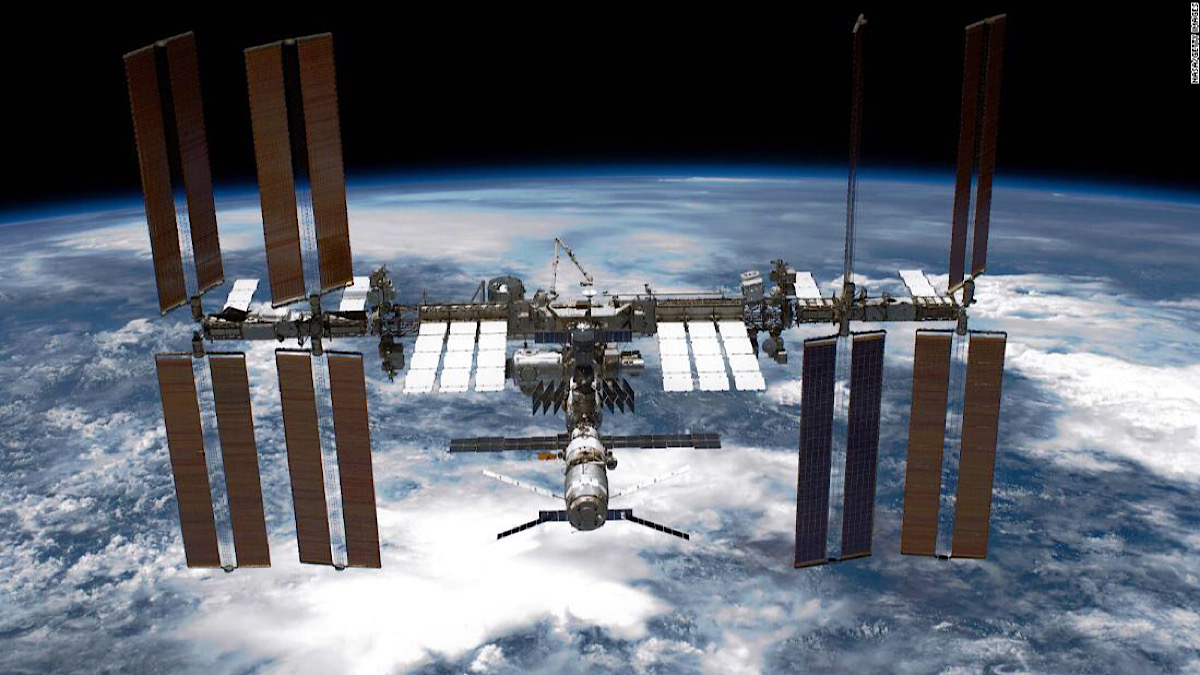
NASA has signed paperwork to explore the prospect of letting a company film what would be the first reality show set in space Space.com reports.

The show, titled “Space Hero,” claims to be “the world’s first ever global casting show where contestants compete for a trip to the International Space Station,” according to a statement, with flights being offered up by Axiom Space.

Despite the agreement, nothing is set in stone just yet. The document signed by NASA this week “does not authorize a private astronaut mission to the International Space Station,” as a NASA spokesperson told Space.com. Instead, it’s meant to facilitate “initial cooperation and information sharing between NAS and Space Hero.”

Continue reading… “NASA CONSIDERING REALITY TV SHOW FILMED ON SPACE STATION”

Chick-fil-A is testing out deliveries with a robot that can wink and transport chicken sandwiches

The newest Kiwibot.

Kiwibot

  • Chick-fil-A is testing out robot delivery in California.
  • The chicken chain is working with Kiwibot, which makes tiny, semi-autonomous delivery robots.
  • Several other chains are also working on robot deliveries, including Domino’s and Chipotle.

Chick-fil-A is testing out robot deliveries in California, Restaurant Business Online reported.

Small, semi-autonomous Kiwibots will be an option at checkout for Chick-fil-A customers at three locations in Santa Monica, California through a partnership between the two companies. Deliveries will use the newest version, Kiwibot 4.0, to make short deliveries.

“What we promise is to at least halve the time it takes for all orders a mile or closer, and more than half the cost” of average deliveries, Kiwibot COO Diego Varela Prada told Restaurant Business Online. The average Chick-fil-A delivery costs $1.99 and takes 30 minutes, according to Chick-fil-A.

The Kiwibots are four-wheeled, semi-autonomous rovers. They’re designed to detect obstacles including people, vehicles, and traffic lights, and they’re able to navigate terrain like sidewalks. Though the new Kiwibots have the most advanced sensors of the brand’s robots yet, they aren’t totally autonomous and still require monitoring.

Continue reading… “Chick-fil-A is testing out deliveries with a robot that can wink and transport chicken sandwiches”

Samsung’s new Galaxy Quantum 2 uses quantum cryptography to secure apps

Launched in South Korea, the Quantum 2 smartphone has a quantum random number generator chip built in.

By Daphne Leprince-Ringuet 

Developed together with SK Telecom, the Galaxy Quantum 2 is the second quantum-equipped smartphone released by Samsung.    Image: SK Telecom

Samsung is launching a new smartphone equipped with quantum cryptography technology, which promises to deliver a new level of security to consumer applications like mobile banking. 

Developed together with South Korean telecoms giant SK Telecom, the Galaxy Quantum 2 device will be — at least for the foreseeable future — only available to the South Korean public, and is the second quantum-equipped smartphone released by Samsung.  

With a 6.7-inch display, a 64MP main camera, and a Qualcomm Snapdragon 855+ chipset, the Quantum 2’s feature set matches some of Samsung’s flagship smartphones, with the additional security of quantum cryptography for some of the device’s services. 

The Quantum 2’s predecessor, called the Galaxy A Quantum, made its debut last year in South Korea, as the world’s first 5G smartphone with integrated quantum cryptography technology. Like the new Quantum 2, the Galaxy A includes a quantum random number generator (QRNG) that’s designed to secure sensitive transactions against the most sophisticated attacks. 

Continue reading… “Samsung’s new Galaxy Quantum 2 uses quantum cryptography to secure apps”

New laser to help clear the sky of space debris

by James Giggacher , Australian National University

Researchers at the Australian National University (ANU) have harnessed a technique that helps telescopes see objects in the night sky more clearly to fight against dangerous and costly space debris.

The researchers’ work on adaptive optics—which removes the haziness caused by turbulence in the atmosphere—has been applied to a new ‘guide star’ laser for better identifying, tracking and safely moving space debris.

Space debris is a major threat to the $US700 billion of space infrastructure delivering vital services around the globe each day. With laser guide star adaptive optics, this infrastructure now has a new line of defense.

The optics that focus and direct the guide star laser have been developed by the ANU researchers with colleagues from Electro Optic Systems (EOS), RMIT University, Japan and the U.S. as part of the Space Environment Research Centre (SERC).

Continue reading… “New laser to help clear the sky of space debris”

The US plans to put a nuclear-powered rocket in orbit by 2025

Nuclear thermal rockets could be more manoeuvrable in space

By  David Hambling

The US is taking steps to put a nuclear-powered rocket in orbit by 2025, paving the way for navigation in space to become much easier.

The Defense Advanced Research Projects Agency (DARPA) plans to turn the long-studied concept of a nuclear thermal rocket into a reality. The technology isn’t powerful enough to launch a rocket from Earth, but could give a spacecraft propulsion for an extended period once in space. This would make it ideal for prolonged manoeuvring in orbit or in deep-space missions requiring acceleration and deceleration.

Via NewScientist.org

Domino’s, Nuro to begin autonomous pizza deliveries in Houston


By Rebecca Bellan

Starting this week, some Domino’s customers in Houston can have a pizza delivered without ever interacting with a human.

The pizza delivery giant said Monday it has partnered with autonomous delivery vehicle startup Nuro to allow select customers to have their pizzas dropped at their door via Nuro’s R2 robot.

“There is still so much for our brand to learn about the autonomous delivery space,” Dennis Maloney, Domino’s senior vice president and chief innovation officer said in a statement. “This program will allow us to better understand how customers respond to the deliveries, how they interact with the robot and how it affects store operations.”

On certain days and times, customers ordering from the Woodland Heights store on the Domino’s website can request R2, which uses radar, 360-degree cameras and thermal imaging to direct its movement. They’ll get texts to let them know where the robot is and what PIN they’ll need to access their pizza via the bot’s touchscreen.

Over the course of the pandemic, the contactless, autonomous food delivery industry has accelerated quickly, and Nuro is currently poised to become a leader in this space.

“Nuro’s mission is to better everyday life through robotics,” Dave Ferguson, Nuro co-founder and president, said in a statement. “We’re excited to introduce our autonomous delivery bots to a select set of Domino’s customers in Houston. We can’t wait to see what they think.”

Continue reading… “Domino’s, Nuro to begin autonomous pizza deliveries in Houston”