The Changing Landscape of Consumer Ownership in the Age of Subscriptions and Restricted Repairs

Andy Harding, the owner of Salem Techsperts, a small electronics-repair shop in Salem, Massachusetts, has been serving his local community for eight years. His business thrives on fixing cracked iPhone screens for college students and nearby hospital staff. However, when Apple released the iPhone 13 in September 2021, Harding noticed a software change that could potentially jeopardize his shop’s survival.

One of the most common repairs at Harding’s shop is fixing cracked iPhone screens, which generates substantial revenue. However, the latest iPhone model introduced a new feature that detected screen replacements, including repairs, and disabled the FaceID functionality. This development caused panic among repair shop owners, including Harding.

Continue reading… “The Changing Landscape of Consumer Ownership in the Age of Subscriptions and Restricted Repairs”

Quantum Simulator Offers New Insights into Relativity and Quantum Theory

The interplay between the theory of relativity and quantum theory remains an intriguing challenge in scientific research. While each theory effectively explains phenomena at different scales, reconciling them into a unified framework has proven elusive. This pursuit of a “quantum theory of gravity” stands as one of the foremost unsolved tasks in science. The complexity of the mathematical equations involved and the difficulty in conducting appropriate experiments have contributed to the ongoing quest.

At the TU Wien in Vienna, Austria, an innovative approach has emerged: the utilization of a “quantum simulator” to explore these fundamental questions. Rather than directly investigating quantum particles in curved spacetime, researchers construct a “model system” that offers analogies and insights into the desired system. Excitingly, the team has demonstrated the exceptional effectiveness of this quantum simulator.

Continue reading… “Quantum Simulator Offers New Insights into Relativity and Quantum Theory”

Delft University Unveils Highly Efficient Hydrogen Car Set to Break World Records

A student team from Delft University of Technology in the Netherlands has introduced what could potentially be the most efficient hydrogen car in the world. Named ERXII, this groundbreaking vehicle aims to cover a remarkable distance of over 2,000km using just 1kg of hydrogen fuel. To put it into perspective, this distance is equivalent to the stretch between Amsterdam and Kyiv.

The ERXII’s capabilities will be put to the test in June at Shell’s Eco-Marathon event in France. The Eco-Runner will compete against student teams from across Europe to break the world record for the longest distance traveled on hydrogen without refueling. The current record, set in 2022 by a methanol fuel-cell-powered Renault Zoe, stands at 2,056km. The 80kg carbon fiber vehicle has been meticulously designed to maximize aerodynamics. With a constant speed of 45kph, the ERXII is projected to cover 2,056km within a span of three days.

Continue reading… “Delft University Unveils Highly Efficient Hydrogen Car Set to Break World Records”

Proteus Ocean Group and NOAA Collaborate to Revolutionize Underwater ResearchP

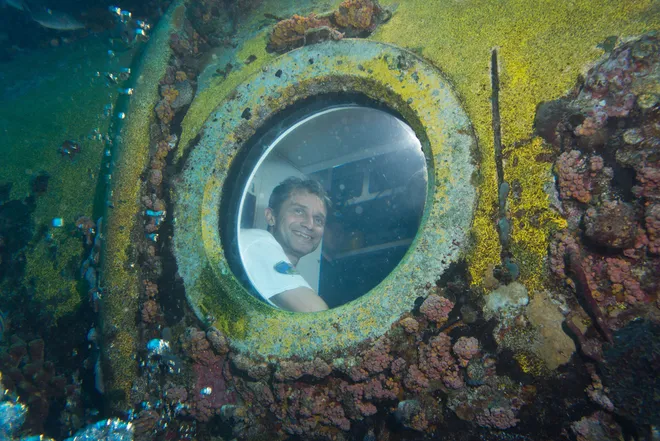
Imagine the incredible experience of working on an ocean floor research station, observing sea creatures gracefully swimming by, while also embarking on explorations of the ocean’s surface. Such opportunities have been limited in the past, but the National Oceanic and Atmospheric Administration (NOAA) and the Proteus Ocean Group are set to change that. They are working together to develop a groundbreaking underwater research laboratory that aims to expand our understanding of the ocean and its wonders.

The Vision of Proteus Ocean Group: Led by Fabien Cousteau, the grandson of renowned ocean exploration pioneer Jacques Cousteau, Proteus Ocean Group is spearheading the creation of an extraordinary “underwater space station of the ocean.” Their ambitious plan involves constructing the station at a depth of nearly 60 feet off the coast of Curaçao in the Caribbean by 2026. This unique partnership between NOAA and the ocean group aims to identify research opportunities, sharing information and scientific expertise.

Continue reading… “Proteus Ocean Group and NOAA Collaborate to Revolutionize Underwater ResearchP”

Meta’s AI-Powered Ad Renaissance: Paving the Way for the Next Generation of Digital Marketing

Meta, the parent company of Facebook and Instagram, has unveiled a range of AI-powered tools aimed at enhancing the effectiveness of advertisements on its platforms. The introduction of the AI Sandbox offers advertisers a testing ground for the latest generative AI solutions in ad creation.

Additionally, Meta has added new features to its Meta Advantage suite to automate ad development for creators and vendors. The AI Sandbox includes an AI writer for text variation and rewriting ads, as well as image-focused tools like background image creation and size adjustment for different aspect ratios. 

Continue reading… “Meta’s AI-Powered Ad Renaissance: Paving the Way for the Next Generation of Digital Marketing”

Niantic’s Peridot: An AR-Enabled Pet Game with Amazon’s Immersive Shopping Integration

Imagine playing fetch with a delightful virtual pet named Leopard through augmented reality (AR) on your phone. This interactive experience, reminiscent of popular games like Pokemon Go, is now a reality thanks to Niantic, the creators of Pokemon Go. But it doesn’t stop there. Niantic envisions this as a prototype for a future world of AR glasses, which may arrive in the next decade. Excitingly, it also marks the debut of a new Amazon shopping service, adding an intriguing dimension to the gameplay.

More than Just a Virtual Pet: Peridot, available for Android and iOS, is an app that introduces AR-enabled virtual pets, drawing inspiration from the concept of Tamagotchi. Originally conceived as a design idea for Niantic’s vision of virtual companions on future AR glasses and headsets, Peridot has evolved into a fully realized game. It offers a wide range of hatchable and breedable pets that users can nurture and feed through their smartphones.

Continue reading… “Niantic’s Peridot: An AR-Enabled Pet Game with Amazon’s Immersive Shopping Integration”

Worldcoin’s Revolutionary Crypto Wallet: A Game-Changer for the Masses

In the age of large language models (LLMs) and ChatGPT, AI is poised to make a weird internet even weirder – turning the content-driven social media apps, news sites and media platforms of today into future uncanny valleys that blur the line between man and machine.

As advances in AI make it more difficult to discern bots from humans, Sam Altman, the co-founder of Open AI – the company behind ChatGPT – thinks blockchains can help.

Altman’s crypto project, Worldcoin, rose to prominence last year with a controversial, Silicon Valley vision for a universal basic income (UBI): a crypto token that can be distributed in equal quantity to everyone in the world.Worldcoin is back again this week with a new launch – this one poised to be its biggest yet. World App, Worldcoin’s crypto wallet, built on the Ethereum sidechain Polygon, is the first product from the elusive identity upstart that anyone, anywhere will be able to download.

Continue reading… “Worldcoin’s Revolutionary Crypto Wallet: A Game-Changer for the Masses”

Get wild with SoftZoo: MIT’s open-source platform for creating soft robots

The world of soft robotics is expanding rapidly, with MIT recently unveiling SoftZoo, a virtual open framework platform that simulates 3D model animals performing various tasks in different environmental settings. Researchers can use the program to design and optimize their own creations, with the aim of co-designing the soft robot bodies and their controllers for specific tasks.

SoftZoo offers an open source program that enables researchers to experiment and test their robot ideas. This allows them to find the best configuration for a robot’s shape, thereby enabling them to design soft robotics algorithms that can perform various tasks. The platform helps users understand the best strategies for robots to interact with their environments.

Continue reading… “Get wild with SoftZoo: MIT’s open-source platform for creating soft robots”

Breaking the Waves: Quantum Detection Lidar Prototype Sets New Standard for Underwater Imaging

Researchers have developed a lidar system that utilizes quantum detection technology to acquire 3D images while underwater. This is the first demonstration of a prototype system that can capture detailed information in extremely low-light conditions found underwater. The high sensitivity of this system allows it to be useful for a wide range of applications, including inspecting underwater installations such as wind farm cables and turbines, surveying submerged archaeology sites, and for security and defense purposes.

Capturing 3D images through ocean water can be challenging because of the light-limited conditions and particles in the water that scatter light and distort the image. However, single-photon detection, a quantum-based technique, allows for high penetration and works in low-light conditions.

Researchers from Heriot-Watt University and the University of Edinburgh describe experiments in which an entire single-photon lidar system was submerged in a large water tank in Optics Express. The new demonstrations bring the technology closer to practical applications compared to the team’s earlier experiments with underwater single-photon detection, which were performed in carefully controlled laboratory conditions with the optical setup placed outside the water tank and data analysis performed offline.

Continue reading… “Breaking the Waves: Quantum Detection Lidar Prototype Sets New Standard for Underwater Imaging”

Boosting Cell Lifespan: Scientists Develop Synthetic Genetic Clock

As we age, our cells naturally degrade and become less efficient, leading to decreased mobility and vitality. However, researchers from the University of California San Diego have discovered a way to extend cell lifespan and promote longevity using a synthetic genetic clock.

Using yeast cells, the team was able to increase their lifespan by 82% on average by “rewiring” their genetic circuits. While the research focused on yeast cells, the team believes it could eventually lead to ways to promote healthier aging in humans.

The key to the study was editing the genetic circuits responsible for regulating cellular processes and mitigating wear and tear. By understanding how these circuits function, scientists can tweak them to promote longevity.

Continue reading… “Boosting Cell Lifespan: Scientists Develop Synthetic Genetic Clock”

Reinventing the Banking Industry: How Financial Institutions Must Evolve to Survive the Digital Revolution

The future of banking is happening faster than we imagined!

By Futurist Thomas Frey: As the global banking system experiences increasing turbulence, a growing number of influential individuals have begun asking crucial questions about 2040 and the future of the banking industry.

What will the landscape of banking look like in 2040? Will physical branches still be relevant? What will be the primary functions and services of banks? And, is there a future where banks may no longer be necessary?

Continue reading… “Reinventing the Banking Industry: How Financial Institutions Must Evolve to Survive the Digital Revolution”

Scientists create ‘mini beating heart’ in a petri dish in major medical breakthrough

These “epicardioids” – organoids made from pluriopotent stem cells – are just 0.5 millimeters in size. Researchers can use them to mimic the development of the human heart in the laboratory and study hereditary heart diseases

Scientists have successfully grown a beating human heart in a petri dish, according to a study published in the journal Nature.

The team, led by Dr. Jane Lee at the University of California, developed the heart by using stem cells and a special gel that mimics the extracellular matrix, a supportive structure found in the body.

“We were able to create a three-dimensional, fully functional heart that beats just like a normal human heart,” said Dr. Lee in an interview with The Independent. “This is a major breakthrough in the field of regenerative medicine.”

Continue reading… “Scientists create ‘mini beating heart’ in a petri dish in major medical breakthrough”