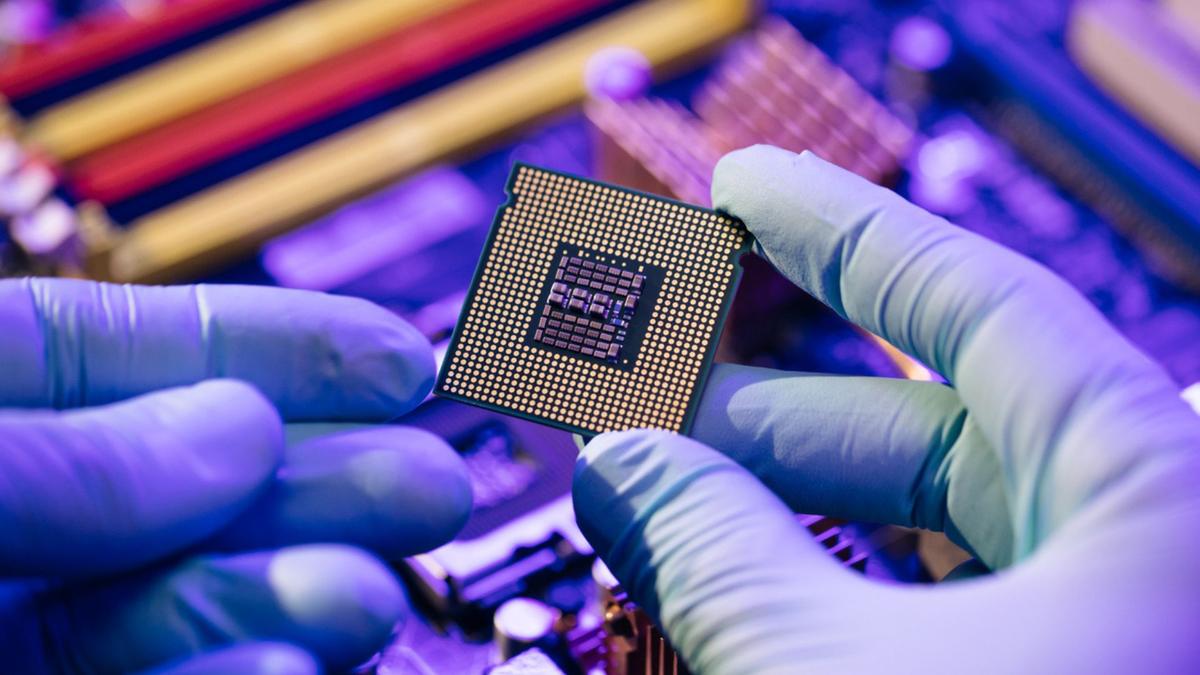
Chinese researchers have unveiled a novel material that could revolutionize the development of two-dimensional, low-power computer chips. The team from the Shanghai Institute of Microsystem and Information Technology at the Chinese Academy of Sciences created an ultra-thin layer of aluminum oxide, just 1.25 nm thick, using a unique oxidation method at ambient temperature on single-crystalline aluminum. This material meets the stringent requirements set by the International Roadmap for Devices and Systems, offering low gate leakage, low interface state density, and high dielectric strength.
Advancing 2D Field-Effect Transistors (FETs)
As traditional silicon field-effect transistors (FETs) approach their miniaturization limits, new materials are needed to address challenges like short-channel effects. Two-dimensional (2D) materials, such as molybdenum disulfide (MoS2), have emerged as promising candidates due to their atomic thinness and high carrier mobility. However, the lack of high-quality dielectric materials has hindered the full potential of 2D FETs.
Continue reading… “Chinese Researchers Develop Groundbreaking Material for Next-Gen 2D Computer Chips”