Rocket Lab will try to snatch a rocket out of mid-air with a helicopter

The ambitious mission, happening this month, is part of a plan to develop a reusable orbital launch vehicle.

By K. Holt

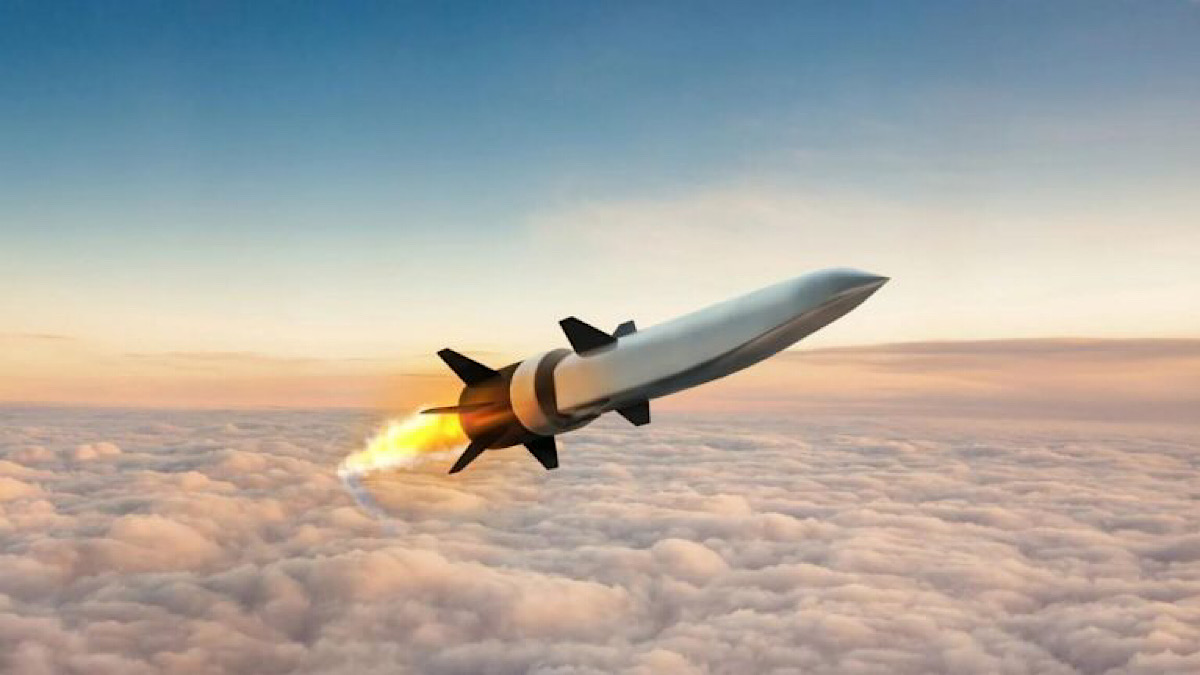
Rocket Lab is developing Electron as a reusable orbital launch vehicle and it has revealed details about the next step of the program. After the rocket’s 26th launch, which is scheduled for later this month, the company will attempt to snatch the first stage out of mid-air with a helicopter.

The mission has a 14-day launch window starting on April 19th. Electron is scheduled to lift off from a launchpad in New Zealand and will carry satellites for a number of companies. 

Around an hour before launch, the helicopter will move into position approximately 150 miles off the coast. Two and a half minutes after lift off, the first and second stages of the rocket will separate, with the latter carrying the payload to orbit. The first stage will descend back to Earth. It will deploy a drogue parachute at an altitude of 13 km (8.3 miles) and its main parachute at an altitude of roughly 6 km (3.7 miles).

Continue reading… “Rocket Lab will try to snatch a rocket out of mid-air with a helicopter”

Canada’s hyperloop dream gets $550m capital injection

By KARL TOMUSK

While hyperloop projects around the world stall or get scrapped entirely, a Toronto startup has secured funding to develop a high-speed tube transportation line between Edmonton and Calgary.

TransPod’s plans claim that it could cut the journey between the two cities from three hours to 45 minutes and add $19.2bn to Alberta’s GDP by 2030.

In a vote of confidence, the UK’s Broughton Capital Group and the Chinese state-owned China-East Resources Import & Export Company agreed in principle to provide a combined $550m to fund the project.

“As the first and only company to confirm such finance for a multibillion dollar tube transportation infrastructure project, TransPod is proud of its commitment to driving growth in Alberta through true innovation and partnership,” said Sebastian Gendron, co-founder and CEO of the startup.

Expected to complete in 2030, the line has the potential to cut carbon emissions by 636,000 tonnes per year by removing some cars and planes from circulation and by generating solar power along the route, TransPod said.

Continue reading… “Canada’s hyperloop dream gets $550m capital injection”

With 3D-Printed Sperm Cells, Scientists Bring Hope To Many Men With Infertility

By Bharat Sharma

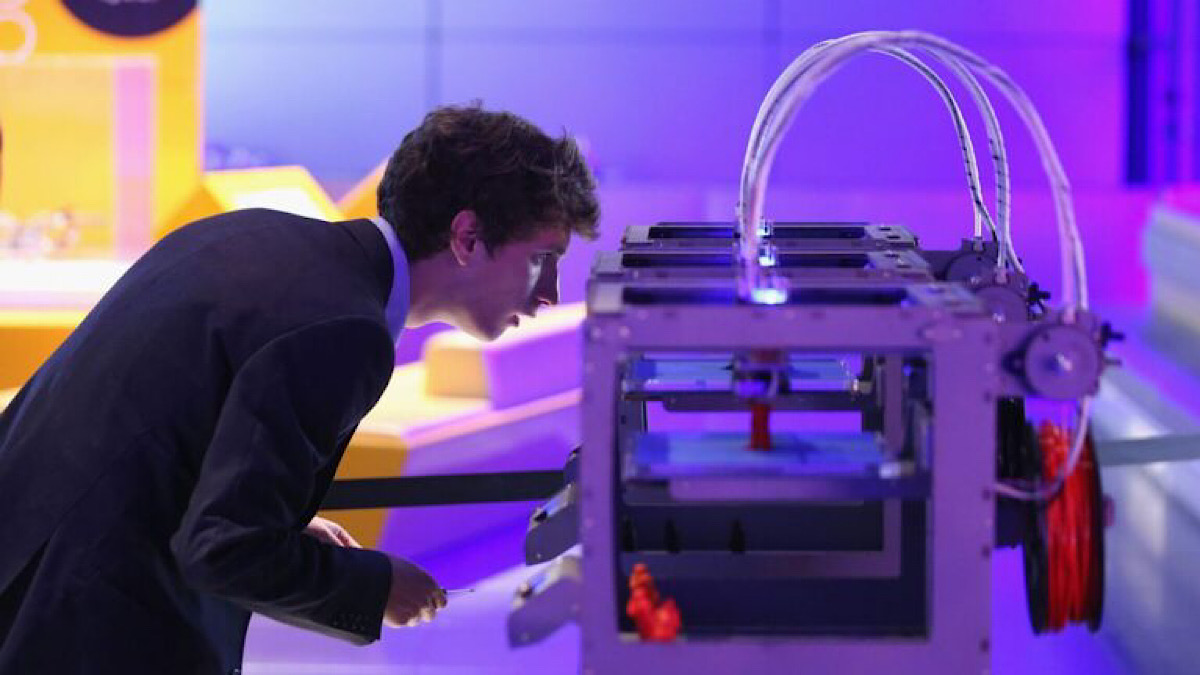
Scientists from Canada have successfully 3D printed male reproductive cells. Yes, you read that right! 3D-printed sperm is here!

In hopes of replicating what we see in the human body, scientists from the University of British Columbia are printing sperm. Led by Ryan Flannigan, a urology assistant professor, the team used a 3D printer to create “viable testicular cells” and later identified early signs of “sperm-producing capabilities,” Global News reported.

Continue reading… “With 3D-Printed Sperm Cells, Scientists Bring Hope To Many Men With Infertility”

Epic announces the RealityScan iPhone app for turning real things into 3D objects

People can create 3D objects out of whatever they point their iPhone at.

By OLIVER HASLAM

  • RealityScan is a new app for creating 3D models of objects.
  • Epic Games is making a beta version of RealityScan available for testing.

Epic Games has today announced a new iPhone app dubbed RealityScan — the aim of which is to scan objects in the real world and then turn them into 3D objects in the virtual one.

The app is now available in limited beta and those interested in taking it for a spin can get it via TestFlight now. With the app installed, people can use their iPhone’s camera to capture a 3D model of whatever it’s pointing at. The app comes by the way of a collaboration with Capturing Reality.

Continue reading… “Epic announces the RealityScan iPhone app for turning real things into 3D objects”

Amazon secures 83 rocket launches to send Project Kuiper internet satellites into space

Overhead of the New Glenn rocket from Blue Origin, one of the three heavy-lift launch providers Amazon selected for Project Kuiper (featuring a mock-up of the Amazon logo).

By Kate Duffy 

  • Amazon said it has secured 83 rocket launches for its satellite internet service, Project Kuiper.
  • It has agreements with rocket firms Blue Origin, ULA, and Arianespace to fly the satellites to space.
  • “Amazon is investing billions of dollars across the three agreements,” a Project Kuiper spokesperson said.

Amazon announced on Tuesday that it has secured a deal for up to 83 rocket launches over a five-year period to send its Project Kuiper internet satellites into space.

In a press release, Amazon said it has signed agreements with space services firms Blue Origin, United Launch Alliance, and Arianespace to use their launch vehicles to carry satellites into orbit for its Project Kuiper, a broadband service that will offer internet connectivity from space and aims to compete with SpaceX’s Starlink service.

Continue reading… “Amazon secures 83 rocket launches to send Project Kuiper internet satellites into space”

The first all-private mission to the ISS a huge step forward in commercial space travel 

The astronauts on board are all private citizens

It’s not long since billionaires were competing to get to the “edge of space”. Now, the first set of private citizens is getting ready to take a SpaceX shuttle up to the International Space Station (ISS). Unlike the short “joyrides” of Richard Branson and Jeff Bezos, this mission will be reaching the roughly 400km altitude needed to dock with the ISS.

The mission by the US commercial aerospace company Axiom Space is a major step forward in private space travel, and is part of a plan to build a private space station. With Russia recently pulling out of collaborating on the ISS, the world will be watching to see whether the private sector can be trusted to provide reliable access to space for peaceful exploration.

The Ax-1 mission is planned for launch on April 6, using a SpaceX Dragon Endeavour spacecraft – the same as that used by astronauts in 2020 – onboard a Falcon 9 rocket. The mission is planned to last ten days, eight of which will be on the ISS.

Continue reading… “The first all-private mission to the ISS a huge step forward in commercial space travel “

First autonomous X-ray-analyzing AI is cleared in the EU

The AI imaging tool reads chest X-rays without the involvement of a radiologist

By Nicole Wetsman  

An artificial intelligence tool that reads chest X-rays without oversight from a radiologist got regulatory clearance in the European Union last week — a first for a fully autonomous medical imaging AI, the company, called Oxipit, said in a statement. It’s a big milestone for AI and likely to be contentious, as radiologists have spent the last few years pushing back on efforts to fully automate parts of their job. 

The tool, called ChestLink, scans chest X-rays and automatically sends patient reports on those that it sees as totally healthy, with no abnormalities. Any images that the tool flags as having a potential problem are sent to a radiologist for review. Most X-rays in primary care don’t have any problems, so automating the process for those scans could cut down on radiologists’ workloads, the Oxipit said in informational materials. 

Continue reading… “First autonomous X-ray-analyzing AI is cleared in the EU”

Microsoft and HPE tests AI on International Space Station

HPE’s Spaceborne Computer-2 deployed in the ISS analyzes the images clicked by crew members using the Glove Analyzer model to search for damages in real-time.

By Dipayan Mitra

Technology giants Microsoft and Hewlett Packard Enterprise (HPE) have partnered with NASA to test artificial intelligence (AI) technology on the International Space Station to perform multiple tasks. 

According to the companies, the tasks they plan to perform using AI include checking the wear and tear of gloves on astronauts’ gloves. 

Once the images are received, NASA analysts evaluate photographs of the gloves for any damage that could constitute a concern, then report back to the astronauts on the International Space Station. 

However, this is a lengthy process, and when astronauts get farther away from Earth, the communication weakens, which might lead to delays in the process. 

Therefore to solve this challenge, Microsoft and HPE engineers are working with NASA scientists on a system that uses artificial intelligence and HPE’s Spaceborne Computer-2 to scan and analyze glove images directly on the International Space Station, potentially giving astronauts onboard autonomy with limited support from Earth. 

Continue reading… “Microsoft and HPE tests AI on International Space Station”

South Korea says it successfully test-fired first solid-fuel space rocket

A South Korea-built, liquid-fuelled Nuri rocket launching from the Naro Space Centre south of Seoul on Oct 21, 2021.

SEOUL (REUTERS) – South Korea’s military said it had successfully test-fired a solid-fuel space rocket for the first time on Wednesday (March 30), a step it said will help eventually launch a constellation of satellites to better monitor threats such as North Korea.

The launch is the first such test since South Korea and the United States agreed last year to end decades of restrictions on the South’s ballistic missile and rocket development, and comes less than a week after North Korea conducted its highest missile test yet.

“The success of the test launch of this solid-propelled space launch vehicle is an important milestone in strengthening the defence power of our military’s independent space-based surveillance and reconnaissance field at a very critical time,” the Ministry of National Defence said in a statement, citing last week’s test of an intercontinental ballistic missile (ICBM) by North Korea.

Continue reading… “South Korea says it successfully test-fired first solid-fuel space rocket”

UK scientists’ breakthrough could save millions from drug-resistant infections

A “game-changing” antibiotic could be used as a “last line of defence” against superbugs to save millions of lives from otherwise drug-resistant infections after a breakthrough by UK scientists, a study suggests.

By Nina Lloyd

Researchers say they have developed new versions of the molecule teixobactin, which is thought to be capable of killing bacteria without damaging mammalian tissue.

Teixobactin was first hailed as a “game-changing” antibiotic in 2015, but the new project has developed “synthetic” classes of the drug, according to scientists.

These versions could destroy a wide range of microbes taken from human patients, a team including researchers from the University of Liverpool has found.

They also successfully eradicated methicillin-resistant Staphylococcus aureus – a so-called superbug known as MRSA, which is resistant to several widely used antibiotics – in a study on mice.

More than 1.2 million people died in 2019 from antibiotic-resistant bacterial infections, according to a study published in The Lancet in January.

Scientists said the tests suggested that in future, patients may be treated with just one dose of teixobactin per day for systemic life-threatening resistant bacterial infections.

Continue reading… “UK scientists’ breakthrough could save millions from drug-resistant infections”

DARPA to build life-saving AI models that think like medics

Project is a M*A*S*H-up of machine learning and battlefield decision-making

Via Brandon Vigliarolo

A new DARPA initiative aims to ultimately give AI systems the same complex, rapid decision-making capabilities as military medical staff and trauma surgeons who are in the field of battle.

The In the Moment (ITM) program, which is right now soliciting research proposals, aims to develop the foundations of expert machine-learning models that can make difficult judgment calls – where there is no right answer – that humans can trust. This study could lead to the deployment of algorithms that can help medics and other personnel make tough decisions in moments of life and death.

“DoD missions involve making many decisions rapidly in challenging circumstances and algorithmic decision-making systems could address and lighten this load on operators … ITM seeks to develop techniques that enable building, evaluating, and fielding trusted algorithmic decision-makers for mission-critical DoD operations where there is no right answer and, consequently, ground truth does not exist,” DARPA said. 

At the heart of this problem is that these sorts of AI systems need to be trained even when there is no ground truth or consensus among experts. Generals may disagree over how exactly a confrontation between two opposing units should unfold. Doctors may have differing opinions on how to treat someone. Teaching machine-learning software how to figure out the best course of action from these stances is non-obvious, and what ITM seems to be set up to tackle.

Continue reading… “DARPA to build life-saving AI models that think like medics”

EP. 79 with John Spencer

Watch our interview with John Spencer on Youtube or listen to it on the Futurati Podcast.

John Spencer is a pioneering outer space architect with design awards from NASA for his work on the International Space Station (ISS). He is the founder of the Space Tourism Society, co-founder of the Space Tourism Conference, and co-founder and Chief Creative Officer of Mars World Enterprises, Inc. His work aims at promoting and developing the Space Experience Economy (SEE).

Continue reading… “EP. 79 with John Spencer”
Discover the Hidden Patterns of Tomorrow with Futurist Thomas Frey
Unlock Your Potential, Ignite Your Success.

By delving into the futuring techniques of Futurist Thomas Frey, you’ll embark on an enlightening journey.

Learn More about this exciting program.