Robotic pill can orally deliver large doses of biologic drugs

Preclinical study evaluated treatments for diabetes, Crohn’s disease, and other conditions that use injectable meds using an orally administered capsule

Newswise — Biologic drugs—so named because they are typically isolated from a living source, rather than chemically synthesized—are used to treat a wide variety of conditions, including diabetes, inflammatory diseases, and certain types of cancer. However, due to their complex and easily degradable components, the administration of these drugs often requires a self-injection, which can represent burdens for patients, such as necessary training for proper self-administration and the potential for needle stick injuries and pain. Now, NIBIB-funded researchers are developing a robotic pill that, after swallowing, can deliver biologic drugs into the stomach, which could potentially revolutionize the way that certain conditions are treated.

“Due to the inherent drawbacks of injectable medications, many healthcare professionals prescribe less effective oral medications in their place, resulting in suboptimal treatment for many patients,” said David Rampulla, Ph.D., director of the division of Discovery Science & Technology at NIBIB. “An oral pill for the delivery of biologic drugs would not only positively impact those patients who already use injectable medications, but could also benefit patients that are currently delaying their use. This preclinical research is an important step toward the development of such an approach.”

Continue reading… “Robotic pill can orally deliver large doses of biologic drugs”

SANCTUARY AI SECURES $75.5 MILLION IN MISSION TO CREATE THE WORLD’S FIRST HUMAN-LIKE INTELLIGENCE ROBOTS

Sanctuary’s backers include Bell, Magna, Verizon, and Workday.

BY CHARLIZE ALCARAZ 

Vancouver-based Sanctuary AI has raised $75.5 million CAD ($58.5 million USD) in what it described as an oversubscribed Series A round.

The backing comes from a notable list of institutional and corporate investors, including Bell, Evok Innovations, Export Development Canada, automotive leader Magna, SE Health, Verizon Ventures, and Workday Ventures.

Anousheh Ansari, the first female private space explorer, and Chris Hadfield, former astronaut and commander of the International Space Station, have joined Sanctuary’s advisory board. 

Continue reading… “SANCTUARY AI SECURES $75.5 MILLION IN MISSION TO CREATE THE WORLD’S FIRST HUMAN-LIKE INTELLIGENCE ROBOTS”

NASA wants to make futuristic tech so we can breathe on Mars

By Joshua Hawkins

NASA just greenlit the study of several futuristic tech concepts, including one that could let you breathe on Mars. The projects are part of the NASA Innovative Advanced Concepts program. The program wants to foster the exploration of tomorrow. As such, it has approved funding for early-stage studies on multiple types of futuristic tech, including new spacesuits and spacecraft designed to explore outer planets.

Continue reading… “NASA wants to make futuristic tech so we can breathe on Mars”

Ion Engines Could Work on Earth too, to Make Silent, Solid-State Aircraft

Ion engines are the best technology for sending spacecraft on long missions. They’re not suitable for launching spacecraft against powerful gravity, but they require minimal propellant compared to rockets, and they drive spacecraft to higher velocities over extended time periods. Ion thrusters are also quiet, and their silence has some scientists wondering if they could use them on Earth in applications where noise is undesirable.

Powered flight is noisy. Helicopters make a horrible racket, and screaming jet engines can make life near an airport almost unbearable. Even small propeller-driven aircraft are noisy. But what if ion engines could be used instead of these louder propulsion systems, at least in some applications where noise is an issue?

Steven Barrett from MIT thinks the idea has merit. Barrett is a Professor of Aeronautics and Astronautics at the Massachusetts Institute of Technology. He’s also the Director of the MIT Laboratory for Aviation and the Environment. “The aim of Steven’s research is to help aviation achieve zero environmental impacts,” the MIT website says. “This includes developing low emissions and noise propulsion technologies for aircraft…” This is where Barrett’s work on ion propulsion comes in.

Barrett’s been interested in an ion propulsion system for many years. In 2018 Barrett and colleagues published an article in the journal Nature titled “Flight of an aeroplane with solid-state propulsion.” Solid-state propulsion systems have no moving parts, so they’re very quiet. The power for flight comes from electroaerodynamics, where electricity moves ions and provides propulsion. Barrett and colleagues call the flow of ions the “ionic wind.” They’ve used it to propel a small test aircraft on steady, stable flights. 

Continue reading… “Ion Engines Could Work on Earth too, to Make Silent, Solid-State Aircraft”

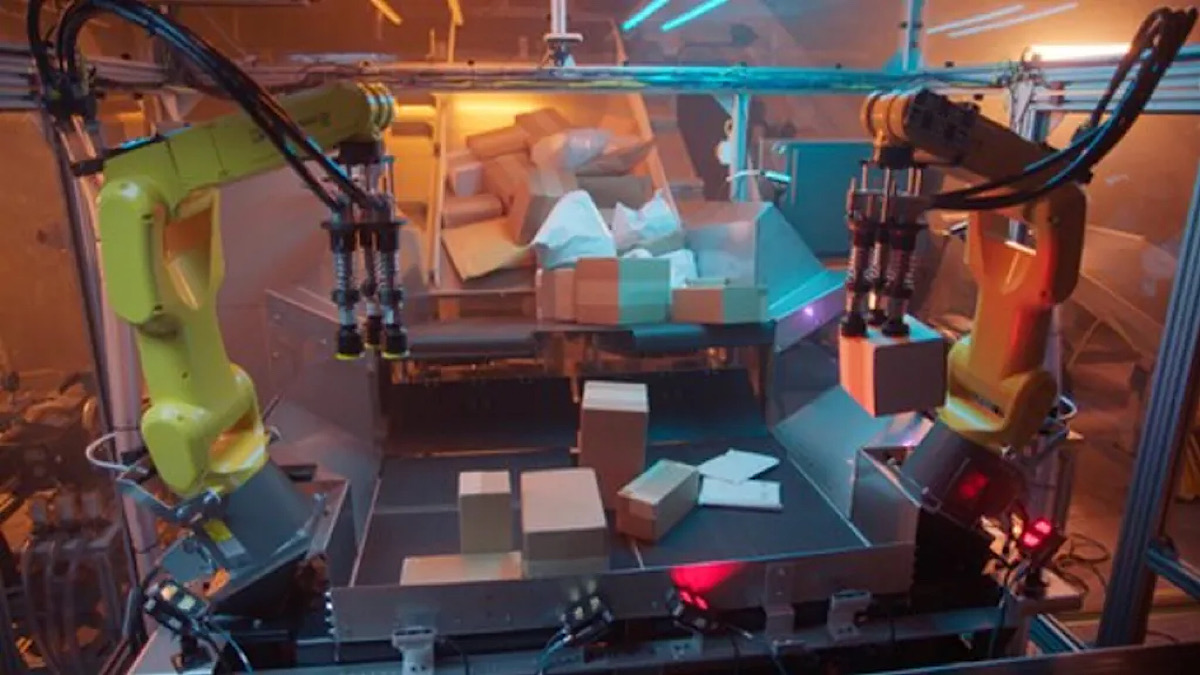
Robots May Soon Fix and Fuel Satellites in Space

Within a few years, NASA’s OSAM-1 mission will launch into space and use a robotic arm to refuel the Landsat 7 Earth-observation satellite, as shown in this animation. NASA

By Kurt Kleiner

Orbiting machines that grip, grapple and maneuver could one day maintain the fleet of small spacecraft that encircle Earth.

For more than 20 years, the Landsat 7 satellite circled Earth every 99 minutes or so, capturing images of almost all the planet’s surface each 16 days. One of many craft that observed the changing globe, it revealed melting glaciers in Greenland, the growth of shrimp farms in Mexico and the extent of deforestation in Papua New Guinea. But after Landsat 7 ran short on fuel, its useful life effectively ended. In space, regular servicing has not been an option.

Now, though, NASA has a potential fix for such enfeebled satellites. In a few years, the agency plans to launch a robot into orbit and maneuver it to within grabbing distance of Landsat 7. The robot will use a mechanical arm to catch hold of it and refuel it, mid-air.

If successful, the mission would mark a milestone — the first time a satellite would be refueled in space. And this mission is just one of a number of planned public and private ventures intended to use robots to repair and improve the billions of dollars’ worth of satellites in orbit.

Eventually, efforts like these could lead to better and cheaper satellites that lower the cost of Internet and cell phone networks, provide better weather forecasts and give unprecedented views of planetary change and of the universe. They could even enable a new wave of in-orbit construction, with armies of robots building satellites, space stations and even Mars-bound spaceships.

Continue reading… “Robots May Soon Fix and Fuel Satellites in Space”

Australian surgeons turn to 3D printing to restore patients’ ankles

A specialised computer-aided design software enables the surgeons to create a customised prosthesis unique to each patient.

SYDNEY (XINHUA) – Two Australian orthopaedic surgeons have developed a 3D-printing technique to create high-tech ankle replacements.

Dr Tim O’Carrigan and Dr Mustafa Alttahir from the Limb Reconstruction Centre at the Macquarie University said their process provided “life-altering” joint replacements for patients who had suffered traumatic injuries, amputations, deformities, or arthritis.

Their breakthrough is achieved using specialised computer-aided design software which enables the surgeons to create a customised prosthesis unique to each patient.

In contrast, the traditional surgical treatment is ankle fusion, which involves removing the remaining joint cartilage and inserting screws between the bones, so the bones ultimately grow together.

Continue reading… “Australian surgeons turn to 3D printing to restore patients’ ankles”

These tiny robots are about to explore the Moon like never before

THE COLMENA PROJECT WILL PUT ROBOTS ON THE MOON THIS YEAR

By Joshua Hawkins

The Colmena Project has officially launched with the support of the Ministry of Foreign Affairs and the Mexican Space Agency. The state of Hidalgo has also backed the project which will put five robots on the surface of the Moon next June. UNAM, the National University of Mexico, leads the project, which has been made possible thanks to over 200 students involved with the Space Instrumentation Laboratory (LINX).

The Colmena Project is a monumental move for Mexico. Omar Fayad, Governor of Hidalgo, says that it is a representation of the country’s priority for the future. This is a unique moment for the world’s push for space, and Mexico playing a part will help spur even more science and progression throughout the country’s universities.

“COLMENA highlights all the values of the UNAM, and gives Mexican society a new way of seeing and understanding the modern world and the confidence that things are possible and that we can overcome our own limits,” Fayad said in a press release. Fayad says that the move may even inspire the next astronaut or leader of future missions.

Continue reading… “These tiny robots are about to explore the Moon like never before”

Buildings of the future could be fully 3D printed using recycled glass

CONCRETE HAS A HUGE ENVIRONMENTAL IMPACT. USING RECYCLED GLASS COULD HELP CURB THIS.

BY SEYED GHAFFAR MEHDI CHOUGAN AND PAWEL SIKORA 

3D printed concrete may lead to a shift in architecture and construction. Because it can be used to produce new shapes and forms that current technologies struggle with, it may change the centuries-old processes and procedures that are still used to construct buildings, resulting in lower costs and saved time.

However, concrete has a significant environmental impact. Vast quantities of natural sand are currently used to meet the world’s insatiable appetite for concrete, at great cost to the environment. In general, the construction industry struggles with sustainability. It creates around 35% of all landfill waste globally.

Our new research suggests a way to curb this impact. We have trialled using recycled glass as a component of concrete for 3D printing.

Concrete is made of a mix of cement, water, and aggregates such as sand. We trialled replacing up to 100% of the aggregate in the mix with glass. Simply put, glass is produced from sand, is easy to recycle, and can be used to make concrete without any complex processing.ADVERTISEMENT

Demand from the construction industry could also help ensure glass is recycled. In 2018 in the U.S. only a quarter of glass was recycled, with more than half going to landfill.

Continue reading… “Buildings of the future could be fully 3D printed using recycled glass”

New Solar Panel Design Uses Wasted Energy to Make Water From Air

The system directly addresses clean water shortages and crop devastation worldwide.

By Monisha Ravisetti

While generating green energy, solar panels usually create excess heat that goes unused. But with a new, innovative design, scientists have found a way to harness those precious leftovers to give the power producers a second purpose: pulling water out of thin air.

Basically, the self-contained system lays solar panels on a special gel that can collect airborne water vapor. As soon as surplus heat coming from the panels touches the gel, the substance releases a sort of mist into a metal box. Within that container, the gas gets condensed into droplets of water.

The team’s motivation is to provide energy and water that’s cheap, clean and off-grid to residents of remote and especially dry-climate areas.

“Our goal is to create an integrated system of clean energy, water, and food production, especially the water-creation part in our design, which sets us apart from current agrophotovoltaics,” Peng Wang, an environmental engineer at the King Abdullah University of Science and Technology in Saudi Arabia, said in a statement.Wang is the senior author of a study on the invention published Tuesday in the journal Cell Reports Physical Science.

Continue reading… “New Solar Panel Design Uses Wasted Energy to Make Water From Air”

Landlords, property taxes, and zoning permits in a virtual world

By Louis B. Rosenberg, Ph.D., CEO of Unanimous AI.

The concept of land ownership is so ingrained in our culture, it’s easy to forget that the practice has only been pervasive in North America for a few hundred years. For 10,000 years before that, the millions of people who lived on this continent felt no reason to think of land as something a person could own.Play Video

Why mention this in a piece about the metaverse?

Because land ownership, like many of the social norms that govern our lives, is a cultural choice, not an inherent requirement of a well-functioning society. And yet it is quickly becoming a central element of many metaverse worlds. 

Is this the right approach? Maybe, but it’s worth noting that land ownership has driven inequality throughout history, concentrating wealth and power within small groups of elites to the detriment of everyone else. And yet metaverse developers, who have the power to invent totally new worlds from scratch, have seized upon this old-world norm by selling NFT real estate. In fact, numerous developers have made the sale of virtual real estate a key premise of their platforms. 

Continue reading… “Landlords, property taxes, and zoning permits in a virtual world”

House Zero brings high-end design to 3D-printed architecture

House Zero is a collaboration between Icon and prestigious US architecture firm Lake/FlatoCasey Dunn

By Adam Williams

A lot of 3D-printed architecture is focused on creating relatively simple and utilitarian structures that look functional but show little thought paid to aesthetics. However, leading 3D printing firm Icon has joined forces with prestigious studio Lake|Flato to create what they hope will become a new genre of homes that combine the benefits of 3D printing technology with the design chops of high-profile firms.

Originally unveiled back in 2021, House Zero is located in Austin, Texas, and features a modernist ranch style that’s not too dissimilar from Lake|Flato’s previous output. The interior decor is a mixture of 3D-printed curved walls, plus glass, and wood. 

It measures roughly 2,000 sq ft (185 sq m), spread over one floor and includes three bedrooms, 2.5 bathrooms, as well as a kitchen and central living room. Windows and doors have been carefully situated to frame choice views and maximize natural light inside. Additionally, adjacent to the main house is a smaller accessory dwelling unit that has another bedroom and bathroom.

“While the organic nature of the 3D-printed concrete and curved walls are new design languages for us, House Zero was still entirely in line with the natural connections we seek in our architecture,” said Ashley Heeren, associate at Lake|Flato. “The home expresses our shared passions for craft and performance in an inviting and comfortable family home constructed through a totally new way of building. It’s been a thrill for our team to work with Icon on such an innovative home design and be a part of the future of homebuilding.”

Continue reading… “House Zero brings high-end design to 3D-printed architecture”

Scientists created an artificial muscle from natural proteins that may transform reconstructive medicine

A microscopic photograph of muscle fibers. 


By Andrea Núñez-Torrón Stock
 and Nathan Rennolds

  • Researchers from the University of Freiburg created an artificial muscle from natural proteins.
  • According to the press release, it can contract autonomously by changing pH and temperature.
  • Natural proteins improve biocompatibility for use in implants and other prosthetics.

The creation of synthetic muscles is an important and growing field in robotics and reconstructive medicine. They could be key in the development of new implants and more sophisticated prosthetics. 

German researchers have now managed to create a synthetic muscle entirely from natural proteins, according to a press release from the University of Freiburg.

The team was led by Dr. Stefan Schiller and Dr. Matthias Huber from the livMatS Cluster of Excellence at the University of Freiburg. 

Natural proteins had been used to make artificial muscles before. But until now, there hasn’t been one that can contract autonomously using chemical energy.

Continue reading… “Scientists created an artificial muscle from natural proteins that may transform reconstructive medicine”
Discover the Hidden Patterns of Tomorrow with Futurist Thomas Frey
Unlock Your Potential, Ignite Your Success.

By delving into the futuring techniques of Futurist Thomas Frey, you’ll embark on an enlightening journey.

Learn More about this exciting program.