Solar-powered robotic mower for vineyards

The Virtrover mower robot.

By EMILIANO BELLINI

Developed by a French start-up, the robotic mower can be used in a 50-unit herd across a property of around 50 hectares and a radius of 20 km. It is powered by polycrystalline cells and equipped with battery storage. The system can operate with a maximum slope of 15% and reach a speed of 300m/h.

French start-up Vitirover has developed an automated PV-powered robotic mower for applications in vineyards and other agricultural fields.

“The robots are built at our headquarters in Saint-Émilion, in the Gironde department of the Nouvelle-Aquitaine region in southwestern France,” the company’s CEO and founder, Arnaud de la Fouchardiere, told pv magazine.

The 20 W device relies on polycrystalline solar cells, a battery and MPPT optimization. “Their price depends on the terrain, the state of the soil, the number of obstacles per hectare, the height of the solar panels, the way in which the motors are installed if they are trackers, and many other variables,” de la Fouchardiere explained.

Continue reading… “Solar-powered robotic mower for vineyards”

Spright and Interpath Laboratory Launch Medical Drone Delivery Pilot Service

Spright, the drone division of Air Methods, announced today that it has partnered with Interpath Laboratory to launch a first-of-its-kind drone delivery network that will transfer lab specimens. The first proof-of-concept test flight was last week with the Yellowhawk Tribal Health Center to Interpath’s main medical laboratory location in Pendleton, OR.

The proof-of-concept initiative is expected to greatly reduce the turnaround time of critical diagnostic test results for clinics like Yellowhawk and Interpath patients, while also improving patient satisfaction, and enabling healthcare providers to implement follow-up care in a timelier manner.

The project, working with the Pendleton UAS Test Site team, will use a Wingcopter 198 drone leveraging beyond line of sight (BVLOS) technology to perform the 15-mile flight from Yellowhawk to Interpath’s clinical laboratory in Pendleton.

The current process for laboratory services takes patient samples throughout the day, then batches them together for pick-up by gasoline-powered vehicles in the evening for delivery to Interpath. These vehicles typically drive thousands of miles each day across the region to pick-up specimens from numerous clinics, hospitals and facilities.

In contrast, the new drone-delivery initiative will enable samples to be repeatedly picked up and delivered to Interpath throughout the day, providing a green solution that removes gasoline-powered vehicles from roads and lessens local traffic.

Continue reading… “Spright and Interpath Laboratory Launch Medical Drone Delivery Pilot Service”

Newly Discovered Stem Cell Resembles Cells in Early Human Embryo

Researchers from the Reik lab have today published their latest work describing a new subset of human embryonic stem cells that closely resemble the cells present at the genomic ‘wake up call’ of the 8-cell embryo stage in humans. This new stem cell model will allow researchers to map out the key genomic changes during early development, and  help move towards a better understanding of the implications of genome activation errors in developmental disorders and embryo loss.

In all mammals, the early embryo undergoes a number of molecular events just after fertilisation that set the stage for the rest of development. During this key ‘wake up call’ the genome of the embryo takes over control of the cell’s activities from the maternal genome. In humans, this happens at the 8-cell stage and is called zygotic genome activation (ZGA). 

Before the findings of this study, investigating the details of human ZGA could only be done in human embryos; existing human stem cell models represented the embryo only at later stages of the developmental process. In the UK, experiments using embryos are permitted but highly regulated, meaning that research into early development relied in part on alternative, non-human models.

Continue reading… “Newly Discovered Stem Cell Resembles Cells in Early Human Embryo”

HTC aims to turn your carpool into a VR roller coaster

By Andy Zahn

Boring carpool got you down? Road trips with the family turning your hair prematurely gray? Holoride and HTC might have just the solution to make you look forward to your daily commute, and to turn unruly passengers into quiescent drooling zombies. They intend to bring VR to your car.

More specifically, the concept they’re pitching involves XR (Extended Reality), which includes a wider selection of sci-fi goggle-based content than just VR. The tech being debuted today takes advantage of the new HTC Vive Flow VR headset, which Digital Trends mobile editor Ajay Kumar got to test out last fall. This device differs from your garden-variety VR headset in that it’s more like wearing a big pair of sunglasses.

It’s quite expensive, and limited in some ways compared to other stand-alone and PC-connected headsets, but it solves the weight and bulk issues that have been a part of what’s held back mainstream VR popularity. Where other headsets are designed to stay at home, the Vive Flow is designed for life on the go.

Continue reading… “HTC aims to turn your carpool into a VR roller coaster”

Fusion tech is set to unlock near-limitless ultra-deep geothermal energy

Quaise says it has a plan, and the technology, to drill deeper than ever before and unlock the vast geothermal power of the Earth to re-power fossil-fired electricity plants with green energy

By Loz Blain

MIT spin-off Quaise says it’s going to use hijacked fusion technology to drill the deepest holes in history, unlocking clean, virtually limitless, supercritical geothermal energy that can re-power fossil-fueled power plants all over the world.

The heat beneath our feet.

Everyone knows the Earth’s core is hot, but maybe the scale of it still has the power to surprise. Temperatures in the iron center of the core are estimated to be around 5,200 °C (9,392 °F), generated by heat from radioactive elements decaying combining with heat that still remains from the very formation of the planet – an event of cataclysmic violence when a swirling cloud of gas and dust was crushed into a ball by its own gravity.

Where there’s access to heat, there’s harvestable geothermal energy. And there’s so much heat below the Earth’s surface, according to Paul Woskov, a senior fusion research engineer at MIT, that tapping just 0.1 percent of it could supply the entire world’s energy needs for more than 20 million years. 

The problem is access. Where subterranean heat sources naturally occur close to the surface, easily accessible and close enough to a relevant power grid for economically viable transmission, geothermal becomes a rare example of totally reliable, round-the-clock green power generation. The Sun stops shining, the wind stops blowing, but the rock’s always hot. Of course, these conditions are fairly rare, and as a result, geothermal currently supplies only around 0.3 percent of global energy consumption.

Continue reading… “Fusion tech is set to unlock near-limitless ultra-deep geothermal energy”

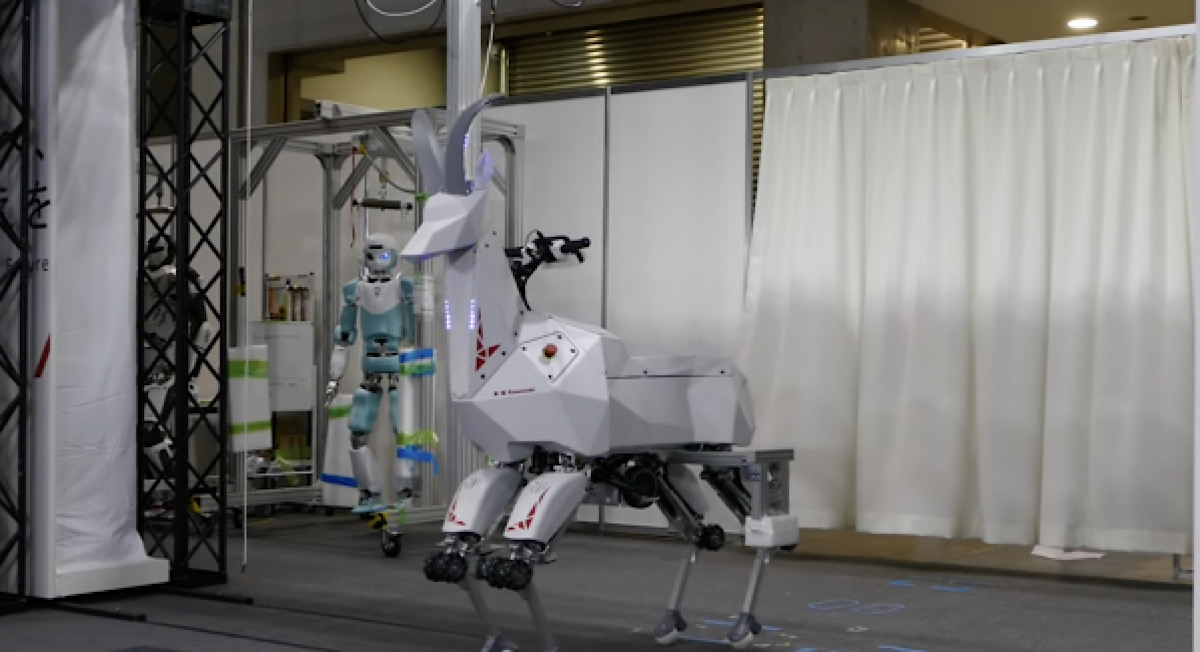
Here’s an Idea: A Jumping ‘SpaceBok’ Robot Makes Giant Leaps Toward the Moon and Mars

The Spacebok robot (shown here) has the ability to leap across complex terrains.

The Mars-bound Perseverance rover is as sophisticated as it gets. The robotic vehicle features six science instruments, six cameras, six aluminum wheels, and even a helicopter. 

But can it jump?

Hendrik Kolvenbach, PhD researcher at the ETH Zurich Robotics Systems Lab, sees the best way to get around on the Moon as less of a step and more of a giant leap. Listen to our episode of Here’s an Idea to learn how Kolvenbach and his team are creating a technology that’s part space robot and part African springbok.

The “SpaceBok” can hop three feet in the air, continuously. The pogo-like hop is an efficient way to someday get around the low-gravity surfaces of the Moon, according to the robot inventor. 

“We have footage of astronauts who had been on the Moon and who would use a jump or a skipping gait, and they find it as the best way to travel,” Kolvenbach told us in our latest episode of Here’s an Idea.

SpaceBok measures about 2.5 feet long by 1.5 feet wide — the size of a small dog, says Kolvenbach. 

Continue reading… “Here’s an Idea: A Jumping ‘SpaceBok’ Robot Makes Giant Leaps Toward the Moon and Mars”

World’s smallest battery has been designed to power a computer the size of a grain of dust, that could be used as discrete sensors, or to power miniaturised medical implants

By RYAN MORRISON

  • The miniature battery is made up of a series of coiled strips of film that recoils 
  • This produces enough electricity to power a small sensor for up to ten hours
  • These could be used in medical research and monitoring in the form of sensors
  • It could also allow for a fleet of microscopic dust-sized sensor to monitor the air 

The world’s smallest battery has been designed to power a computer the size of a grain of dust, that could be used as discrete sensors, or for medical implants. 

A team led by Chemnitz University of Technology in Germany say these microscopic batteries are needed to power the ongoing miniaturisation of electronics.  

Smart dust devices, including biocompatible sensor systems in the body, require computers to handle data at sizes smaller than a grain of dust, but while the devices are getting smaller, powering them has proved to be problematic.

Continue reading… “World’s smallest battery has been designed to power a computer the size of a grain of dust, that could be used as discrete sensors, or to power miniaturised medical implants”

RECORD LABEL CEO EXPLAINS HOW MUSIC NFTS ARE SET TO REVOLUTIONIZE THE INDUSTRY

NFTs must evolve beyond PFPs and the Metaverse to stay relevant in 2022, and Monstercat CEO Mike Darlington explains that music may be next

By ALYSSA EXPOSITO 

Music-based nonfungible tokens are an emerging frontier in the crypto and NFT space, but the first questions that come to mind are: What are they? And what are their utility?

Music NFTs are relatively new to the scene and cannot be pinned down by one definition. At the most basic level, however, they are verifiable digital collectibles, with a core component being the integration of a song.

One of the first collections was “Audioglyphs,” which cemented itself as revolutionizing the way users consume music, synthesizing an infinite stream of audio for each NFT. Creators and investors began to discover the novelty of music NFTs, as they lessened the barriers of access to artists and consumers.

Continue reading… “RECORD LABEL CEO EXPLAINS HOW MUSIC NFTS ARE SET TO REVOLUTIONIZE THE INDUSTRY”

How Self-Driving Vehicles Fit In Perfectly With the Future of Retail

BY BRADLEY BERMAN

The days of needing to drive to the store to pick up a whole cartful of groceries are gone. If you live near a major metropolitan area in the United States or a populous suburb, nearly everything you can imagine is available for delivery to your doorstep through mobile apps and e-commerce sites—sometimes in a matter of hours. Even the small, local mom-and-pop shops just down the street are quickly changing. 

Among the many hardships of the COVID-19 pandemic was that it forced brick and mortar retailers to radically rethink their approach, accelerating the long-term trends of consumers moving away from in-person shopping. After previously relying heavily on foot traffic and in-store customers, they suddenly needed to figure out how to reach their customers online, safely at home, or socially distanced. 

Now, as parts of the world emerge from the pandemic (or at least adjust to a less dire “new normal”), autonomous vehicles are poised to help these retailers rebuild even more sustainable, efficient, and long-lasting businesses with new ways to connect to their customers. “Retailers are shifting capital to change their stores,” says Troy Beeler, cofounder of the Future Commerce Initiative, a consulting firm. “All the effort is going into distribution, getting the inventory close to the consumer in a way that the consumer can either pick it up or you can deliver it to them in the most cost-effective way.” 

We’re seeing these changes happen today. Fast food restaurants are experimenting with drive-through-only locations. Weather permitting, entire store facades now slide open to allow circulation. Kiosks are wheeling outside. Customers and delivery contractors pick up orders at the curb or via newly installed takeout windows. Consumers seeking the ability to touch and feel products can still do so, but outside, in more limited quantities, and they are encouraged to look up more inventory on the store’s website. “The idea of super-dense interior spaces is no longer palatable,” says Zachary Colbert, an architecture professor at Carleton University. Now it’s all about open-air courtyards, verandas, pop-up tents, parklets, and pickup zones. 

Continue reading… “How Self-Driving Vehicles Fit In Perfectly With the Future of Retail”

Verdant Robotics launches multi-action agricultural robot for ‘superhuman farming’

BY DAVID EDWARDS 

To meet farmers’ demands for more sustainable and profitable growing practices, Verdant Robotics has expanded its robot-as-a-service (RaaS) model to ensure access for more specialty crop farmers.

Founded in late 2018 by a leading roboticist, a software engineer, and a California farmer, Verdant has raised $21.5 million to develop the industry’s first multi-action, autonomous farm-robot capable of millimeter-accurate spraying, laser weeding, and AI-based digital crop modeling. 

Together with farming partners, Verdant uses these tools to deliver better outcomes: larger produce, greater yields and significant savings.

Verdant has already contracted to service approximately 40 percent of the US carrot market exclusively for the next five years and is currently scaling to meet the needs of the US multi-billion-dollar fruit and vegetable industry.

Continue reading… “Verdant Robotics launches multi-action agricultural robot for ‘superhuman farming’”

WE NOW HAVE THE FIRST EVER GRAPHENE HEADPHONES

The Ora GQ headphones by Ora Sound uses a membrane made of a patented material called GrapheneQ. 

By PRATEEK JOSE

Graphene has, despite the odds, lived up to its hype. The carbon compound has made everything from solar-powered artificial skin to safer condoms a reality. Now it has been tapped to reinvent the world of high-performance audio by Ora Sound, who have created the first ever graphene headphones, the Ora GQ. The Montreal-based company’s pitch has been a hit on Kickstarter, where they have raised $270,000 with contributions from over a thousand backers.

So the obvious question that comes to mind is, “Why graphene?” And the answer has everything to do with the material’s properties, which make it 200 hundred times sturdier than steel and lighter than paper by 1000 times. The latter makes it possible to create extremely thin graphene membranes, which Ora has patented under the name GrapheneQ. The GrapheneQ diaphragms that are used on the Ora GQ headphones lend it a high level of fidelity, resulting in improved sound quality compared to standard mylar membranes.

And it doesn’t end there. The benefits of using graphene include an extended frequency response, lower distortion, and more efficient heat dissipation as a result of the ability to direct heat away from the headphone’s voice coil. They also claim a 70 percent increase in battery efficiency, which would mean having to plug them in much less often. The company has put the device through third party tests, and the results are available on their Kickstarter page with a bunch of graphs and measurements.

Continue reading… “WE NOW HAVE THE FIRST EVER GRAPHENE HEADPHONES”

First Woman Has Been ‘Cured’ of HIV Using Stem Cells

The novel treatment using umbilical cord blood could help dozens of people with both HIV and aggressive cancers

By Corryn Wetzel

A woman of mixed race is the third person in the world believed to be cured of HIV after receiving a stem cell transplant from a donor naturally resistant to the virus, scientists announced last week. The success of the new method involving umbilical cord blood could allow doctors to help more people of diverse genders and racial backgrounds, Apoorva Mandavilli reports for the New York Times.

Two previous patients that appear to have been cured of HIV, the virus that causes AIDS, underwent a different treatment. Instead of using stem cells from umbilical cord blood, Timothy Brown and Adam Castillejo received a bone marrow transplant from donors with a genetic mutation that blocks HIV infection, reports Nicoletta Lanese for Live Science. Both bone marrow and umbilical cord blood, which is collected at the time of a baby’s birth and donated by parents, contain adult hematopoietic stem cells. Those stem cells develop into all types of blood cells that support the immune system.

When the female patient needed umbilical cord blood as a treatment for leukemia, her doctors chose a donor with natural immunity to HIV with the hope of helping her fight both illnesses. According to doctors, the woman, who is keeping her identity private, has now been free of the virus for 14 months.

Continue reading… “First Woman Has Been ‘Cured’ of HIV Using Stem Cells”
Discover the Hidden Patterns of Tomorrow with Futurist Thomas Frey
Unlock Your Potential, Ignite Your Success.

By delving into the futuring techniques of Futurist Thomas Frey, you’ll embark on an enlightening journey.

Learn More about this exciting program.