Making Cells Dance: Acoustic Waves Revolutionize Drug Discovery

Creating new drugs has traditionally required thousands of hours spent testing cells in petri dishes before treatments can reach patients. Even in 2025, much of this process remains manual, making it time-consuming, costly, and occasionally unreliable—significantly slowing down the development of life-saving therapies.

While some lab tasks like pipetting and liquid handling have been automated, growing and manipulating cells is still a complex challenge. This process often depends on multiple pieces of specialized equipment, including centrifuges and incubators, all of which must work together seamlessly. The more machines involved, the more expensive and complex the system becomes—making it inaccessible for many smaller labs, especially since the costly equipment may wear out before delivering a return on investment.

Continue reading… “Making Cells Dance: Acoustic Waves Revolutionize Drug Discovery”

A Silk-Based System Could Help Eliminate Animal Testing in Cancer Imaging Research

Historically, animal testing has been viewed as a necessary step in drug discovery, particularly for assessing new imaging agents. However, a growing number of researchers are working to eliminate this reliance by developing more advanced in vitro alternatives. One such innovation comes from a team in Austria, which has patented a cutting-edge system that combines 3D cell cultures with automated imaging technology—offering a promising path away from animal models.

At the heart of the new approach is a sophisticated system that grows human cells on silk-based scaffolds. These silk fibroin sponges act as a supportive extracellular matrix, enabling cells to develop in a realistic, three-dimensional tissue-like form. The scaffold is then inserted into a specialized device that mimics fluid flow similar to chromatography systems.

Continue reading… “A Silk-Based System Could Help Eliminate Animal Testing in Cancer Imaging Research”

Corleo: Kawasaki Unveils Hydrogen-Powered Robotic Horse of the Future

Kawasaki Heavy Industries has taken the wraps off Corleo, a futuristic, four-legged hydrogen-powered robotic horse that blends artificial intelligence, clean energy, and off-road capability. Unveiled at the Osaka-Kansai Expo 2025, this bold concept drew attention for its unusual approach to sustainable mobility and its inspiration from both motorcycles and living creatures.

Corleo isn’t just built to turn heads—it’s designed to traverse tough terrain. Each of its four legs moves independently, enabling it to maintain balance and provide a smoother ride across a range of surfaces, from rocky trails to grassy fields. Kawasaki describes the concept as an “off-road mobility platform,” one capable of handling varied environments with stability and control.

Continue reading… “Corleo: Kawasaki Unveils Hydrogen-Powered Robotic Horse of the Future”

SpinLaunch Shifts Gears with Ambitious Meridian Space Constellation

SpinLaunch, the experimental space startup known for its centrifugal satellite launcher, has unveiled bold new plans to create a broadband satellite network called Meridian Space. This next-generation constellation will consist of compact “microsatellites” deployed in massive batches of up to 250 satellites per launch—a move that, if successful, would surpass SpaceX’s 2021 record of 143 satellites on a single flight.

In a surprising twist, SpinLaunch won’t be using its signature kinetic launch system—designed to fling payloads into orbit like a giant slingshot—for the initial satellite deployments. Instead, the company will rely on traditional rocket launchesto begin building out the network.

Continue reading… “SpinLaunch Shifts Gears with Ambitious Meridian Space Constellation”

Printing the Future of Cosmetics: 3D-Printed Skin Models Offer Alternative to Animal Testing

A groundbreaking collaboration between Graz University of Technology (TU Graz) in Austria and the Vellore Institute of Technology (VIT) in India has resulted in the development of a 3D-printed skin model designed to replace animal testing in the cosmetic industry. This innovation aligns with increasingly strict European regulations—such as Directive 2010/63/EU—which significantly limit the use of animal testing for cosmetic purposes.

At the core of the research are specially engineered hydrogels, which serve as the foundation for creating lifelike, biomimetic skin structures. These hydrogels are infused with living skin cells and processed using a biocompatible 3D printing method. Their high water content makes them ideal for supporting cell growth and proliferation, but it also presents unique challenges in maintaining mechanical and chemical stability. To address this, TU Graz developed innovative crosslinking techniques that stabilize the structures under mild, cell-friendly conditions, avoiding substances that could damage the delicate cells.

Continue reading… “Printing the Future of Cosmetics: 3D-Printed Skin Models Offer Alternative to Animal Testing”

Smarter Smiles: AI-Driven 3D Bioprinting Creates Personalized Gum Grafts Without Surgery

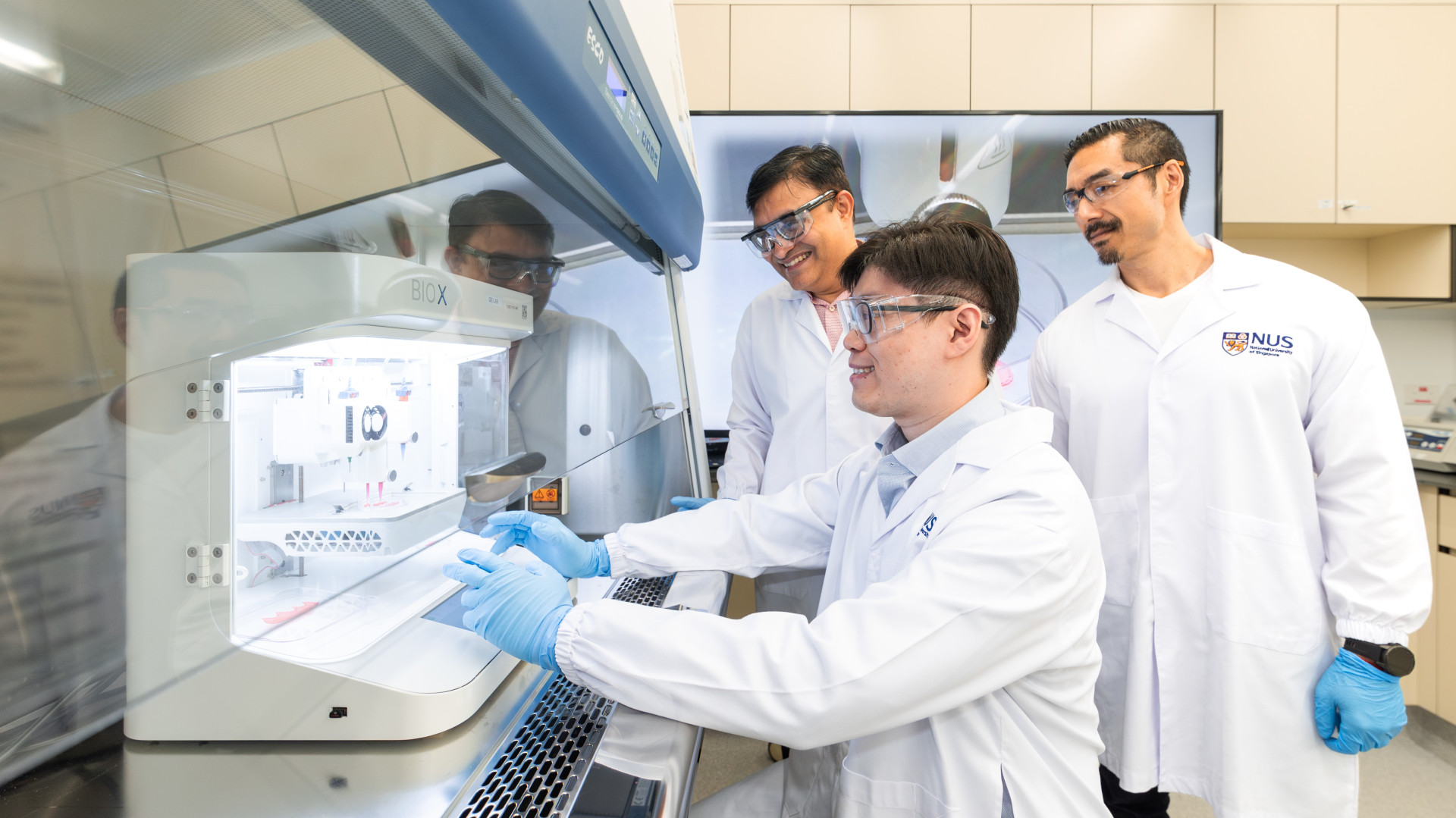
A team of researchers from the National University of Singapore (NUS) has developed a groundbreaking technique that combines 3D bioprinting with artificial intelligence (AI) to produce personalized gum grafts, offering a less invasive alternative to traditional dental surgery. Led by Assistant Professor Gopu Sriram from the NUS Faculty of Dentistry, this innovation aims to reduce patient discomfort by eliminating the need to harvest tissue from the patient’s own mouth—a common and often painful step in current grafting procedures.

Designed for use in treating gum defects caused by periodontal disease or complications from dental implants, the team’s approach relies on a specially formulated bio-ink that supports cell growth while maintaining the mechanical strength necessary during the 3D printing process. Their research, published in Advanced Healthcare Materials on December 17, 2024, was funded by the National Additive Manufacturing Innovation Cluster and the National University Health System.

Continue reading… “Smarter Smiles: AI-Driven 3D Bioprinting Creates Personalized Gum Grafts Without Surgery”

Twist to Power: Revolutionary Metamaterial Sets New Standard for Mechanical Energy Storage

Modern technologies—from shock absorbers and energy-efficient machinery to advanced robotics—depend on materials that can efficiently store and release mechanical energy. This essential process involves converting motion or mechanical work into elastic energy, which can later be recovered and reused. At the core of this transformation is enthalpy, a key measure of how much energy a material can absorb and release. Yet maximizing enthalpy remains a significant engineering challenge. According to Professor Peter Gumbsch of the Karlsruhe Institute of Technology (KIT), the difficulty lies in balancing often conflicting properties: high stiffnesshigh strength, and large recoverable strain.

To overcome this, Gumbsch—who also directs the Fraunhofer Institute for Mechanics of Materials in Freiburg—collaborated with researchers from China and the United States to develop an innovative mechanical metamaterial. These are materials with engineered internal structures that do not exist in nature, granting them extraordinary properties. The team’s starting point was deceptively simple: a round rod. They discovered a way to store large amounts of elastic energy in it without breaking or causing permanent deformation. By cleverly arranging these rods, they integrated the mechanism into a full-scale metamaterial.

Continue reading… “Twist to Power: Revolutionary Metamaterial Sets New Standard for Mechanical Energy Storage”

Bio-Inspired Breakthrough: Scientists Develop Bone-Mimicking 3D Printing Material

In a major step forward for regenerative medicine, researchers have developed a new bioceramic material that closely mimics the micro- and nanoscale structure of natural bone. The team overcame significant technical challenges by leveraging prenucleation clusters—tiny molecular structures naturally found in bone that play a key role in guiding mineralization.

By incorporating these clusters into a transparent calcium phosphate resin, the researchers were able to replicate the intricate architecture of real bone, bringing them one step closer to creating implants that don’t just support the body but become part of it. Their groundbreaking results were recently published in Advanced Materials.

Continue reading… “Bio-Inspired Breakthrough: Scientists Develop Bone-Mimicking 3D Printing Material”

Brains of the Future: Self-Learning ‘Infomorphic Neurons’ Bring AI Closer to Biology

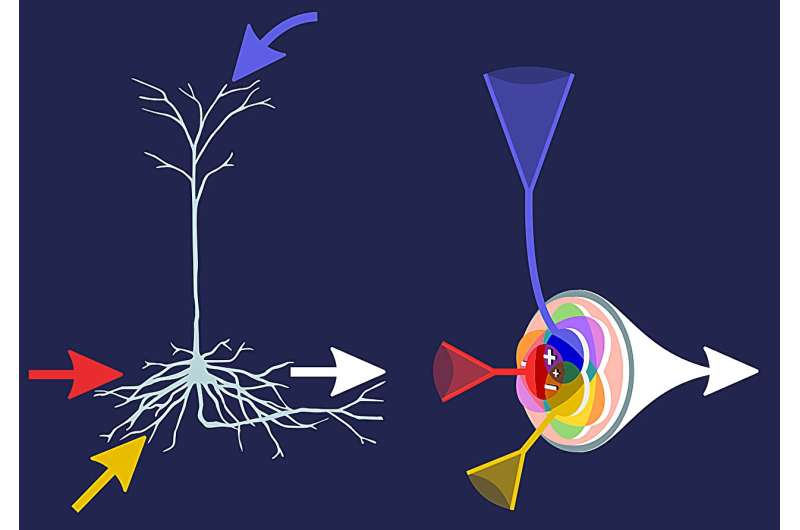
In a breakthrough that could redefine the future of artificial intelligence, researchers have developed a new kind of artificial neuron that mimics the brain more accurately than ever before. Known as “infomorphic neurons,” these units can learn independently, just like their biological counterparts.

Developed by scientists at the Göttingen Campus Institute for Dynamics of Biological Networks (CIDBN) at the University of Göttingen and the Max Planck Institute for Dynamics and Self-Organization (MPI-DS), these artificial neurons were designed to self-organize and extract meaningful patterns from their local network environment—without relying on external coordination. The research was recently published in the Proceedings of the National Academy of Sciences.

Continue reading… “Brains of the Future: Self-Learning ‘Infomorphic Neurons’ Bring AI Closer to Biology”

Turning Trash into Tech: German Scientists Transform Household Plastic Waste into 3D Printing Gold

Germany is tackling its mounting plastic waste crisis head-on with an innovative approach led by the Fraunhofer Institute for Manufacturing Technology and Advanced Materials (IFAM). In 2023 alone, the country generated a staggering 5.6 million metric tons of plastic waste—most of it single-use packaging consumed in homes. With less than a third of that being recyclable, scientists are under pressure to find new ways to reuse this waste.

Fraunhofer IFAM has developed a cutting-edge system that converts everyday household plastic waste into high-quality filaments used for 3D printing. The breakthrough comes at a critical time as industries increasingly demand sustainable materials for manufacturing.

Continue reading… “Turning Trash into Tech: German Scientists Transform Household Plastic Waste into 3D Printing Gold”

Reclaiming Voices: New Brain-to-Speech Tech Restores Natural Communication for the Paralyzed

For millions of people around the world who have lost the ability to speak due to conditions like stroke, ALS, or traumatic brain injuries, a groundbreaking breakthrough is offering renewed hope. Scientists have developed a cutting-edge system that translates brain activity directly into speech in real time, allowing individuals with severe paralysis to communicate naturally once again.

Unlike earlier technologies that introduced awkward delays into conversation, this new “brain-to-voice neuroprosthesis” responds almost instantly to the user’s intent to speak. It processes brain signals in tiny 80-millisecond chunks, enabling fluid, real-time speech that closely mirrors natural conversation.

Continue reading… “Reclaiming Voices: New Brain-to-Speech Tech Restores Natural Communication for the Paralyzed”

Ultra-Thin Lightsail Brings Interstellar Travel Closer to Reality

In a groundbreaking development that could accelerate humanity’s journey to the stars, scientists have created an ultra-thin, ultra-reflective lightsail membrane designed to ride laser beams at unprecedented speeds. This advancement may one day enable small spacecraft to travel to neighboring star systems like Alpha Centauri in just a few decades—rather than thousands of years.

Developed through a collaboration between researchers at Brown University and the Delft University of Technology (TU Delft) in the Netherlands, the lightsail measures 60 millimeters on each side but is just 200 nanometers thick—thinner than a human hair. What sets this new design apart is its surface, which is patterned with billions of nanoscale holes. These features dramatically reduce the sail’s weight while enhancing its reflectivity, allowing it to better harness the pressure of light for acceleration.

Continue reading… “Ultra-Thin Lightsail Brings Interstellar Travel Closer to Reality”