IBM’s previously announced work intersecting blockchain and AI is moving forward with the establishment of a new office in Germany.
The announcement is part of a broader technology push initiated this week by IBM, which is investing $200m to fuel its internet of things (IoT) efforts.
Boeing Co. once helped the U.S. beat the Soviet Union in the race to the moon. Now the company intends to go toe-to-toe with newcomers such as billionaire Elon Musk in the next era of space exploration and commerce.
sketched out a Jetsons-like future at a conference Tuesday, envisioning a commercial space-travel market with dozens of destinations orbiting the Earth and hypersonic aircraft shuttling travelers between continents in two hours or less. And Boeing intends to be a key player in the initial push to send humans to Mars, maybe even beating Musk to his long-time goal.
The package delivery giant is testing drones for sending medical items to rural locations.
The United Parcel Service has high hopes for drones.
In late September, the package delivery giant and a drone startup, CyPhy Works, said they had successfully tested a drone delivery, in which a flying robot delivered an asthma inhaler to a children’s summer camp on a small island off the coast of Massachusetts.
Electric vehicles come with a huge benefit: peace and quiet. But that’s just what manufacturers are afraid of.
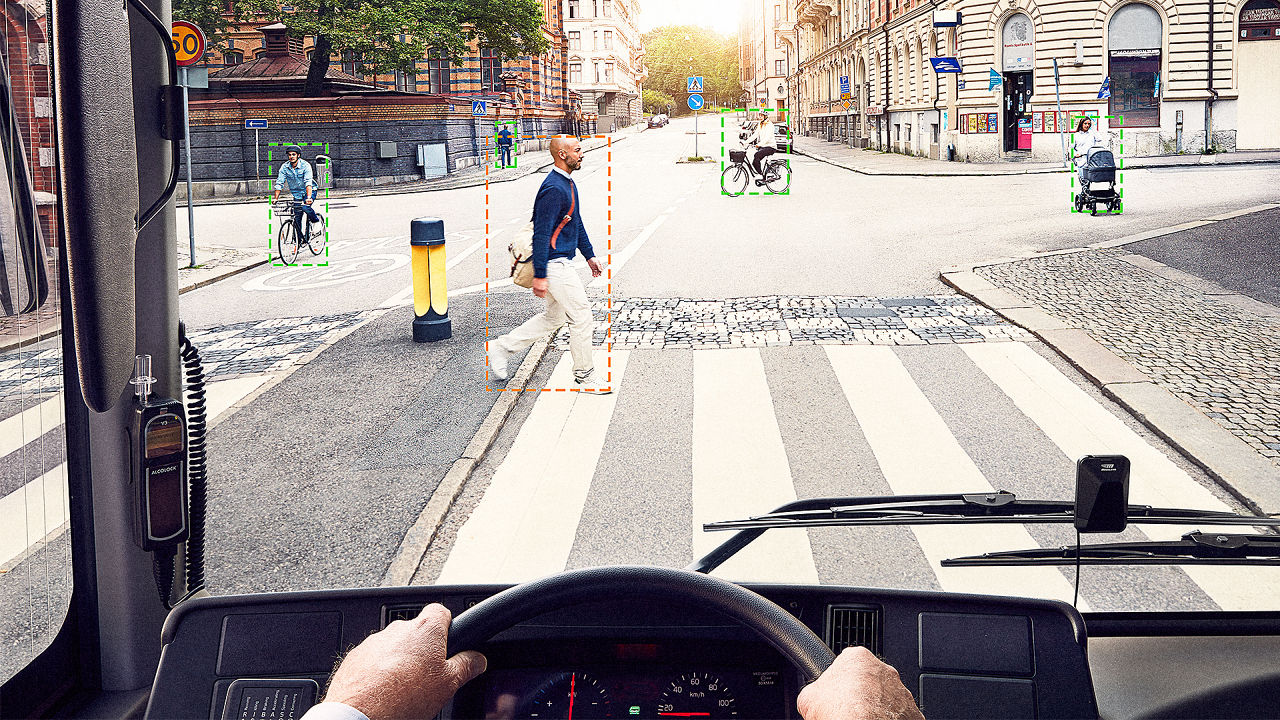
Volvo has come up with a novel way to for its silent electric buses to let pedestrians know that they’re there: The new bus detects humans in the road ahead and honks at them, just like a human driver might.
Comma.ai, the self-driving car startup helmed by iPhone hacker George Hotz, has unveiled new details about its first commercial product, the newly named Comma One. According to a report from TechCrunch, the company claims this $999 after-market kit will allow buyers to give their cars semi-autonomous abilities on a par with Tesla’s Autopilot. The physical product will be shipping before the end of the year, says Comma.ai, and will require a $24 monthly subscription fee for access to Comma.ai’s software, as well as certain in-car features like electronic power steering. The aim, said Hotz when we spoke to him earlier this year, is to provide “ghost riding for the masses.”
Microsoft has vowed to “solve the problem of cancer” within a decade by using ground-breaking computer science to crack the code of diseased cells so they can be reprogrammed back to a healthy state.
If you’ve felt like Netflix’s US catalog has shrunk dramatically since the company started making its own shows and movies, you’re absolutely right.
Since 2012, Netflix’s selection of titles has dropped over 50%, from roughly 11,000 titles to about 5,300, according to streaming blog Exstreamist, which cites multiple former Netflix employees.
My dad, a former Wall Street trader always advised me “cash is king” and to “hold on to it” when the economy gets tough.
But in the Netherlands, cash is definitely not getting the royal treatment. In so many places, it has simply ceased to be recognised as legal tender. More and more Dutch stores, from upscale health-food store Marqt to my local baker and bagel shop, take pin — or debit — cards exclusively. Some retailers even describe going cash-free as “cleaner” or “safer”.
Skyscrapers in the City of London could soon be built by robots rather than by people, according to the boss of one of the UK’s biggest construction firms. The result would be huge productivity gains as more work could be done by fewer people – but also mass layoffs as traditionally labour-intensive construction projects hire fewer and fewer staff.
If you had to pick a tech industry buzzword for 2016, “machine learning” would be a good choice. Every other company, it seems, is packing the phrase into their pitches, and it’s having an effect.
If you summon an Uber in 10 years’ time, you will probably get a car that drives itself. But then again, you may not be travelling in a car at all.
The taxi-hailing app is working on technology that would allow airborne passenger drones to fly its users short distances around cities, it has emerged, raising the prospect of a future in which skylines are dotted with Uber aircraft shuttling commuters back and forth.