Dutch city cuts ribbon on World’s largest bike garage

14B28C95-67F0-4F5E-881E-3B8032E1BAF9

The world’s largest bicycle parking facility in Utrecht, the Netherlands. (Photo via CU2030/City of Utrecht)

UTRECHT, Netherlands (CN) – When your country has more bikes than people, you need somewhere to park them all.

On Monday, the Dutch city of Utrecht opened the world’s largest bicycle parking facility. The Netherlands has a population of 18 million people but 23 million bicycles.

Located beneath the central train station in the country’s fourth-largest city, the Stationsplein bicycle parking can hold 12,656 bikes. The previous record was held by Tokyo, Japan, which has a facility that can hold 9,400 bikes.

Continue reading… “Dutch city cuts ribbon on World’s largest bike garage”

Scientists extract hydrogen gas from oil and bitumen, giving potential pollution-free energy

BBBA0210-99BC-4C39-A2ED-F9A936FE500F

Scientists have developed a large-scale economical method to extract hydrogen (H2) from oil sands (natural bitumen) and oil fields. This can be used to power hydrogen-powered vehicles, which are already marketed in some countries, as well as to generate electricity; hydrogen is regarded as an efficient transport fuel, similar to petrol and diesel, but with no pollution problems. The process can extract hydrogen from existing oil sands reservoirs, with huge existing supplies found in Canada and Venezuela. Interestingly, this process can be applied to mainstream oil fields, causing them to produce hydrogen instead of oil.

Hydrogen powered vehicles, including cars, buses, and trains, have been in development for many years. These vehicles have been acknowledged to be efficient, but the high price of extracting the Hydrogen from oil reserves has meant that the technology has not been economically viable. Now a group of Canadian engineers have developed a cheap method of extracting H2 from oil sands. They are presenting this work at the Goldschmidt Geochemistry Conference in Barcelona.

Continue reading… “Scientists extract hydrogen gas from oil and bitumen, giving potential pollution-free energy”

Building from thin air & the carbon revolution

B317E872-CCAA-405F-B29F-208C5E92B939

Imagine making fuel, plastics, and concrete out of “thin air.” That’s the promise of Direct Air Capture (DAC), a technology that fundamentally disrupts our contemporary oil economy.

 Mimicking what already occurs in nature, DAC essentially involves industrial photosynthesis, harnessing the power of the sun to draw carbon directly out of the atmosphere.

This captured carbon can then be turned into numerous consumer goods, spanning fuels, plastics, aggregates and concrete (as I write this blog, I’m even wearing shoes 3D-printed from carbon).

A vital component of every life form on Earth, carbon stands at the core of our manufacturing, energy, transportation, among the world’s highest-valued industries.

And in the coming 10 years, sourcing carbon out of the air will become more cost-effective than carbon sourced from the ground (oil).

Continue reading… “Building from thin air & the carbon revolution”

Sorry, scooters aren’t so climate-friendly after all

524C0ACC-D26D-4717-9E28-9B8313332E0F

A look at the full lifetime emissions of the vehicles call into question the ecological assumptions around “micromobility.”

Bird boasts that its dockless electric scooters allow customers to “cruise past traffic and cut back on CO2 emissions—one ride at a time.”

Its rival Lime claims the vehicles “reduce dependence on personal automobiles for short distance transportation and leave future generations with a cleaner, healthier planet.”

But the mere fact that battery-powered scooters don’t belch pollution out of a tailpipe doesn’t mean they’re “emissions free,” or as “eco-friendly” as some have assumed. The actual climate impact of the vehicles depends heavily on how they’re made, what they’re replacing, and how long they last.

Continue reading… “Sorry, scooters aren’t so climate-friendly after all”

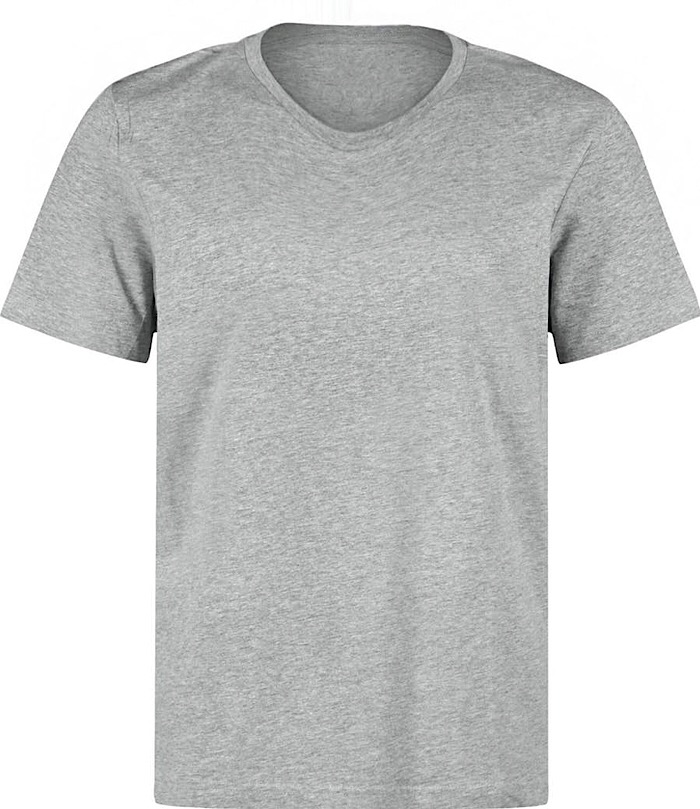
Softer-than-cotton antibacterial shirt is made out of milk

24C2A1FB-F0DB-4631-8331-70B05C8EB978

The Limitless Milk Shirt is claimed to be three times softer than regular cotton

Every day, dairies dispose of milk that for one reason or another is deemed unfit for human consumption. A Los Angeles-based startup by the name of Mi Terro is taking some of that milk and using it to create T-shirts, that reportedly have some big advantages over regular cotton Tees.

Continue reading… “Softer-than-cotton antibacterial shirt is made out of milk”

This solar-powered device produces energy and cleans water at the same time

B2F86F57-755D-410B-BFA2-486882F7DC03

UNDER THE SUN Solar panels with water purification devices mounted on their backs (illustrated) could produce freshwater and electricity simultaneously.

 Still a prototype, the machine could one day help curb electricity and freshwater shortages

By mounting a water distillation system on the back of a solar cell, engineers have constructed a device that doubles as an energy generator and water purifier.

While the solar cell harvests sunlight for electricity, heat from the solar panel drives evaporation in the water distiller below. That vapor wafts through a porous polystyrene membrane that filters out salt and other contaminants, allowing clean water to condense on the other side. “It doesn’t affect the electricity production by the [solar cell]. And at the same time, it gives you bonus freshwater,” says study coauthor Peng Wang, an engineer at King Abdullah University of Science and Technology in Thuwal, Saudi Arabia.

Continue reading… “This solar-powered device produces energy and cleans water at the same time”

Giant shipper bets big on ending its carbon emissions. Will it pay off ?

A6DE378F-3186-40FA-9CC4-9D91A2B6405F

The Danish company Maersk has been shipping goods around the world since the age of steamships. Now it wants to usher in a new era, with carbon neutral transport.

Maersk — the world’s largest container shipping company — has an astonishing goal. By 2050, the company vows to send goods — everything from electronics to soybeans to sneakers — around the world with zero carbon emissions.

The environmental logic behind such a promise is straightforward: Shipping contributes substantially to global climate change.

Continue reading… “Giant shipper bets big on ending its carbon emissions. Will it pay off ?”

Your UPS deliveries may soon arrive in electric trucks

87CC4560-1531-4515-8CEF-38D021D32535

Through its multiple partnerships with EV startups, the company is precipitating a sustainable transformation in the delivery industry.

A new UPS truck now rolling around the streets of London looks like an ordinary delivery vehicle. But at night, the truck plugs into a new smart grid at the company’s hub in the center of the city, where it pulls in enough charge to drive up to 150 miles the next day.

The smart grid and the battery infrastructure inside the truck are made by the U.K.-based startup Arrival. They will soon fully debut in a pilot fleet of custom trucks equipped with other features, including a wraparound front window that makes it easier for a driver to see other vehicles and pedestrians. This pilot is just one piece of UPS’ larger experimentation with electric vehicles.

Continue reading… “Your UPS deliveries may soon arrive in electric trucks”

Energy abundance : The future of nuclear

59CB99E7-0DFE-4799-B4AE-F360362435DD

Yes, I want nuclear energy *in my back yard*!

Extraordinary new innovations are giving us failsafe nuclear fission and the potential to achieve our age-old dream of fusion.

This year, Bill Gates commented: “Nuclear is ideal for dealing with climate change, because it is the only carbon-free, scalable energy source that’s available 24 hours a day. The problems with today’s reactors, such as the risk of accidents, can be solved through innovation.”

This blog is about convincing you to re-consider nuclear as a viable and critical idea. The upside of success is extraordinary, which is why, for the first time, we’re beginning to see venture capital make massive investments in the field.

Continue reading… “Energy abundance : The future of nuclear”

South Korean tech breakthrough could change biofuels forever

 93306F1B-7449-4001-9931-3AE3E035DE03

Researchers in South Korea have made a major breakthrough in using bacteria to sustainably and efficiently produce biofuels. The team of scientists from the Korea Advanced Institute of Science and Technology (KAIST) report that they have developed a new kind of engineered microorganisms that are capable of producing greater volumes of the fatty acids that make up biodiesel than ever before.

A team of researchers from KAIST released a study detailing their discovery last month in the scientific journal Nature Chemical Biology. The paper, titled “Engineering of an oleaginous bacterium for the production of fatty acids and fuels” details the development of these record-breaking microorganisms which could prove to be a key breakthrough in the effort to develop sustainable, bio-based energy sources to replace dirtier, finite fossil fuels.

Continue reading… “South Korean tech breakthrough could change biofuels forever”

Hydrogel uses sunlight to harvest fresh water from the sea

3D8F6229-BABA-4634-B93B-82DA6445FADE

The research team (led by Tan Swee Ching, at right) with samples of the hydrogel

In many arid coastal regions, a great quantity of valuable fresh water is lost into the atmosphere every day, as it evaporates from the surface of the ocean. This situation prompted scientists to create a new hydrogel that’s highly effective at capturing moisture from the sea air, and then releasing it as fresh water.

Developed by a team at the National University of Singapore, the zinc-based material is claimed to be over eight times more absorbent than existing drying agents such as silica gel and calcium chloride – it can absorb more than four times its dry weight in water. Additionally, unlike the case with traditional drying agents, no electricity is required to get that water back out of it, plus the gel can be reused over 1,000 times.

Continue reading… “Hydrogel uses sunlight to harvest fresh water from the sea”

Alphabet’s Sidewalk Labs unveils its high-tech ‘city-within-a-city’ plan for Toronto

FBD74DDB-070A-42E1-91D8-CB8F0E08EE51

Sidewalk Labs says it will spend $1.3 billion on the project in the hopes of spurring $38 billion in private sector investment by 2040

 Sidewalk Labs, Alphabet’s smart city subsidiary, released its massive plan Monday to transform a slice of Toronto’s waterfront into a high-tech utopia. Eighteen months in the making and clocking in at 1,524 pages, the plan represents Alphabet’s first, high-stakes effort to realize Alphabet CEO Larry Page’s long-held dream of a city within a city to experiment with innovations like self-driving cars, public Wi-Fi, new health care delivery solutions, and other city planning advances that modern technology makes possible.

Previously, Sidewalk Labs called it “a neighborhood built from the internet up.” But on Monday, Sidewalk Labs CEO Dan Doctoroff went a step further to describe it as “the most innovative district in the world.”

Continue reading… “Alphabet’s Sidewalk Labs unveils its high-tech ‘city-within-a-city’ plan for Toronto”

Discover the Hidden Patterns of Tomorrow with Futurist Thomas Frey
Unlock Your Potential, Ignite Your Success.

By delving into the futuring techniques of Futurist Thomas Frey, you’ll embark on an enlightening journey.

Learn More about this exciting program.