Overcoming the Limitations of Aqueous Supercapacitors with Hybrid Electrolyte Design

Supercapacitors, also known as ultracapacitors or electric double-layer capacitors, are crucial components in modern electrical systems. They are commonly used in regenerative braking systems for vehicles, power supplies, and various electronic devices. These energy storage devices, unlike batteries that store energy through chemical reactions, use ion separation to store energy.

While traditional capacitors are widely used for their ability to rapidly release energy, supercapacitors offer an advanced solution with much higher energy storage capacity. They achieve this by using high-surface-area electrodes and a liquid electrolyte that contains ions. In essence, supercapacitors are designed to store and discharge electrical energy more efficiently than conventional capacitors.

Continue reading… “Overcoming the Limitations of Aqueous Supercapacitors with Hybrid Electrolyte Design”

Jetson ONE’s First Production Model Soars with Successful Maiden Flight

The Jetson ONE has officially completed its maiden flight, marking a major milestone in the development of electric vertical takeoff and landing (eVTOL) aircraft. Known as SN1, this compact flying car showed exceptional stability during flight and landed smoothly without any issues, as demonstrated in a newly released video.

The SN1 is proving to be a solid foundation for what promises to be the first of many Jetson ONE units to come. “The excitement from our community has been incredible,” the company stated. “Your enthusiasm fuels our drive as we move full speed ahead, with serial production now underway.”

Continue reading… “Jetson ONE’s First Production Model Soars with Successful Maiden Flight”

Innovative Construction Methods Aim to Tackle America’s Housing Crisis

As housing costs skyrocket and the availability of affordable homes dwindles, millions of Americans are struggling to secure a place to live. To address this escalating crisis, builders are increasingly turning to innovative construction techniques that promise to speed up the building process, cut costs, and boost the housing supply. From 3D printing to modular homes and even hemp-based construction materials, these unconventional methods are paving the way for more affordable and sustainable housing solutions.

The shortage of both homes for sale and rental properties is one of the most pressing challenges facing the United States today. According to Adrianne Todman, former acting secretary of the U.S. Department of Housing and Urban Development, the lack of affordable housing can only be remedied through the adoption of more innovative construction practices. Todman pointed out that had we embraced these methods decades ago, the current housing crisis might have been less severe.

Continue reading… “Innovative Construction Methods Aim to Tackle America’s Housing Crisis”

Coral-Inspired Carbon Capture Method Paves the Way for Carbon-Negative Building Materials

A revolutionary new approach, inspired by the natural processes of coral reefs, promises to capture carbon dioxide from the atmosphere and transform it into durable, fire-resistant building materials. Developed by researchers at the University of Southern California (USC), this method provides a promising solution for carbon-negative construction and is detailed in a recent study published in npj Advanced Manufacturing. By mimicking coral’s ability to create robust structures while sequestering carbon, the new approach results in mineral-polymer composites with extraordinary mechanical strength, fracture toughness, and fire resistance.

The idea behind this breakthrough stems from the natural world, particularly the way coral reefs sequester carbon dioxide and form solid, resilient structures. Coral reefs naturally capture carbon dioxide from the atmosphere through photosynthesis, converting it into aragonite, a type of calcium carbonate, which builds the reef’s hard skeletons. This biological process, known as biomineralization, was the key inspiration behind the USC team’s innovation.

Continue reading… “Coral-Inspired Carbon Capture Method Paves the Way for Carbon-Negative Building Materials”

Robotic Industry Breakthrough: Chrissy Snow Comes to Life Through AI and Humanoid Technology

The world of robotics is evolving at an extraordinary pace, and a new collaboration between two leading firms has demonstrated just how far it’s come. Through a combination of open-source robotics, lip-sync technology, and advanced AI, a humanoid robot has successfully assumed the personality of a beloved TV character: Chrissy Snow, as portrayed by Suzanne Somers in the iconic 70s and 80s TV sitcom Three’s Company.

This remarkable achievement was made possible by Realbotix, a prominent creator of humanoid robots, and Hollo.AI, a conversational AI platform specializing in character-based digital twins and AI personality engines. The partnership brought Chrissy Snow back to life in a way never seen before, combining cutting-edge robotics and AI to create a physical and conversational representation of the character.

Continue reading… “Robotic Industry Breakthrough: Chrissy Snow Comes to Life Through AI and Humanoid Technology”

New Research Sheds Light on Why We Forget Early Childhood Memories

Family gatherings often lead to playful discussions about childhood antics—stories about how mischievous you were as a toddler, stories that everyone remembers except you. Ever wonder why your family seems to have vivid recollections while you have no recollection at all? Recent research may offer an answer: it’s not that the memories are gone, but rather that retrieving them is far more difficult than we realize.

For decades, scientists believed that infants couldn’t form lasting memories because the brain structures required for memory formation, such as the hippocampus, were underdeveloped. However, a groundbreaking study led by Tristan Yates and his team challenges this long-standing assumption.

Continue reading… “New Research Sheds Light on Why We Forget Early Childhood Memories”

Chinese Researchers Create the World’s Smallest LED Displays Using Virus-Sized Pixels

Researchers from Zhejiang University in Hangzhou, China, in collaboration with the University of Cambridge, have achieved a remarkable breakthrough in display technology by creating pixels the size of a virus. These tiny pixels have been used to develop the world’s smallest light-emitting diode (LED) displays, which are smaller than a grain of sand.

This innovation is significant because, as display technology advances, the trend has been to increase pixel density in order to enhance image quality. The more pixels that can fit into a given space, the sharper and more detailed the image. Currently, micro-LEDs, made from II-V semiconductors, are used for creating small pixels, but miniaturizing these components becomes expensive and inefficient as their size decreases. To overcome this, the Zhejiang University team explored a promising alternative: perovskite.

Continue reading… “Chinese Researchers Create the World’s Smallest LED Displays Using Virus-Sized Pixels”

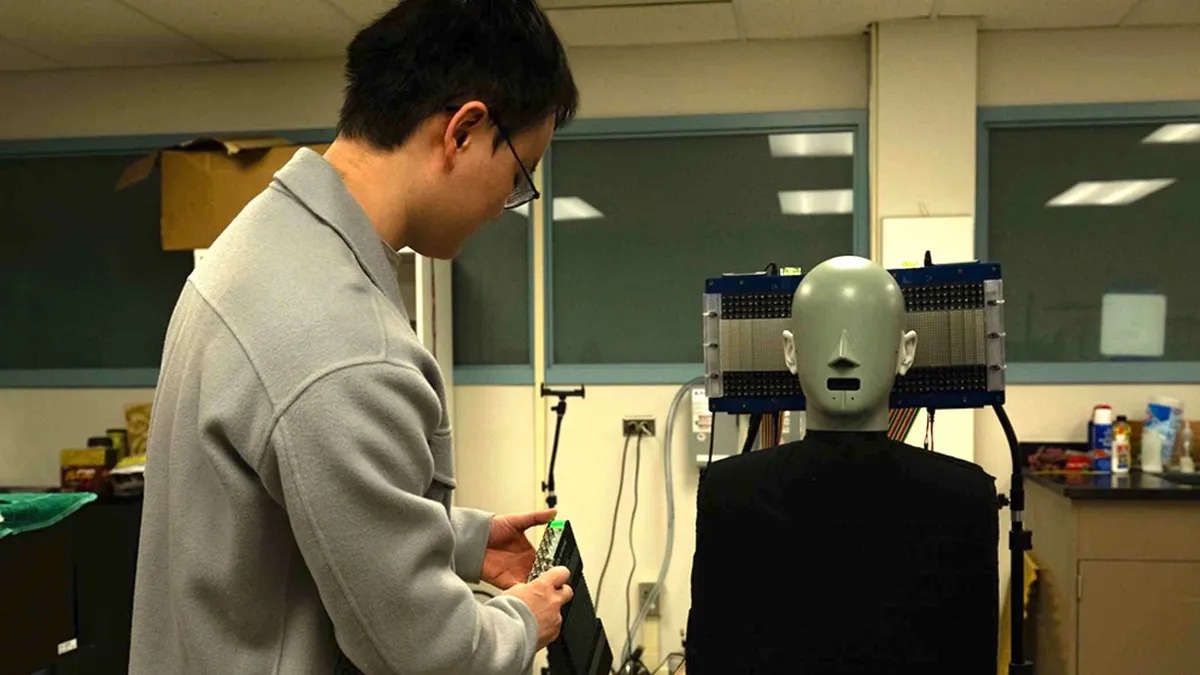
Penn State’s “Audible Enclave” Technology Could Revolutionize Private Listening Without Headphones

We’ve all become accustomed to enjoying music and audio through speakers, relishing the freedom to move around the room or share the experience with others at concerts or movies. But as the world becomes more connected and personal audio listening grows, wireless headphones have become a must-have, allowing us to enjoy audio discreetly without disturbing those around us.

However, what if you could enjoy private audio without the need for headphones, wires, or any wearable devices at all? That’s the innovative promise behind Penn State University’s groundbreaking “Audible Enclave” technology. This new tech uses ultrasonic waves to create pockets of sound that are only audible to someone in a specific location, offering a personal listening experience without the need for headphones or any additional hardware.

Continue reading… “Penn State’s “Audible Enclave” Technology Could Revolutionize Private Listening Without Headphones”

Parsec’s Aero Pro Electric Skateboard Looks Like It Came Straight Out of The Matrix

When it comes to electric skateboards, some brands go for a sleek, retro design that hides the tech underneath, while others fully embrace their futuristic vibes. Parsec’s Aero Pro definitely belongs to the latter category, boasting a design that looks like it was plucked straight from The Matrix.

The Aero Pro features a carbon fiber deck, dual rear-wheel-drive motors, and a high-tech drivetrain that combines cutting-edge materials with serious performance. Built for those who crave the power and style of tomorrow’s tech, the Aero Pro comes equipped with a T800 carbon fiber deck, dual Hobbywing 5250 motors, 7075-T6511 aluminum trucks, S136H steel axles, and 80-mm polyurethane wheels. With a top speed of 27 mph (43 km/h) and the ability to accommodate riders up to 250 lb (113 kg), it’s a board designed to push the limits.

Continue reading… “Parsec’s Aero Pro Electric Skateboard Looks Like It Came Straight Out of The Matrix”

BYD Unveils Ultra-Fast EV Charger That Can Deliver 249 Miles of Range in Just 5 Minutes

A significant hurdle to the widespread adoption of electric vehicles (EVs) has always been the time it takes to recharge them. This week, Chinese EV maker BYD revealed a breakthrough in charging technology with a charger that can recharge an electric vehicle almost as quickly as filling up at a gas station.

While the range of electric vehicles has dramatically improved over the years, most still offer about half the distance per charge compared to a full tank of gas. This limited range, combined with the fact that public charging stations are much less common than gas stations and take much longer to charge vehicles, has contributed to the widespread issue of “range anxiety.” Even though fast chargers can provide 200 miles of range in approximately 15 minutes, the time required to recharge remains a major sticking point for many consumers.

Continue reading… “BYD Unveils Ultra-Fast EV Charger That Can Deliver 249 Miles of Range in Just 5 Minutes”

Star Catcher Industries Achieves Milestone in Space-Based Power Beaming with Successful Demo

Star Catcher Industries has announced a significant achievement in its pursuit of space-based energy transmission, successfully beaming concentrated solar energy over 100 meters to satellite solar arrays on the ground at EverBank Stadium in Florida. The March 21 demonstration marked the first real-world test of the startup’s vision for a space-based power grid, one that eliminates the need for customer satellites to be retrofitted or outfitted with custom receivers.

Based in Jacksonville, Florida, Star Catcher aims to revolutionize energy delivery by harnessing solar power in space and transmitting it wirelessly to Earth. “This demonstration marks the first end-to-end test of our space power beaming technology, proving we can collect and transmit energy with the precision needed for space applications,” said Andrew Rush, co-founder and CEO of Star Catcher. “Today’s success takes us one step closer to eliminating power constraints in space and unlocking new capabilities for satellites and the customers they serve.”

Continue reading… “Star Catcher Industries Achieves Milestone in Space-Based Power Beaming with Successful Demo”

Breakthrough in Thermal Energy Storage Could Revolutionize Renewable Energy Storage

A groundbreaking new technology known as thermal energy storage (TES) is set to transform the future of energy storage. At the heart of this innovation is an advanced thermal emitter that captures heat and converts it into electromagnetic radiation, which is then transformed into electricity through photovoltaic cells. Compared to conventional batteries, this system offers a more scalable and sustainable alternative. If successful, it could pave the way for a more efficient and eco-friendly energy storage solution, potentially replacing existing, less reliable systems.

Renewable energy sources such as solar and wind power hold great promise for reducing our reliance on fossil fuels, but they come with one major obstacle: intermittency. Since these energy sources depend on weather conditions and time of day, their availability is often unpredictable. This unpredictability can lead to instability in power generation, creating challenges for managing electrical grids. To address these fluctuations, large-scale energy storage systems are essential to balance supply and demand.

Continue reading… “Breakthrough in Thermal Energy Storage Could Revolutionize Renewable Energy Storage”