
Trent Fowler is a noted keynote speaker on blockchain, cryptocurrency, and futurism, and he is the co-host of the Futurati Podcast. Reach out here if you’re interested in booking him for your event.
Continue reading… “Don’t understand the blockchain? Watch this!”EP. 94 WITH STEVEN KOTLER

Listen on the Futurati Podcast
Flow is a well-known and valuable psychological state in which time seems to drop away and you become completely immersed in the present moment. Though its usefulness in achieving individual excellence has been studied extensively, much less attention has been paid to how it can aid in cooperation. Well tonight we’re joined by a guest who has tried to fill that gap by writing “The Devil’s Dictionary”, a fascinating novel which also explores topics around climate change, mass extinction, and the future of humanity. Steven Kotler is one of the world’s foremost experts on human peak performance and the New York Times bestselling author of “The Art of Impossible” and “The Rise of Superman”.
Continue reading… “EP. 94 WITH STEVEN KOTLER”DRIVERLESS CARS NEED SMARTER ROADS: A TALE FROM SAN FRANCISCO

As Jonathan Bartlett notes, the recent Frisco foul-up shows the need for roads adapted to include self-driving cars
The future was here, briefly at least. The driverless cars of GM’s autonomous driving unit, Cruise, started charging fares early last month in a limited area in San Francisco. Google’s Waymo also operates driverless cars in Frisco but hasn’t yet started charging fares. With the regulators and the tech media, it certainly seemed like all systems were go:
The era of commercial autonomous robotaxi service is here — Cruise officially became the first company to offer fared rides to the general public in a major city as of late Wednesday. The milestone comes after Cruise received official approval from the California Public Utilities Commission in early June to operate driverless in a commercial capacity.
Initially, Cruise’s driverless autonomous offering will operate only between 10 p.m. and 6 a.m., and only on designated streets in the city.
DARRELL ETHERINGTON, “CRUISE’S DRIVERLESS AUTONOMOUS CARS START GIVING RIDES TO PAYING PASSENGERS” AT TECHCRUNCH (JUNE 24, 2022)
But then, less than a week later,
Continue reading… “DRIVERLESS CARS NEED SMARTER ROADS: A TALE FROM SAN FRANCISCO”Japan Proposes a Wild Concept for Making Artificial Gravity on the Moon

The list of challenges space explorers will face is formidable. They’ll have to produce breathable air, clean water, and food in extremely hostile environments lacking all of the above. They’ll also have to peacefully coexist with small groups of fellow explorers in tight quarters for long periods of time, all while minimizing exposure to the searing radiation that’s ubiquitous virtually anywhere they go.
Assuming explorers overcome these challenges, there’s another that doesn’t get the love it deserves, according to researchers at Japan’s Kyoto University.
Long-term settlement of Earth orbit, the moon, Mars, and beyond requires explorers forsake Earth’s gravity—the steady downward force every Earthly animal has evolved to navigate over billions of years. Studies of astronauts spending weeks or months in microgravity have shown atrophied muscles, bone loss, vision loss, and changes to immune systems. There have, of course, been no studies of humans living on planetary bodies with low-gravity, but it’s likely adult explorers would contend with health issues—and how all this might affect childbirth and normal development in kids is unknown.
Assuming some kind of artificial gravity would lessen these risks considerably, Kyoto University partnered with construction company, Kajima Corp, to explore futuristic concepts that might one day offer tourists and settlers a healthy dose of good ol’ Earth gravity.
Their far-future vision? A towering sci-fi space cone, called the Glass, that would stand 1,312 feet (400 meters) tall and 656 feet (200 meters) across. This habitat would spin around its axis once every 20 seconds so that people living on its inner walls would enjoy Earth gravity—alongside trees, grass, and a lake that would do MC Escher proud. The plans call for spinning habitats on the moon and Mars, where gravity is notably less than on Earth.
In addition to the habitat itself, the three-part proposal, outlined in a press release and video last week, also sketched out a system for transportation between Earth, Mars, and the moon called Hexatrack, which would include standardized vehicles for travel between habitats on the surface of the planet or moon and base stations in orbit.
Continue reading… “Japan Proposes a Wild Concept for Making Artificial Gravity on the Moon”This Dissolvable Implant Could Revolutionize Pain Management
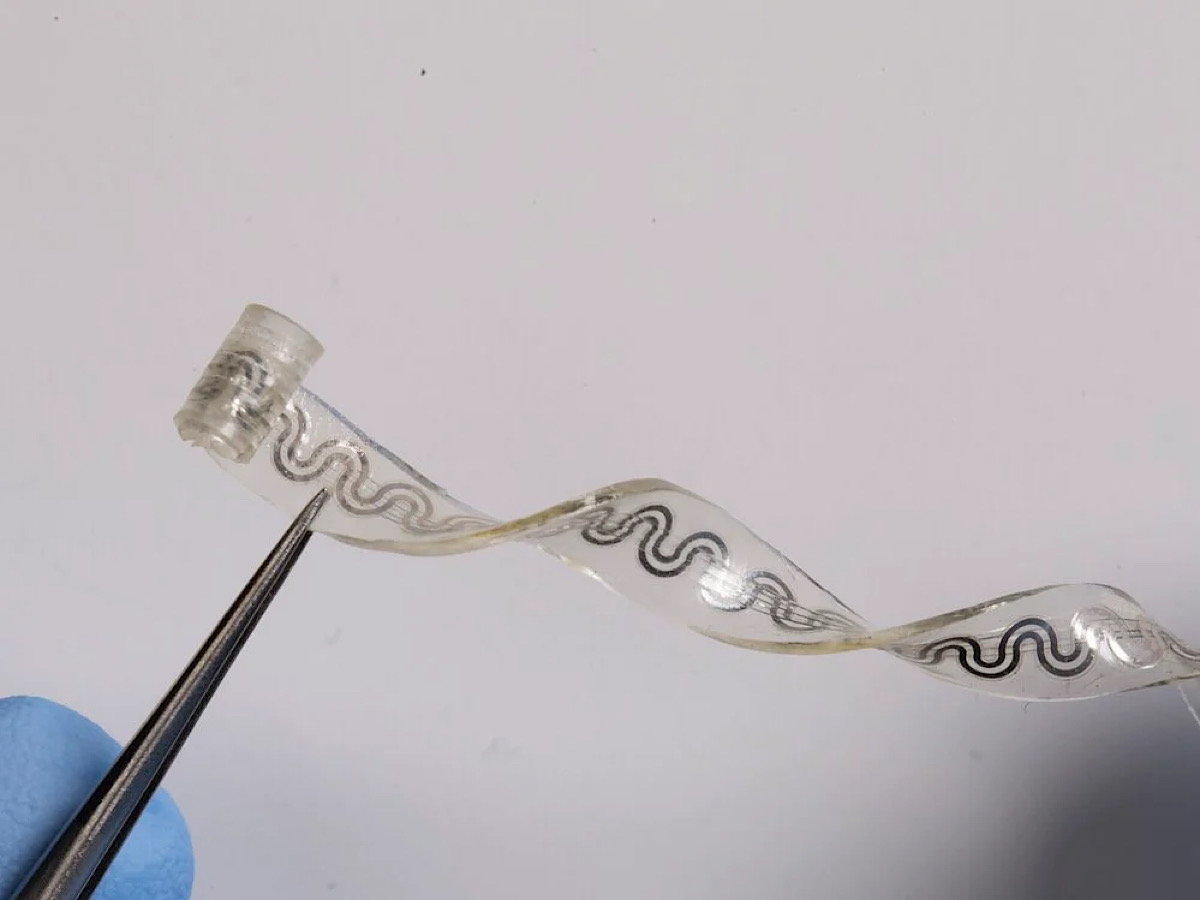
Researchers at Northwestern University created an implantable device that attaches to a nerve to deliver pain relief.
After some success on rats, researchers are hopeful this device could provide humans a more targeted and less addictive alternative to opioids.
Millions of Americans live with pain. While pain can be an important indicator of health, it can also be debilitating, causing fatigue, depression and a decreased quality of life. Researchers from Johns Hopkins University and George Washington University estimated that pain cost the United States $560 billion to $635 billion in 2011.
In the 1990s, pharmaceutical companies claimed they had the answer: opioids. After being assured these drugs were not addictive, doctors prescribed opioids liberally, hoping to relieve their patients’ suffering.
But opioids are highly addictive, and as doctors prescribed more and more, drug abuse escalated. Some patients turned to heroin and synthetic opioids when they couldn’t get ahold of prescription drugs, and between 1999 and 2019, opioid overdoses killed nearly 500,000 people in the U.S. In 2017, the United States Department of Health and Human Services declared the opioid epidemic a public health emergency.
Since discovering the addictive properties of opioids, scientists have been searching for safer alternatives to relieve pain. Biomedical engineer John A. Rogers, of Northwestern University, thinks he may have created one—an implantable, dissolvable device that cools nerves in the body.
Continue reading… “This Dissolvable Implant Could Revolutionize Pain Management”Combining AI and Zebrafish to Accelerate Drug Discovery

As part of our SLAS Europe 2022 coverage, we speak to Dr. Javier Terriente, Co-founder and Chief of Drug Development at ZeClinics, about how zebrafish could be the future for discovering new therapeutics.
Please could you introduce yourself and tell us about your role at ZeClinics?
My name is Javier Terriente, and I have a PhD in molecular biology. I spent 15 years in academia, and in 2013 we founded ZeClinics. I am the co-founder of ZeClinics, but I have also been leading the scientific side of the company. I was the scientific director until a couple of years ago, and today I am the chief of drug development.
Essentially, my role now within the company is to lead our internal drug development programs, and I also help with the implementation of new technologies like artificial intelligence and so on. In a way, I would say that I am the chief innovative officer in the company.
ZeClinics is a contract research organization (CRO) specializing in zebrafish research. Why was ZeClinics founded, and what are some of its core missions and values?
First and foremost, ZeClinics was founded on the basis of our expertise, which we felt could bring something new to the industry. As an academic, I had a lot of experience working with zebrafish. I was very much focused on basic research problems, but we understood from early on that the zebrafish could bring a lot of biological and experimental advantages to the industry that may be useful for drug discovery, target discovery, and understanding the safety of new compounds and more. So, we thought, ‘Why not?’. Why not create a company that can bring that expertise to the industry? Our company started small and has grown to 40 people – and we hope to grow more in the future.
In terms of core missions and values, I would say that our main mission is excellence and quality. We think – and hope – that we are always providing the best scientific output with the best quality, in terms of data management, in terms of scientific quality, and in terms of translatability of the results to humans.
I would say this excellence is what really drives us. The second mission that we have is to accelerate research. Within everything that we do, we seek to get drugs to patients earlier and at the lowest possible cost.
Continue reading… “Combining AI and Zebrafish to Accelerate Drug Discovery”Einride’s Driverless Electric Pod Approved for US Public Roads

The Swedish startup’s electric trucks will carry out a test on public roads in Q3 this year.
By Stephanie MlotStephanie Mlot
Swedish transport company Einride got the green light to operate autonomous electric trucks without a driver present on US public roads.
The National Highway Traffic Safety Administration approved the company’s “Pod” for public roads, which counts as an industry first for this type of driverless truck.
A sleek black-and-white box on wheels, the Einride Pod doesn’t have room for a human driver. Instead, a remote operator monitors and can step in to control the vehicle if necessary. As these are effectively electric trucks and will be transporting heavy goods, it comes as no surprise that the range is estimated to be 124 miles on a fully-charged battery.
Continue reading… “Einride’s Driverless Electric Pod Approved for US Public Roads”JHU Applied Physics Lab’s Dragonfly drone is heading to Saturn’s largest moon

A rendering of JHU APL’s Dragonfly on Saturn’s moon Titan.
NASA’s next bold mission: To put a drone on a moon — the largest moon of Saturn, to be precise.
This week, the U.S. space agency picked a project led by Johns Hopkins Applied Physics Lab (APL) that would send a rotorcraft lander to Titan as the next mission for its New Frontiers Program.
The 10-ft. by 10-ft. robotic lander, called Dragonfly, will have eight rotors and fly like a large UAV. The mission is the first of its kind for NASA, both in the type of vehicle being used to land on another world, and its approach to landing at multiple sites.
Dragonfly will be tasked with exploring dozens of locations across the moon. Titan holds special appeal for scientists, as it’s considered to be the world in our solar system that’s most like Earth, especially the planet’s early development. So with Dragonfly, they’ll look to take measurements and samples with an eye toward exploring how what’s happening there could improve understanding of how life came to inhabit our own planet.
Continue reading… “JHU Applied Physics Lab’s Dragonfly drone is heading to Saturn’s largest moon”This Warehouse Robot Reads Human Body Language
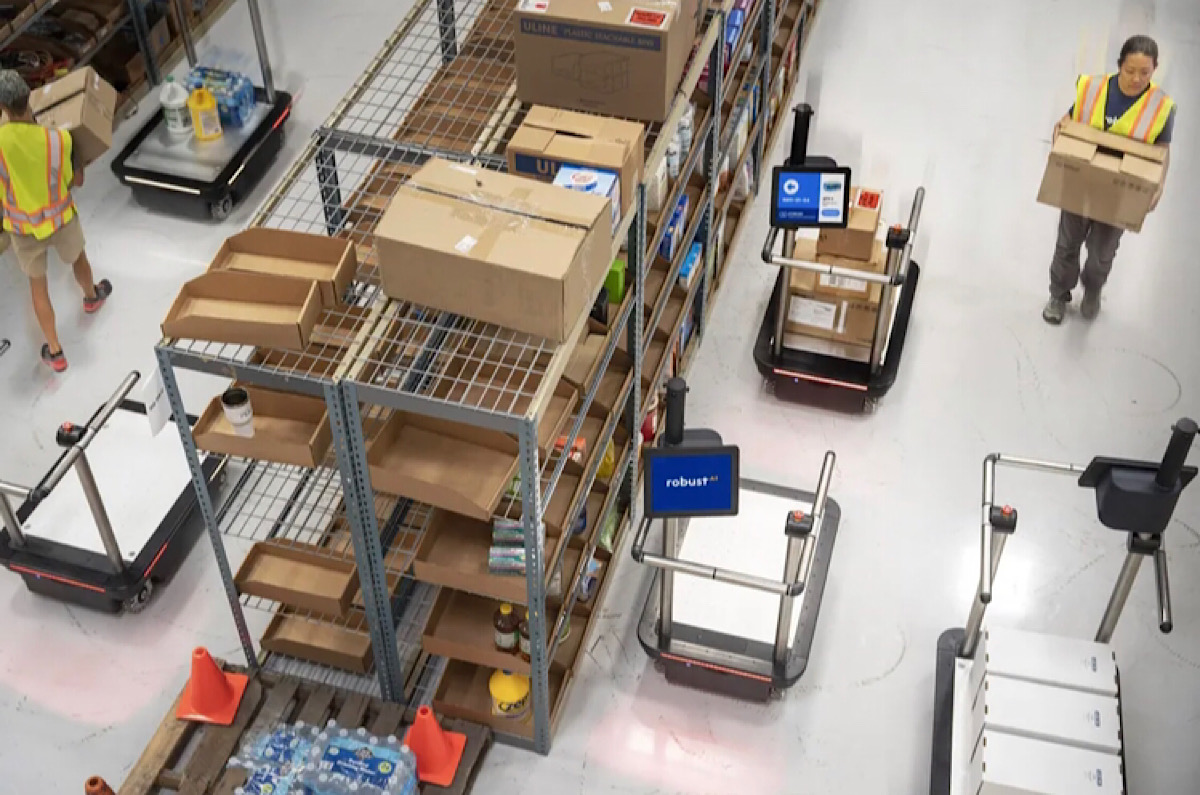
Machines that understand what their human teammates are doing could boost productivity without taking jobs.
RODNEY BROOKS KNOWS a fair bit about robots. Besides being a pioneer of academic robotics research, he has founded companies that have given the world the robot vacuum cleaner, the bomb disposal bot, and a factory robot anyone can program.
Now Brooks wants to introduce another revolutionary type of robot helper—a mobile warehouse robot with the ability to read human body language to tell what workers around it are doing. Robots are increasingly working in close proximity to humans, and finding ways to maximize human-machine teamwork could help companies boost productivity and perhaps lead to new kinds of jobs rather than robots replacing people. But giving robots the ability to read human cues is far from easy.
Brooks’ new company, Robust AI, unveiled its mobile robot, Carter, designed to work in warehouse facilities, last week. “The analogy here is a service dog,” Brooks says via video call. “It obeys you; you can modify its behavior, and it’s there to help you.”
Robust AI’s robot, Carter, looks like the kind of dolly you’d find at a home improvement store, but it has a motorized base, a touchscreen mounted above its handlebar, and a periscope with several cameras. It uses these cameras to scan the surrounding scene, allowing its software to identify workers nearby, and it attempts to infer what they are doing from their pose and how they are moving. If a human worker needs to move several boxes, for example, they can approach a Carter robot moving autonomously and, by grabbing the handlebar, take manual control. The robot can be configured to perform a variety of different tasks using a “no code” graphical interface—for example, to follow a person around a warehouse, carrying items that are picked from shelves.
Continue reading… “This Warehouse Robot Reads Human Body Language”Watch the nuclear-powered flying hotel that can stay airborne for years with 5,000 passengers

A video of ‘Flytanic’ has the internet divided
By Ameya Paleja
A concept video of Sky Cruise, a giant flying machine that can carry 5,000 passengers and has all the luxuries of the world, has gone viral on the internet. The maker of the video claims that such an aircraft built in the future would have no carbon footprint, The Independent reported.
The concept of a floating world in itself is not new and has been described even in Jonathan Swift’s works from the 18th century, much before the Wright Brothers made their first flight. Fans of animated movies might have also come across the concept in 1986 Japanese movie, Castle in the Sky.
While such references in the past have relied on the ‘virtues of materials’ which make up the world to give them such flying powers, the concept, as shown above, borrows from modern-day technology to project a possible future.
Continue reading… “Watch the nuclear-powered flying hotel that can stay airborne for years with 5,000 passengers”Made in Israel: First AI-designed Antibody Could Lead to Eradication of Tumors

A computer may design the perfect antibody to fight cancer in a breakthrough for medicine. Prof. Yanay Ofran explains why testing it on mice can be misleading, and what limits creativity in biotech companies: ‘They’re searching for a new biology and trying to treat it using old technology. We do the opposite.
In recent weeks certain doctors and patients with terminal cancer in Australia have been participating in a highly important experiment. The doctors are injecting the patients with an antibody that they hope will activate a molecule familiarly known as IL-2, which is naturally produced in the human body and can eradicate tumors.
What makes the experiment unusual is that the antibody they’re injecting wasn’t produced by living tissue, but rather by computers in the laboratory of Biolojic Design in Rehovot. The antibody, known as AU-007, is the first to be designed by computer and reach the stage of clinical trials. It evokes keen hopes because if it works, it paves the way for the development of a new kind of drug based on computational biology and big data.
Like practically every drug that enters clinical trials on humans, Biolojic Design’s antibody was first tested on mice. All evinced positive reactions to the treatment. In the 17-day trial period of the study, the antibody led to the complete elimination of the tumors in ten of 19 mice, and significantly inhibited the development of tumors in the nine other mice.
Prof. Yanay Ofran, founder and CEO of Biolojic Design, is keeping his enthusiasm strictly curbed. “We have a joke we tell at conferences. ‘We have great news for all the mice in the audience. We’ve managed to infect and sicken them with 1001 diseases and cure them.’ The lingua franca of the drug development world, the empiric language it uses, is animal studies. You have to show success with an animal trial or you won’t be able to raise money, the regulator won’t let you test it on people, and doctors won’t refer their patients to the trial.”
Continue reading… “Made in Israel: First AI-designed Antibody Could Lead to Eradication of Tumors “AMAZON WILL LAUNCH DRONE DELIVERY FOR CALIFORNIA RESIDENTS WITH PRIME AIR ELIGIBLE ITEMS

Some California residents will begin receiving their Amazon deliveries from drones later this year.
On Monday, Amazon announced it plans to use drones for customer deliveries in Lockeford, California. The move will mark the first time the e-commerce company will use drones to deliver packages to customers in the United States.
The Amazon drones will deliver packages to the backyard of Lockeford, California residents. The area is located around 40 miles south of Sacramento.
Continue reading… “AMAZON WILL LAUNCH DRONE DELIVERY FOR CALIFORNIA RESIDENTS WITH PRIME AIR ELIGIBLE ITEMS”