It’s the year of social media for Super Bowl ads

volkswagen

Advertisers are falling over themselves to get their ads out on YouTube or as part of online contests, like Volkswagen has done this year.

A big social event every year is the Super Bowl.  During this year’s battle pitting the New York Giants against the New England Patriots, getting social will happen on screens and the sofa. (video)

Continue reading… “It’s the year of social media for Super Bowl ads”

Home births in the U.S. rise by 30%

home-births

Home births are still rare in the United States but it is a growing trend.

Jessica Wilcox thinks her in-laws still view her ideas about childbirth as kind of out there, but it’s hard to argue with success: In the last five years or so, Wilcox has given birth to two boys and two girls — each weighing more than 10 pounds — at her northern Virginia home. And she hopes to do it again one or two more times.

Continue reading… “Home births in the U.S. rise by 30%”

iPad can be a pain in the neck: study

ipad

Harvard study finds the iPad is putting a lot of strain on the neck muscles.

A record breaking 15.43 million iPads have been sold by Apple in the last three months of 2011, which means a lot of people are starting to use tablet computers. And with last week’s news that Apple is planning to bring textbooks to the iPad — well, that’s a lot more people who may start to use tablets, too.

Continue reading… “iPad can be a pain in the neck: study”

Health of kids predicts parents’ future heart disease: study

parents

Study found kids’ weight, cholesterol and blood pressure helped predict the odds of a parent developing heart disease, high blood pressure or diabetes over the next three decades.

When children have high cholesterol or blood pressure, their parents may have increased risks of diabetes and heart disease down the road, according to a new study.

Continue reading… “Health of kids predicts parents’ future heart disease: study”

Scientists create first atomic X-ray laser

atomic xray laser 234234

A powerful X-ray laser pulse from SLAC National Accelerator Laboratory’s Linac Coherent Light Source comes up from the lower-left corner (shown as green) and hits a neon atom (center). This intense incoming light energizes an electron from an inner orbit (or shell) closest to the neon nucleus (center, brown), knocking it totally out of the atom (upper-left, foreground). In some cases, an outer electron will drop down into the vacated inner orbit (orange starburst near the nucleus) and release a short-wavelength, high-energy (i.e. “hard”) X-ray photon of a specific wavelength (energy/color) (shown as yellow light heading out from the atom to the upper right along with the larger, green LCLS light).

Scientists working at the U.S. Department of Energy’s (DOE) SLAC National Accelerator Laboratory have created the shortest, purest X-ray laser pulses ever achieved, fulfilling a 45-year-old prediction and opening the door to a new range of scientific discovery.

The researchers, reporting in Nature, aimed SLAC’s Linac Coherent Light Source (LCLS) at a capsule of neon gas, setting off an avalanche of X-ray emissions to create the world’s first “atomic X-ray laser.”
“X-rays give us a penetrating view into the world of atoms and molecules,” said physicist Nina Rohringer, who led the research. A group leader at the Max Planck Society’s Advanced Study Group in Hamburg, Germany, Rohringer collaborated with researchers from SLAC, DOE’s Lawrence Livermore National Laboratory and Colorado State University…

Continue reading… “Scientists create first atomic X-ray laser”

Internet is our main source of memory instead of our own brains

google

Our brains are being boggled by Google.

Our main source of memory is coming from the internet instead of our own brains, a study has concluded.  In the age of Google, our minds are adapting so that we are experts at knowing where to find information even though we don’t recall what it is.

Continue reading… “Internet is our main source of memory instead of our own brains”

Pacemaker under tongue may stop snoring

snoring

The Hypoglossal Nerve Stimulation System, works by stimulating the nerve which controls the muscles of tongue.

Scientists have come up with a new pacemaker-style device which they claim when implanted underneath one’s tongue could help stop snoring. A team claims that the new implant, called the Hypoglossal Nerve Stimulation System, works by stimulating the nerve which controls the muscles of tongue, thus helping reduce the severity of sleep apnoea, a major cause of snoring.

Continue reading… “Pacemaker under tongue may stop snoring”

11 amazing whiz kid inventors

Kid-inventors1

Inventor kids

You probably think  kids are only good at inventing excuses to avoid chores, but think again. These teens and tweens are the minds behind some revolutionary products from household staples, Philo Farnsworth’s electronic television to cool niche novelties magnetic locker wallpaper to an entire method of communicating braille.

Continue reading… “11 amazing whiz kid inventors”

The Pirate Bay Says Downloading Actual Products Is Next

makerbot objects 342342

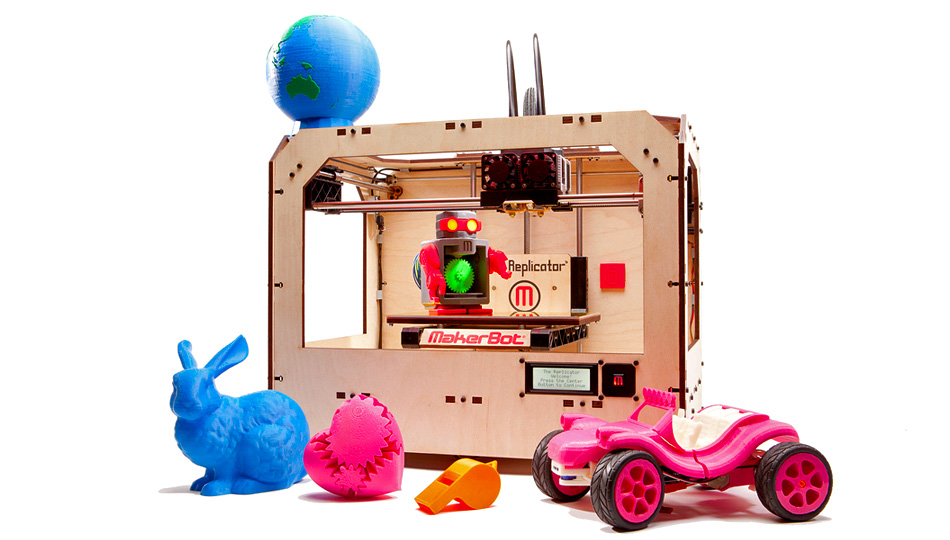
Any moron can download a movie or album—but torrenting a new pair of jeans? That’s the future right there. At least according to Swedish anti-copyright royalty The Pirate Bay, which declared physical objects to be their next bounty.

Or, “physible,” as they’re calling it for some reason. But nevermind that. The Pirate Bay is committed to a (rather lofty) vision of the future…

Continue reading… “The Pirate Bay Says Downloading Actual Products Is Next”