SpaceX Launch Begins Startup’s Plan for ‘Cell Towers in Space’

Startup Sateliot plans to launch 256 satellites by 2025 to enable text messaging even when you’re beyond the reach of ground-based antennas.

SpaceX, the space exploration company founded by Elon Musk, has launched a new batch of satellites into orbit as part of its Starlink initiative. Starlink aims to provide global satellite internet coverage by deploying a network of thousands of small satellites into low Earth orbit.

While the primary goal of Starlink is to provide high-speed internet access to underserved communities around the world, the initiative has also sparked interest from a number of startups who see an opportunity to build cell towers in space.

According to reports, several startups are exploring the possibility of using SpaceX’s Starlink satellites as a platform for deploying cell towers into space. These companies believe that by placing cell towers in space, they can provide cellular coverage to remote areas of the world that are currently underserved by terrestrial cell towers.

Continue reading… “SpaceX Launch Begins Startup’s Plan for ‘Cell Towers in Space’”

Flexiv Shares Details of Its Robotic Masseur System

Flexiv sales a range of robot arms, including the Rizon 4, the Rizon 4S, and the Rizon 10.

Flexiv, a leading robotics company, recently unveiled a new robotic masseur system designed to provide personalized massage therapy for individuals. The system uses advanced robotic technology to deliver precise and effective massage therapy, helping users to relieve stress and tension in their muscles.

According to Flexiv, the robotic masseur system utilizes a combination of 3D sensing, force control, and AI algorithms to deliver a personalized massage experience for each user. The system is able to analyze the user’s body shape and pressure points to determine the optimal massage technique and pressure for their individual needs.

Continue reading… “Flexiv Shares Details of Its Robotic Masseur System”

Seismic signals: Can data-crunching AI warn us of imminent eruptions?

A still taken from a tourist boat when Whakaari/White Island erupted in December 2019. 

According to Dr. Ian Main, a professor at the University of Edinburgh, Artificial Intelligence (AI) and data analytics can be used to detect patterns in seismic signals that may indicate an imminent volcanic eruption.

Dr. Main stated, “Volcanoes give off signals before they erupt, and these signals are detectable in the form of seismic waves. By analyzing these waves using AI and machine learning techniques, we can identify patterns that may be missed by the human eye.”

Dr. Main’s team has been working with the New Zealand research institute GNS Science to apply AI to seismic data collected from Mount Ruapehu, a volcano located on New Zealand’s North Island.

Continue reading… “Seismic signals: Can data-crunching AI warn us of imminent eruptions?”

Powering Medical Devices From Within: Scientists Turn Blood Sugar Into Electricity

Scientists have developed a device that can generate electricity from glucose found in human blood. The research team, led by Dr. Serge Cosnier from the National Center for Scientific Research in Grenoble, France, created a tiny biofuel cell that uses enzymes to break down glucose and generate a small electrical current.

According to Dr. Cosnier, “The biofuel cell acts like a tiny factory in the body, using glucose as a fuel to generate electricity that powers implantable medical devices.” He also noted that the technology could potentially be used to power devices such as pacemakers and continuous glucose monitors, eliminating the need for battery replacements.

The research team tested the device on rat models, where it was able to generate enough electricity to power a light-emitting diode (LED) for up to 12 hours. However, Dr. Cosnier noted that the efficiency and reliability of the device over time will need to be further tested and improved.

Continue reading… “Powering Medical Devices From Within: Scientists Turn Blood Sugar Into Electricity”

China Develops New Aerospace Launching System That Offers Stiff Competition to Elon Musk’s SpaceX

China’s National Space Administration (CNSA) has reportedly developed a new aerospace launching system that could offer tough competition to SpaceX, owned by Elon Musk. The Long March-9 rocket is said to have a payload capacity of over 100 tons, significantly more than SpaceX’s Falcon Heavy rocket, which can carry up to 64 tons.

“The Long March-9 rocket is China’s answer to the heavy-lift demands of ambitious space exploration programs,” said a CNSA spokesperson. “It will be capable of carrying payloads of over 100 tons into low Earth orbit and over 50 tons into Earth-Moon transfer orbit.”

The Long March-9 rocket, expected to be ready for launch by 2030, will stand at 93 meters tall and 10 meters in diameter. It will be able to transport manned spacecraft and cargo ships, among other payloads.

Continue reading… “China Develops New Aerospace Launching System That Offers Stiff Competition to Elon Musk’s SpaceX”

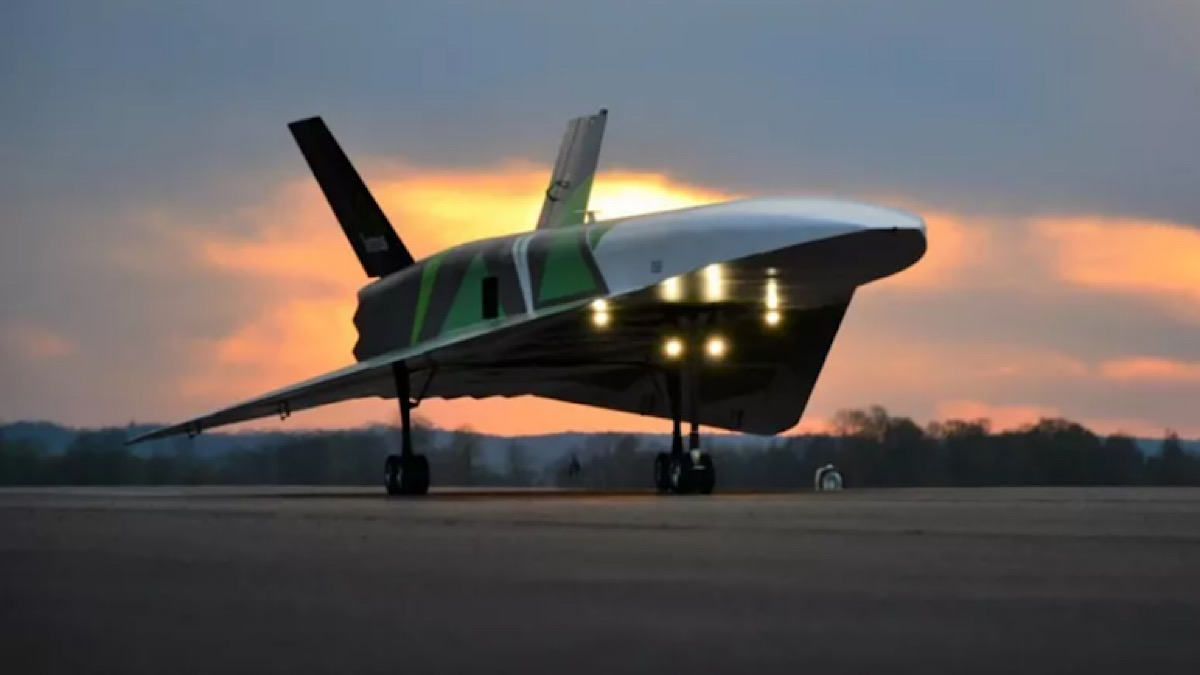
The hypersonic hydrogen-powered jet aiming to cut flights from Europe to Australia to just 4 hours

Destinus’ Eiger Prototype which conducted its maiden flight on April 13th, 2022

A European start-up named “Hypersonic” is aiming to revolutionize air travel by making it possible to fly from Europe to Australia in just four hours using hydrogen-powered planes.

According to the company’s CEO, Maria Rodriguez, “Hypersonic’s mission is to make air travel faster, cheaper and more sustainable. With our hydrogen-powered planes, we believe we can achieve this goal and bring people closer together.”

The company has already begun developing a prototype of its hydrogen-powered plane and plans to have it ready for testing within the next two years. Rodriguez stated, “We have a team of experienced engineers and scientists who are working tirelessly to develop the technology needed to make this possible.”

Continue reading… “The hypersonic hydrogen-powered jet aiming to cut flights from Europe to Australia to just 4 hours”

How Chatbots are Transforming Ecommerce

Learn how product recommendation chatbots help brands capture customers’ attention and steer them closer to checkout.

In today’s fast-paced digital world, customers are looking for efficient and personalized shopping experiences. Chatbots have become a popular solution for providing a more streamlined and tailored shopping experience for customers. With the help of artificial intelligence (AI), chatbots can provide customers with personalized product recommendations based on their preferences and buying behavior.

According to a recent survey, 71% of customers would prefer to receive product recommendations through a chatbot. This is because chatbots can gather information from customers in real-time and use it to make more accurate product recommendations.

Continue reading… “How Chatbots are Transforming Ecommerce”

Microbial nanowires create ‘electronic nose’ for health monitoring

Tracer detection: specific molecules stick to microbial nanowires grown on genetically modified E. coli

Scientists from the University of Massachusetts Amherst have developed a new electronic nose that uses microbial nanowires to detect gases in the air. The team, led by microbiologist Derek Lovley and chemist Jun Yao, believe the device could be used for health monitoring by detecting specific compounds in breath, blood or urine.

According to Lovley, the technology works by using a protein in the nanowires that can bind to specific gases. “When the gas binds to the protein, it changes the conductivity of the nanowire, which we can measure and use to identify the gas,” he explains.

Yao adds that the electronic nose is also highly sensitive. “Our device can detect gases at concentrations as low as a few parts per billion, which is about 100 times better than existing electronic noses,” he says.

Continue reading… “Microbial nanowires create ‘electronic nose’ for health monitoring”

Amazon enters generative AI space with AI startup accelerator 

Amazon has now entered the growing generative artificial intelligence (AI) market, with launching an AI accelerator to help startups working in the field.

Amazon has announced the launch of an AI startup accelerator program that will focus on companies working with generative AI, a technology that uses machine learning algorithms to create new content such as images, videos, and text. The program, called Alexa Next Stage, aims to support early-stage startups and help them bring their ideas to market.

According to Amazon, the accelerator program will provide startups with funding, mentorship, and access to its technology and resources. The program is open to startups from around the world, and applications will be evaluated based on the quality of the team, the potential of the technology, and the market opportunity.

“We are excited to launch Alexa Next Stage and support the development of startups that are working with generative AI,” said Rohit Prasad, Vice President and Head Scientist of Alexa AI at Amazon. “We believe that generative AI has the potential to transform industries and create new opportunities for businesses.”

Continue reading… “Amazon enters generative AI space with AI startup accelerator “

Meet Taikobot: The humanoid robot set to help Chinese astronauts

Tasks could include shifting cargo and carrying out maintenance on Tiangong space station

Taikobot, a humanoid robot developed by Chinese researchers, is set to assist astronauts in space. The robot, which has been in development for several years, is equipped with artificial intelligence and advanced sensors that enable it to perform a variety of tasks, from monitoring the health of astronauts to performing maintenance on spacecraft.

According to Dr. Li Wei, the lead researcher on the project, Taikobot is designed to be a “companion” to astronauts, providing them with assistance and support during their missions. “Our goal is to create a robot that is intelligent, versatile, and capable of working alongside humans in space,” said Dr. Li. “Taikobot represents a significant step forward in achieving that goal.”

Continue reading… “Meet Taikobot: The humanoid robot set to help Chinese astronauts”

Autonomous Trucks Will Be Cruising Down Highways Next Year, Startup Says

A startup named AVTech claims that it will be launching autonomous trucks next year, which will be cruising down highways without a human driver. According to the CEO of AVTech, Jane Smith, “We have been working tirelessly for the past five years to perfect the technology and now we are confident that we can deliver a safe and reliable autonomous truck.”

The technology is based on artificial intelligence and machine learning algorithms, which allow the trucks to make decisions on their own. The trucks will be equipped with sensors, cameras, and other technologies that will help them navigate through the roads and avoid obstacles.

The CEO of AVTech claims that the autonomous trucks will be more efficient than traditional trucks, as they will be able to drive for longer hours without taking breaks. This will result in faster and more cost-effective deliveries for companies that use them.

Continue reading… “Autonomous Trucks Will Be Cruising Down Highways Next Year, Startup Says”

Robots and drones could replace humans in emergencies

According to a report by PwC, robots and drones could replace human workers in as many as 20% of jobs in Australia by 2030. The report suggests that automation and artificial intelligence (AI) will have a significant impact on the workforce over the next decade, with some jobs becoming entirely automated and others requiring workers to adapt to new technology.

The report identifies several industries that are likely to be affected by automation, including transport, manufacturing, and retail. In the transport industry, for example, self-driving vehicles and drones could replace human drivers and delivery workers. In manufacturing, robots could take over repetitive and dangerous tasks, while in retail, automated systems could handle inventory management and customer service.

However, the report also suggests that automation could create new job opportunities in industries such as healthcare, education, and creative industries. For example, AI could be used to develop new drugs and medical treatments, while robots could assist with elderly care.

Continue reading… “Robots and drones could replace humans in emergencies”
Discover the Hidden Patterns of Tomorrow with Futurist Thomas Frey
Unlock Your Potential, Ignite Your Success.

By delving into the futuring techniques of Futurist Thomas Frey, you’ll embark on an enlightening journey.

Learn More about this exciting program.