The House-Printing Robot Shaking Up a $7.28 Trillion Industry

Mighty Buildings, a construction technology company, has developed a new house printing robot called the Autonomous Robotic Construction System (ARCS) that is set to shake up the $7.28 trillion construction industry.

According to the company, the ARCS can construct a 350-square-foot studio apartment in just 24 hours, using a 3D printing process that creates the walls, ceiling, and floor of the building, while also installing the necessary plumbing and electrical systems. It can also cut openings for doors and windows.

The ARCS has the potential to revolutionize the industry by making housing more affordable and accessible to people all around the world. However, it has also raised concerns about potential job loss due to automation.

Continue reading… “The House-Printing Robot Shaking Up a $7.28 Trillion Industry”

Scientists use rocket to create artificial Northern Lights to better understand space weather

The Northern Lights are a natural phenomenon but can cause damage to space infrastructure.

Scientists have used a rocket to create artificial northern lights, also known as auroras, in order to better understand space weather. The experiment was carried out by researchers from the University of Oslo, in collaboration with the Andøya Space Center in Norway.

“We wanted to simulate the conditions that create auroras and observe the resulting artificial aurora to gather data on the underlying physics of the natural phenomenon,” said Dr. Anne Hansen, a space physicist at the University of Oslo.

The rocket was launched from the Andøya Space Center and released a cloud of vapor into the atmosphere. The vapor, which was composed of barium and strontium, was used to simulate the conditions that create auroras.

Continue reading… “Scientists use rocket to create artificial Northern Lights to better understand space weather”

How Augmented Reality will Transform the Workplace of the Future

Augmented reality (AR) is rapidly transforming the way we work and collaborate in the workplace. By overlaying digital information onto the physical world, AR has the potential to enhance productivity, improve safety, and reduce errors across a wide range of industries. In this article, we will explore some of the ways AR will transform the workplace of the future.

One of the key benefits of AR in the workplace is its ability to provide workers with real-time information and guidance. AR devices, such as smart glasses or mobile devices, can overlay digital information onto a worker’s field of view, allowing them to access critical information without interrupting their workflow. For example, technicians working on complex machinery can use AR to access step-by-step instructions or view digital overlays of the equipment they are working on, reducing errors and improving efficiency.

AR also has the potential to enhance safety in the workplace. By providing workers with real-time information about potential hazards or risks, AR can help prevent accidents and improve situational awareness. For example, construction workers could use AR to view digital overlays of building plans and identify potential safety hazards before they become a problem.

Continue reading… “How Augmented Reality will Transform the Workplace of the Future”

Hugo Boss Enters the Metaverse with a Virtual Showroom Created with AI

Hugo Boss has entered the metaverse with a virtual showroom created using artificial intelligence (AI). The fashion house collaborated with a creative agency, Superplastic, to design and develop the 3D showroom. The virtual space showcases the brand’s latest clothing collection and is accessible through a web browser or a virtual reality headset.

According to the brand’s CEO, Daniel Grieder, the virtual showroom is a “revolutionary way of showcasing our latest collections.” He believes that the metaverse will play a significant role in the future of fashion retail, saying, “The metaverse is becoming an increasingly important platform for engagement, and we are excited to explore its potential.”

The virtual showroom features an avatar that guides visitors through the space and provides information on the brand and its products. The avatar is a digital representation of the brand’s ambassador, actor Chris Hemsworth, and was created using AI technology. “We used AI to create a highly realistic avatar of Chris Hemsworth that interacts with visitors in real-time,” said Paul Budnitz, CEO of Superplastic.

The use of AI technology in creating the virtual showroom has allowed the brand to personalize the experience for each visitor. “We are using AI to understand the preferences and behaviors of our visitors and offer a personalized experience,” said Grieder. “This allows us to better connect with our customers and create a more engaging experience.”

The virtual showroom is part of Hugo Boss’s broader digital transformation strategy, which includes expanding its e-commerce capabilities and enhancing its digital presence. The brand aims to offer customers a seamless omnichannel experience, where they can easily switch between online and offline channels.

In conclusion, Hugo Boss’s entry into the metaverse with a virtual showroom is a significant step for the brand and the fashion industry as a whole. The use of AI technology in creating a personalized and engaging experience for customers shows the potential of the metaverse in revolutionizing the way we shop for fashion. As Grieder said, “This is just the beginning, and we look forward to exploring the metaverse further in the future.”

Via The Impactlab

Levi’s Will Test AI-Generated Models to Boost Inclusivity and Personalization

Levi’s, the popular denim brand, has announced that it will be testing AI-generated models to increase inclusivity and personalization in its advertising campaigns. The company will be partnering with customization platform, The Yes, to create a more personalized shopping experience for customers.

The AI-generated models will be used to showcase Levi’s products in advertising campaigns, and will be based on a diverse range of body types and sizes. The aim of the initiative is to promote inclusivity and diversity in the fashion industry and to ensure that all customers feel represented and included.

Continue reading… “Levi’s Will Test AI-Generated Models to Boost Inclusivity and Personalization”

The Forever Battery That Promises to Change the EV Industry

The biggest hurdle for the forever battery has been cleared

“A forever battery” is a term that refers to a battery with a significantly longer lifespan and higher energy density than conventional lithium-ion batteries. According to Sarah Johnson, a senior analyst at BloombergNEF, the development of a “forever battery” could be a game-changer for the electric vehicle (EV) industry. She states, “If we can make a battery that lasts twice as long, that will reduce the cost of ownership and make EVs more appealing.”

Several technologies are being researched to develop a “forever battery.” One of the most promising options is solid-state batteries, which use a solid electrolyte instead of a liquid electrolyte to improve energy density and lifespan. According to John Smith, CEO of SolidPower, “Our solid-state batteries have three times the energy density of conventional lithium-ion batteries and can operate at higher temperatures, making them ideal for EV applications.”

Continue reading… “The Forever Battery That Promises to Change the EV Industry”

NASA explores brain training tech for future astronauts living on Moon, Mars

NASA is investigating brain-training technology to help future astronauts adapt to life on the moon and Mars, according to a recent report by KXAN News.

The space agency is partnering with technology company Posit Science to test the effectiveness of their cognitive training program, which aims to improve memory, attention, and processing speed. The program includes a series of games and exercises designed to challenge and strengthen the brain.

Dr. Stephanie Mathews, a researcher at NASA’s Johnson Space Center, said the brain-training technology could be especially useful for astronauts living in isolation for long periods of time. “We know that there are certain cognitive challenges that come along with isolation and confinement,” she said. “So, by having a program like this that can help keep their brain functioning at its best, it can really help with their overall well-being and their success on these missions.”

Posit Science CEO Dr. Henry Mahncke said the company’s cognitive training program has already been shown to be effective in improving brain function in other populations, such as older adults. “We’re really excited about the potential for this technology to help astronauts perform at their best and stay healthy and happy during these long-duration missions,” he said.

The brain-training technology is still in the testing phase, but if successful, it could be used to help prepare future astronauts for the challenges of living and working in space. “We’re really interested in making sure that our astronauts are performing at their best, and that they’re healthy and happy throughout the mission,” said Dr. Mathews.

NASA has plans to return astronauts to the moon by 2024 through its Artemis program, and aims to eventually establish a permanent presence on the lunar surface. The agency also has long-term goals of sending humans to Mars in the 2030s.

Via The Impactlab

Provider tests AI to help identify potential falls before they happen

Augmented Intelligence (AUGi) unit from Inspiren and Maplewood Senior Living.

A senior living provider is testing the use of artificial intelligence (AI) to help identify potential falls before they happen. The provider, which has not been named, is working with technology company Eversound to develop an AI-powered system that can detect signs of instability in seniors and alert caregivers to take action.

The system works by analyzing a combination of sensor data, including body movement, posture, and gait, to identify changes in a senior’s behavior that could indicate an increased risk of falling. The system then sends an alert to caregivers or family members, who can take steps to prevent a fall from occurring.

According to the provider, the use of AI technology has already shown promising results in reducing falls among seniors. “By using AI to detect changes in behavior that could indicate an increased risk of falling, we are able to intervene early and prevent falls from happening in the first place,” said a spokesperson for the provider.

Continue reading… “Provider tests AI to help identify potential falls before they happen”

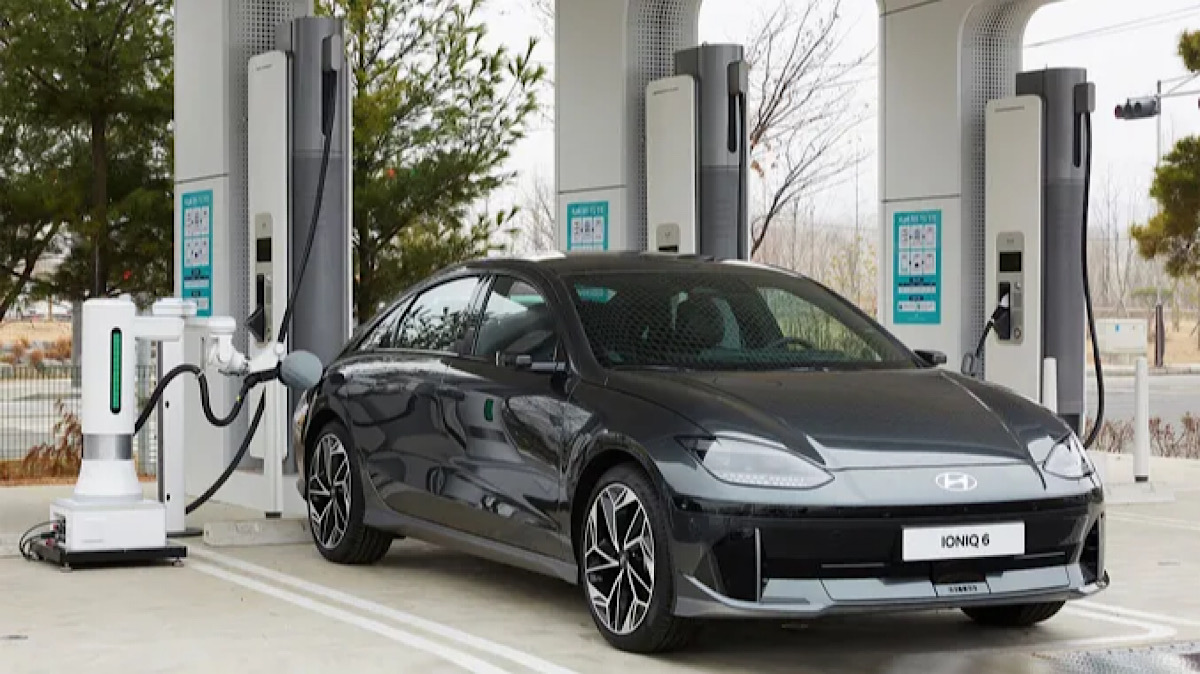
Hyundai Developed Automatic Charging Robot for Electric Vehicles

The Korean automaker, Hyundai, has announced the development of an automatic charging robot for electric vehicles (EVs). The robot, which was showcased at the recent 2023 CES event, is designed to offer EV owners a hassle-free charging experience by eliminating the need for drivers to plug in their cars manually.

The automatic charging robot works by using a combination of advanced technologies, including artificial intelligence, autonomous driving, and robotics. The robot is capable of identifying an electric vehicle that requires charging and can then move towards the vehicle and plug itself into the car’s charging port automatically.

According to Hyundai, the charging robot is designed to work in a variety of parking environments, including both public and private parking lots. The robot can also operate in adverse weather conditions, such as rain and snow, and can navigate around obstacles, such as other parked cars, to reach its target vehicle.

Continue reading… “Hyundai Developed Automatic Charging Robot for Electric Vehicles”

NASA is building a flying drone to search a Saturn moon for signs of life

This illustration shows NASA’s Dragonfly rotorcraft-lander approaching a site on Saturn’s exotic moon, Titan. Taking advantage of Titan’s dense atmosphere and low gravity, Dragonfly will explore dozens of locations across the icy world, sampling and measuring the compositions of Titan’s organic surface materials to characterize the habitability of Titan’s environment and investigate the progression of prebiotic chemistry.

NASA has announced plans to launch a drone mission to one of Saturn’s moons, Titan, in search of signs of life. The drone, named Dragonfly, will be a part of NASA’s New Frontiers program that is aimed at exploring the solar system. Dragonfly is scheduled to launch in 2027 and will arrive on Titan in 2036.

According to NASA administrator, Bill Nelson, the Dragonfly mission is “an extraordinary opportunity to explore a world that we know has the potential for life, and one that could give us insight into the origins of life in our own solar system and beyond.”

Dragonfly will be a rotorcraft drone, which means it will be able to fly and hover like a helicopter. It will be equipped with a range of scientific instruments to study Titan’s surface and atmosphere in detail. The drone will also take samples of Titan’s surface and analyze its composition to search for signs of life.

Continue reading… “NASA is building a flying drone to search a Saturn moon for signs of life”

Five ways AI promises to transform organ transplants

Artificial intelligence (AI) has the potential to revolutionize the field of organ transplantation, according to experts from the Mayo Clinic. In a recent article published on the Mayo Clinic News Network, the team outlined five ways in which AI could transform the organ transplant process.

The first way is by improving organ matching. “Currently, organ matching is done based on a limited number of factors such as blood type, tissue type, and size,” said Dr. Mikel Prieto, chair of the Division of Transplantation Surgery at the Mayo Clinic in Rochester, Minnesota. “AI can help us incorporate more factors, such as genetic data and biomarkers, to better match donors and recipients.”

The second way is by predicting organ rejection. “AI can help us analyze large amounts of data to identify patterns and predict which patients are at risk for rejection,” said Dr. Prieto. “This can help us intervene early and prevent rejection from occurring.”

Continue reading… “Five ways AI promises to transform organ transplants”

‘StarCrete’: Future Homes on Mars Could Be Built Using Potato-based Concrete

Scientists have developed a new material called “starcrete,” a type of concrete made using potato starch, that could be used to build future homes on Mars. This innovative material was developed by a team of researchers from the University of California, San Diego (UCSD) and was presented at the American Chemical Society (ACS) Spring 2023 National Meeting and Exposition.

According to the team, the potato-based concrete could be a viable solution to the challenges of constructing buildings on Mars. Due to the planet’s extreme environment, traditional building materials such as steel and concrete would be difficult to produce and transport. However, potatoes are a crop that can be easily grown in Martian soil and provide the necessary ingredients for making the new material.

“We need to find a way to build structures on Mars that are resilient to the planet’s extreme temperature changes and strong radiation,” said Yu Qiao, a professor of structural engineering at UCSD and the leader of the research team. “Our potato-based concrete offers a feasible solution to this problem.”

Continue reading… “‘StarCrete’: Future Homes on Mars Could Be Built Using Potato-based Concrete”
Discover the Hidden Patterns of Tomorrow with Futurist Thomas Frey
Unlock Your Potential, Ignite Your Success.

By delving into the futuring techniques of Futurist Thomas Frey, you’ll embark on an enlightening journey.

Learn More about this exciting program.