Self-Driving Car Companies Zoom Ahead, Leaving U.S. Regulators Behind

Cruise, Tesla, Alphabet Inc’s Waymo and Aurora Innovation Inc are among many companies aiming to deploy fully autonomous vehicle technology in the United States within the next two to three years.

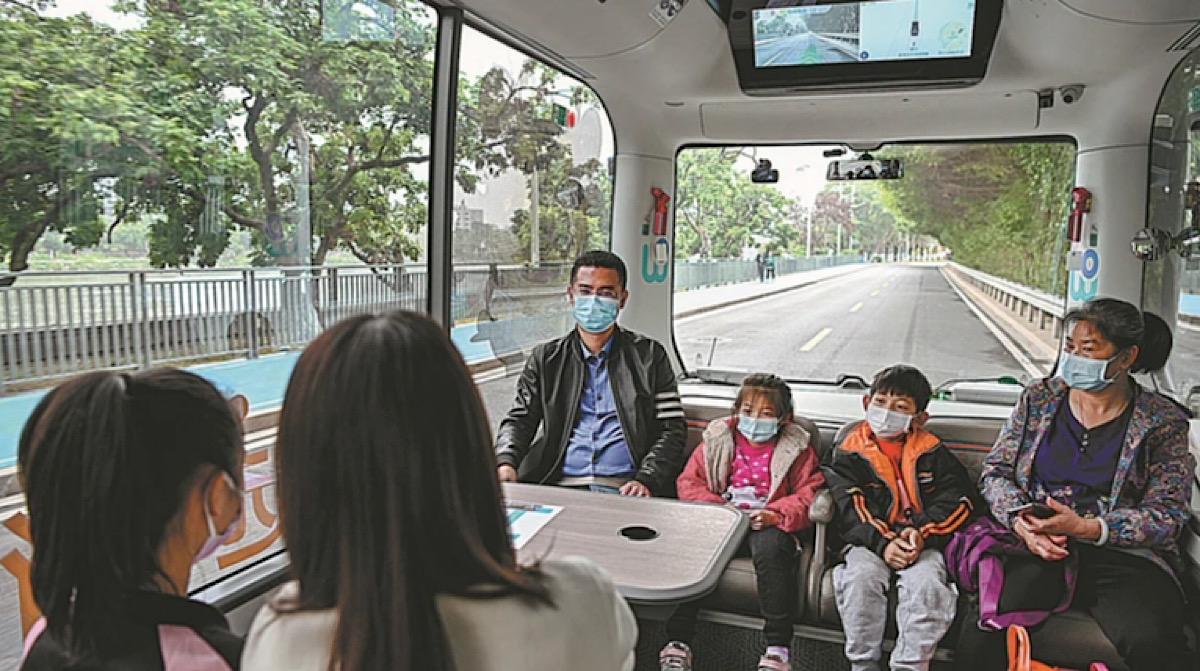
Self-driving vehicle companies from Tesla Inc to General Motors Co’s Cruise are racing to start making money with their technology, outrunning efforts by regulators and Congress to write rules of the road for robot-driven vehicles. On Tuesday, Cruise said that SoftBank Group Corp will invest another $1.35 billion in anticipation of Cruise launching commercial robo-taxi operations. Cruise needs one permit, from California’s Public Utilities Commission, to start charging for rides around San Francisco in vehicles with no human driver.

Cruise, Tesla, Alphabet Inc’s Waymo and Aurora Innovation Inc are among many companies aiming to deploy fully autonomous vehicle technology in the United States within the next two to three years, whether or not federal regulators give them a clear legal framework for doing so. Autonomous vehicle (AV) startups and automakers are under pressure to start generating revenue from billions of dollars of engineering investment over the past decade.

Proposed legislation to create a national framework of rules to govern autonomous vehicles remains stalled in Congress, despite the industry’s lobbying. That has left autonomous vehicle companies free to deploy robo-taxis or self-driving trucks in some states, such as Arizona and Texas, but not in others. Waymo has provided thousands of rides in driverless robo-taxis in Phoenix, though the service remains limited.

Continue reading… “Self-Driving Car Companies Zoom Ahead, Leaving U.S. Regulators Behind”

SNAPCHAT’S FLYING CAMERA

Snap takes another stab at hardware with a selfie drone called Pixy

By Alex Heath

MoreMore than five years after it released Spectacles, Snap is back with a second hardware product. And this time it flies.

Yes, Snap made a drone. Called Pixy, the small yellow puck takes off from your hand, follows you around, and captures video that can be sent back to Snapchat. It’s Snap’s attempt at making a drone that’s friendlier and more approachable than other products on the market — and it may hint at the more advanced, AR-powered future Snap is building toward.

Pixy is available online for $230 in the US and France starting Thursday. Unlike most existing drones, it’s small and light enough to fit in a pant pocket. There isn’t a controller; it takes off from and lands on an outstretched palm, and it uses six pre-programmed flight patterns that are accessible through a dial on the top of the device.

Why on earth would Snap, which primarily operates an ephemeral messaging app, make a selfie drone? It’s the first question I pose to CEO Evan Spiegel.

“Because we’re a camera company,” he tells me recently over video chat. Snap has brandished that tagline since 2016 when the company changed its name from Snapchat to Snap and released its first pair of Spectacles. “Our mission is to empower people to express themselves, live in the moment, learn about the world, and have fun together. And this product does exactly that.”

Continue reading… “SNAPCHAT’S FLYING CAMERA”

Space Startup Aims to Build Space Hotel With Artificial Gravity by 2025

An illustration of the Pioneer-class space station, which is designed to have five modules built around a gravity ring.

By Passant Rabie

The Pioneer-class stations are designed to accommodate 28 guests for up to two weeks.

Orbital Assembly Corporation announced plans to develop a space business park, complete with artificial gravity, that’s designed to accommodate 28 guests in five modules built around a rotating gravity ring. 

The startup, which is based in Huntsville, Alabama, is aiming to make its first Pioneer-class space station operational by 2025, in what is an ambitious and likely unrealistic timeline. That said, Orbital Assembly is intent on making this the first commercial, hybrid space station that can be leveraged for both research and leisure.

Continue reading… “Space Startup Aims to Build Space Hotel With Artificial Gravity by 2025”

This year’s college grads think they’ll earn over $100,000 from their first job. In reality, they’ll make half as much

By Jane Thier

The average starting salary for college graduates is $55,000, but current college students think they’ll earn nearly double that amount from their first job out of school.

The students said they expect to make almost $104,000, according to a recent survey of 1,000 undergrads by real estate data company Clever.

The lofty expectations are a fairly new development. The class of 2019, for example, had expected to earn nearly $50,000 less, Danetha Doe, an economist at Clever, tells Fortune. “They’re asking for more, so they can enjoy the financial comfort other generations have been able to afford,” she says, though most students clearly are having to settle for far less.

Continue reading… “This year’s college grads think they’ll earn over $100,000 from their first job. In reality, they’ll make half as much”

The Design for the World’s First Floating Sustainable City Unveiled

by Otilia Drăgan

“Floating infrastructure” and “waterborne urbanism” sound like things from a Sci-Fi movie, but they are being brought to life in a truly groundbreaking project. The world’s first floating city that’s also 100% sustainable was announced a couple of years ago, and its future design was recently unveiled.

As it is in most cases, while some are lobbying for a return to minimalistic, simple dwellings that are as close to nature as possible, others are taking a radically opposite approach, envisioning futuristic urban communities that are unlike anything that’s been done before. Neom is one of the most recent projects of this kind, which is currently being built in the Tabuk province of Saudi Arabia. 

But there’s no other floating city concept except for Oceanix Busan. UN-Habitat, the Busan Metropolitan City of the Republic of Korea, and Oceanix (a New York-based blue technology company) teamed up to create this futuristic city that is by no means a simple experiment, but a potential solution to a very serious problem. 

Continue reading… “The Design for the World’s First Floating Sustainable City Unveiled”

Neural network can read tree heights from satellite images

Researchers at ETH Zurich have developed a world map that for the first time uses machine learning to derive vegetation heights from satellite images in high resolution.

by Stéphanie Hegelbach

Using an artificial neural network, researchers at ETH Zurich have created the first high-resolution global vegetation height map for 2020 from satellite images. This map could provide key information for fighting climate change and species extinction, as well as for sustainable regional development planning.

Last year marked the beginning of the UN Decade on Ecosystem Restoration. This initiative is aimed at halting the degradation of ecosystems by 2030, preventing it going forward and, if possible, remedying the damage that has already been done. Delivering on these kinds of projects calls for accurate foundations, such as surveys and maps of the existing vegetation.

In an interview, Ralph Dubayah, the Principal Investigator of NASA’s Global Ecosystem Dynamics Investigation (GEDI) mission, explains: “We simply do not know how tall trees are globally. […] We need good global maps of where trees are. Because whenever we cut down trees, we release carbon into the atmosphere, and we don’t know how much carbon we are releasing.”

Analyzing and preparing precisely this kind of environmental data is what the EcoVision Lab in the ETH Zurich Department of Civil, Environmental and Geomatic Engineering specializes in. Founded by ETH Zurich Professor Konrad Schindler and University of Zurich Professor Jan Dirk Wegner in 2017, this lab is where researchers are developing machine learning algorithms that enable automatic analysis of large-scale environmental data. One of those researchers is Nico Lang. In his doctoral thesis, he developed an approach—based on neural networks—for deriving vegetation height from optical satellite images. Using this approach, he was able to create the first vegetation height map that covers the entire Earth: the Global Canopy Height Map.

Continue reading… “Neural network can read tree heights from satellite images”

Desktop Metal launches S-Max Flex – a Robotic Sand 3D Printing technology

Above: ExOne S-Max® Flex is an affordable and easy-to-use robotic additive manufacturing system/Image Source: Desktop Metal

Desktop Metal, a leader in mass production and turnkey additive manufacturing solutions, announced the launch of ExOne S-Max Flex, a scalable, large-format binder jetting system for sand 3D printing used by foundries to quickly cast complex metal designs for the aerospace, automotive, and energy industries, among others.

ExOne (now a part of Desktop Metal) is the leading provider of digital sand printing solutions for foundries. The new S-Max Flex combines ExOne’s sand printing expertise in process and materials with proprietary Desktop Metal SPJ technology in an affordable architecture to bring new value to foundries that have long desired an S-Max but have found the premium price out of reach.

Continue reading… “Desktop Metal launches S-Max Flex – a Robotic Sand 3D Printing technology”

Elon Musk Doubles Down On Claim That Brain Chip Can Treat Morbid Obesity

Elon Musk keeps talking about Neuralink as a treatment for morbid obesity, but how likely is it and when will it be available for medical use?

Elon Musk really seems to believe that a brain chip can treat morbid obesity, something that scientists have weighed in on as well. The device is, of course, the Neuralink, a computer interface that’s implanted into the brain. It’s suggested that this might someday be a quick and simple procedure, enabling all sorts of futuristic possibilities. A real chance of bypassing spinal cord injuries to restore movement seems exciting, and has a basis in reality, but other ideas seem less likely to come anytime soon.- Advertisement –

It’s no surprise that Neuralink made headlines since it’s one of Elon Musk’s companies. However, despite its early surge of interest, the company has been relatively quiet since its launch in 2015. Musk occasionally throws out a tidbit of information about progress but only a few demonstrations have been seen so far. Animal tests with rats, pigs, and monkeys have shown that the device is capable of connecting to the brain and picking up signals that can be processed by a computer. Human testing is supposedly the next step.

Continue reading… “Elon Musk Doubles Down On Claim That Brain Chip Can Treat Morbid Obesity”

China Will Test Planetary Defense by Crashing a Spacecraft into An Asteroid

China’s plans are similar to a NASA mission that will slam into an asteroid later this year.

By Becky Ferreira

China plans to crash a spaceship into an asteroid that is potentially hazardous to Earth to alter its trajectory, a maneuver that caps off a multi-step planetary defense strategy that was outlined by a representative of the nation’s space agency on Sunday, reports SpaceNews. 

The asteroid deflection mission is scheduled for launch sometime in the mid-2020s, according to Wu Yanhua, deputy director of the China National Space Administration (CNSA), who described the project during a celebration of China’s Space Day, which commemorates the launch of the nation’s first satellite, Dongfanghong-1, on April 24, 1970.

Continue reading… “China Will Test Planetary Defense by Crashing a Spacecraft into An Asteroid”

Jab inside your ear to restore hearing! New drug prompts stem cells to grow into hair-like cilia cells to reverse hearing loss

By ALICE JAFFE

A gel that’s injected into the ear could reverse hearing loss. Called FX-322, the one-off jab works by encouraging dormant stem cells inside the ear to grow into healthy new auditory cells capable of transmitting sounds to the brain.

Stem cells are immature cells found throughout the body, and many have the capacity to grow into virtually any type of tissue.

The new drug prompts these dormant cells to grow into cilia. These tiny hair-like cells pick up sounds and turn them into electrical impulses that are sent along the auditory nerve to the brain for processing.

Around 11 million people in the UK are affected by hearing loss, eight million of whom are aged 60 or older. Short-term hearing loss can occur as a result of ear infections or wax build-up.

Stem cells are immature cells found throughout the body, and many have the capacity to grow into virtually any type of tissue. The new drug prompts these dormant cells to grow into cilia

But while this is treatable, hearing loss due to damage to the cilia — for example, from repeated exposure to loud noise or changes in the inner ear as we age — is largely untreatable because the cells cannot repair themselves.

Continue reading… “Jab inside your ear to restore hearing! New drug prompts stem cells to grow into hair-like cilia cells to reverse hearing loss”

Eindhoven living lab to test five use cases for autonomous drone services over six months

The Dutch High Tech Campus Eindhoven (HTCE) in the Netherlands started the first demonstrations of autonomous drone services in March 2022. HTCE is one of the consortium partners of the EU-funded FF2020 project that is developing a state-of-the-art geospatial UAM ecosystem by incorporating UAM within the geospatial data infrastructure of cities. Besides Eindhoven, FF2020’s solutions will also be tested in another four living labs during the project: Milan (Italy), Oulu (Finland), Tartu (Estonia) and Zaragoza (Spain).

The drone operations will continue until the end of September 2022. The five use cases tested on campus focus on security support, building inspection, meal delivery, express shipping and emergency automated external defibrillator (AED) delivery.

The first use case involves the use of drones for campus surveillance to assist security personnel. In the second use case, drones will be scanning and inspecting buildings to assess their condition. The remaining three use cases concern the last-mile delivery of goods such as meals, packages and AEDs to the rural part of campus.

Continue reading… “Eindhoven living lab to test five use cases for autonomous drone services over six months”
Discover the Hidden Patterns of Tomorrow with Futurist Thomas Frey
Unlock Your Potential, Ignite Your Success.

By delving into the futuring techniques of Futurist Thomas Frey, you’ll embark on an enlightening journey.

Learn More about this exciting program.