If a tree falls in the Amazon, but you don’t capture it on Snapchat, did it actually fall? I had the thought while hiking through the rainforest, on the third day of a digital detox that was slowly killing me. What’s the point of eating a live worm or luring a monkey onto my shoulder if I can’t post the photos to prove it?
Stretched, trijet 50-seat configuration to be tested by subscale supersonic demonstrator
Guy Norris Los Angeles
Boom Time
More than half a century after development of the Concorde was launched, progress toward economically viable supersonic airliners has proved elusive. But now a Silicon Valley-backed startup says the ingredients for a successful, small, faster-than-sound airliner are in place, thanks to a new wave of enabling technology and a market primed with the need for speed.
Since first unveiling plans earlier this year for a 40-seat, twin-engine, supersonic transport, Denver-based Boom Technology has revised and fine-tuned the design that will cruise at Mach 2.2 for the same ticket price as subsonic business class. The aircraft has since been stretched to seat up to 50 and is now reconfigured as a trijet to permit immediate use on long overwater routes.
A team of researchers from Belgium think that they are close to extending the anticipated end of Moore’s Law, and they didn’t do it with a supercomputer. Using an artificial intelligence (AI) algorithm called reservoir computing, combined with another algorithm called backpropagation, the team developed a neuro-inspired analog computer that can train itself and improve at whatever task it’s performing.
Chinese-backed Atieva plans to debut the Atvus sedan before the end of the year.
Over the last few months, we’ve been entertained by Edna, a Mercedes Metris work van with a 900-hp electric drivetrain developed by Chinese-backed electric car company Atieva. Edna notably beat a Ferrari 458 Speciale, Tesla Model S, and Nissan GT-R in a drag race, which has generated excitement around its mysterious creators.
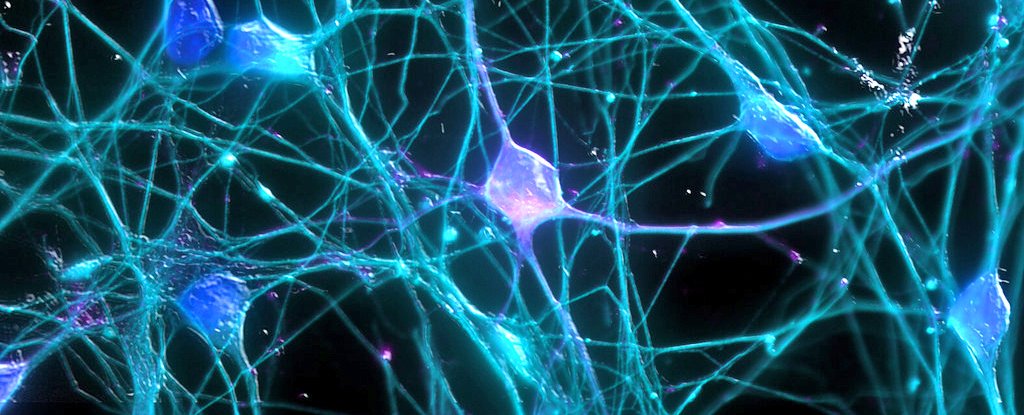
Scientists have figured out how to make nerve fibres repair themselves in mice, having identified a gene that inhibits fibre regrowth when nerve connections become damaged.
This gene, called Cacna2d2, acts as ‘molecular brake’, but now that we know how to turn the brake off, it could help us to develop treatments for conditions like paralysis and other spinal cord injuries.
There will be two million electric cars on the road by the end of 2016.
Despite low oil prices, plug-in electric vehicles (EV) are charging forward worldwide, with more than 2 million expected to be on the roads by the end of 2016, according torecent market figures.
Around 312,000 plug-in electric cars were sold during the first half of 2016, according to analysts at EV Volumes — a nearly 50 percent increase over the first half of 2015.
After conquering e-commerce, Jeff Bezos is working to take over the physical world, too.
Everything old is new again. Nearly one year after announcing plans to open its first brick-and-mortar bookstore, Amazon, having conquered e-commerce, is now planning to establish a beachhead in another corner of the physical world: convenience and grocery stores. The Wall Street Journal reports that the small storefronts would be stocked with perishable grocery items like milk and produce, and would allow for curbside pickup of groceries. Customers could also possibly use their smartphones to order nonperishable goods like cereal to their homes for same-day delivery.
Scotland unveiled the first turbine for the MeyGen tidal stream project, the world’s first large-scale tidal energy farm. The project will initially install four turbines, but will eventually have 269 turbines, enough to power 175,000 homes.
Egyptian researchers have developed a bandage embedded with nanoparticles for the treatment of wounds using the anti-epilepsy drug Phenytoin, known for its capacity to treat skin injuries.
The bandage can heal wounds in a few days, after just one application to soft tissue. Wounds normally take several days to a few weeks to heal completely, and some may only heal after several months or up to two years.


:format(webp)/cdn1.vox-cdn.com/uploads/chorus_image/image/51358885/KOBI_zomer.0.jpg)