Experimental CRISPR Treatment Cuts Cholesterol in Mice by Up to 57% in a Single Shot

By PETER DOCKRILL

Scientists have improved upon a form of gene-editing therapy, creating an experimental treatment that looks to hold great promise for treating high cholesterol – a diagnosis affecting tens of millions of Americans, and linked to a number serious health complications.

In new research conducted with mice, researchers used an injection of a newly-formulated lipid nanoparticle to deliver CRISPR-Cas9 genome editing components to living animals, with a single shot of the treatment reducing levels of low-density lipoprotein (LDL) cholesterol by up to 56.8 percent.

In contrast, an existing FDA-approved lipid nanoparticle (or LNP; a tiny, biodegradable fat capsule) delivery system could only manage to reduce LDLs by 15.7 percent in testing.

Of course, these results have so far only been demonstrated in mice, so the new therapy will take a lot of further testing before we know it’s both safe and equally effective in humans. But based on these results so far, signs are promising.

Continue reading… “Experimental CRISPR Treatment Cuts Cholesterol in Mice by Up to 57% in a Single Shot”
Sonantic uses AI to infuse emotion in automated speech for game prototypes

https://youtu.be/YajBa5PO1Hk


By Dean Takahashi

Sonantic has figured out how to use AI to turn written words into spoken dialogue in a script, and it can infuse those words with the proper emotion.

And it turns out this is a pretty good way to prototype the audio storytelling in triple-A video games. That’s why the Sonantic technology is finding use with 200 different video game companies for audio engineering.

The AI can provide true emotional depth to the words, conveying complex human emotions from fear and sadness to joy and surprise. The breakthrough advancement revolutionizes audio engineering capabilities for gaming and film studios, culminating in hyper-realistic, emotionally expressive and controllable artificial voices.

“Our first pilots were for triple-A companies, and then when we started building this,” said cofounder Zeena Qureshi in an interview with GamesBeat. “We went a lot more vertical and deeper into just working very closely with these types of partners. And what we found is the highest quality bar is for these studios. And so it’s really helped us bring our technology into a very great place.”

Building upon the existing framework of text-to-speech, London-based Sonantic’s approach is what differentiates a standard robotic voice from one that sounds genuinely human. Creating that “believability” factor is at the core of Sonantic’s voice platform, which captures the nuances of the human voice.

Continue reading… “Sonantic uses AI to infuse emotion in automated speech for game prototypes”

Microsoft Mesh aims to bring holographic virtual collaboration to all

The platform will let developers easily build apps for cross-platform remote meetings.

By D. Hardawar

Last week, I sat around a table with fellow journalists as Greg Sullivan, Microsoft’s head of Mixed Reality, detailed the company’s vision for the future of virtual collaboration. Nobody was wearing masks or standing apart. We weren’t worried about getting sick. Instead, we were all wearing HoloLens 2 headsets and sitting in different parts of the world. The holographic table was right beside my actual desk, and my media pals were floating around my office as we chatted with our cartoonish avatars. For a second, it felt like mingling in real life during the Before Times.

Continue reading… “Microsoft Mesh aims to bring holographic virtual collaboration to all”

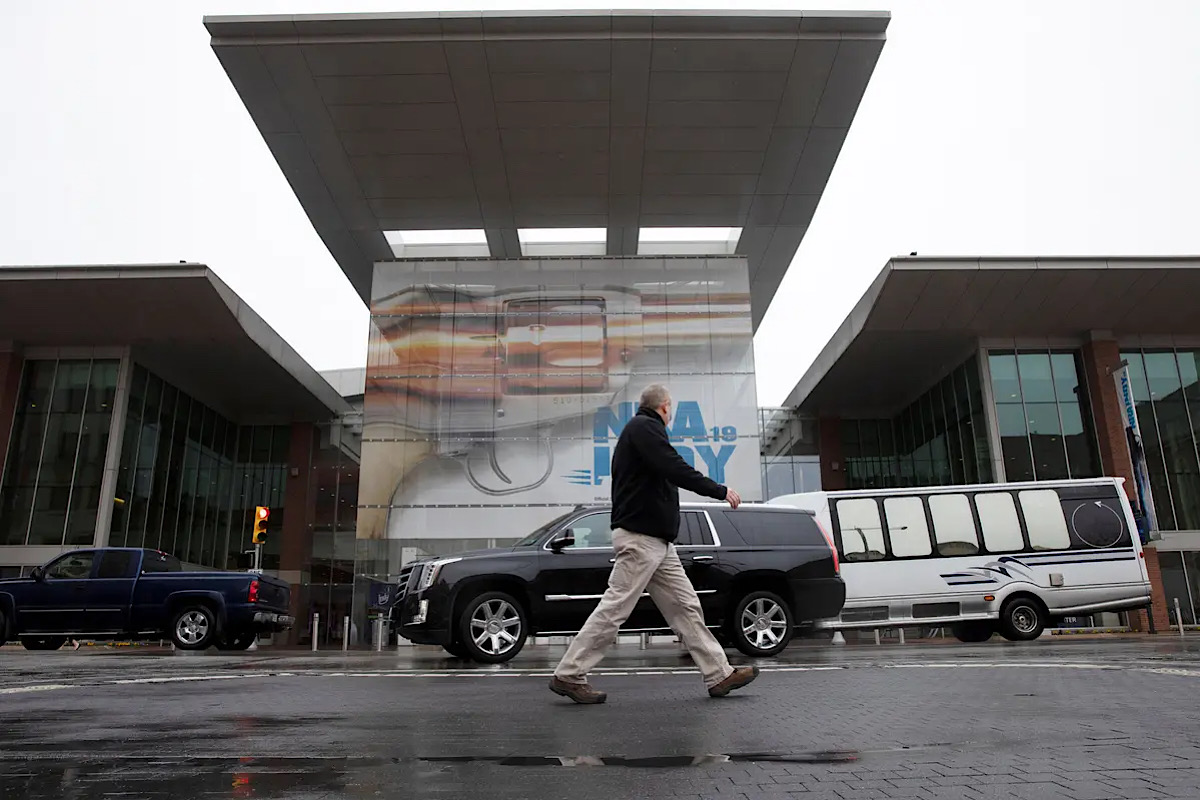
Nobody Is Going to Conventions. Convention Centers Are Growing

Indianapolis’s convention center hosted the National Rifle Association convention last year, just one of the many events that didn’t go off as usual in 2020.

By Mary Williams Walsh

The pandemic is intensifying the competition among cities, which are rushing to build bigger, more alluring event spaces.

After 20 years of trying, Indianapolis finally landed the American Dental Association convention. Last December, the group agreed to gather there in 2026, promising Indianapolis tens of thousands of visitors and tens of millions of dollars for the local economy.

But there’s a catch: The dentists can back out if the convention center complex does not complete a $550 million expansion: 143,500 square feet of new event and ballroom space as well as two privately financed hotels.

That helps explain why, in the depths of a pandemic that has left many convention centers empty or repurposed into field hospitals or homeless shelters, a 25-member board in Indianapolis voted unanimously in September to add up to $155 million to the public debt.

“We see convention tourism racing back in 2023,” said Chris Gahl, senior vice president of Visit Indy, the nonprofit that markets the Indiana Convention Center and attractions like the Indianapolis Motor Speedway. “When the green flag drops, we’re going to be on the competitive edge.”

Continue reading… “Nobody Is Going to Conventions. Convention Centers Are Growing”

Bitcoin is at a tipping point and could become ‘currency of choice’ for global trade, Citi says


Ryan Browne

  • Bitcoin could one day “become the currency of choice for international trade,” Citi said in a research note Monday.
  • The cryptocurrency is “at the tipping point of mainstream acceptance or a speculative implosion,” the bank added.
  • Bitcoin’s wild ascent over the last few months has forced big Wall Street players to reevaluate the cryptocurrency.

Citi thinks bitcoin is at a “tipping point” and could one day “become the currency of choice for international trade” as companies like Tesla and PayPal warm to it and central banks explore issuing their own digital currencies.

“There are a host of risks and obstacles that stand in the way of Bitcoin progress,” the U.S. bank’s global perspectives and solutions team wrote in a note Monday.

Continue reading… “Bitcoin is at a tipping point and could become ‘currency of choice’ for global trade, Citi says”

3 TRANSFORMATIVE TECHNOLOGIES THAT WILL REVOLUTIONIZE THE PLANET

The next agricultural revolution is coming.

AGRICULTURE’S IMPACT ON THE PLANET is massive and relentless. Roughly 40 percent of the Earth’s suitable land surface is used for cropland and grazing. The number of domestic animals far outweighs the remaining wild populations. Every day, more primary forest falls against a tide of crops and pasture, and each year an area as large as the United Kingdom is lost. If humanity is to have a hope of addressing climate change, we must reimagine farming.

Covid-19 has also exposed weaknesses with current food systems. Agricultural scientists have known for decades that farm labor can be exploitative and hard, so it should surprise no one that farm owners had trouble importing labor to keep farms running as they struggled to ensure food workers stay free from the virus.

Similarly, “just enough, just in time” food supply chains are efficient but offer little redundancy. And pushing farmland into the wilds connects humans with reservoirs of viruses that — when they enter the human population — prove devastating.

To address these challenges, new technologies promise a greener approach to food production and focus on more plant-based, year-round, local and intensive production. Done right, three technologies — vertical, cellular, and precision agriculture — can remake the relationship between land and food.

Continue reading… “3 TRANSFORMATIVE TECHNOLOGIES THAT WILL REVOLUTIONIZE THE PLANET”

THREE WORDS: SUPERSONIC. COMBAT. DRONES.

SKYNET IN THE SKY, BASICALLY.

Fly Like an Arrow

A Singapore-based aerospace company has developed a combat drone capable of reaching supersonic speeds. 

Kelley Aerospace unveiled their concept for an unmanned aerial vehicle (UAV) called the Arrow last week, according to Auto Evolution. The drone’s capable of flying more than 2,600 nautical miles at mach 2.1, or 1,611 miles per hour. That means the drone can fly from Los Angeles to Tokyo in a little over three hours — all while breaking the sound barrier.

Oh, and: It looks, straight up, like a UFO. 

Continue reading… “THREE WORDS: SUPERSONIC. COMBAT. DRONES.”

Hyundai proposes electric vehicle battery leasing plan to lower cost of EVs

THE PROPHECY CONCEPT. SOURCE: HYUNDAI

By JOSHUA S. HILL

South Korean automotive giant Hyundai is to create an electric vehicle (EV) battery leasing business with the aim of reducing the initial cost of buying an EV as well as providing services that enable eco-friendly re-use of the batteries beyond their useful EV lifespan.

Hyundai said this week it had signed a Memorandum of Understanding (MoU) with the South Korean Government, as well as LG Energy Solution and KST Mobility to demonstrate an EV battery leasing business, including for the rental of electric taxi batteries.

Under the plan KST Mobility will sell ownership of batteries in newly purchased EVs to Hyundai Glovis, the battery lessor. KST Mobility will then pay a monthly fee for battery usage, which will in turn ensure KST Mobility is able to reduce its initial investment on EV purchases.

Continue reading… “Hyundai proposes electric vehicle battery leasing plan to lower cost of EVs”

US-based ‘Tesla lite’ 3-wheeled electric vehicle startup passes $1B market cap

By Micah Toll 

Arcimoto’s market capitalization recently crossed the $1 billion threshold, making the three-wheeled electric vehicle company the newest member of the unicorn club.

Late last year, it looked like the sky was the limit for Arcimoto, which trades on the NASDAQ as FUV. 

Now it seems like the company has blown right through the sky and is headed for the moon.

Less than a year ago Arcimoto’s share price had dipped below $1. Yesterday it closed at $31.12.

While the entire market has shown impressive growth since bottoming out early in the COVID-19 pandemic, Arcimoto’s share price has grown 1,658% in the last 12 months.

With a current market cap of $1.23 billion as of market close yesterday, Arcimoto is gaining the attention of several well-known investors and EV bulls.

As the Portland Business Journal reported, new support from investor Ross Gerber has likely helped fuel the most recent growth in the company’s valuation.

Continue reading… “US-based ‘Tesla lite’ 3-wheeled electric vehicle startup passes $1B market cap”

Hyundai is working on a driverless car that can also turn into a ‘walking machine’

By Anmar Frangoul

  • As tech develops and consumer habits change, the sight of unmanned vehicles could become commonplace in both urban and rural locations. 
  • Drones have already been used to deliver medication to remote spots, for example. 

The Hyundai Motor Group has released details of a concept vehicle designed to function as both a four-wheel-drive car and a “four-legged walking machine,” in the latest example of how ideas on mobility and logistics are changing.

According to a statement from the South Korean automotive giant Wednesday, the vehicle — known as TIGER, or transforming intelligent ground excursion robot — has been designed to operate without a crew and in “extreme, remote locations.”

A team from Hyundai’s California-based New Horizons Studio has been working alongside U.S. firms Autodesk and Sundberg-Ferar on the project’s development.

Continue reading… “Hyundai is working on a driverless car that can also turn into a ‘walking machine’”

Waymo begins testing autonomous vehicles with riders in San Francisco

By Kyle Bradshaw 

After successfully opening Waymo One as a public driverless ride-hailing service in Phoenix, Waymo is beginning to test autonomous vehicles with riders in San Francisco.

Over on the official Waymo blog, the company shared that one of its major goals has been for its driverless vehicles to be robust enough to handle the complexities of San Francisco’s roads. In part, this goal is rooted in Waymo being based in the San Francisco Bay Area — having spun out of Google to become an Alphabet company in 2016.

However, a recent survey of San Francisco residents, taken by Waymo, reveals a more noble cause. A massive 63% of the respondents said “dangerous drivers” made it difficult to get around the city, while as many as 23% said they “don’t feel safe” on the roads.

Continue reading… “Waymo begins testing autonomous vehicles with riders in San Francisco”

Planning 500,000 charging points for EVs by 2025, Shell becomes the latest company swept up in EV charging boom


By Jonathan Shieber

Shell’s plan to roll out 500,000 electric charging stations in just four years is the latest sign of an EV charging infrastructure boom that has prompted investors to pour cash into the industry and inspired a few companies to become public companies in search of the capital needed to meet demand.

Since the beginning of the year, three companies have been acquired by special purpose acquisition vehicles and are on a path to go public, while a third has raised tens of millions from some of the biggest names in private equity investing for its own path to commercial viability.

Continue reading… “Planning 500,000 charging points for EVs by 2025, Shell becomes the latest company swept up in EV charging boom”